
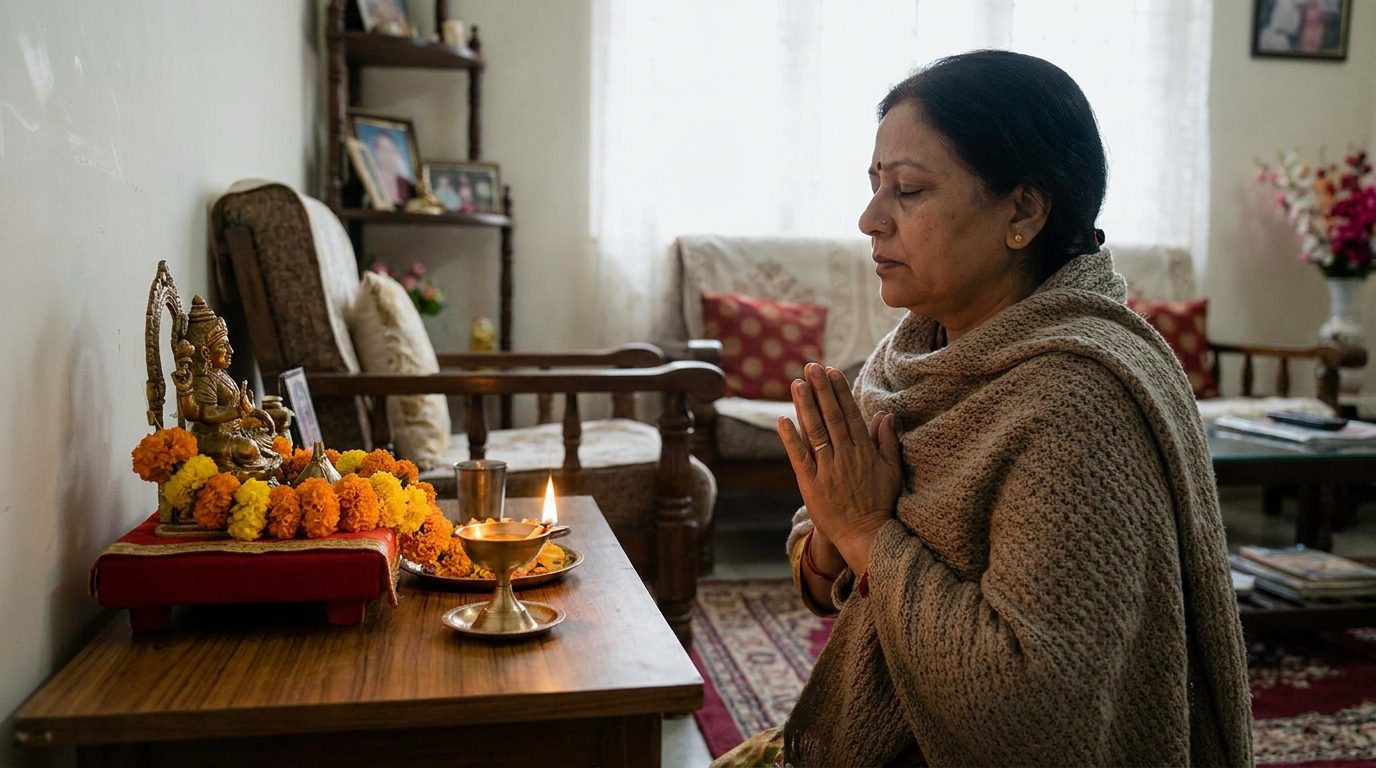
A daily Bhakti practice at home is a gentle way of turning the heart toward God, again and again.
Bhakti Yoga means the path of devotion, or the path of loving connection with the Divine. The Sanskrit word bhakti comes from a root that means “to share,” “to participate,” or “to lovingly serve.” In simple terms, Bhakti Yoga is the practice of remembering God with love through chanting, prayer, service, study, and offering our daily life.
You do not need to be born into a particular culture, religion, or tradition to begin. You do not need to know Sanskrit. You do not need a perfect home, a perfect schedule, or a perfect mind.
You only need sincerity.
At The Bhakti House, we often remember that spiritual life is not about becoming someone else. It is about uncovering the soul’s natural love. A daily Bhakti practice helps us make space for that love to awaken. Even a few minutes each day can soften the heart, steady the mind, and help us live with more compassion, humility, and purpose.
The Bhagavad-gita, one of the most beloved scriptures of Bhakti Yoga, teaches that even a small effort on the spiritual path brings great benefit. In Bhagavad-gita 2.40, Krishna says that there is no loss or failure in this practice, and even a little progress protects one from fear. This is very encouraging. Bhakti is not all-or-nothing. It is a relationship, and relationships grow through regular loving attention.
A daily home practice is like watering a sacred seed. Some days the practice feels joyful. Some days it feels dry. Some days we are distracted, tired, or emotional. Still, if we keep showing up with humility, something beautiful begins to grow.
Creating Sacred Space in Your Home
A Bhakti practice becomes easier when we create a small space that reminds us of our spiritual intention. This does not have to be elaborate. A sacred space can be a shelf, a small table, a windowsill, a corner of a room, or even a clean cloth placed on the floor.
The purpose is not decoration. The purpose is remembrance.
Choosing a Simple Place for Practice
Choose a place in your home that feels peaceful and relatively clean. If possible, choose somewhere you can return to each day. Over time, that space becomes spiritually charged by your prayers, chanting, and heartfelt intentions.
You may place sacred items there, such as:
- A picture of Krishna, Radha, Rama, Vishnu, or another form of God you feel drawn to
- A picture of a saint, spiritual teacher, or lineage that inspires you
- A candle or lamp
- Fresh flowers
- A small bowl of water
- Prayer beads, called japa mala
- A copy of the Bhagavad-gita or another sacred text
If you are new to Bhakti, keep it simple. Let the space feel welcoming rather than intimidating. God is not impressed by luxury; God is touched by love.
Keeping the Space Clean and Honored
Cleanliness supports clarity. In Bhakti traditions, caring for a sacred space is itself a form of service, called seva. Seva means loving service offered for the pleasure of God and the benefit of others.
You might dust the altar, refresh flowers, light incense, or simply fold your hands and offer a moment of gratitude. These small acts help train the heart to see ordinary actions as spiritual offerings.
The Bhagavad-gita 9.26 says, “If one offers Me with love and devotion a leaf, a flower, a fruit, or water, I will accept it.” This verse is very dear in Bhakti Yoga because it shows that God accepts the love behind the offering. The item may be simple, but the heart can be full.
Making Sacred Space in a Busy Home
If you live with family, roommates, children, or limited space, your practice can still thrive. Your sacred space may need to be portable. You can keep your beads and scripture in a small bag. You can practice quietly before others wake up. You can chant softly while walking outside.
Bhakti is not limited by circumstances. The real sacred space is the heart. The outer space simply helps us remember.
Beginning the Day with Remembrance
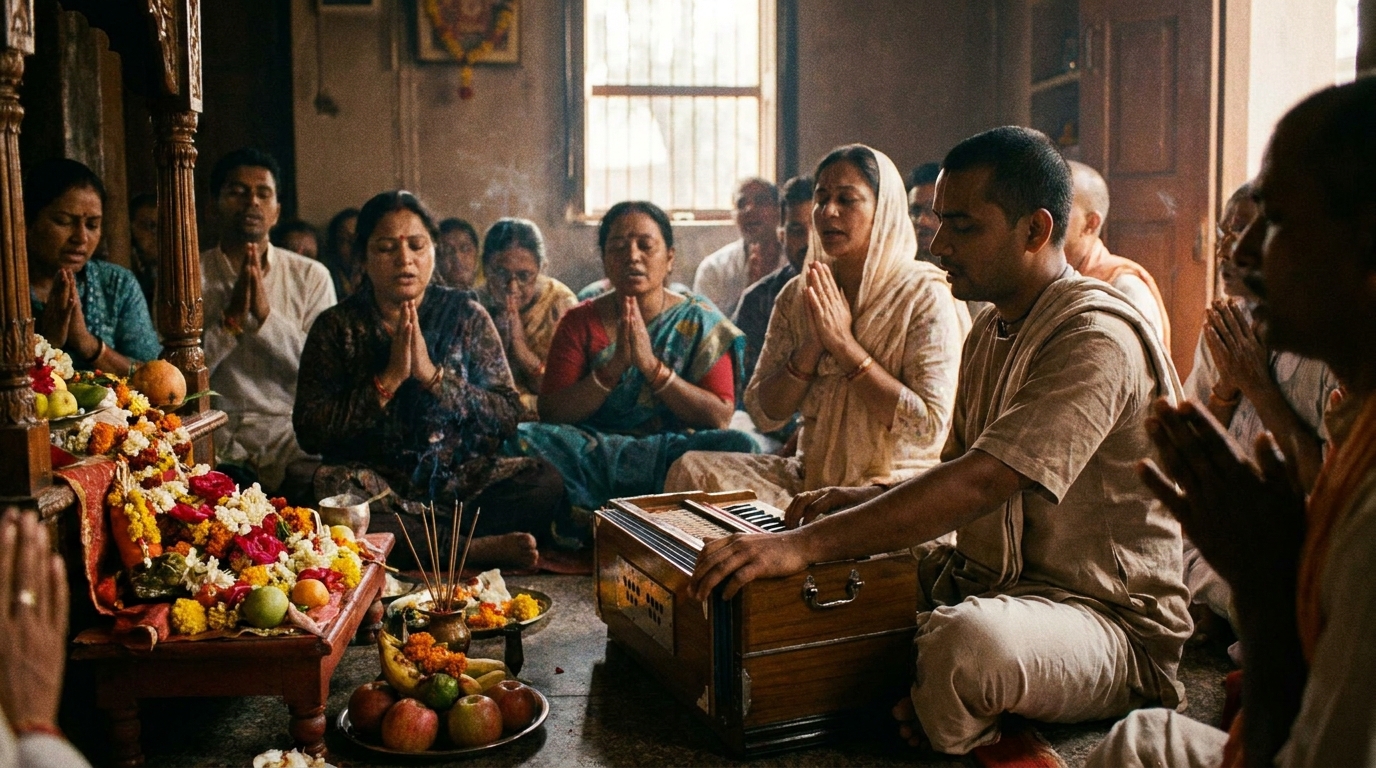
Morning is a powerful time for spiritual practice. The mind is often quieter before the day’s responsibilities begin. In many Bhakti traditions, early morning is considered especially favorable for prayer, meditation, and chanting.
But if mornings are difficult for you, please do not feel discouraged. The best time to practice is the time you can consistently offer with sincerity.
Waking with Gratitude
Before checking your phone or entering the rush of the day, pause for a few breaths.
You can place your hand on your heart and say:
“Thank You, Lord, for this day. Please guide my thoughts, words, and actions. May I live in a way that pleases You and serves others.”
This simple prayer can shift the whole direction of the day. Instead of waking into anxiety, we wake into relationship. Instead of feeling alone, we remember that divine love is present.
Offering the First Moments
In Bhakti Yoga, offering the beginning of something is very meaningful. The first thought, the first words, the first food, the first action of the day—these can all become offerings.
You might begin by bowing your head, chanting one mantra, reading one verse, or lighting a candle. Even one sincere minute matters.
A mantra is a sacred sound or phrase used for meditation and prayer. In Bhakti, mantras are not merely sounds; they are understood as spiritual invitations. They help us remember and call upon God.
A very well-known Bhakti mantra is the Hare Krishna maha-mantra:
Hare Krishna Hare Krishna
Krishna Krishna Hare Hare
Hare Rama Hare Rama
Rama Rama Hare Hare
Hare refers to the divine energy of love and devotion. Krishna means “the all-attractive one,” a beautiful name for God. Rama means “the source of joy” or “the reservoir of pleasure.” In simple language, this mantra is a prayer: “O Lord, O Divine Energy, please engage me in Your loving service.”
A Simple Morning Practice
Here is a gentle morning practice you can try:
- Sit comfortably in your sacred space.
- Take three slow breaths.
- Offer a short prayer of gratitude.
- Chant the Hare Krishna mantra or another holy name for 5–15 minutes.
- Read one verse or passage from a Bhakti scripture.
- Set one intention for the day, such as patience, kindness, honesty, or remembrance.
This does not need to be long. Consistency is more important than intensity. A steady daily practice, even a small one, gradually shapes the heart.
Please visit our website for more information on our articles: articles.
Chanting as the Heart of Bhakti Practice
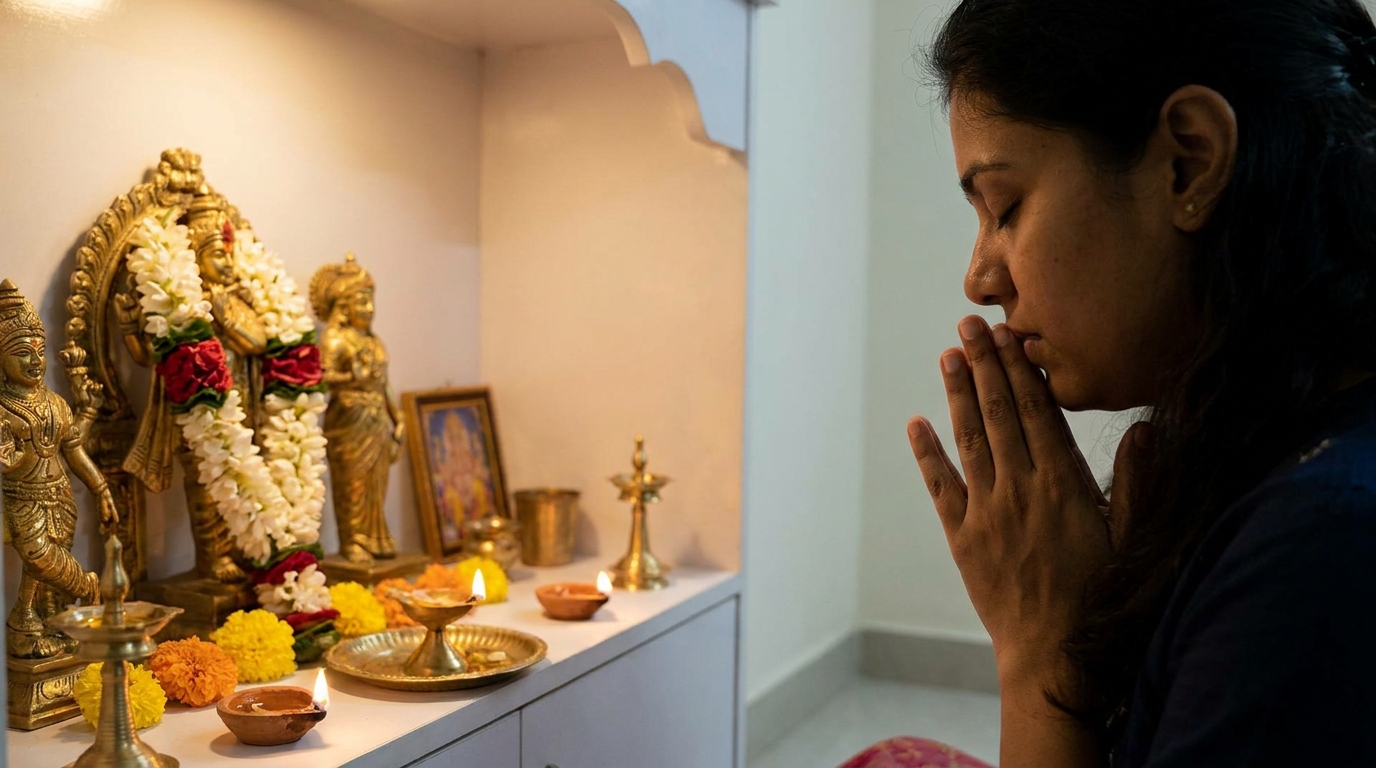
Chanting is one of the most accessible and powerful practices in Bhakti Yoga. It can be done alone or with others, silently or aloud, with music or without music.
In Sanskrit, chanting the names of God is often called nama-japa or kirtan. Nama means name. Japa means soft, personal repetition of a mantra, often using beads. Kirtan means singing or glorifying God, usually in a call-and-response style with music.
Both are beautiful. Both help us remember.
Practicing Japa Meditation at Home
Japa meditation is a personal practice of repeating a mantra, often on a string of 108 beads called a mala. Each bead helps keep the mind gently focused. You touch one bead, chant the mantra, then move to the next bead.
If you do not have beads, you can still chant. You can use a timer, your breath, or simply chant for a set number of minutes.
To practice japa:
- Sit in a clean, quiet place.
- Hold your beads or rest your hands comfortably.
- Chant the mantra clearly enough that you can hear yourself.
- Bring your mind back when it wanders.
- Try to listen with the heart.
The mind will wander. This is normal. Do not become harsh with yourself. Each time you return to the sound, that returning is part of the practice. Bhakti is not about forcing the mind into silence. It is about lovingly bringing the mind back to God.
Bringing Kirtan into the Home
Kirtan is devotional singing. You can sing alone, with your family, or with friends. You can use instruments like harmonium, drum, guitar, kartals, or simply your voice and hands.
If you feel shy, start quietly. Play a recording and sing along. Let your home become filled with sacred sound.
Kirtan is not a performance. It is an offering. The beauty of kirtan is not measured by musical skill but by sincerity. A cracked voice offered with love is deeply sacred.
In the Srimad-Bhagavatam, a foundational Bhakti scripture, hearing and chanting about God are described as powerful ways to purify the heart. This does not mean we become perfect overnight. It means the heart gradually becomes clearer, softer, and more receptive to divine love.
Chanting Throughout the Day
Your practice does not need to stay in one room. You can chant while cooking, cleaning, walking, driving, or resting. Softly repeating a mantra during ordinary activities can transform them.
This is one of the gifts of Bhakti Yoga: it brings spiritual life into daily life. We do not have to run away from responsibilities to remember God. We can invite God into the middle of them.
Prayer as Honest Conversation with God
Prayer is the soul speaking to the Divine. It does not need to be formal or poetic. It can be as simple as, “Please help me,” or “Thank You,” or “I am trying.”
In Bhakti, prayer is not only asking for things. It is opening the heart. It is learning to depend on divine grace. It is becoming honest in the presence of the One who already knows us completely and loves us beyond measure.
Praying with Humility
Humility does not mean thinking we are worthless. Humility means seeing ourselves truthfully: we are small, dependent, loved, and capable of receiving grace.
A humble prayer might be:
“Lord, I do not know how to love You purely, but I want to learn. Please guide me. Please remove what keeps me far from You. Please help me serve with sincerity.”
This kind of prayer is very powerful because it invites transformation. It does not demand that God serve our ego. It asks that our heart become aligned with divine love.
Praying in Times of Difficulty
A home Bhakti practice becomes especially meaningful during difficult times. When we are grieving, anxious, angry, or confused, prayer gives us somewhere to place the weight.
You can tell God the truth. You can say, “I am hurting.” You can say, “I do not understand.” You can say, “Please stay with me.”
Bhakti does not ask us to pretend. The great saints often prayed with tears, longing, and vulnerability. Their prayers teach us that spiritual life includes the whole human experience.
In the Bhagavad-gita 18.66, Krishna lovingly invites us to surrender to Him and promises protection. Surrender does not mean passivity or giving up responsibility. It means trusting that we are not alone, and allowing divine wisdom to guide our next step.
Keeping a Prayer Journal
A prayer journal can be a beautiful part of your daily practice. You might write:
- What you are grateful for
- What you are struggling with
- A prayer for guidance
- A name of God you want to remember
- A quality you want to cultivate
- A person you want to bless
Over time, a prayer journal becomes a record of your relationship with God. You may begin to notice subtle answers, inner shifts, and moments of grace that you might otherwise overlook.
Studying Bhakti Wisdom at Home
Sacred study helps nourish the mind and guide the heart. In Bhakti Yoga, study is not meant for pride or argument. It is meant for transformation.
The Sanskrit word shastra means scripture or sacred teaching. Bhakti scriptures such as the Bhagavad-gita, Srimad-Bhagavatam, and writings of saints offer wisdom about the soul, God, devotion, service, and the purpose of life.
If you are new, begin gently. One verse a day is enough.
Reading the Bhagavad-gita Practically
The Bhagavad-gita is a conversation between Krishna and Arjuna, a warrior facing deep moral and emotional crisis. Arjuna is overwhelmed, confused, and unsure what to do. Krishna does not shame him. Krishna teaches him with patience and compassion.
This is one reason the Gita is so practical. It meets us in the middle of life’s battlefield—where decisions, relationships, fears, and responsibilities are real.
When reading the Gita, ask:
- What is Krishna teaching here?
- How does this apply to my life today?
- What quality is being encouraged?
- How can I act with more devotion and less selfishness?
Even if you do not understand everything, keep going. Sacred wisdom reveals itself gradually.
Reflecting on One Verse
Choose one verse and sit with it. Read it slowly. Notice one word or phrase that touches you. Then ask how you can live that teaching today.
For example, Bhagavad-gita 9.27 says: “Whatever you do, whatever you eat, whatever you offer or give away, and whatever austerities you perform—do that as an offering to Me.”
This is a complete home practice in one verse. Cooking can be an offering. Work can be an offering. Parenting can be an offering. Rest can be an offering. Giving can be an offering. The ordinary becomes sacred when offered with love.
Learning from Saints and Teachers
Bhakti is a living tradition carried by saints, teachers, and sincere practitioners. Reading their lives and teachings can inspire us deeply.
We may learn from their devotion, but we should not compare ourselves harshly. Saints show what is possible through grace. They invite us forward, one step at a time.
If possible, connect with a trusted spiritual community, teacher, or sangha. Sangha means spiritual community. Practicing at home is wonderful, and practicing with others can strengthen our faith and keep us encouraged.
Offering Food with Love
One of the sweetest home Bhakti practices is offering food to God before eating. In many Bhakti traditions, food offered to Krishna with love is called prasadam. Prasadam means mercy or grace.
The idea is simple: we prepare food with care, offer it to God, and then receive it as a blessing.
Cooking as Devotion
Cooking can become meditation when done with love. Before you begin, wash your hands, take a breath, and offer a simple prayer:
“May this food be pleasing to You. May it nourish everyone who receives it.”
As you cook, you can chant or listen to kirtan. Try to cultivate gratitude for the ingredients, the earth, the farmers, the water, the fire, and the divine presence sustaining everything.
In Bhakti, the consciousness of the cook matters. Food carries not only nutrition but intention. Cooking with prayer can bring peace into the home.
Making a Simple Offering
You do not need a complex ritual. Place a portion of the food on a clean plate or bowl. Set it before a picture of Krishna or on your sacred space. Offer a prayer, such as:
“Dear Lord, this food is Yours. Please accept it with my love and gratitude.”
You may chant the Hare Krishna mantra or sit quietly for a few moments. Then the food is honored as prasadam and shared.
Eating with Gratitude
Before eating, pause. Remember that this food is a gift. Eat with appreciation, not distraction. If you are eating with others, you can invite them into gratitude in a simple, inclusive way.
Receiving prasadam helps us remember that we are cared for. It also teaches us to see nourishment as sacred, not merely physical.
Turning Daily Duties into Devotional Service
A daily Bhakti practice is not limited to chanting and prayer. It includes how we live, how we speak, how we work, and how we treat others.
Seva, or devotional service, is central to Bhakti Yoga. Service purifies the heart because it moves us from “How can I enjoy?” toward “How can I love?”
Serving the People Around You
Home is often the first temple of service. Washing dishes, caring for children, listening to a partner, helping a roommate, calling a parent, or feeding a guest can all become seva when done with devotion.
This does not mean we should neglect healthy boundaries or enable harm. Bhakti service is not about losing ourselves in people-pleasing. It is about acting from love, wisdom, and dedication to God.
A simple practice is to ask each morning:
“Who can I serve today, and how can I do it with kindness?”
Offering Your Work
Many of us spend much of the day working, studying, caregiving, or managing responsibilities. Bhakti teaches that these activities can be spiritualized when offered to God.
Before beginning work, you can pray:
“May my work today be honest, helpful, and offered to You.”
This transforms the mood of action. We still do our best, but we become less trapped by ego, praise, blame, success, and failure.
Krishna teaches in the Bhagavad-gita that we have a right to perform our duty, but not to control the results. This wisdom can bring relief. We offer our effort sincerely and leave the fruits in God’s hands.
Practicing Compassion
Devotion is not separate from compassion. If our chanting does not make us more kind, patient, and truthful, then we can humbly pray for deeper chanting.
Try to practice small acts of compassion daily:
- Speak gently.
- Forgive where possible.
- Avoid gossip.
- Feed someone.
- Encourage a friend.
- Care for animals.
- Reduce harm in your choices.
- Listen without rushing to fix.
Bhakti grows when love becomes practical.
Building a Realistic Daily Routine
A home Bhakti practice should be steady, nourishing, and realistic. If we make it too complicated, we may become discouraged. It is better to begin with a small practice that we can keep.
Spiritual growth is not a race. It is a lifelong relationship.
Start Small and Stay Consistent
If you are just beginning, try 10–20 minutes a day:
- 2 minutes of prayer
- 5–10 minutes of chanting
- 5 minutes of reading
- 1 simple offering of your day
Once this becomes natural, you can gradually increase.
If you miss a day, do not quit. Begin again. The path of Bhakti is full of new beginnings. God is not waiting to punish us for imperfection. God is inviting us back into love.
Create Anchors in the Day
Daily anchors help us remember. You might choose:
- Morning chanting
- Offering meals
- A verse before bed
- Evening gratitude
- Kirtan while cooking
- A weekly online or in-person satsang
Satsang means gathering in truth, or keeping company with those who seek spiritual wisdom. Even occasional satsang can strengthen your home practice.
A Sample Daily Bhakti Practice
Here is one possible rhythm:
Morning:
- Wake with gratitude.
- Chant one round of japa or chant for 10 minutes.
- Read one verse from the Bhagavad-gita.
- Offer the day to God.
Midday:
- Offer your food before eating.
- Pause for one minute of mantra meditation.
- Practice one act of kindness.
Evening:
- Sing or listen to kirtan.
- Write one gratitude and one prayer.
- Reflect: “Where did I remember God today? Where did I forget? Please help me tomorrow.”
This routine can be adjusted for your life. A parent with young children, a student, a healthcare worker, or someone working multiple jobs may each practice differently. Bhakti meets us where we are.
Overcoming Common Challenges
Every practitioner faces challenges. Distraction, doubt, tiredness, inconsistency, and emotional ups and downs are normal. They do not mean you are failing.
They mean you are human.
When the Mind Wanders
During chanting or prayer, the mind may run everywhere. It may plan, worry, remember, judge, or dream. This can feel frustrating.
The practice is to gently return to the mantra. Again and again. Each return is a small act of devotion.
You can pray:
“Please help me hear Your name. Please help me come back.”
Do not measure your practice only by how peaceful you feel. Sometimes the most powerful practice is simply staying present when the mind resists.
When You Feel Unworthy
Many people hesitate to approach God because they feel unworthy. Bhakti scriptures repeatedly teach that God is especially moved by sincerity, not social status, scholarship, wealth, or outer perfection.
The Bhagavad-gita 9.30–31 offers great hope, explaining that even if someone has made mistakes, if they are sincerely devoted and determined on the path, they should be seen as saintly because they are rightly resolved. This does not excuse harmful behavior, but it shows the power of sincere turning.
God’s love is not fragile. You can begin from where you are.
When Practice Becomes Mechanical
Sometimes we chant, pray, or read but feel disconnected. This happens. Rather than abandoning practice, bring honesty into it.
Say:
“Lord, my heart feels dry today. Please accept this small effort. Please awaken real devotion in me.”
You can also refresh your practice by singing, reading a saint’s prayer, serving someone, joining kirtan, or spending time in nature.
Bhakti is personal. If the heart feels asleep, call out gently. The calling itself is sacred.
Deepening Your Bhakti Practice Over Time
As your daily practice becomes steady, you may feel drawn to deepen. Let this happen naturally, without pride or pressure.
Deepening Bhakti means becoming more sincere, more surrendered, more compassionate, and more absorbed in loving remembrance.
Increasing Chanting Gradually
You may choose to chant more rounds of japa or spend more time in kirtan. Increase in a way that is sustainable. Quality and attention matter.
Try to listen more deeply. The holy name is not ordinary sound. In Bhakti understanding, the name of God carries God’s presence. When we chant with humility, we are placing ourselves in that presence.
Studying with Guidance
As questions arise, seek guidance from trustworthy teachers and communities rooted in authentic Bhakti teachings. A mature guide can help us understand scripture practically and avoid confusion.
Ask questions with humility. Spiritual inquiry is welcomed in the Bhagavad-gita. Arjuna asks Krishna many questions, and Krishna responds with care. Honest questions can deepen faith when they are held in a spirit of service and sincerity.
Sharing Bhakti with Others
When something nourishes our heart, we naturally want to share it. You can share Bhakti gently by inviting someone to kirtan, offering prasadam, sending a verse, or simply living with more kindness.
There is no need to pressure others. Love is the best invitation. A peaceful, serviceful life speaks deeply.
Making Your Home a Place of Devotion
A Bhakti home is not defined by size, style, or perfection. It is defined by remembrance, gratitude, sacred sound, and loving service.
A small apartment can be a temple. A busy family kitchen can be a place of offering. A bedroom corner can become a sanctuary. A heart that chants sincerely can become a holy place.
The home becomes spiritual not because every moment is peaceful, but because we keep turning back to God. We apologize when needed. We forgive when possible. We chant when we can. We offer what we have. We begin again.
In time, daily Bhakti practice can change the atmosphere of a home. The sound of mantra softens the mind. Offered food brings grace. Prayer brings humility. Scripture brings wisdom. Service brings love into action.
And slowly, we may begin to see that God was present all along—in the morning light, in the meal, in the child’s laughter, in the difficult conversation, in the quiet tear, in the mantra, in the breath.
Taking One Sincere Step Today
If you feel inspired to begin a daily Bhakti practice at home, start simply.
Choose one small step:
- Chant the Hare Krishna mantra for five minutes.
- Offer your meal with gratitude.
- Read one verse from the Bhagavad-gita.
- Create a small sacred space.
- Say one honest prayer.
- Serve one person with love.
- Listen to kirtan while cooking or resting.
Do not wait until life is perfect. Do not wait until you feel qualified. Bhakti begins now, with the heart you have, in the home you live in, in the life you are already living.
God accepts sincere offerings. A leaf, a flower, a fruit, water—or even one humble moment of remembrance—can become the beginning of a beautiful relationship.
Everyone is welcome on this path. Whatever your background, whatever your story, whatever your level of knowledge, you can take one sincere step toward God today. And by grace, that one step can open the heart to a lifetime of love.
FAQs
What is a home Bhakti practice?
A home Bhakti practice refers to the personal and intimate practice of devotion and worship within the comfort of one’s own home. It involves creating a sacred space, performing rituals, chanting mantras, and engaging in acts of devotion to cultivate a deeper connection with the divine.
How can one start building a home Bhakti practice?
To start building a home Bhakti practice, one can begin by setting aside a dedicated space for worship and meditation. This space can be adorned with sacred images, candles, incense, and other items that inspire devotion. Regularly engaging in rituals, chanting, and prayer can also help in establishing a consistent practice.
What are the benefits of a home Bhakti practice?
Engaging in a home Bhakti practice can bring about a sense of inner peace, spiritual growth, and a deeper connection with the divine. It can also provide a source of comfort, solace, and strength during challenging times. Additionally, it can help in cultivating a more loving and compassionate outlook towards oneself and others.
Are there any specific rituals or practices associated with a home Bhakti practice?
Some common rituals and practices associated with a home Bhakti practice include daily puja (worship), offering of flowers and food to deities, singing or chanting devotional songs and mantras, reading sacred texts, and engaging in meditation and prayer.
Can a home Bhakti practice be personalized to fit individual preferences and beliefs?
Yes, a home Bhakti practice can be personalized to fit individual preferences and beliefs. One can choose specific deities to worship, select favorite mantras or prayers, and incorporate rituals and practices that resonate with their spiritual inclinations. This personalization can make the practice more meaningful and fulfilling.

