
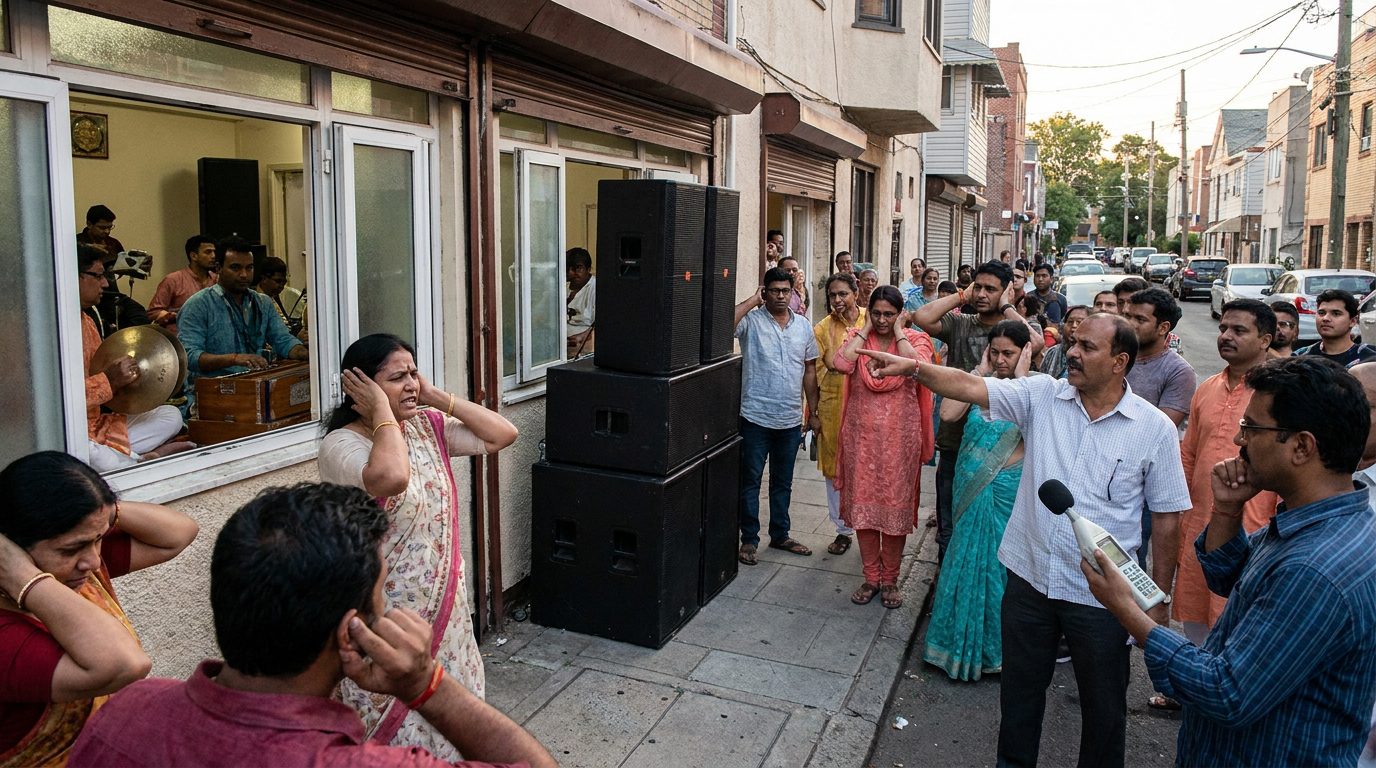
There’s a beautiful moment in every kīrtana — that sacred call-and-response chanting — when the room comes alive. Voices rise together, instruments find their groove, and something beyond ordinary experience fills the space. Hearts open. The Holy Names vibrate through every corner. It feels like the most natural thing in the world.
And then someone says, “It’s too loud.”
If you’ve ever organized or led kīrtana in a temple, yoga studio, community hall, or even your own home, you’ve probably encountered this. A complaint about volume can feel like cold water on a warm fire. It can create tension, self-doubt, and even conflict within a community that’s supposed to be centered on love.
So how do we honor the sacred energy of kīrtana while also being considerate of others? And how do we handle complaints gracefully — without allowing one person’s preference to dictate the spiritual experience of an entire group?
Let’s explore this together with open hearts and practical wisdom.
Kīrtana isn’t just music. In the Bhakti tradition, it’s one of the most powerful and accessible forms of connecting with God. Śrī Caitanya Mahāprabhu, the great 15th-century saint who popularized congregational chanting, described the chanting of God’s Holy Names as the prime benediction for all of humanity. The Bṛhan-Nāradīya Purāṇa emphasizes:
harer nāma harer nāma harer nāmaiva kevalam
kalau nāsty eva nāsty eva nāsty eva gatir anyathā
“In this age, there is no other way, no other way, no other way than chanting the Holy Name of the Lord.”
Volume plays a real role in this experience. When kīrtana has energy and fullness, it helps participants let go of self-consciousness, surrender to the moment, and become absorbed in the Names. A vibrant kīrtana can carry people beyond their mental chatter and into a space of genuine devotion.
At the same time, sound that’s genuinely too loud can cause physical discomfort, hearing damage, and anxiety — especially for children, elderly devotees, or those with sensory sensitivities. So there is a real balance to find. This isn’t about dismissing complaints. It’s about finding wisdom in how we respond to them.
The Difference Between Preference and Genuine Concern
Not all complaints are the same, and it’s important to gently discern the difference.
Some complaints reflect genuine physical discomfort or health concerns. A person with tinnitus, a mother with a sleeping infant, or an elderly guest experiencing pain — these are real needs that deserve compassionate attention.
Other complaints may reflect personal preference, mood, or even a desire for control. Someone might simply not enjoy energetic music, or they may feel uncomfortable with the ecstatic nature of kīrtana. These feelings are valid, but they don’t necessarily mean the volume needs to change for everyone.
Learning to tell the difference — with kindness, not judgment — is an essential skill for anyone managing a kīrtana space.
Understanding the “One Loud Voice” Problem
Here’s a pattern many communities experience: one person complains repeatedly about the volume, and over time, the entire kīrtana culture shifts to accommodate that single voice. The chanting becomes quieter, more restrained, and gradually loses its life force. Musicians feel stifled. Newer participants wonder where the joy went.
This happens because most of us in devotional communities are kind-hearted people who genuinely don’t want to upset anyone. That’s a beautiful quality. But when taken to an extreme, it can create an imbalance where one person’s discomfort effectively governs the spiritual experience of dozens — or even hundreds — of others.
How Good Intentions Can Create Unhealthy Dynamics
In the Bhagavad Gītā (3.21), Kṛṣṇa explains that whatever a leader does, others will follow. If leadership consistently yields to the loudest complainer, it sends an unspoken message: whoever protests the most gets to set the rules. This can inadvertently empower controlling behavior while disempowering the broader community.
It can also create resentment. Musicians may feel their service isn’t valued. Enthusiastic chanters may feel unwelcome. And the overall mood of the community can shift from joyful devotion to walking on eggshells.
None of this serves love. None of this serves God.
Recognizing Control vs. Community Care
It’s worth asking honest questions when recurring complaints arise: Is this person genuinely suffering, or do they want things done their way? Are they willing to sit in a different spot, use ear protection, or attend a quieter session? Or does it have to be their terms or nothing?
A person who is genuinely struggling will usually be grateful for accommodations. A person seeking control will often escalate even when reasonable solutions are offered. Recognizing this pattern early can save a community a great deal of unnecessary pain.
Practical Strategies for Managing Volume Wisely
Thankfully, there are many practical steps communities can take to honor both the energy of kīrtana and the needs of individuals. Here are some approaches that have worked well in Bhakti communities around the world.
Set Clear Sound Guidelines
Rather than making volume decisions on the fly — especially in response to pressure in the moment — establish clear guidelines in advance. This might include:
- A maximum decibel level measured with a simple smartphone app
- Designated sound check times before kīrtana begins
- A specific person or small team responsible for monitoring sound levels during the event
When guidelines exist beforehand, decisions feel less personal. It’s not about one person’s opinion versus another’s. It’s about a standard the community has agreed upon together.
Create Zones Within the Space
If your space allows it, consider creating different zones. The area near the front and the speakers can be for those who love immersive, energetic sound. The back of the room or an adjacent space can offer a quieter experience.
Some temples have even set up a separate room with a live audio feed at a lower volume for those who need it. This is a beautiful act of inclusion that doesn’t require dampening the experience for everyone else.
Offer Multiple Kīrtana Experiences
Not every kīrtana needs to be the same. Some sessions can be gentle and meditative — soft voices, simple melodies, a quiet and contemplative mood. Others can be full and celebratory, with drums, karatālas (hand cymbals), and joyful dancing.
When a community offers variety, people can choose what suits them. The person who prefers quiet chanting has a home, and the person who comes alive in ecstatic kīrtana also has a home. Everyone belongs.
Empower a Small, Balanced Team
Volume decisions shouldn’t rest on one leader’s shoulders alone — and they certainly shouldn’t be dictated by one complainer. Form a small team of two or three trusted, balanced individuals who can assess sound levels, receive feedback gracefully, and make decisions together.
This team should include people who love kīrtana and understand its spiritual importance, not just people focused on logistics. The goal is to protect the devotional atmosphere while being genuinely responsive to legitimate concerns.
Sure, here is the sentence with the clickable link:
Check out our website for more bhakti articles.
Responding to Complaints with Grace and Firmness
When someone does come to you with a complaint, how you respond matters enormously. The Bhakti path teaches us to be compassionate, but compassion doesn’t mean being a pushover. True compassion sometimes means holding a boundary for the greater good.
Listen First, Then Assess
Give the person your full attention. Thank them for sharing their concern. Ask questions to understand whether this is a physical issue, a preference, or something else. Often, people just need to feel heard.
Then take a breath before responding. You don’t have to fix anything in the moment. It’s perfectly fine to say, “Thank you for telling me. Let me talk with our team and see what we can do.”
Offer Solutions Without Overpromising
Instead of immediately turning everything down, offer specific alternatives:
- “Would you like to try sitting further back?”
- “We have earplugs available at the welcome table.”
- “Our Wednesday evening session is much quieter — you might really enjoy it.”
These responses show care without surrendering the overall experience to one person’s demand.
Know When to Hold the Line
If someone continues to complain despite reasonable accommodations, it’s okay — lovingly — to hold the line. You might say something like, “We’ve done our best to address your concern, and we really value you being here. This particular session is designed to be energetic, and we understand it might not be for everyone. We’d love to help you find a kīrtana experience that feels right for you.”
This isn’t rejection. It’s honest, loving communication.
The Spiritual Heart of the Matter
At the deepest level, this issue isn’t really about decibels. It’s about how we hold space for devotion in community.
The Śrīmad Bhāgavatam (11.2.37) describes the symptoms of a genuine devotee, including tolerance, compassion, and friendliness to all. These qualities guide us as we navigate disagreements. We can be tolerant without being passive. We can be compassionate without being controlled. We can be friendly while still protecting the sacred energy that draws people to kīrtana in the first place.
Trusting the Transformative Power of the Holy Names
Sometimes we get so caught up in managing logistics that we forget: the Holy Names themselves have transformative power. When kīrtana is offered with sincerity and love, it has the ability to soften hearts, dissolve anxiety, and bring even the most reluctant person into a space of peace.
We should trust that power. We should protect the conditions that allow it to flourish. And we should be brave enough to let kīrtana be what it’s meant to be — a full, free, joyful offering of the heart to God.
Keeping Love at the Center
Every decision we make about volume, space, and community management should come back to one question: Does this serve love? Does it serve the community’s connection to the Divine?
If turning the volume down slightly serves love, do it happily. If holding the volume steady so that fifty people can have a deep spiritual experience serves love, do that happily too. Let love — not fear of conflict, not one person’s demands — be your guide.
You Are Welcome Here
Whether you love thundering mṛdaṅga drums or prefer the gentle hum of a quiet japa (personal chanting) session, you belong in this tradition. Bhakti Yoga has always been for everyone — every temperament, every background, every comfort level.
If you’re part of a community navigating these questions, take heart. The fact that you care enough to think about it means you’re already on the right path. These conversations, handled with honesty and love, can actually strengthen a community rather than divide it.
And if you’re someone who has never experienced kīrtana at all, we warmly invite you to try. Come as you are. Sit wherever feels comfortable. And let the Holy Names do what they do best — meet you exactly where you are and gently carry you closer to the Source of all love.
You don’t need to have it all figured out. You just need one sincere step. God takes care of the rest.

