
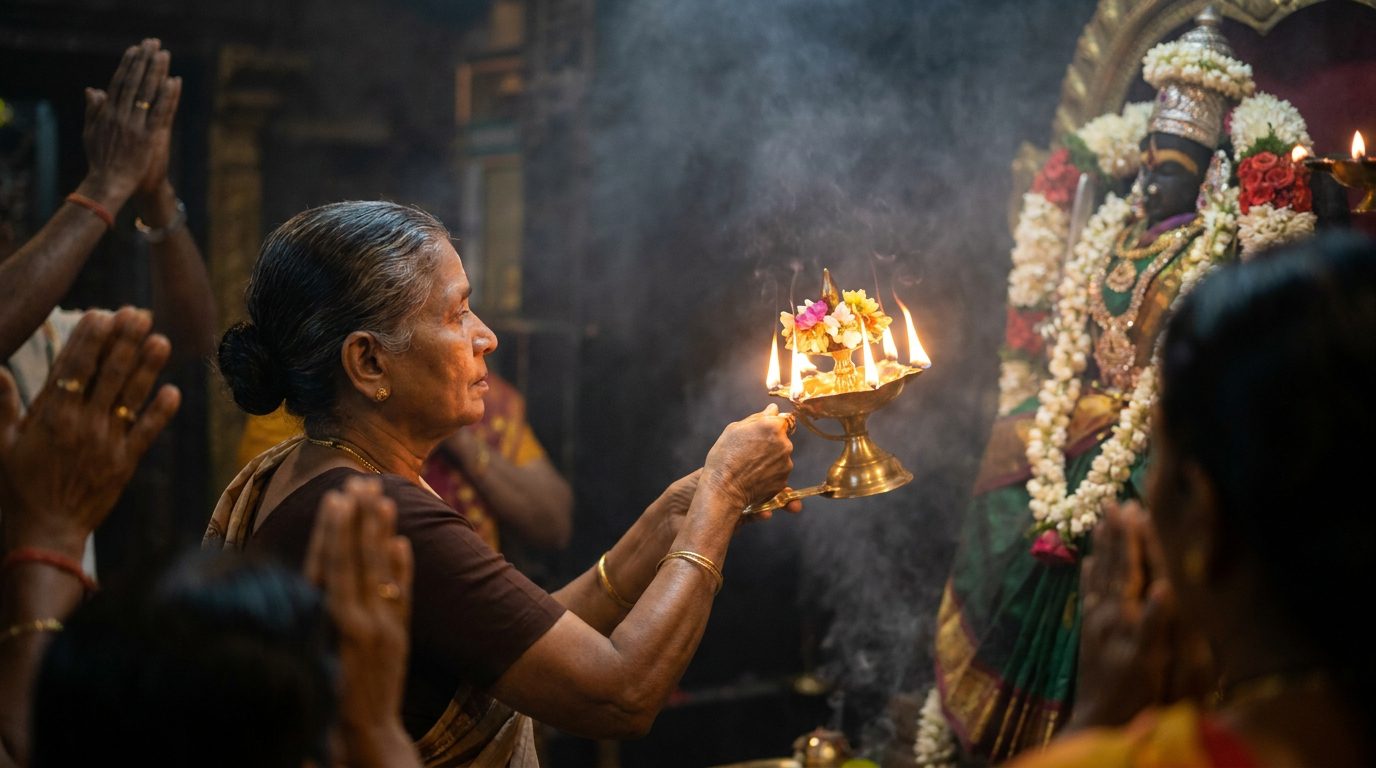
Arati, sometimes spelled aarti or arati, is a sacred offering of love to the Lord. In the Bhakti Yoga tradition, arati is a devotional ceremony in which light, incense, water, flowers, music, and heartfelt prayers are offered to God.
The word arati comes from Sanskrit and is often understood as an offering that removes darkness, fear, and inauspiciousness. Most commonly, it refers to the waving of a lamp before the Lord, accompanied by singing, bells, and prayer.
But arati is much more than a ritual.
At its heart, arati is a moment of relationship. It is the soul turning toward God and saying, “I am here. Please accept this small offering of love.”
In Bhakti Yoga, which means “the yoga of devotion,” we learn that spiritual life is not only about philosophy or discipline. It is about loving service. Arati gives us a simple, beautiful way to practice that love with our body, mind, voice, and heart.
Whether you are new to Bhakti, grew up with arati in a temple or home, or are simply curious about devotional traditions, you are warmly welcome here. Arati is an invitation, not a performance. It is a sacred doorway into prayer, gratitude, humility, and connection with the Divine.
The Meaning and Purpose of Arati
Arati Is an Offering of Love
In Bhakti Yoga, we understand God as a person, full of beauty, compassion, wisdom, and love. Different traditions may call the Divine by different names—Krishna, Rama, Vishnu, Narayana, Radha, Shiva, Devi, Allah, Yahweh, the Supreme, or simply God.
In the Bhakti tradition, especially as taught in the Bhagavad-gita, the Supreme Lord lovingly receives even the simplest offering when it is given with devotion.
In the Bhagavad-gita 9.26, Krishna says:
“If one offers Me with love and devotion a leaf, a flower, fruit, or water, I will accept it.”
This verse is at the heart of arati. The Lord does not need our lamp, incense, water, or flowers. God is complete. But out of love, He accepts the heart behind the offering.
Arati teaches us that devotion is not measured by wealth, status, or external perfection. A small lamp offered with sincerity can become spiritually powerful.
Arati Removes Darkness
The lamp used in arati represents divine light. When we wave the lamp before the Lord, we are not “showing” God the light. Rather, we are acknowledging that all light comes from God.
The flame reminds us of wisdom, purity, and spiritual awakening. It also represents the light of devotion that can brighten the darkness of confusion, loneliness, pride, and forgetfulness.
Life can become heavy. We may carry anxiety, grief, distraction, or uncertainty. Arati gently turns our attention back to the eternal shelter of God. Even a few minutes of sincere chanting and prayer can help the heart remember, “I am not alone. I belong to the Divine.”
Arati Engages the Senses in Worship
Bhakti Yoga is deeply practical. It does not ask us to reject the world, but to spiritualize our daily life.
In arati, every sense is engaged in devotion:
- The eyes see the beautiful form of the Lord.
- The ears hear sacred mantras and kirtan, devotional singing.
- The nose smells incense and flowers.
- The hands offer lamps, water, and other items.
- The tongue chants holy names and prayers.
- The mind remembers God.
- The heart offers love.
This is one of the great gifts of Bhakti Yoga. It gives the whole person a way to participate in spiritual life.
The Spiritual Foundations of Arati in Bhakti Yoga
Bhakti Means Loving Devotion
The Sanskrit word bhakti means devotion, loving service, or heartfelt dedication to God. It is not merely emotion, though emotion may be present. It is love expressed through action.
Bhakti Yoga includes practices such as:
- Chanting the holy names of God
- Hearing sacred teachings
- Prayer
- Worship
- Meditation
- Service to others
- Offering food to God
- Remembering the Lord throughout the day
- Living with compassion and humility
Arati belongs beautifully within this path. It is not separate from daily life. Rather, it trains us to see daily life as an offering.
When we light a lamp for God, we are also learning to bring light into our relationships. When we offer incense, we are learning to make our thoughts fragrant with kindness. When we ring a bell, we are inviting the sleeping heart to awaken.
Deity Worship: Seeing God with Love
In many Bhakti temples and homes, arati is offered to a murti or vigraha, often translated as a sacred form or deity. This may be a form of Krishna, Radha, Rama, Vishnu, Narasimha, Gaura-Nitai, Jagannath, or another worshipable form of the Lord.
For someone new to the tradition, deity worship may raise questions. Are devotees worshiping a statue?
Bhakti scriptures explain that God, being unlimited, can kindly appear in a visible form to receive our service. Just as a photograph of a loved one can awaken real affection, the deity is approached with reverence as God’s merciful presence.
In Bhakti, the Lord is not limited by matter. He can be present through sound, scripture, the heart, nature, and the sacred deity form. Arati helps us relate to God personally—not as a distant idea, but as the beloved Lord who receives our care.
The Role of the Holy Name
Arati is usually accompanied by chanting. In Bhakti Yoga, chanting the names of God is considered one of the most powerful spiritual practices, especially in this age.
A common mantra is the Maha-mantra, meaning “great mantra”:
Hare Krishna Hare Krishna
Krishna Krishna Hare Hare
Hare Rama Hare Rama
Rama Rama Hare Hare
“Krishna” means the all-attractive Lord. “Rama” means the source of spiritual joy. “Hare” addresses the divine energy of the Lord, often understood as Srimati Radharani, the supreme expression of devotion.
Chanting during arati is not simply music. It is prayer. It is the heart calling out to God, asking to be engaged in loving service.
The Srimad-Bhagavatam, one of the central Bhakti scriptures, repeatedly glorifies hearing and chanting about the Lord as a path of purification and joy. Through sacred sound, the restless mind becomes gradually softened and directed toward divine love.
Check out our latest articles at https://thebhaktihouse.org/blog.
Common Items Used in Arati
The Ghee Lamp or Camphor Flame
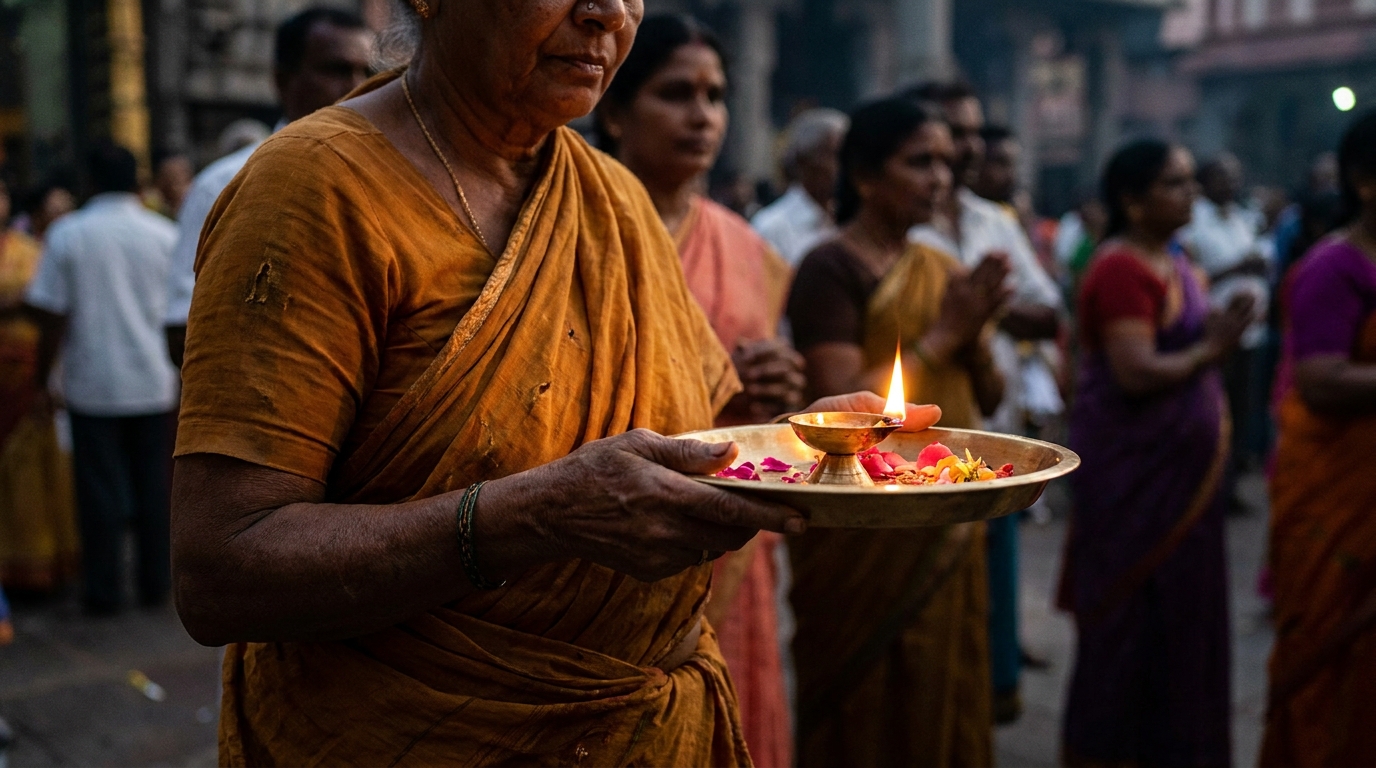
The lamp is the central offering in many arati ceremonies. Traditionally, a lamp may be made with cotton wicks and ghee, which is clarified butter. Sometimes camphor is used.
The flame represents purity, knowledge, and devotion. When offered to the Lord, it symbolizes giving the light of our consciousness back to its source.
After the lamp is offered, devotees often receive the flame by placing their hands near it and then touching their head or eyes. This is a way of honoring the Lord’s mercy and accepting spiritual purification.
Incense
Incense represents fragrance and purification. As the smoke rises, it can remind us of prayers rising toward the Divine.
When we offer incense, we may inwardly pray: “May my thoughts, words, and actions become pleasing to You.”
In a practical sense, incense also creates a sacred atmosphere. But its deeper purpose is devotional. It is not about creating a mood for ourselves alone; it is about offering something pleasing to God.
Water
Water is often offered in a small conch shell or spoon. Water symbolizes life, cleansing, and hospitality.
In traditional worship, offering water is a way of respectfully welcoming the Lord, just as we might offer water to an honored guest. In Bhakti, God is approached not as an abstract force but as the most beloved guest and the eternal master of our heart.
Cloth
A small cloth may be offered as a sign of care and respect. It represents the desire to serve the Lord personally.
In temple worship, the deity is often dressed beautifully. This is not because God needs clothing, but because love naturally wants to decorate and serve the beloved.
Flowers
Flowers are among the most beloved offerings in Bhakti. Their beauty, color, and fragrance express affection.
A flower also teaches a gentle lesson: life is temporary, but it can be offered beautifully. Our body, talents, time, and energy are also temporary. Arati invites us to offer them with devotion while we have the chance.
Chamara and Peacock Fan
In many temples, a chamara, a traditional yak-tail fan, and a peacock fan are offered. These items symbolize royal service. They express the mood that the Lord is the supreme beloved and worthy of the finest care.
At the same time, Bhakti reminds us that the greatest offering is not costly objects but sincerity.
How Arati Is Performed
Preparing the Heart
Before beginning arati, it is helpful to pause. Wash your hands if possible. Take a few deep breaths. Remember that you are approaching a sacred moment.
You may pray simply:
“My dear Lord, I do not know how to worship perfectly. Please accept this small offering. Please help me remember You with love.”
This humble mood is very important. Bhakti does not begin with expertise. It begins with sincerity.
Preparing the Space
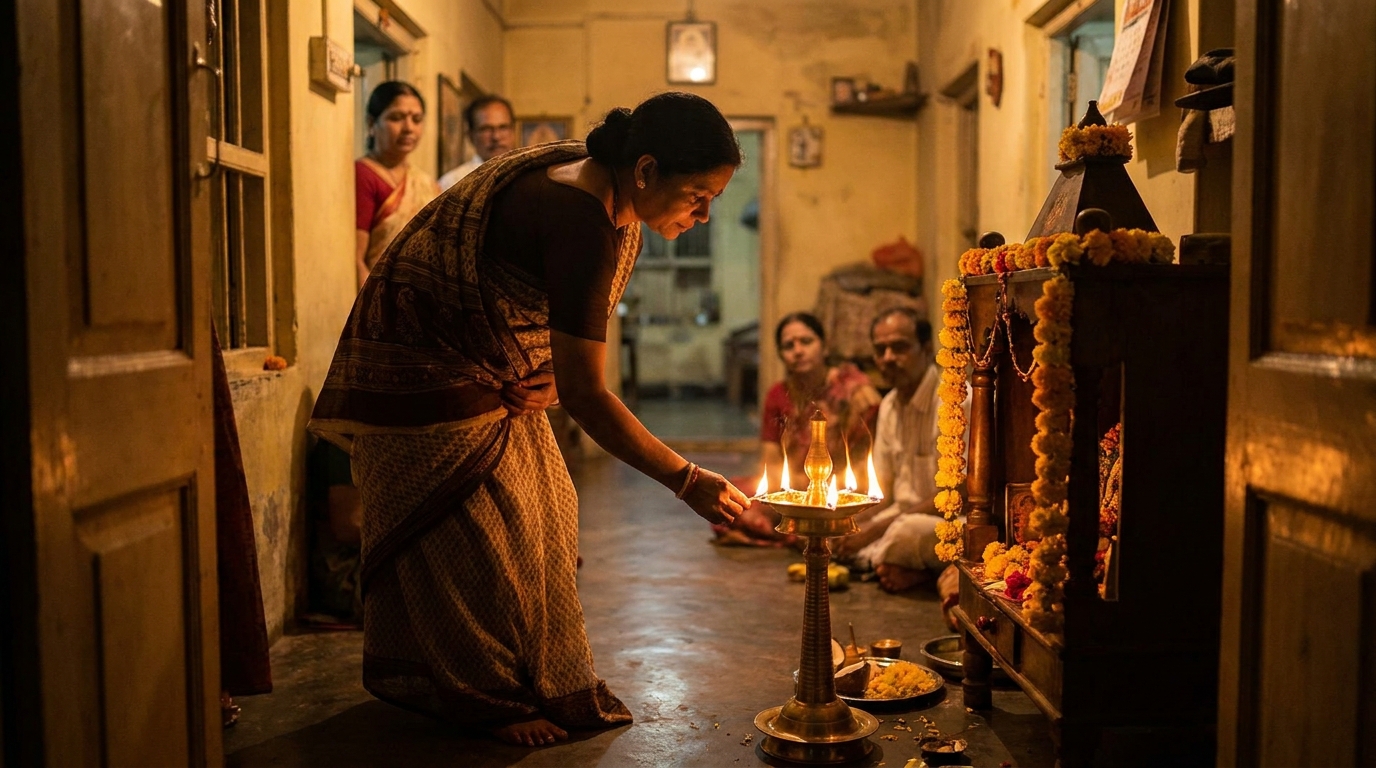
If you are performing arati at home, choose a clean, peaceful place. This may be a home altar with pictures or deities of Krishna, Radha, Rama, Vishnu, Gaura-Nitai, Jagannath, or another sacred form of God you worship.
You may include:
- A clean cloth
- A picture or deity
- Fresh flowers
- Incense
- A small lamp
- A bell
- A small cup of water
- A prayer book or kirtan recording
Keep the area simple and respectful. Do not worry if it is not elaborate. A sincere home altar can become a powerful place of spiritual nourishment.
Offering the Items
In traditional arati, the items are offered in a particular order. This can vary slightly by lineage or temple, but a common sequence is:
- Incense
- Lamp
- Water
- Cloth
- Flowers
- Chamara fan
- Peacock fan
Each item is offered by moving it in graceful circles before the Lord. Often, the offering is made first to the feet, then the navel, then the face, and then the whole form. In some traditions, the item is circled a specific number of times.
If you are new, do not become anxious about doing everything perfectly. It is wonderful to learn from qualified devotees and follow a genuine tradition. But remember: the Lord sees the heart.
Ringing the Bell
A bell is often rung during arati. The sound invites attention and marks the ceremony as sacred. It can also help the mind let go of ordinary distractions.
The bell seems to say, “Wake up, dear soul. Remember God.”
Singing During Arati
Arati is usually accompanied by devotional songs. In Krishna Bhakti traditions, devotees may sing songs such as:
- Gurvastakam, prayers to the spiritual master, during early morning arati
- Sri Sri Gurv-astaka
- Gaura Arati, glorifying Lord Chaitanya
- Jaya Radha Madhava, a beautiful song about Radha and Krishna
- The Hare Krishna Maha-mantra
If you do not know the songs, you can listen, follow along, or simply chant God’s names. The essence is prayerful participation.
Different Types of Arati
Mangala Arati
Mangala means auspicious. Mangala arati is the early morning worship, often performed before sunrise.
This arati is deeply cherished in Bhakti communities. Rising early to greet the Lord sets the tone for the day. It says, “Before I enter the world of duties, messages, plans, and responsibilities, I want to remember You.”
Mangala arati can be quiet and tender or joyful and energetic. In temples, it often includes lively kirtan, dancing, and prayers.
For home practice, even lighting a small candle in the morning and chanting for a few minutes can carry the spirit of mangala arati.
Sandhya Arati
Sandhya refers to the junctions of the day, especially evening. Evening arati helps us offer the day back to God.
After work, study, childcare, service, or daily responsibilities, the heart may feel tired or scattered. Sandhya arati gathers us again. It becomes a sacred pause between the busyness of the day and the restfulness of night.
A simple evening arati at home can include a lamp, incense, and chanting. Families may gather, children may participate, and guests may join. It is a beautiful way to make the home spiritually warm.
Gaura Arati
Gaura arati is the worship of Lord Chaitanya Mahaprabhu, also known as Gauranga, “the golden Lord.” Lord Chaitanya appeared in India in the 15th century and widely shared the chanting of the holy names of Krishna.
In many Bhakti temples, Gaura arati is performed in the evening with joyful singing and dancing. The song Jaya Jaya Goracander Aratiko Sobha describes the beauty of Lord Chaitanya and His associates during arati.
Lord Chaitanya taught that the holy name of God is available to everyone, regardless of birth, background, education, gender, nationality, or social position. This inclusive spirit is very dear to The Bhakti House mood: everyone is welcome to chant, pray, serve, and grow.
Festival Arati
During festivals such as Janmashtami, Rama Navami, Gaura Purnima, Nityananda Trayodashi, Diwali, Kartik, and Govardhan Puja, arati may be especially elaborate.
There may be many lamps, abundant flowers, special songs, and large gatherings of devotees. These festivals help the community remember divine pastimes and celebrate spiritual joy together.
Still, the principle remains simple: offer love to God and receive grace with gratitude.
Arati at Home: A Practical Guide
Start Simply
If you are beginning arati at home, start with what is manageable. You do not need a full temple arrangement.
You might begin with:
- A clean picture of Krishna, Radha-Krishna, Rama, Lord Chaitanya, or your worshipable form of God
- One small candle or ghee lamp
- One stick of incense
- A flower or leaf
- A few minutes of chanting
Offer these with humility. Sing or play a devotional song. Bow your head. Speak a prayer from your heart.
Small, steady practice is often more transformative than occasional elaborate practice.
Create a Daily Rhythm
Consistency nourishes devotion. You may choose a simple daily arati in the morning or evening. Even five to ten minutes can make a difference.
A simple home arati rhythm may look like this:
- Clean the altar area.
- Light incense and a lamp.
- Offer them before the Lord.
- Chant the Hare Krishna Maha-mantra or another sacred name.
- Offer a short prayer.
- Bow or sit quietly for a moment.
- Carry the remembrance of God into the day.
Over time, this rhythm can become a spiritual anchor.
Involve the Whole Family
Arati is a beautiful practice for families and communities. Children often love ringing bells, offering flowers, clapping, singing, or watching the lamp.
It is important to make participation joyful, not forced. Let children experience arati as a loving family offering, not as a burden.
You might explain simply: “We are offering this light to Krishna because we love Him and want to remember Him.”
Keep It Clean and Respectful
Cleanliness is part of devotional worship. Try to keep the altar area tidy. Use clean items. Offer fresh flowers when possible. Avoid placing ordinary clutter on the altar.
But do not let perfectionism stop you. If life is busy, offer what you can. Bhakti grows through sincerity and regular practice.
Offer Food Alongside Arati
Many devotees also offer food to God, called prasada after it has been offered. Prasada means mercy.
Before eating, you can place a small portion of vegetarian food before the Lord and pray, “Please accept this offering.” After a few minutes, the food is honored as prasada.
This practice helps us remember that everything comes from God and can be used in loving service.
The Inner Mood of Arati
Humility
Arati is not about showing that we are spiritual. It is about remembering that we are dependent on grace.
The more deeply we enter Bhakti, the more we understand: devotion is a gift. We cannot demand love of God. We can only pray for it, practice sincerely, and receive mercy.
A humble heart thinks, “I am small, but I am loved. I am imperfect, but I can still serve.”
Gratitude
Arati is a daily expression of thankfulness.
Thank You for this life.
Thank You for this breath.
Thank You for food, shelter, family, friendship, and guidance.
Thank You for giving me another chance to remember You.
Gratitude softens the heart. It shifts our focus from what is missing to what has been given.
Attention
In modern life, our attention is pulled in countless directions. Arati invites us to gather the mind and offer it to God.
Even if the mind wanders, gently bring it back. Watch the flame. Hear the mantra. Speak the prayer. Look at the Lord.
This is real meditation—not emptying the heart, but filling it with divine remembrance.
Service
Arati trains us in seva, a Sanskrit word meaning service. In Bhakti, service is not low or humiliating. It is the natural expression of love.
When we serve God, we become purified. When we serve others as children of God, our devotion becomes practical and compassionate.
The mood of arati should continue beyond the altar. After offering a lamp to the Lord, we can offer patience to our family, kindness to a stranger, honesty in our work, and compassion to those who are suffering.
Scriptural Reflections on Arati and Worship
Bhagavad-gita: Love Is the Essential Ingredient
As mentioned earlier, Krishna says in the Bhagavad-gita 9.26 that He accepts a leaf, flower, fruit, or water when offered with devotion.
This verse gives hope to everyone. You do not need to be wealthy. You do not need to be a scholar. You do not need to wait until your life is perfectly organized.
You can begin now.
Offer one flower. Offer one prayer. Offer one moment of sincere chanting. God sees the love.
Srimad-Bhagavatam: Hearing and Chanting Purify the Heart
The Srimad-Bhagavatam teaches that hearing and chanting about the Lord cleanses the heart and awakens devotion. Arati often includes both: we hear sacred songs and chant holy names.
This is why arati can feel so powerful. It is not only visual beauty. It is spiritual sound, sacred offering, community prayer, and remembrance combined.
When practiced regularly, arati can help us become more peaceful, more grateful, and more aware of God’s presence.
Narada Bhakti Sutra: Devotion Is Supreme Love
The Narada Bhakti Sutra, a treasured text on devotion, describes bhakti as supreme love for God. Arati is one way that supreme love is practiced in simple, embodied form.
Love needs expression. We may say we love someone, but love naturally becomes action—cooking, caring, listening, giving, remembering.
Similarly, love for God becomes chanting, worship, service, and prayer. Arati gives the heart a language of love.
Common Questions About Arati
Do I Need to Be Hindu to Attend Arati?
No. Arati is open to sincere seekers of all backgrounds. You do not have to label yourself in a particular way to respectfully participate.
If you come with curiosity, humility, and respect, you are welcome. You may stand, listen, chant, clap, pray silently, or simply observe.
Bhakti Yoga is a path of the heart. The holy name and the mercy of God are not limited by nationality, ethnicity, caste, or social status.
What Should I Do During Arati in a Temple?
If you are visiting a temple, you can follow what others are doing. Usually, devotees stand, sing, clap, bow, or gently dance.
You may see people offering respects by bowing down. You may also see the lamp brought around after it has been offered. You can receive the warmth of the flame with your hands and touch your head respectfully.
If you are unsure, it is perfectly fine to observe quietly. Devotees are usually happy to help newcomers.
What If I Do Not Know the Mantras?
That is completely okay. You can listen. You can repeat what you hear. You can chant the Hare Krishna Maha-mantra. Or you can pray in your own words.
The Lord understands every language, including the silent language of the heart.
Can I Perform Arati Without a Deity?
Yes. You may offer arati before a sacred picture of the Lord or even sit in prayer and offer a candle mentally with devotion.
In time, you may wish to learn more about home worship from experienced practitioners. But do not wait to begin remembering God.
Is Arati Required for Spiritual Growth?
Arati is a powerful and beautiful practice, but Bhakti Yoga includes many forms of devotion. Some people begin with chanting. Others begin with reading scripture, serving prasada, attending kirtan, or praying.
Arati can support spiritual growth by creating a daily rhythm of offering and remembrance. But the main principle is loving devotion.
How Arati Transforms Daily Life
It Makes the Home Sacred
A home where arati is offered becomes more than a place to eat and sleep. It becomes a place of prayer.
Even if the home is small, simple, or busy, a regular offering can create a gentle spiritual atmosphere. The sound of chanting, the fragrance of incense, and the light of the lamp remind everyone that God is welcome here.
It Softens the Heart
Regular arati can gradually soften anger, pride, and anxiety. Not all at once, and not magically in a superficial way, but steadily.
When we stand before the Lord each day, we begin to see ourselves more honestly. We notice where we need forgiveness, patience, and courage. We learn to ask for help.
This is spiritual growth: not pretending to be perfect, but becoming more surrendered and loving.
It Builds Community
Temple arati brings people together. Different ages, cultures, languages, and life stories gather around the same sacred flame and the same holy names.
In a world that often divides people, arati reminds us of our shared identity as souls, beloved parts of God.
Kirtan, prayer, and prasada after arati can create deep spiritual friendship. This is why Bhakti communities often feel like family.
It Teaches Us to Offer Everything
Eventually, arati becomes more than something we do at an altar. It becomes a way of living.
We begin to ask:
Can I offer my work to God?
Can I offer my words?
Can I offer my struggles?
Can I offer my relationships?
Can I offer my talents?
Can I offer even my mistakes and ask to be guided?
This is the deeper arati: the offering of the whole life.
A Simple Arati Practice You Can Try Today
Step 1: Choose a Sacred Focus
Place a picture of Krishna, Radha-Krishna, Lord Chaitanya, Rama, Vishnu, or another form of God meaningful to you in a clean space.
If you are still exploring, you may simply place a candle and pray to the Supreme Lord with sincerity.
Step 2: Light a Lamp or Candle
As you light it, remember that divine light is already present. You are turning toward it.
Pray: “Please bring light into my heart.”
Step 3: Offer Incense or a Flower
If you have incense, offer it gently. If not, offer a flower, leaf, or even folded hands.
Remember Krishna’s promise in the Bhagavad-gita: the Lord accepts simple offerings made with love.
Step 4: Chant or Pray
Chant the Hare Krishna Maha-mantra, sing a devotional song, or speak honestly to God.
You might pray:
“My dear Lord, please guide me. Please help me serve You and others with love. Please help me remember You today.”
Step 5: Sit in Gratitude
After the offering, sit quietly for a moment. Let the heart receive.
Spiritual life is not only speaking to God. It is also listening, noticing, and allowing grace to work within us.
Arati as a Path of Love
Arati is a complete guide in itself because it teaches the whole movement of Bhakti Yoga.
We receive everything from God.
We offer something back with love.
God accepts the love.
The heart becomes purified.
We learn to serve more deeply.
This is the beautiful cycle of devotion.
The lamp may be small, but the meaning is vast. The song may be simple, but the holy name carries divine presence. The offering may seem ordinary, but when given with love, it becomes spiritual.
Please do not feel that you must be advanced to begin. Bhakti begins wherever you are. With questions, with longing, with doubt, with gratitude, with tears, with joy—come as you are.
Arati welcomes the whole person into relationship with God.
At The Bhakti House, we honor the sacred wisdom of the Bhakti tradition while warmly welcoming sincere seekers from every background. Whether you are ready to attend temple arati, begin a small home practice, chant one round of mantra, offer one flower, serve one person, or simply whisper one prayer, your step matters.
May the light of arati remind you that God’s love is near, patient, and always inviting you home. Everyone is welcome to take one sincere step toward God today.
FAQs
What is Arati?
Arati, also spelled as Aarti, is a Hindu religious ritual of worship, a part of puja, in which light from wicks soaked in ghee or camphor is offered to one or more deities.
What is the significance of Arati?
Arati is a way to show reverence and devotion to the deities. It is believed to dispel darkness (ignorance) and bring in the light of knowledge and wisdom.
When is Arati performed?
Arati is performed at the end of a puja or worship ceremony, usually in the morning and evening. It can also be performed during special occasions and festivals.
How is Arati performed?
During Arati, a plate with a lit lamp or candle is circled around the deity or deities, accompanied by the ringing of bells and singing of devotional songs.
What are the benefits of performing Arati?
Performing Arati is believed to bring peace, prosperity, and spiritual upliftment. It is also a way to express gratitude and seek blessings from the deities.

