
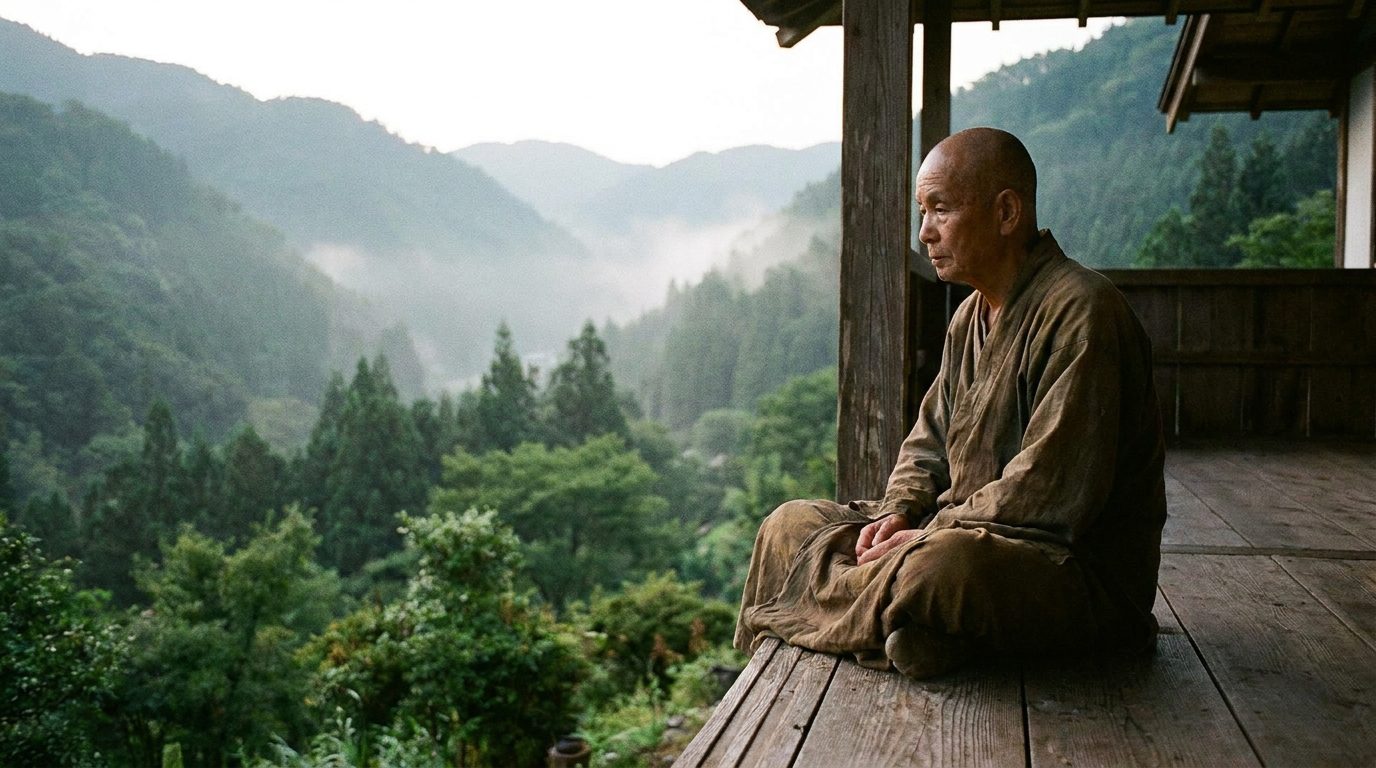
There’s a beautiful Sanskrit word that often gets misunderstood, and it’s one that can truly change how we walk through this world. That word is Vairāgya (pronounced “vai-RAHG-ya”), and it simply means detachment — but not the cold, distant kind you might imagine.
Vairāgya isn’t about shutting down your heart. It’s not about becoming a stone. It’s actually about freeing your heart so completely that you can love more deeply, serve more genuinely, and draw closer to God without the heavy chains of attachment pulling you in every direction.
At The Bhakti House, we believe that real spiritual growth happens when knowledge meets love. And Vairāgya, when understood through the lens of Bhakti (devotion), becomes one of the most tender and liberating practices on the spiritual path. So let’s explore this together — gently, honestly, and with open hearts.
At its root, Vairāgya comes from the Sanskrit word rāga, which means attachment, passion, or coloring of the mind. The prefix vi- suggests moving away from or beyond. So Vairāgya literally means “beyond attachment” — a state where the heart is no longer controlled by the push and pull of worldly desires.
But here’s the part that matters most: Vairāgya is not the absence of feeling. It’s the presence of freedom.
Think of it this way. When you hold a bird tightly in your fist, you might feel like you possess it — but the bird suffers, and so does your hand. When you open your palm, the bird is free, and so are you. That open hand is Vairāgya. You haven’t stopped caring about the bird. You’ve simply stopped clutching.
The great Bhakti teacher Śrīla Rūpa Gosvāmī described a specific type of detachment that arises naturally on the devotional path. He called it yukta-vairāgya — balanced, engaged detachment. This means we don’t reject the world. Instead, we learn to use everything in the service of God and in the spirit of love.
Vairāgya in the Bhagavad Gītā
Lord Krishna speaks about detachment throughout the Bhagavad Gītā, but one verse captures its essence with striking clarity:
> “One who is not attached to the fruits of their actions, who acts as duty requires, is a true renunciant and a true yogi — not one who merely gives up all activities.”
> — Bhagavad Gītā 6.1
This verse is so important because it tells us that real detachment isn’t about running away from life. It’s about changing our relationship with life. We still act. We still love. We still participate fully. But we offer the results to God, trusting that whatever comes is part of a larger, more beautiful plan than we can see.
Vairāgya in the Bhāgavata Purāṇa
The Śrīmad Bhāgavatam, one of the most cherished scriptures in the Bhakti tradition, is essentially a love story between the soul and God. And throughout its pages, Vairāgya appears again and again — not as a harsh discipline, but as a natural flowering of devotion.
When the heart becomes absorbed in love for God, the grip of material attachments loosens on its own, much like how a person who has found a feast naturally loses interest in crumbs. The Bhāgavatam (1.2.7) teaches:
> “By rendering devotional service unto the Supreme Lord, one immediately acquires causeless knowledge and detachment from the world.”
Notice the word causeless. This detachment isn’t forced or manufactured through willpower alone. It arises naturally, like a sunrise, when devotion fills the heart.
The Difference Between Detachment and Indifference
This is perhaps the most important distinction we can make, and it’s where many seekers get confused — sometimes painfully so.
Indifference says: “I don’t care.”
Detachment says: “I care deeply, but I’m not controlled by the outcome.”
Indifference is cold. It shuts people out. It builds walls.
Detachment is warm. It opens doors. It builds trust — especially trust in God.
When someone practices indifference and calls it spirituality, they often become distant from the people around them, disconnected from their own emotions, and ironically, more attached than ever — just to the idea of being unattached. This kind of spiritual bypassing can cause real harm.
True Vairāgya, especially in the Bhakti tradition, looks completely different. A devotee with genuine detachment might cry during prayer, laugh with children, grieve a loss, or work tirelessly in service — all while holding an inner peace that doesn’t depend on circumstances. Their heart is fully alive, but their anchor is in God rather than in the shifting sands of this world.
A Practical Example
Imagine two gardeners planting seeds. The first gardener plants seeds and then sits anxiously by the soil every day, digging them up to check if they’re growing, losing sleep over whether the rain will come, and becoming devastated if a single plant wilts. The second gardener plants the seeds with love, waters them faithfully, and then trusts the sun and the soil to do their work. When storms come, she doesn’t collapse — she replants with the same love.
Both gardeners care about their gardens. But only the second one is practicing Vairāgya. She gives her best and surrenders the rest.
Why Vairāgya Matters on the Bhakti Path
You might wonder: if Bhakti is all about love and devotion, why do we need detachment at all? Isn’t love the opposite of letting go?
This is such a beautiful question, and the answer reveals something profound about the nature of spiritual love.
We practice Vairāgya not to love less, but to love better.
When we’re entangled in attachments — to status, possessions, approval, comfort, or even our own ideas of how life should look — our love becomes conditional. We love people for what they give us. We serve God for what we hope to receive. Our relationships become transactions rather than offerings.
Vairāgya gently untangles those knots. It creates space in the heart for prema — pure, unconditional divine love — to grow.
Vairāgya and Chanting
One of the most accessible practices in Bhakti Yoga is chanting the Holy Names of God, often called Kīrtana (congregational singing) or Japa (personal meditation on a mantra). And Vairāgya plays a quiet but essential role in this practice.
When we sit down to chant, the mind wanders. It pulls us toward worries, plans, memories, desires. Vairāgya is the gentle hand that brings us back — not with frustration, but with patience. Each time we return our attention to the sacred sound, we are practicing detachment in its purest form: letting go of mental noise to be present with God.
Śrī Caitanya Mahāprabhu, the great 15th-century Bhakti saint, taught that chanting with sincerity naturally produces both bhakti (devotion) and vairāgya (detachment). They arise together, like two wings of a bird. You don’t need to manufacture detachment separately — simply chant with an open heart, and the freedom will come.
Vairāgya and Service (Sevā)
Service, or Sevā, is the heartbeat of Bhakti practice. Whether it’s cooking a meal for others, cleaning a temple space, caring for a neighbor, or simply listening to someone who needs to be heard — Sevā is love in action.
Vairāgya in service means offering your efforts without demanding recognition. It means serving even when no one notices, even when it’s inconvenient, even when you’d rather not. It means finding joy not in the applause, but in the act of giving itself — because the giving is your prayer.
This kind of selfless service purifies the heart like nothing else can.
Sure, here is the sentence with the clickable link:
Check out our blog for more posts at more posts.
Common Misconceptions About Vairāgya
Let’s lovingly clear up a few misunderstandings that often surround this teaching, because getting this right can save a lot of unnecessary suffering on the spiritual journey.
“Detachment Means I Shouldn’t Enjoy Anything”
Not at all. The Bhakti path is full of joy — the joy of kīrtana, of prasādam (sacred food offered to God), of community, of nature, of creative expression in God’s service. Vairāgya doesn’t ask you to stop enjoying life. It asks you to stop depending on enjoyment for your sense of self-worth or peace.
Enjoy the sunrise. Savor the meal. Celebrate with your loved ones. Just remember that your deepest happiness doesn’t come from any of these things — it comes from your connection with the Divine.
“Detachment Means I Should Leave My Family and Responsibilities”
Some spiritual traditions emphasize physical renunciation, and there’s certainly a time and place for that. But in the Bhakti tradition, your family, your work, and your daily responsibilities can all be sacred ground for practicing devotion and detachment.
You don’t have to go to a cave in the Himalayas. You can practice Vairāgya while cooking dinner, while sitting in traffic, while holding your child. In fact, these everyday moments are often the most powerful teachers.
“If I’m Still Struggling with Attachment, I Must Be Failing”
Oh, dear friend — please hear this. Vairāgya is not a switch you flip. It’s a garden you tend. Some days the weeds of attachment grow faster than you can pull them. That’s okay. That’s human. The very fact that you’re aware of your attachments and gently working to loosen their grip means you are already on the path.
The Bhagavad Gītā (6.25) encourages us: “Gradually, step by step, one should become situated in trance by means of intelligence sustained by full conviction, and the mind should be fixed on the Self alone and should think of nothing else.”
Gradually. Step by step. There’s so much grace in those words.
How to Cultivate Vairāgya in Daily Life
So how do we actually practice this? Here are some gentle, practical suggestions rooted in the Bhakti tradition.
Start Your Day with Prayer or Chanting
Even five minutes of Japa or a simple prayer in the morning can set the tone for your whole day. When you begin by turning your heart toward God, you create an inner anchor that helps you navigate whatever comes with more steadiness and grace.
Practice Offering the Results of Your Actions
Before starting a task — whether it’s a work project, a conversation, or a creative endeavor — silently offer it to God. Say in your heart: “This is for You. Whatever comes of it, I trust You.” This small act of surrender is Vairāgya in motion.
Spend Time in Satsaṅga (Spiritual Community)
The company we keep shapes our consciousness. Being around other seekers who are also trying to live with devotion and detachment strengthens our own practice. At The Bhakti House, we deeply believe in the power of coming together — to chant, to share, to support one another on this path.
Reflect on Impermanence with a Soft Heart
This isn’t meant to be morbid. But gently reminding yourself that everything in this material world is temporary can help loosen the grip of attachment. Not because life doesn’t matter — it matters immensely — but because recognizing impermanence helps us treasure each moment without clinging to it.
Be Patient and Kind with Yourself
This might be the most important practice of all. Vairāgya grows in the soil of self-compassion. When you stumble, when old attachments flare up, when the mind gets noisy — be gentle. God is not keeping score. God is cheering you on.
Vairāgya as an Act of Love
Here is the truth that ties everything together: Vairāgya, practiced through Bhakti, is ultimately an act of love.
It’s the love that says, “God, I trust You more than I trust my fears.” It’s the love that opens its hands and offers everything back to the Source. It’s the love that doesn’t run from the world but walks through it with eyes fixed on something eternal.
The great Bhakti saints — Mīrābāī, Prahlāda, the Gopīs of Vrindāvan, Hanumān — were not cold or indifferent people. They were radiant with love. They laughed, they wept, they danced, they served. And they were utterly free — because their hearts belonged entirely to God.
That’s the Vairāgya we’re invited into. Not the gray, lifeless kind. The kind that’s so full of love it has no room left for fear.
You Are Welcome Here
Wherever you are on your journey — whether you’re brand-new to these ideas or you’ve been walking this path for decades — please know that you are welcome here. You don’t need to have it all figured out. You don’t need to be perfectly detached or endlessly devoted.
You just need to take one sincere step. One honest prayer. One moment of letting go. One sacred Name chanted from the heart.
God meets us wherever we are. And the beautiful thing about Vairāgya is that it doesn’t ask us to become someone we’re not. It asks us to become who we truly are — free, loving, and eternally connected to the Divine.
Take that one step today. Chant. Pray. Serve. Let go just a little. And trust that the rest will unfold in ways more beautiful than you can imagine.
With love and gratitude from all of us at The Bhakti House — you belong here. 🙏

