
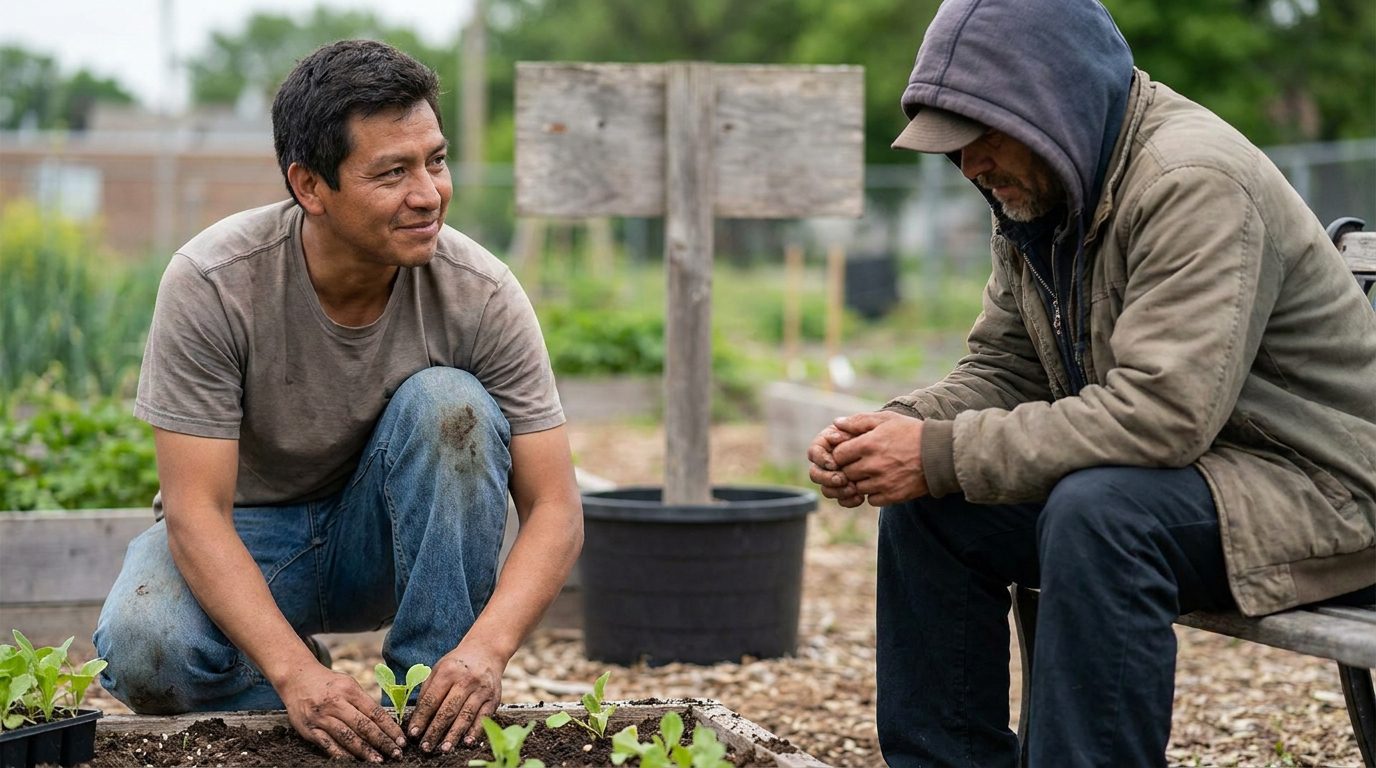
Have you ever noticed how some moments in your day feel sacred — a quiet sunrise, a kind word from a stranger, the laughter of a child — while the rest can feel like a long list of tasks to check off? What if every single moment, even the ordinary ones, could become something sacred? What if washing the dishes, driving to work, or sharing a meal could become an act of love offered to God?
In the beautiful tradition of Bhakti Yoga — the path of devotion and love — this isn’t just a poetic idea. It’s a living, breathing practice. The ancient Bhakti scriptures teach us that we don’t need to leave our daily lives behind to find God. Instead, we can invite God into everything we do, transforming our entire day into a loving offering.
Whether you’re new to spirituality or you’ve been walking this path for years, this article is for you. Let’s explore together how to gently weave devotion into every part of your day — not with perfection, but with sincerity and love.
In Bhakti Yoga, the word “arpana” (pronounced ar-PAN-ah) means “offering.” It’s the beautiful act of dedicating something to God — not out of obligation, but out of love. Just as you might lovingly prepare a meal for someone you adore, arpana is about pouring your heart into whatever you do and gently placing it at the feet of the Divine.
In the Bhagavad Gita, one of the most cherished scriptures in the Bhakti tradition, Lord Krishna tenderly says:
> “Whatever you do, whatever you eat, whatever you offer or give away, and whatever austerities you perform — do that as an offering to Me.” (Bhagavad Gita 9.27)
This verse is so wonderfully inclusive. It doesn’t say “only your prayers” or “only your time in the temple.” It says whatever you do. That means your morning coffee, your work emails, your conversations with loved ones, even your struggles — all of it can become sacred when offered with a loving heart.
The Heart Behind the Offering
The key here isn’t perfection. It’s intention. God doesn’t need our offerings — He is complete in every way. But we need the practice of offering. It softens our hearts. It reminds us that we’re not alone. It turns our attention away from our ego and toward something infinitely greater and more loving than ourselves.
Think of it this way: when a small child draws a picture and runs to give it to their parent, the drawing itself may be simple, but the love behind it makes it priceless. That’s how God receives our offerings. It’s the love that matters.
You Don’t Have to Be Perfect to Begin
One of the most beautiful things about Bhakti is that it meets you exactly where you are. You don’t have to have a perfect meditation practice. You don’t need to know Sanskrit. You don’t need to have your life “figured out.” All you need is a sincere desire to connect with God, even if that desire feels small or uncertain.
As the great Bhakti saint Srila Rupa Goswami taught, devotion begins with even the smallest step taken in sincerity. A single honest prayer, a moment of gratitude, a whispered name of God — these are not small things. In the eyes of the Divine, they are everything.
Starting Your Morning with Sacred Intention
The way you begin your morning often sets the tone for the rest of your day. In Bhakti, mornings are considered especially auspicious — a quiet, tender time when the world is still and the heart is naturally more open.
A Simple Morning Prayer
You don’t need an elaborate ritual to start your day with devotion. Even before you get out of bed, you can close your eyes, place your hand on your heart, and offer a simple prayer:
“Dear Lord, I offer this day to You. Please guide my thoughts, my words, and my actions. Let everything I do today be an expression of love for You.”
That’s it. No special words are required. God hears the language of the heart more clearly than any formal prayer.
Chanting as a Morning Anchor
In Bhakti Yoga, kirtan and japa are two beloved practices of chanting God’s holy names. Kirtan is chanting together with music, while japa is the quiet, personal practice of repeating a mantra (a sacred sound or name of God) on prayer beads.
The Maha Mantra — Hare Krishna, Hare Krishna, Krishna Krishna, Hare Hare, Hare Rama, Hare Rama, Rama Rama, Hare Hare — is considered the most powerful mantra for this age. Chanting it, even for just a few minutes each morning, is like planting a seed of devotion that blossoms throughout your entire day.
The word “Hare” (pronounced HAH-ray) is a calling out to God’s divine energy of love. “Krishna” means the all-attractive Supreme Person, and “Rama” means the source of all joy. So when you chant this mantra, you’re essentially saying, “Dear Lord, dear Beloved, please engage me in Your loving service.”
Offering Your First Moments
Try offering the very first sip of water or the first bite of food to God before you take it for yourself. In the Bhakti tradition, food that is lovingly prepared and offered to God becomes prasadam (pronounced pra-SAH-dam), which means “mercy.” It’s no longer just food — it’s grace. Even if you simply pause before eating and say, “This is for You, Lord,” you’ve transformed an ordinary act into something sacred.
Transforming Work and Daily Tasks into Devotion
For most of us, a large portion of our day is spent working, running errands, cooking, cleaning, and managing responsibilities. It’s easy to feel like these hours are “unspiritual” — but Bhakti teaches us the exact opposite.
The Yoga of Action
The Bhagavad Gita introduces a powerful concept called Karma Yoga — the yoga of action. But in the Bhakti context, it goes even deeper. It’s not just about doing good deeds; it’s about doing everything for God’s pleasure.
When you shift your motivation from “I’m doing this for myself” or “I’m doing this because I have to” to “I’m doing this as a loving offering,” something miraculous happens. The same tasks that once felt burdensome begin to feel lighter. There’s a sweetness that enters your work when you know it’s being received by someone who loves you unconditionally.
Practical Ways to Offer Your Work
Here are a few simple ways to bring devotion into your workday:
- Before starting a task, take a breath and silently say, “I offer this to You.”
- While cooking, play devotional music or chant softly. Imagine you’re cooking for God.
- While commuting, listen to kirtan, Bhakti lectures, or simply chant the Maha Mantra.
- When facing a difficult conversation, ask God for patience and compassion.
- At the end of your workday, take a moment to offer the results — good or imperfect — to God.
Finding God in the Mundane
There’s a story often told in Bhakti circles about a devotee who asked a saint, “How can I think of God all the time when I have so much to do?” The saint smiled and said, “Do you ever forget to breathe? Thinking of God can become just as natural — not by force, but by love.”
This is the gentle magic of Bhakti. It doesn’t ask you to abandon your life. It asks you to bring God into your life, one moment at a time.
Sure, here is the sentence with the clickable link:
Check out our blog for more posts at more posts.
Serving Others as an Offering to God
One of the most powerful ways to transform your day into an offering is through seva (pronounced SAY-vah), which means “selfless service.” In Bhakti, every living being is seen as a beloved child of God. So when you serve another person — with kindness, with presence, with care — you’re serving God Himself.
The Eyes of Love
The Srimad Bhagavatam, one of the most important Bhakti scriptures, teaches that a true devotee sees every living being with equal vision, recognizing the presence of God within all hearts. This doesn’t mean we ignore differences or injustices — it means we treat every person with dignity, compassion, and respect because we understand their inherent spiritual worth.
Small Acts, Big Devotion
Seva doesn’t have to be grand. It can be:
- Listening wholeheartedly when someone needs to talk
- Preparing a meal for a neighbor going through a hard time
- Offering a genuine smile to a stranger
- Volunteering your time for a cause you believe in
- Simply being patient with someone who is struggling
When you perform these acts with the consciousness that you’re serving God through serving His children, even the smallest gesture becomes a profound offering.
Service Within Your Own Home
Some of the deepest seva happens within our own families. Caring for an aging parent, raising children with love and patience, supporting a spouse through difficult times — these are not interruptions to your spiritual life. They are your spiritual life. When done with devotion, the home becomes a temple and every act of care becomes worship.
Closing Your Day with Gratitude and Surrender
Just as we begin the day with intention, we can close it with gratitude and surrender. The evening hours offer a precious opportunity to reflect, give thanks, and release the day into God’s hands.
An Evening Reflection
Before you sleep, take a few quiet moments to review your day. Not to judge yourself, but to offer it all — the beautiful parts and the messy parts — to God.
You might reflect:
- Where did I feel God’s presence today?
- Where did I forget? And can I offer that forgetfulness to God too?
- What am I grateful for?
The Beauty of Surrender
In Bhakti, sharanagati (pronounced shah-rah-NAH-gah-tee) means “complete surrender.” It’s the recognition that we are not the ultimate controllers of our lives — God is. And surrendering to His love is not weakness. It’s the greatest strength.
As you lay your head down at night, you can whisper, “Whatever happened today, I offer it to You. Whatever tomorrow brings, I trust in Your love.”
This simple act of surrender can bring a peace that no amount of planning or worrying ever could.
Letting God Carry the Weight
So many of us carry the weight of our days — the stress, the disappointments, the anxious thoughts about tomorrow. But Bhakti gently reminds us that we were never meant to carry it all alone. God is always here, always present, always ready to receive whatever we’re willing to offer — including our burdens.
You Are Already on the Path
If you’ve read this far, something in your heart is already stirring. That stirring — that longing for something deeper, something more loving, something sacred — is itself a gift from God. It’s His gentle way of calling you closer.
You don’t have to transform your entire life overnight. You don’t have to do everything perfectly. Bhakti is not about perfection. It’s about love. And love grows one sincere moment at a time.
So here is our humble invitation from The Bhakti House to you: take one small, sincere step today. Offer one prayer. Chant one round of the Maha Mantra. Cook one meal with God in mind. Serve one person with a full heart. Pause once and simply say, “This is for You, Lord.”
That one step is enough. God will meet you there. He always does.
Everyone is welcome here — no matter your background, your tradition, your doubts, or your questions. The door of the heart is always open, and the path of love has room for all of us.
With love and devotion,
The Bhakti House �DiplomaHome

