
In today’s busy world, keeping the mind peaceful, steady, and connected with the Divine can be difficult. Work, family responsibilities, mobile phones, news, and daily worries constantly pull our attention outward. A simple daily bhakti practice can provide a stable spiritual foundation amid these distractions.
You do not need to spend hours performing rituals or follow complicated rules to begin practicing bhakti. Even a few minutes each day can make a meaningful difference. What matters most is consistency, sincerity, and a genuine desire to remember and serve the Divine.
What Is a Daily Bhakti Routine?
A daily bhakti routine is a regular period of time dedicated to spiritual practices such as prayer, chanting, mantra meditation, scripture reading, kirtan, contemplation, or service.
The purpose is not merely to complete a religious obligation. The deeper purpose is to:
- Direct the mind toward the Divine
- Purify one’s thoughts and actions
- Develop peace and emotional balance
- Cultivate gratitude, humility, and compassion
- Recognize the presence of the Divine throughout daily life
A healthy bhakti routine should be simple, practical, and suitable for your current lifestyle.
1. Begin with a Small Commitment
When people first become enthusiastic about spiritual life, they sometimes make very large commitments. They may decide to meditate for an hour, read several chapters of scripture, and complete a lengthy chanting practice every day.
When they cannot maintain that schedule, they may become discouraged and abandon the routine completely.
Begin with only 10 or 15 minutes.
For example:
- Two minutes of prayer
- Five minutes of mantra meditation
- Five minutes of spiritual reading
- Two minutes of quiet reflection
A small practice performed consistently is more valuable than an ambitious practice performed only occasionally.
2. Choose a Regular Time
The early morning is often considered especially suitable for bhakti because the surroundings are quiet and the mind has not yet become absorbed in the activities of the day.
However, the best time is ultimately the time you can maintain consistently. You may practice in the evening, during a lunch break, or before going to sleep.
You can also connect your spiritual practice to an existing daily habit, such as:
- Chanting after bathing
- Praying before morning tea
- Expressing gratitude before meals
- Reading scripture before bed
When bhakti is connected to an established habit, it becomes easier to remember and maintain.
3. Create a Peaceful Sacred Space
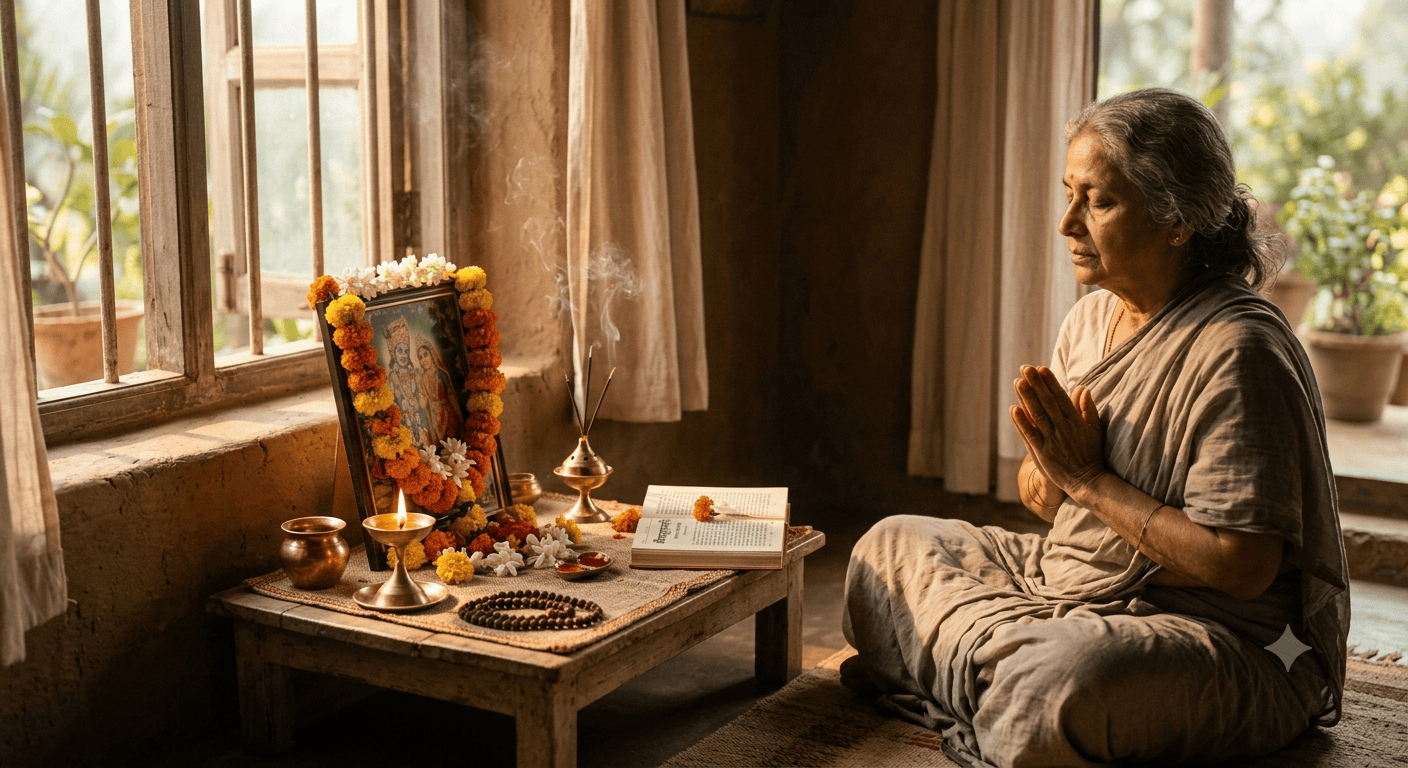
Choose a clean and quiet place in your home for your daily practice. It does not need to be large or elaborate. A small table, meditation seat, shelf, or peaceful corner of a room is enough.
Depending on your tradition and personal devotion, you may place the following items there:
- A picture or sacred form of the Divine
- A lamp or candle
- Fresh flowers
- Prayer beads
- A spiritual book
- Incense or another gentle fragrance
Keep the area clean and orderly. When you return to the same place each day, the mind gradually begins to associate that space with peace, prayer, and spiritual attention.
4. Begin with Prayer
Start your practice with a simple prayer. Prayer does not need to be written in Sanskrit or expressed in formal religious language. You may speak honestly in your own words.
For example:
“Dear Lord, please help me think clearly, speak kindly, and act with wisdom today. Protect my mind from anger, pride, and unnecessary anxiety. Please give me the desire to serve You and to treat every living being with compassion.”
Sincere prayer softens the heart and reminds us that life does not depend entirely upon our personal control.
5. Chant the Holy Names
Mantra meditation can become one of the simplest and most powerful elements of a daily bhakti routine. You may chant a sacred name or mantra according to your spiritual tradition.
One widely practiced mantra is:
Hare Krishna, Hare Krishna
Krishna Krishna, Hare Hare
Hare Rama, Hare Rama
Rama Rama, Hare Hare
Chant slowly and attentively. Do not merely repeat the words mechanically. Listen carefully to each sound.
When the mind wanders, do not become frustrated. Gently return your attention to the mantra.
Begin with five minutes. As the practice becomes natural, you may gradually increase the amount of time or the number of repetitions.
6. Read a Small Amount of Scripture
Reading a few lines from an authentic spiritual text each day brings understanding and depth to devotional practice.
You may read from:
- The Bhagavad Gita
- The Srimad Bhagavatam
- The Ramcharitmanas
- Accessible explanations of the Upanishads
- The teachings of saints and spiritual teachers
You do not need to read a large amount. One verse, one paragraph, or one short teaching may be enough.
After reading, ask yourself:
“How can I apply this teaching in my life today?”
This question helps spiritual knowledge move beyond the page and become part of your conduct and character.
7. Listen to or Sing Kirtan
Music provides a natural and joyful way to practice devotion. When the mind struggles to become peaceful during silent meditation or individual chanting, listening to bhajans or kirtan can help redirect it toward the Divine.
You may also sing along.
A beautiful singing voice is not required. In bhakti, sincerity and participation are more important than musical skill.
Kirtan can lighten the emotional burden of the mind, create a peaceful atmosphere, and strengthen one’s personal relationship with the holy names.
8. Offer Your Food
Bhakti does not need to be limited to a few minutes of formal prayer. It can be included in the ordinary activities of daily life.
Before eating, pause for a moment and offer the food to the Divine with gratitude.
You may say:
“Dear Lord, this food has been provided through Your grace. Please accept this offering and help me receive it with gratitude and respect.”
When food is prepared and received in a devotional mood, it becomes prasadam—sanctified food received as divine mercy.
This practice encourages gratitude, mindfulness, and self-control.
9. Make Service Part of Your Practice
Bhakti is not limited to chanting, prayer, or temple worship. Selfless service is also an essential expression of devotion.
Make a daily commitment to perform at least one small act of service, such as:
- Listening patiently to someone who is struggling
- Helping with household responsibilities
- Sharing food
- Speaking kindly to someone who feels alone
- Caring for animals
- Supporting a person in need
- Sharing spiritual encouragement
Try to remember that every living being is connected with the Divine. When service is performed with this understanding, even an ordinary action can become spiritual.
10. Reflect at the End of the Day
Before going to sleep, take two or three minutes to reflect upon the day.
Ask yourself:
- What am I grateful for today?
- When did I show patience or compassion?
- Where did I act carelessly?
- What could I do better tomorrow?
- Did I remember the Divine during the day?
The purpose of reflection is not to condemn yourself. It is to become more conscious and gradually align your life with the principles of devotion.
A Simple 15-Minute Daily Bhakti Routine
A busy person can begin with the following schedule:
First 2 minutes: Sit quietly and take a few calm breaths.
Next 2 minutes: Offer a prayer and express gratitude.
Next 5 minutes: Chant a mantra or the holy names.
Next 4 minutes: Read a short passage from the Bhagavad Gita or another spiritual text.
Final 2 minutes: Reflect on how you can apply the teaching during the day.
When more time becomes available, you may add kirtan, a longer period of chanting, worship, journaling, or additional scripture reading.
How to Remain Consistent
Interruptions are a natural part of life. Some days you may have very little time. You may be traveling, tired, unwell, or mentally distracted.
On such days, do not abandon your practice completely.
Instead, you can:
- Offer one short prayer
- Chant for one minute
- Repeat the name of the Divine several times
- Read one verse or one meaningful sentence
Bhakti should not become a burden or a source of guilt. It is a loving relationship with the Divine.
Do not compare your progress with another person’s practice. Everyone has different responsibilities, circumstances, temperaments, and stages of spiritual development.
Bhakti Is Not Separate from Daily Life
True bhakti does not remain confined to a prayer room, temple, book, or set of chanting beads. Over time, it begins to influence the way we speak, work, eat, think, and treat other people.
When we work honestly, choose patience instead of anger, forgive someone, care for another person, or offer help without expecting recognition, we are also practicing bhakti.
The ultimate goal is not merely to remember the Divine during a scheduled spiritual routine. The goal is to gradually remember the Divine throughout the entire day.
Conclusion
You do not need perfect knowledge, special qualifications, or large amounts of free time to begin a daily bhakti routine. A sincere heart and a small daily commitment are enough.
Begin with a few minutes of prayer, chanting, spiritual study, reflection, and service. Over time, this simple routine can become one of the most natural and meaningful parts of your life.
In bhakti, the most important question is not how much you have done. What matters is how sincerely, attentively, and lovingly you have done it.
Set aside ten minutes today. Sit quietly, chant the holy names, and take the first step in developing a deeper relationship with the Divine.
FAQs
What is a daily Bhakti routine?
A daily Bhakti routine is a spiritual practice in the Hindu tradition that involves devotional activities such as prayer, meditation, chanting, and reading sacred texts to cultivate a deep connection with the divine.
Why is it important to have a daily Bhakti routine?
Having a daily Bhakti routine helps individuals to deepen their spiritual connection, cultivate a sense of inner peace, and develop a greater understanding of their faith. It also provides a structured way to express devotion and gratitude towards the divine.
What are some common practices in a daily Bhakti routine?
Common practices in a daily Bhakti routine include waking up early for meditation and prayer, offering food and prayers to deities, chanting mantras, reading sacred texts, attending religious services, and performing acts of service and charity.
How can one start a daily Bhakti routine?
To start a daily Bhakti routine, one can begin by setting aside a specific time each day for devotional activities, creating a sacred space for meditation and prayer, learning and practicing mantras, and seeking guidance from spiritual teachers or mentors.
What are the benefits of maintaining a daily Bhakti routine?
Maintaining a daily Bhakti routine can lead to a greater sense of inner peace, spiritual growth, and a deeper connection with the divine. It can also provide a sense of purpose, meaning, and fulfillment in life.

