
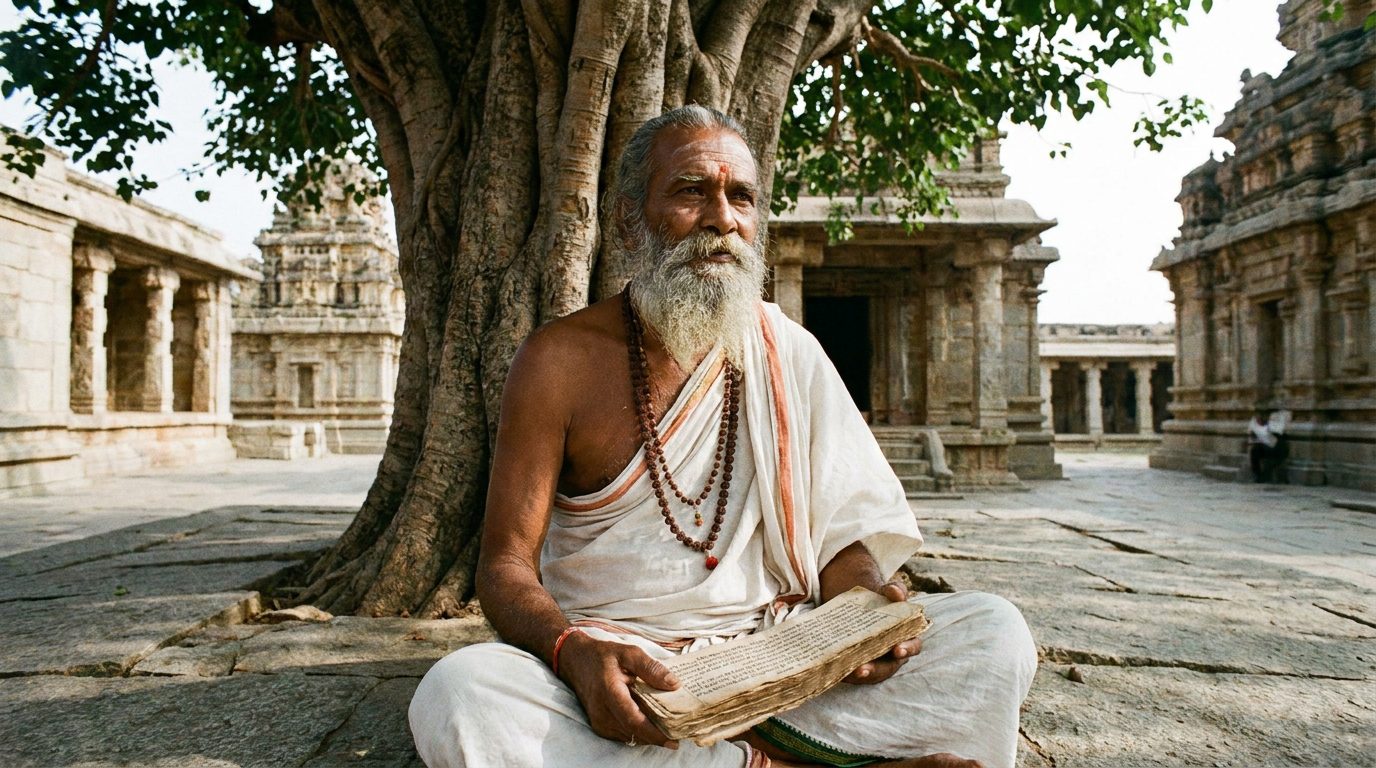
There are some souls who walk this earth and leave behind a trail of devotion so deep, so luminous, that seekers continue to follow it centuries later. Sanātana Gosvāmī is one of those rare souls. A man who gave up wealth, political power, and worldly prestige — all for the sake of love. Love for God. Love for truth. Love for every living being searching for a way home.
Whether you are brand new to the Bhakti path or have been chanting and praying for years, the life and teachings of Sanātana Gosvāmī offer something deeply personal and practical. His story reminds us that no matter where we come from or what we have done, the door to divine love is always open.
At The Bhakti House, we believe that these teachings belong to everyone. So let us walk together through the life, wisdom, and legacy of this extraordinary saint, and discover how his insights can transform our own spiritual journey — one sincere step at a time.
Sanātana Gosvāmī was born in the late 15th century in a Bengali brāhmaṇa family. Along with his younger brother Rūpa Gosvāmī, he rose to become one of the most powerful ministers in the government of Hussain Shah, the Sultan of Bengal. He was learned, influential, and respected by scholars and rulers alike.
But his heart longed for something more.
A Soul Restless for God
Despite his prestigious position, Sanātana felt a deep spiritual restlessness. He and his brother Rūpa had been quietly studying the devotional scriptures and corresponding with Śrī Caitanya Mahāprabhu — the great saint and avatāra (divine descent) of love who revived the path of Bhakti in the 16th century. Śrī Caitanya’s message was simple and revolutionary: the highest truth is not dry knowledge or rigid ritual, but pure, unconditional love for God — specifically through the chanting of the Holy Names.
When Sanātana finally met Śrī Caitanya Mahāprabhu, he surrendered completely. He asked the most honest and humble question a soul can ask:
> “ke āmi, kene āmāya jāre tāpa-traya”
> “Who am I? Why do the threefold miseries of material existence torment me?”
This question, recorded in the Śrī Caitanya-caritāmṛta (Madhya 20.102), is the beginning of one of the most profound spiritual conversations ever documented. Sanātana was not asking casually. He had left behind his entire life to receive this answer.
Renunciation Born of Love
Sanātana’s renunciation was not cold or philosophical — it was born from an overwhelming love that made everything else seem small. He literally escaped from imprisonment (the Sultan had jailed him for abandoning his post) and walked through forests and across rivers just to reach the lotus feet of his spiritual master. He arrived in torn clothes, humble and hungry, but his heart was full.
This is Bhakti. Not perfection, but sincerity. Not having it all together, but being willing to give it all up for something real.
The Foundational Teachings Sanātana Received
When Sanātana Gosvāmī sat before Śrī Caitanya Mahāprabhu, he received teachings that would become the theological foundation of Gauḍīya Vaiṣṇavism — the tradition of Bhakti Yoga that focuses on devotion to Lord Kṛṣṇa (God in His most personal, loving form).
Understanding Our True Identity
The very first thing Śrī Caitanya Mahāprabhu explained to Sanātana was the nature of the soul. In the Śrī Caitanya-caritāmṛta (Madhya 20.108–109), the Lord said:
> *”jīvera ‘svarūpa’ haya — kṛṣṇera ‘nitya-dāsa’
> kṛṣṇera ‘taṭasthā-śakti’ ‘bhedābheda-prakāśa'”*
> “It is the living entity’s constitutional position to be an eternal servant of Kṛṣṇa because he is the marginal energy of Kṛṣṇa and a manifestation simultaneously one with and different from the Lord.”
In simple words: you are not this temporary body. You are an eternal spark of the Divine, meant to live in a relationship of love with God. The soul is both part of God and yet a unique individual — like a ray of the sun that is sunshine and yet not the sun itself.
This understanding changes everything. When we know who we really are, we stop looking for fulfillment in places that can never truly satisfy us.
The Science of God’s Energies
Śrī Caitanya also taught Sanātana about the different energies of the Lord — the spiritual energy (which creates the eternal spiritual world), the material energy (which creates the temporary world we experience), and the marginal energy (the living beings, or jīvas, who can choose between the two). This framework helps us understand why there is suffering and how we can find our way back to lasting joy.
The Path of Devotion Above All Else
Perhaps the most beautiful part of these teachings is the emphasis on bhakti itself as the supreme path. Not just as a means to an end, but as both the means and the end. Love for God is the practice and love for God is the goal. As stated in the Śrīmad-Bhāgavatam (1.2.6):
> *”sa vai puṁsāṁ paro dharmo
> yato bhaktir adhokṣaje
> ahaituky apratihatā
> yayātmā suprasīdati”*
> “The supreme occupation [dharma] for all humanity is that by which men can attain to loving devotional service unto the transcendent Lord. Such devotional service must be unmotivated and uninterrupted to completely satisfy the self.”
Sanātana Gosvāmī carried this teaching in his heart and dedicated the rest of his life to sharing it.
The Literary Legacy of Sanātana Gosvāmī
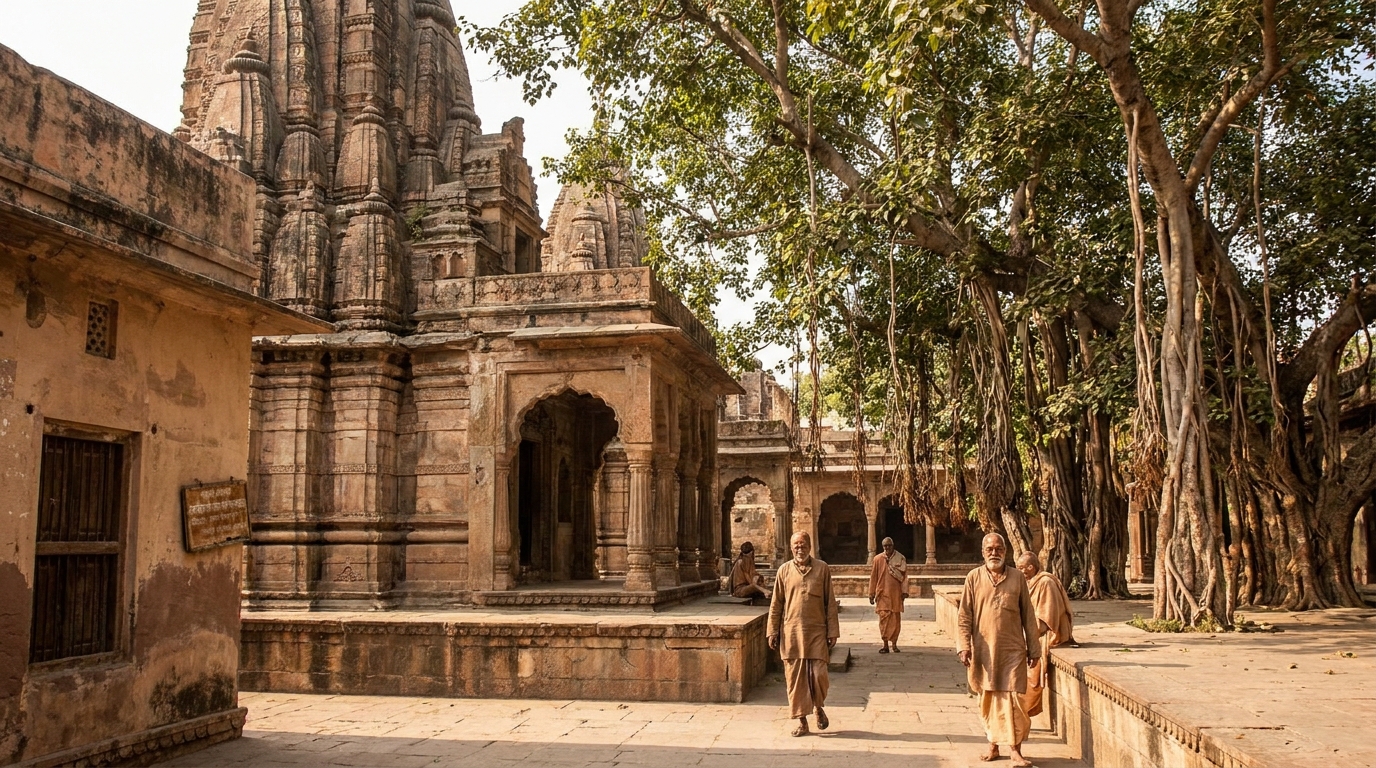
After receiving the mercy of Śrī Caitanya Mahāprabhu, Sanātana Gosvāmī moved to Vṛndāvana — the sacred land where Lord Kṛṣṇa performed His childhood pastimes — and devoted himself to writing, worship, and service.
Bṛhad-Bhāgavatāmṛta — The Great Nectar of the Lord’s Devotees
One of Sanātana Gosvāmī’s most beloved works is the Bṛhad-Bhāgavatāmṛta, which means “The Great Nectar of the Supreme Lord.” This beautiful text takes the reader on a journey through different levels of devotion — from the pious person who worships God for material blessings, all the way to the intimate cowherd friends of Kṛṣṇa in Vṛndāvana.
What makes this work so special is that it is written as a story. Through the travels of a devoted soul named Nārada (and later a devotee named Gopa-kumāra), we experience the progressive deepening of love for God. It is devotional literature at its most accessible and moving.
Hari-bhakti-vilāsa — A Guide for Devotional Life
Sanātana Gosvāmī also compiled the Hari-bhakti-vilāsa, a comprehensive guide for daily devotional practice. This text covers everything from how to chant the Holy Names to how to observe sacred days, offer prayers, and conduct worship. It provides structure and guidance so that our devotion does not remain abstract but becomes a living, breathing part of our everyday lives.
Recovering the Lost Holy Places
Along with Rūpa Gosvāmī, Sanātana played a crucial role in rediscovering and restoring the sacred sites of Vṛndāvana, many of which had been forgotten or overgrown. He identified temples, bathing places (kuṇḍas), and groves where Kṛṣṇa’s pastimes had taken place. In this way, he helped preserve the spiritual heritage of Vṛndāvana for all future generations.
Check out our website for more articles: more articles.
What We Can Learn From Sanātana Gosvāmī Today
You might be wondering — what does a 16th-century Indian saint have to do with my life today? The answer is: everything.
Humility Is the Gateway to Grace
Sanātana Gosvāmī was one of the most learned scholars and powerful leaders of his time. Yet when he came before Śrī Caitanya Mahāprabhu, he presented himself as ignorant and fallen. He said, in essence: “I don’t even know what is truly good for me. Please teach me.”
This kind of humility is not weakness. It is the most courageous thing a person can do — to admit that we need help, that we don’t have all the answers, and that we are willing to learn. In the Śrī Caitanya-caritāmṛta (Madhya 20.100), Sanātana humbly tells the Lord:
> *”‘grāmya-vyavahāre dekhe tāi ‘paṇḍita’ kari’ māne
> āpanāra hitāhita kichui nā jāni”*
> “In worldly dealings, people consider me a learned scholar, but I am so unfortunate that I do not know what is beneficial for me and what is detrimental.”
How refreshing. How real. This is where true learning begins.
Devotion Is for Everyone
Sanātana Gosvāmī’s writings emphasize again and again that Bhakti is not restricted by birth, caste, gender, or social status. The Holy Name of God is available to every living being. In the Bṛhad-Bhāgavatāmṛta, we see devotees from all walks of life — kings, sages, simple cowherds — and the conclusion is always the same: what matters is the sincerity of your love.
Small Steps Matter
Sanātana Gosvāmī’s life teaches us that the spiritual path is not about dramatic overnight transformation. After his initial meeting with Śrī Caitanya Mahāprabhu, he spent decades in Vṛndāvana — chanting, writing, serving, and worshipping. Day after day. Step by step. The depth of his realization grew through consistency, patience, and grace.
If you can chant one round of the Hare Kṛṣṇa mahā-mantra today — Hare Kṛṣṇa, Hare Kṛṣṇa, Kṛṣṇa Kṛṣṇa, Hare Hare / Hare Rāma, Hare Rāma, Rāma Rāma, Hare Hare — that is a beautiful step. If you can offer a sincere prayer before a meal, that counts. If you can read one verse from the Bhagavad-gītā or Śrīmad-Bhāgavatam and let it sit in your heart, you are walking the same path Sanātana Gosvāmī walked.
The Heart of Sanātana Gosvāmī’s Message
If we could distill the vast ocean of Sanātana Gosvāmī’s wisdom into a single drop, it would be this: you are loved, and you are meant to love.
The soul’s natural condition is not loneliness, anxiety, or confusion. It is joy. It is connection. It is an eternal relationship with the Supreme Person, Śrī Kṛṣṇa, who is not a distant, abstract force but the most intimate friend, the most loving parent, and the most beautiful beloved.
Love as the Highest Philosophy
In a world that often separates the head from the heart, Sanātana Gosvāmī shows us that the deepest philosophy and the deepest love are one and the same. His theological writings are brilliant, rigorous, and intellectually satisfying — and yet every word is soaked in devotion. He didn’t write to impress scholars. He wrote to help souls find their way home.
Service as a Way of Life
Sanātana Gosvāmī lived with almost nothing. He ate simply, dressed simply, and spent his time chanting, writing, and caring for the devotees and sacred places of Vṛndāvana. His life was an offering — every breath, every word, every action given to God and to the welfare of others.
This is sevā — devotional service. And it doesn’t require moving to a holy city or giving up your home. It can begin right where you are. Cooking a meal with love and offering it to God. Singing a devotional song with feeling. Helping a neighbor. Sharing a kind word. When our actions are connected to the Divine through love, everything becomes sacred.
An Invitation to Walk the Path
The great Sanātana Gosvāmī gave up a kingdom for a relationship with God. You don’t have to give up a kingdom. But perhaps today, you can give up a few minutes of distraction and offer them to something deeper.
Chant a mantra. Read a verse. Sit quietly and talk to God — in whatever language feels most natural to you. Ask the same question Sanātana asked: “Who am I? What is truly good for me?” And then listen. The answers may come slowly, softly, through experience and grace — but they will come.
At The Bhakti House, we believe that every soul is a beloved child of God, and that no one is too far away, too broken, or too late to begin. Sanātana Gosvāmī’s life is proof. He walked away from everything the world told him was valuable and found something infinitely more precious.
You are welcome here. Wherever you are on your journey, whatever tradition you come from, whatever doubts or hopes you carry — you are welcome. Take one sincere step toward God, and watch as God takes ten steps toward you.
FAQs
Who is Sanātana Gosvāmī?
Sanātana Gosvāmī was a prominent saint, theologian, and philosopher in the Gaudiya Vaishnavism tradition of Hinduism. He was a key figure in the 16th century Bhakti movement in India.
What were Sanātana Gosvāmī’s contributions?
Sanātana Gosvāmī is known for his extensive writings on theology, philosophy, and devotional practices. He also played a significant role in establishing important pilgrimage sites and temples in Vrindavan, India.
What is Sanātana Gosvāmī’s significance in the Gaudiya Vaishnavism tradition?
Sanātana Gosvāmī is revered as one of the six Goswamis of Vrindavan, who are considered to be the foremost disciples of the Vaishnava saint Chaitanya Mahaprabhu. His teachings and writings continue to be influential in the Gaudiya Vaishnavism tradition.
What are some of Sanātana Gosvāmī’s notable works?
Sanātana Gosvāmī’s notable works include the Hari-bhakti-vilasa, Brihad-bhagavatamrita, and the Dig-darshini-tika. These texts are considered foundational in the Gaudiya Vaishnavism tradition.
How is Sanātana Gosvāmī honored today?
Sanātana Gosvāmī is honored through various festivals, pilgrimages, and scholarly discussions dedicated to his life and teachings. His legacy continues to be celebrated by followers of the Gaudiya Vaishnavism tradition around the world.

