
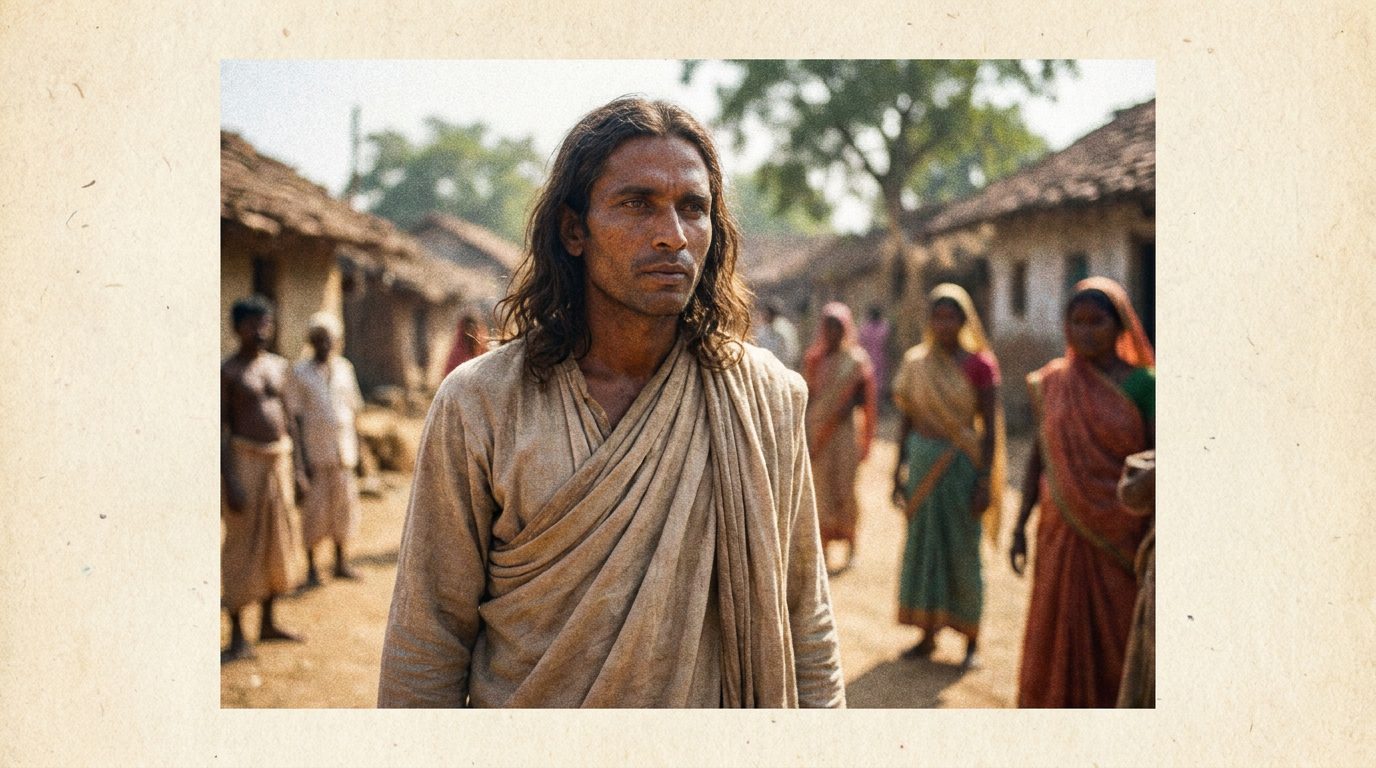
There is something deeply beautiful about the fact that when God descends into this world, He doesn’t come alone. He comes surrounded by love — by friends, companions, and devoted souls who help carry His mission forward.
Sri Caitanya Mahaprabhu, who appeared in Navadvipa, West Bengal, in 1486, is understood in the Bhakti tradition as the most merciful incarnation of the Supreme Lord. He came not as a king or warrior, but as a devotee — golden-complexioned, arms raised, tears streaming down His face, chanting the holy names of God. And with Him came an extraordinary circle of associates whose lives continue to inspire millions on the path of devotion.
At The Bhakti House, we believe that learning about these great souls isn’t just a history lesson. It’s an invitation. Their stories show us what devotion looks like when it’s lived fully — through chanting, service, humility, and boundless love.
Whether you’re new to Bhakti Yoga or have been walking this path for years, we hope you’ll find encouragement and warmth in the lives of these extraordinary pillars of devotion.
Before we explore His associates, it helps to understand who Sri Caitanya Mahaprabhu is and why His appearance is so significant.
In the Bhakti tradition, Lord Caitanya is understood as Krishna Himself appearing in the mood of His greatest devotee, Srimati Radharani. He came to experience the sweetness of divine love from the devotee’s perspective and to freely distribute that love to everyone — without condition.
His mission was beautifully simple: to spread the sankirtana movement, the congregational chanting of God’s holy names, especially the Hare Krishna maha-mantra:
Hare Krishna, Hare Krishna, Krishna Krishna, Hare Hare / Hare Rama, Hare Rama, Rama Rama, Hare Hare
The Caitanya Caritamrita, the authoritative biography of Lord Caitanya written by Krishnadasa Kaviraja Goswami, describes this mission with tremendous depth. In its pages, we meet the extraordinary souls who stood beside the Lord and helped carry His love into the world.
As stated in the Caitanya Caritamrita (Adi 1.4):
> “May the Supreme Lord who is known as the son of Śrīmatī Śacīdevī be transcendentally situated in the innermost core of your heart. Resplendent with the radiance of molten gold, He has descended in the age of Kali by His causeless mercy to bestow what no incarnation has ever offered before: the most elevated mellow of devotional service, the mellow of conjugal love.”
This verse reveals the unprecedented generosity of Lord Caitanya’s appearance. And His associates were the instruments through which that generosity flowed.
The Panca-Tattva: The Five Divine Aspects of Lord Caitanya’s Mission
At the very heart of Lord Caitanya’s movement stands the Panca-tattva — five sacred personalities who together embody the complete theology of divine love. The word Panca-tattva simply means “five truths” or “five aspects of the Absolute Truth.”
They are:
- Sri Caitanya Mahaprabhu — the Supreme Lord Himself
- Sri Nityananda Prabhu — the Lord’s first expansion, full of mercy
- Sri Advaita Acharya — the Lord’s incarnation who called Him to descend
- Sri Gadadhara Pandita — the Lord’s internal energy, pure devotion personified
- Sri Srivasa Thakura — representing the pure devotee, the ideal practitioner
Together, they are worshiped and remembered before every chanting session with this prayer:
> “Pañca-tattvātmakaṁ kṛṣṇaṁ bhakta-rūpa-svarūpakam / bhaktāvatāraṁ bhaktākhyaṁ namāmi bhakta-śaktikam”
This translates to: “I offer my obeisances unto the Supreme Lord, Kṛṣṇa, who is nondifferent from His features as a devotee, devotional incarnation, devotional manifestation, pure devotee, and devotional energy.”
(Caitanya Caritamrita, Adi 1.14)
This is important because it tells us something profound: God’s love doesn’t work in isolation. It flows through relationships, through community, through the living example of devoted hearts.
Sri Nityananda Prabhu: The Embodiment of Unconditional Mercy

The Most Compassionate Friend
If Lord Caitanya is the golden sun of divine love, then Sri Nityananda Prabhu is the rain cloud that pours that love upon everyone without discrimination.
Nityananda Prabhu, also known lovingly as Nitai, is understood as the expansion of Lord Balarama — Krishna’s elder brother and most intimate companion. But in the pastimes of Lord Caitanya, Nityananda Prabhu takes on a specific and breathtaking role: He becomes the distributor of mercy to the most fallen.
There is a famous pastime that captures His spirit perfectly. When two drunken brothers named Jagai and Madhai — notorious troublemakers — attacked Nityananda Prabhu and caused Him to bleed, He did not retaliate. Instead, He pleaded with Lord Caitanya to forgive them. His love was so powerful that it transformed their hearts entirely.
The Caitanya Caritamrita (Adi 5.203) states:
> “I offer my respectful obeisances unto the lotus feet of Lord Nityānanda, by whose mercy even a great atheist can be delivered.”
What Nityananda Prabhu Teaches Us
For those of us walking the Bhakti path, Nityananda Prabhu’s example is deeply encouraging. He shows us that no one is too fallen, too broken, or too far gone to receive God’s grace. His mercy doesn’t depend on our qualifications. It depends on His compassion — and His compassion has no limits.
At The Bhakti House, we find tremendous hope in this. Whatever your background, whatever your struggles, the door of devotion is open. Nityananda Prabhu holds it open for you.
Check out our website for more articles: more articles.
Sri Advaita Acharya: The One Who Called God to Earth
A Devotee’s Prayer That Changed the World
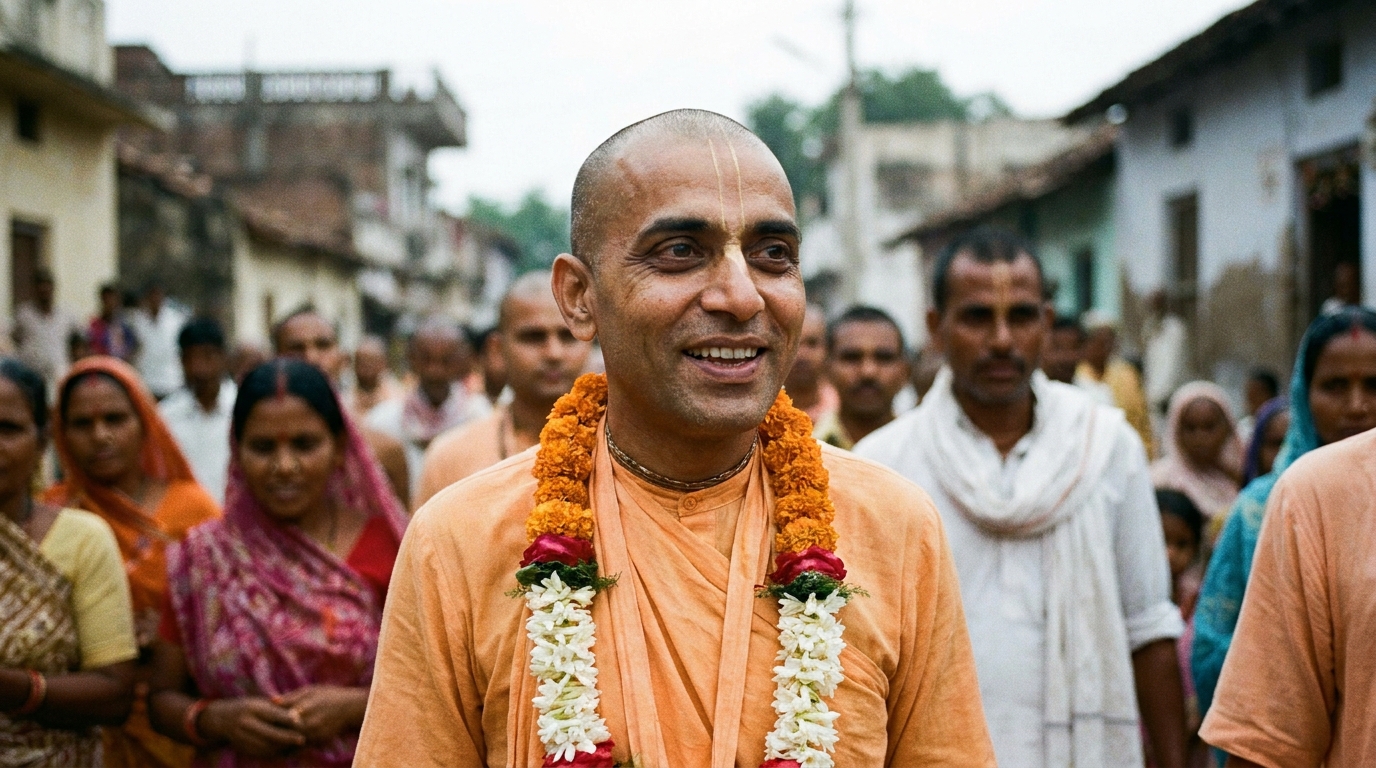
Sri Advaita Acharya is one of the most fascinating figures in Lord Caitanya’s pastimes. An elderly, deeply learned scholar and devotee, Advaita Acharya looked out at the world and saw the suffering of people drowning in materialism and forgetfulness of God. His heart broke.
What did he do? He prayed. He worshiped the sacred Shalagrama Shila (a sacred stone representing Lord Vishnu) with Tulasi leaves and Ganges water, and he cried out for the Lord to descend.
And the Lord answered.
The Caitanya Caritamrita (Adi 3.110) explains:
> “Śrī Advaita Ācārya, who is very merciful and who is the Lord Himself, brought about the descent of Lord Caitanya Mahāprabhu to deliver the fallen souls.”
What Advaita Acharya Teaches Us
His example reminds us that prayer is not passive — it is powerful. A single sincere prayer, offered with genuine concern for others, can move the heart of God. We don’t need grand resources or positions of power. We need sincerity, humility, and love.
The Six Goswamis: Scholars, Saints, and Servants of Love
Turning Wealth into Worship
Among Lord Caitanya’s most important associates are the Six Goswamis of Vrindavana — six extraordinary souls who were directly instructed by the Lord to excavate the lost holy places of Vrindavana, write devotional literature, and establish the philosophical foundations of the Bhakti movement.
They are:
- Sri Rupa Goswami — the leader of the Six Goswamis, who mapped out the science of devotion in his masterwork, Bhakti-rasamrta-sindhu (The Nectar of Devotion)
- Sri Sanatana Goswami — Rupa’s elder brother, who wrote extensively on Vaishnava theology and devotional practice
- Sri Raghunatha Dasa Goswami — born into immense wealth, he renounced everything to live in radical simplicity and constant prayer
- Sri Raghunatha Bhatta Goswami — known for his extraordinary recitation of Srimad Bhagavatam that would move listeners to tears
- Sri Jiva Goswami — the brilliant philosopher who systematized the entire theology of Gaudiya Vaishnavism
- Sri Gopala Bhatta Goswami — who established standards of Deity worship and devotional practice
Lives of Breathtaking Renunciation
What strikes the heart most about the Six Goswamis is their complete absorption in devotional service. Rupa and Sanatana Goswami had served as powerful ministers in the government of Bengal. They gave it all up — wealth, prestige, political influence — to sleep under a different tree each night in the forests of Vrindavana, spending their days writing, chanting, and searching for the sacred places where Krishna had performed His pastimes.
Srinivasa Acharya, a later devotee, wrote this famous prayer about them:
> “Kṛṣṇotkīrtana-gāna-nartana-parau premāmṛtāmbho-nidhī…”
This verse describes the Six Goswamis as “always engaged in chanting, singing, and dancing for Krishna,” as “oceans of the nectar of love,” and as those who offered “respectful obeisances to everyone and demanded nothing for themselves.”
What the Six Goswamis Teach Us
Their message is wonderfully practical: true richness is found in devotion, not possession. You don’t need to renounce the world literally as they did, but you can bring their spirit into your daily life. Chant with sincerity. Study sacred wisdom. Serve others with humility. Let love for God gradually become the center of everything you do.
Srivasa Thakura and the Devotee Community: Where Sankirtana Was Born
The Living Room Where a Revolution Began
Sri Srivasa Thakura holds a uniquely tender place in Lord Caitanya’s pastimes. It was in his home — in the courtyard of Srivasa Angan in Navadvipa — that Lord Caitanya would gather with His devotees for all-night kirtans (devotional singing). These weren’t formal religious ceremonies. They were explosions of ecstatic love — singing, dancing, weeping, and laughing in the presence of God.
The Caitanya Caritamrita (Adi 7.17) states:
> “Śrīvāsa Ṭhākura is the topmost devotee in the assembly of the Lord.”
The Power of Spiritual Community
Srivasa Thakura’s home represents something profoundly important: sangha, or spiritual community. Bhakti doesn’t flourish in isolation. It grows in the company of others who share the longing for God. When we come together to chant, to share a meal, to study, to serve — we create a sacred space where hearts can open.
This is what we aspire to at The Bhakti House. Not perfection, but sincerity. Not exclusivity, but welcome. A place where anyone can come, sit down, and experience the warmth of devotional community.
Haridasa Thakura: The Namacharya Who Chanted Against All Odds
Devotion That Nothing Could Break
Sri Haridasa Thakura was given the title Namacharya — “the teacher of the holy name” — by Lord Caitanya Himself. Born in a Muslim family at a time of deep social division, Haridasa Thakura faced severe persecution for his devotion. He was beaten in twenty-two marketplaces by order of the local ruler, yet he never stopped chanting. He never expressed anger toward his persecutors. He only prayed for their welfare.
He made a personal vow to chant 300,000 names of God every single day, and he kept this vow until the very end of his life.
The Caitanya Caritamrita (Antya 3.137) describes him:
> “Haridāsa Ṭhākura, the teacher of the holy name, is among the most exalted associates of Śrī Caitanya Mahāprabhu.”
What Haridasa Thakura Teaches Us
His life answers a question many of us carry in our hearts: “Am I qualified for this path?” Haridasa Thakura was rejected by the social and religious establishment of his time. And yet God embraced him as one of His dearest devotees.
The path of Bhakti doesn’t ask where you come from. It asks where your heart wants to go. If your heart yearns for the Divine, you already belong.
How These Associates Inspire Our Practice Today
The lives of Lord Caitanya’s associates are not distant legends. They are living invitations. Each one illuminates a different facet of the devotional path:
- Nityananda Prabhu shows us that mercy has no boundaries
- Advaita Acharya shows us the transformative power of sincere prayer
- The Six Goswamis show us the beauty of devotion grounded in wisdom and renunciation
- Srivasa Thakura shows us the importance of spiritual community
- Haridasa Thakura shows us that devotion transcends all external designations
Together, they paint a picture of what Bhakti Yoga really looks like in practice: a life centered on chanting God’s names, serving others, cultivating humility, and loving God with everything we have.
You Are Welcome Here
If something in these stories has stirred your heart, please trust that stirring. It’s real. It’s sacred. It’s the beginning of something beautiful.
You don’t need to know all the Sanskrit terms. You don’t need to have a perfect meditation practice. You don’t need to have it all figured out. Lord Caitanya’s associates came from every walk of life — scholars, ministers, outcasts, and homemakers. What united them was one thing: a sincere desire to love God and share that love with others.
At The Bhakti House, we believe that same desire lives in every heart. Wherever you are on your journey, you are welcome here.
Take one sincere step. Chant one sincere prayer. Open your heart, even just a little. And trust that the same mercy that flowed through Lord Caitanya and His beautiful associates is flowing toward you right now.
FAQs
Who were Lord Caitanya’s associates?
Lord Caitanya’s associates were a group of devotees who were close companions and followers of the 16th-century Indian saint, Sri Caitanya Mahaprabhu. They included prominent figures such as Nityananda Prabhu, Advaita Acharya, Gadadhara Pandita, and Srivasa Thakura, among others.
What was the significance of Lord Caitanya’s associates?
Lord Caitanya’s associates played a crucial role in spreading the teachings of Caitanya Mahaprabhu and the practice of congregational chanting of the holy names of God, known as sankirtan. They were instrumental in establishing the Gaudiya Vaishnavism tradition and were revered for their devotion and service to Lord Caitanya.
What were the main contributions of Lord Caitanya’s associates?
Lord Caitanya’s associates made significant contributions to the development and propagation of the Gaudiya Vaishnavism tradition. They were instrumental in organizing and participating in sankirtan gatherings, writing devotional literature, and establishing temples and centers for the worship of Lord Krishna.
How did Lord Caitanya’s associates influence the spread of Gaudiya Vaishnavism?
Lord Caitanya’s associates played a pivotal role in popularizing the practice of congregational chanting and the philosophy of bhakti (devotion) as taught by Caitanya Mahaprabhu. Their exemplary lives and devotion inspired countless individuals to embrace the path of devotion and contribute to the growth of Gaudiya Vaishnavism.
What is the legacy of Lord Caitanya’s associates in the Gaudiya Vaishnavism tradition?
The legacy of Lord Caitanya’s associates in the Gaudiya Vaishnavism tradition is profound and enduring. Their devotion, teachings, and contributions continue to inspire and guide followers of Gaudiya Vaishnavism around the world, shaping the practice and understanding of bhakti yoga and the worship of Lord Krishna.

