
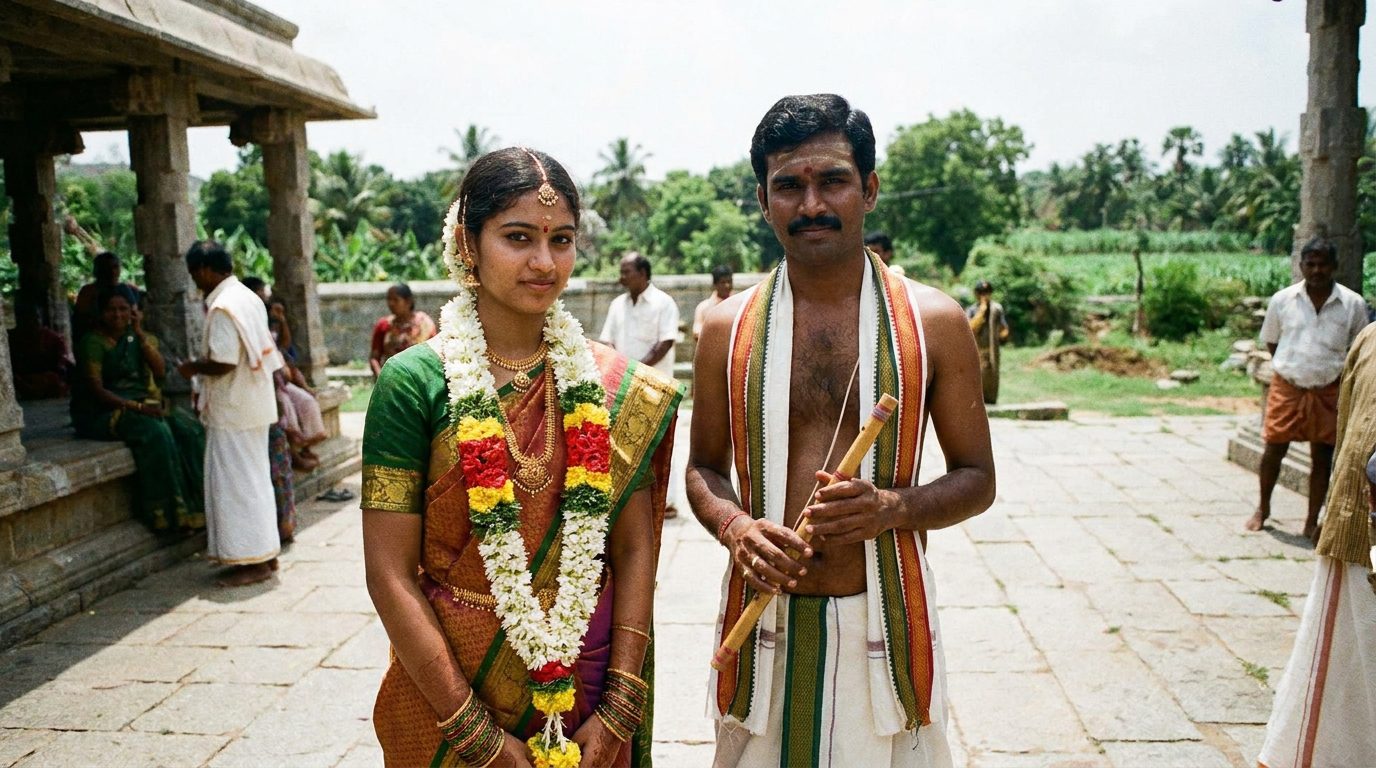
When we step into the world of Bhakti Yoga — the path of loving devotion — we encounter something beautiful and surprising. In many spiritual traditions, the Supreme is presented as a singular, all-powerful figure. But in the Bhakti tradition, the highest truth is not just about God alone. It’s about God in love. And where there is love, there must be a beloved. That beloved, in the Bhakti tradition, is Śrīmatī Rādhārāṇī — and She doesn’t simply stand beside Krishna. She stands before Him.
This might feel unfamiliar or even startling, especially if you’re new to Bhakti. But we invite you to stay with us. What unfolds here is one of the most tender, profound, and empowering teachings in all of spiritual life — and it has something beautiful to offer every heart, no matter where you come from.
Śrīmatī Rādhārāṇī (often lovingly called “Rādhā”) is understood in the Bhakti tradition as the supreme feminine aspect of the Divine — the eternal consort and counterpart of Lord Krishna. She is not a separate God. She is not a mythological character. She is the very energy of love that makes God complete.
In Sanskrit, She is called the hladini-shakti, which simply means “the pleasure potency” — the personal energy of divine bliss within Krishna Himself. If Krishna is the sun, Rādhā is the sunshine. If Krishna is the ocean, Rādhā is the wave. They are eternally one and yet eternally two, engaged in a love so pure that it forms the very foundation of all existence.
Why Her Name Comes First
You may have noticed that devotees often say “Rādhā-Krishna” rather than “Krishna-Rādhā.” This isn’t accidental. In the Bhakti tradition, the devotee is honored even above God, because God Himself is conquered by love. And no one loves Krishna more purely, more completely, more selflessly than Rādhārāṇī. She is the supreme devotee, and therefore She is honored first.
This principle is not something devotees invented. It flows from the very nature of divine love itself. Love, by its nature, puts the other first. And since Rādhā’s love for Krishna is the most exalted love in all of existence, Krishna Himself places Her before all others — even before Himself.
The Scriptural Foundation: What the Sacred Texts Tell Us
The primacy of Rādhā isn’t based on sentiment alone. It is deeply rooted in the sacred scriptures of the Bhakti tradition. Let us look at some of the most important teachings.
The Śrīmad-Bhāgavatam and the Gopīs’ Love
In the Śrīmad-Bhāgavatam (often called the Bhāgavata Purāṇa), the tenth canto describes Krishna’s intimate pastimes with the gopīs — the cowherd women of Vṛndāvana whose love for Him is considered the highest standard of devotion. Among all the gopīs, one stands supreme.
In Śrīmad-Bhāgavatam 10.30.28, when Krishna disappears from the rāsa dance with all the gopīs, they discover His footprints alongside those of one particular gopī. The verse reveals:
> “anayārādhito nūnaṁ bhagavān harir īśvaraḥ
> yan no vihāya govindaḥ prīto yām anayad rahaḥ”
“Certainly this particular gopī has perfectly worshiped the all-powerful Personality of Godhead, Govinda, since He was so pleased with Her that He abandoned the rest of us and brought Her to a secluded place.” (SB 10.30.28, Vedabase.io)
The word ārādhita — meaning “one who has worshiped perfectly” — is the very root of the name Rādhā. She is the one who worships with such complete love that even God is drawn exclusively to Her. This is the scriptural foundation for understanding why Rādhā holds this supreme position.
Śrī Caitanya-Caritāmṛta: The Theology of Rādhā’s Supremacy
Śrī Caitanya Mahāprabhu, the great 16th-century saint who is understood in the Bhakti tradition as Krishna Himself appearing in the mood of Rādhā, revealed profound truths about Her supremacy. His biography, the Caitanya-caritāmṛta by Kṛṣṇadāsa Kavirāja Gosvāmī, contains perhaps the most systematic theological explanation of Rādhā’s primacy.
In Caitanya-caritāmṛta, Ādi-līlā 4.95-96, we find:
> “In Vraja, Krishna is the source of all love, yet Śrīmatī Rādhārāṇī is His most beloved. She is the chief of all the goddesses of fortune, and She alone can fully satisfy Krishna’s desire for love.”
The text further explains in Ādi-līlā 4.83:
> “rādhā — pūrṇa-śakti, kṛṣṇa — pūrṇa-śaktimān
> dui vastu bheda nāi, śāstra-paramāṇa”
“Śrī Rādhā is the full power, and Lord Kṛṣṇa is the possessor of full power. The two are not different, as evidenced by the revealed scriptures.” (CC Ādi 4.96, Vedabase.io)
This is a stunning declaration: Rādhā and Krishna are not different in essence. They are one reality expressed as two for the sake of love.
Why Love Takes Precedence Over Power
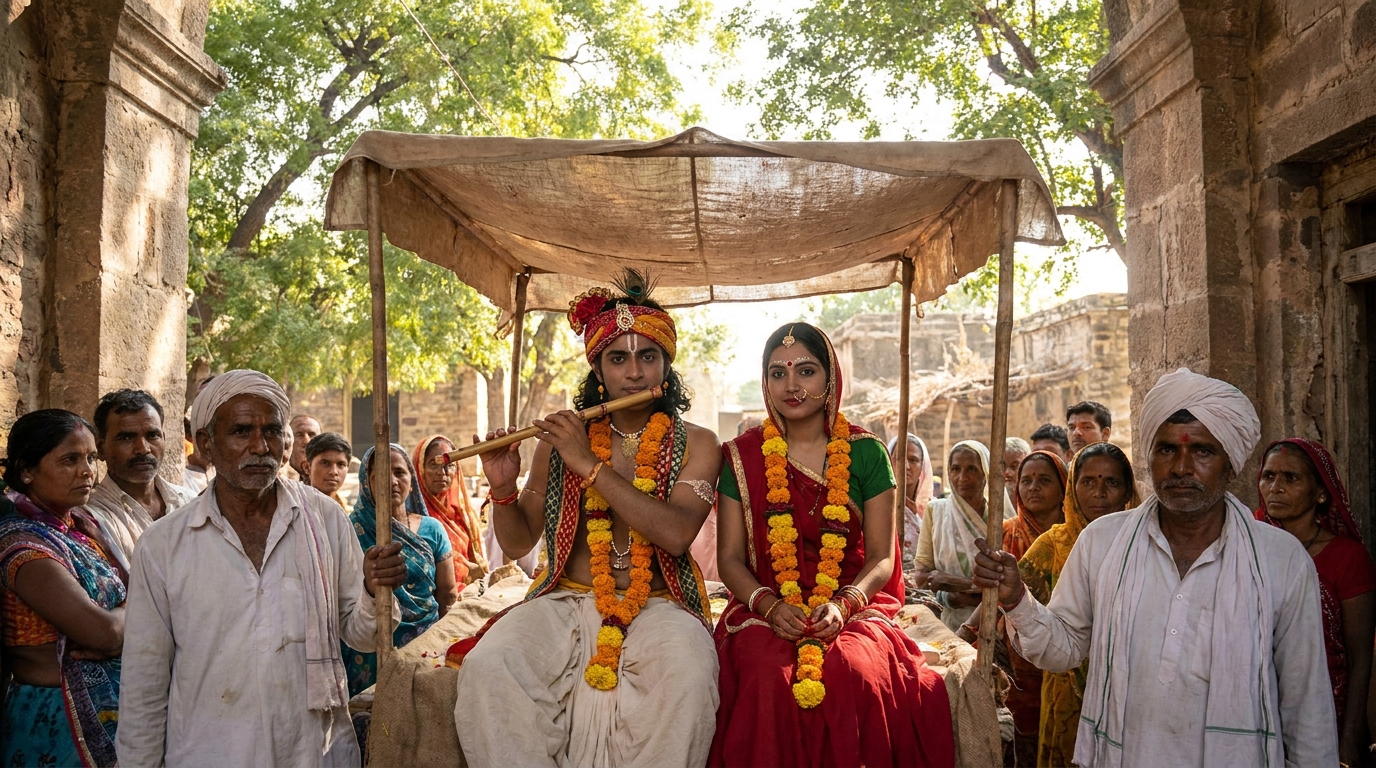
Here we arrive at one of the most revolutionary ideas in all of spiritual philosophy — and one of the reasons Rādhā comes before Krishna in the devotional understanding.
In most religious frameworks, God is primarily understood through power: God as creator, God as controller, God as judge. And Krishna certainly possesses all of these attributes in infinite measure. But in Bhakti Yoga, the highest understanding of God is not through His power but through His capacity to love and be loved.
The Beloved Is Greater Than the Lover
Śrīla Prabhupāda, the founder-ācārya of the International Society for Krishna Consciousness and a beloved teacher in the Bhakti tradition, explained this principle with beautiful simplicity. He taught that Rādhārāṇī’s position is so exalted because She can do something that no one else can — She can completely control Krishna through the pure force of Her love.
In his purport to Caitanya-caritāmṛta, Ādi-līlā 4.56, Śrīla Prabhupāda writes:
> “The Supreme Personality of Godhead, Kṛṣṇa, is the controller of everything, but in the presence of Śrīmatī Rādhārāṇī, He becomes controlled.”
Think about what that means. The all-powerful Supreme becomes willingly subordinate to love. This is not weakness — it is the ultimate expression of divine completeness. A God who can only command but cannot be moved by love would be incomplete. Krishna’s willingness to be “defeated” by Rādhā’s love reveals the deepest truth about the nature of the Absolute.
Power Serves Love, Not the Other Way Around
This principle has profound implications for our own spiritual lives. It tells us that the goal of Bhakti is not to become powerful, not to gain control, not to accumulate mystical abilities. The goal is to love — purely, selflessly, and completely. Rādhārāṇī is the supreme teacher of this path because She embodies it perfectly.
Every chant of the Hare Krishna mahā-mantra — Hare Krishna, Hare Krishna, Krishna Krishna, Hare Hare / Hare Rāma, Hare Rāma, Rāma Rāma, Hare Hare — is actually a prayer to Rādhārāṇī. The word “Hare” is a vocative form of “Harā,” which is another name for Rādhā. So when we chant, we are first calling out to Her: “O Rādhā! O divine energy of love! Please engage me in the service of Krishna.”
Sure, here is the sentence with the clickable link:
Check out our website for more articles: more articles.
Rādhā as the Gateway to Krishna
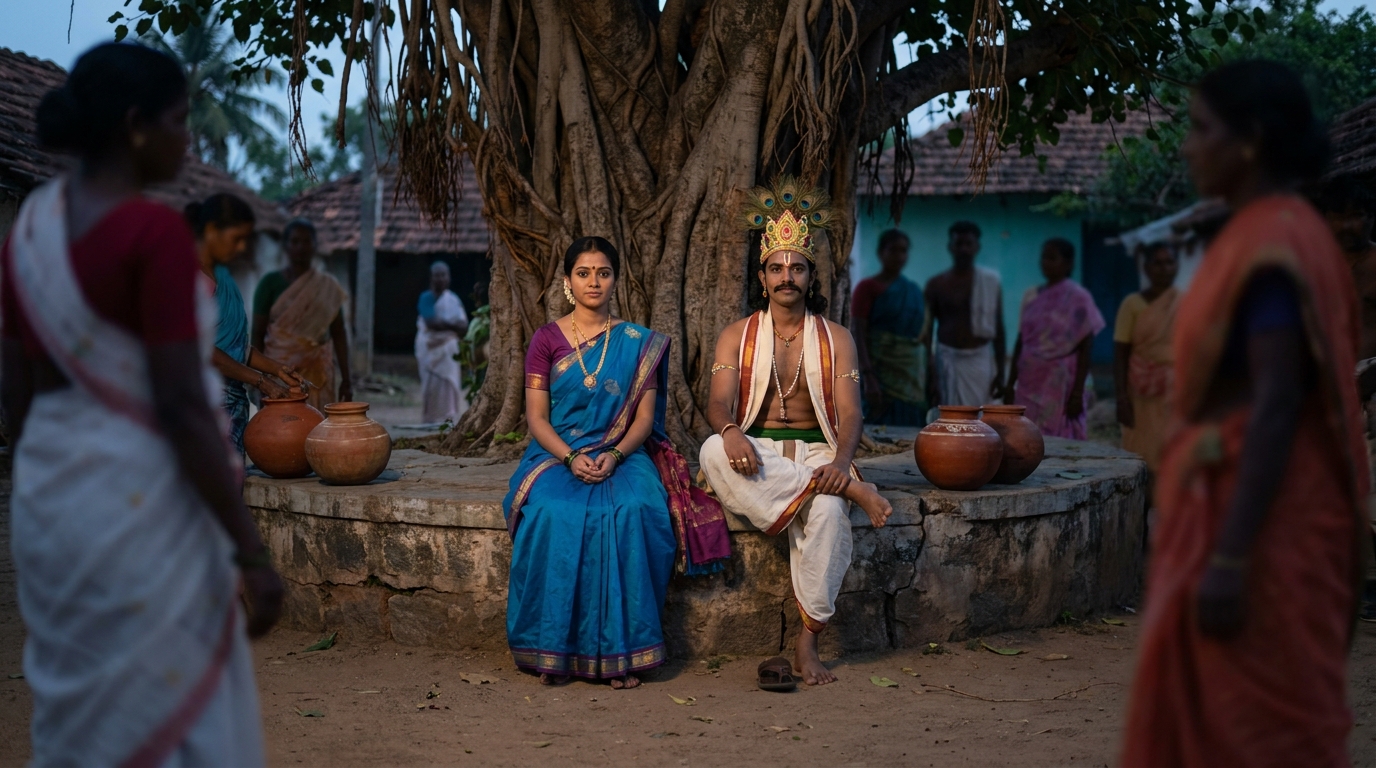
One of the most practical and heart-opening teachings in Bhakti is this: we do not approach Krishna directly. We approach Him through Rādhā. She is the gateway, the intercessor, the one who opens the door to Krishna’s heart.
The Mercy of Rādhārāṇī
Why is this the case? Because Krishna responds to love, and Rādhā is love personified. When a sincere soul turns toward God — even with a small, trembling, imperfect attempt — it is Rādhārāṇī’s mercy that receives that effort and magnifies it. She is the most compassionate aspect of the Divine, always looking for an opportunity to bring souls closer to Krishna.
Śrīla Prabhupāda often encouraged devotees to seek Rādhārāṇī’s mercy. He explained that if Rādhārāṇī recommends a soul to Krishna, Krishna cannot refuse. Such is the power of Her love and Her position.
How This Teaching Serves Us in Daily Life
For those of us walking the Bhakti path in daily life — balancing work, family, health, and spiritual practice — this teaching is immensely comforting. It means we don’t have to be perfect to approach God. We don’t have to be scholars, renunciants, or saints. We simply have to be sincere. And sincerity itself is a gift of Rādhārāṇī’s grace.
When you sit down to chant, even if your mind wanders, you are calling out to Rādhā. When you offer a simple prayer before a meal, you are connecting with Her mercy. When you serve another person with a loving heart, you are walking in the footsteps of Her compassion.
Rādhā’s Primacy as a Model of Sacred Femininity
The fact that the supreme position in Bhakti theology belongs to a feminine figure is deeply significant. In a world that has often marginalized the feminine, the Bhakti tradition places the Divine Feminine not just alongside the Divine Masculine but before Him.
Beyond Gender, Into the Heart of Love
It’s important to understand that Rādhā’s supremacy is not about gender politics or social agendas. It is a spiritual truth that transcends material categories. Every soul — regardless of the body they inhabit — has an eternal, feminine relationship with God. In Sanskrit, this is expressed through the understanding that all individual souls (jīvas) are prakṛti (the enjoyed) in relation to Krishna, who is puruṣa (the enjoyer).
Rādhārāṇī represents the fullest flowering of this receptive, loving nature. She teaches us all — men, women, and everyone — how to open our hearts completely to the Divine. Her example shows that the deepest strength lies not in domination but in devotion, not in control but in surrender, not in independence but in loving interdependence with God.
Rādhārāṇī’s Example of Selfless Service
Rādhā’s love is characterized by one extraordinary quality: it is entirely for Krishna’s pleasure, never for Her own. This is called prema — pure, unconditional divine love. She feels joy only when Krishna is happy. She doesn’t love Krishna to get something in return. She loves Him because love is Her very nature.
This is the ultimate aspiration of every Bhakti practitioner. As Caitanya Mahāprabhu prayed in His famous Śikṣāṣṭaka (verse 8):
> “āśliṣya vā pāda-ratāṁ pinaṣṭu mām
> adarśanān marma-hatāṁ karotu vā
> yathā tathā vā vidadhātu lampaṭo
> mat-prāṇa-nāthas tu sa eva nāparaḥ”
“Let Kṛṣṇa tightly embrace this maidservant who has fallen at His lotus feet, or let Him trample Me or break My heart by never being visible to Me. He is a debauchee, after all, and can do whatever He likes, but still He alone, and no one else, is the worshipable Lord of My heart.” (Śikṣāṣṭaka 8, Vedabase.io)
This prayer, spoken in the mood of Rādhārāṇī, represents the pinnacle of spiritual attainment — love that is completely unconditional, completely fearless, and completely free.
An Invitation to Every Heart
If you have read this far, something in your heart is responding. Perhaps it’s curiosity. Perhaps it’s recognition. Perhaps it’s a quiet longing that you’ve carried for a long time without knowing what to call it.
Whatever brought you here, please know this: the path of Bhakti is open to you. It doesn’t matter what tradition you come from, what you believe or don’t believe, what you’ve done or haven’t done. Rādhārāṇī’s mercy is available to every sincere soul.
You don’t have to understand everything today. You don’t have to change your whole life overnight. You simply have to take one sincere step. Maybe that step is chanting the Hare Krishna mahā-mantra — even once, with feeling. Maybe it’s offering a quiet prayer from the heart. Maybe it’s serving someone in need with a spirit of love.
Whatever form it takes, that one step is enough. Because the moment you turn toward God with sincerity, Rādhārāṇī is already there, ready to carry you the rest of the way.
You are welcome here. You are loved. And you are never alone on this journey.
Hare Krishna, Hare Krishna, Krishna Krishna, Hare Hare / Hare Rāma, Hare Rāma, Rāma Rāma, Hare Hare
FAQs
1. Who is Rādhā in Hindu mythology?
Rādhā is a central figure in Hindu mythology, known for her deep love and devotion to the god Krishna. She is often depicted as Krishna’s consort and is revered for her selfless love and devotion.
2. Why is Rādhā considered to be more important than Krishna in some traditions?
In some traditions, Rādhā is considered to be more important than Krishna because of her unwavering love and devotion to him. Her love is seen as the epitome of devotion and is often celebrated as the highest form of love in Hindu mythology.
3. What is the significance of Rādhā coming before Krishna in the title?
The title “Why Rādhā Comes Before Krishna” may refer to the idea that Rādhā’s love and devotion precede and surpass Krishna’s own divine qualities. It highlights the importance of Rādhā’s role in Hindu mythology and her significance in relation to Krishna.
4. How is the relationship between Rādhā and Krishna portrayed in Hindu scriptures and literature?
The relationship between Rādhā and Krishna is often portrayed as a divine and eternal love. Their love is celebrated in Hindu scriptures and literature through various stories, poems, and songs that depict their deep emotional connection and spiritual bond.
5. What lessons can be learned from the story of Rādhā and Krishna?
The story of Rādhā and Krishna teaches important lessons about love, devotion, and the spiritual connection between devotee and deity. It is often interpreted as a metaphor for the soul’s longing for union with the divine and the power of selfless love.

