
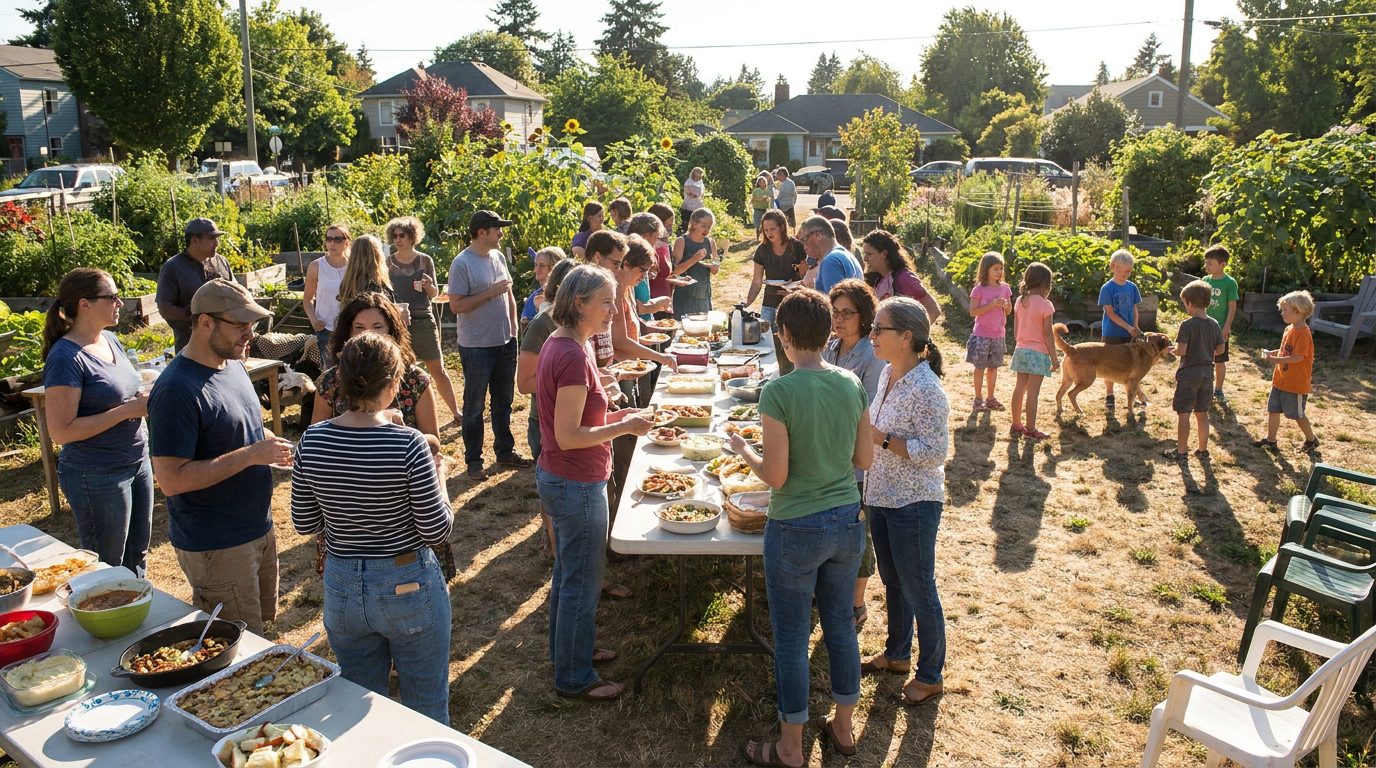
Bhakti Yoga is often described as the path of love and devotion. The word bhakti means loving devotion, and yoga means union or connection. So Bhakti Yoga is the sacred practice of reconnecting with God through the heart—through chanting, prayer, service, remembrance, friendship, and sincere spiritual living.
While Bhakti is deeply personal, it is not meant to be walked alone. The heart grows softer in the company of others who are also trying to love God. Our faith becomes stronger when we hear sacred wisdom together. Our chanting becomes sweeter when many voices rise as one. Our service becomes more joyful when we serve side by side.
In Bhakti practice, community is not simply a social group. It is a spiritual family, a place where we are reminded of who we truly are: souls, beloved by God, meant for loving connection. Whether someone is new to spirituality, returning after many years, or already steady in their practice, community offers encouragement, shelter, friendship, and inspiration.
In the Bhakti tradition, spiritual community is often called sanga or sadhu-sanga. Sanga means association or company. Sadhu means a sincere spiritual person, someone trying to live with truth, compassion, and devotion. So sadhu-sanga means keeping company with people who help awaken our love for God.
We Become Shaped by the Company We Keep
All of us are influenced by our surroundings. The conversations we hear, the values we see, and the habits we share all shape our inner life.
If we spend time with people who are anxious, cynical, or overly materialistic, our hearts can easily become restless. But when we spend time with people who chant God’s names, speak about sacred wisdom, serve others, and try to live humbly, something within us begins to change.
This is not about judging anyone. It is about understanding the tender nature of the heart. The heart absorbs atmosphere. In a loving Bhakti community, the atmosphere gently points us toward remembrance of God.
The Śrīmad-Bhāgavatam, one of the central scriptures of Bhakti Yoga, explains that in the association of sincere devotees, discussions about God become nourishing to the heart and ear. These sacred conversations awaken faith and devotion step by step. In simple words, when we gather with sincere people and speak about spiritual truth, our hearts begin to heal.
Spiritual Friendship Helps Us Stay Steady
Most of us begin spiritual life with inspiration. We may hear a beautiful kirtan, read a powerful verse, attend a retreat, or feel God’s presence in a moment of prayer. But daily life can be demanding. Work, family, responsibilities, distractions, and inner struggles can make spiritual practice feel difficult.
This is where community becomes so important.
A spiritual friend may gently ask, “How is your chanting going?” or “Would you like to come to kirtan this week?” Someone may share a verse that speaks directly to our struggle. Another person may simply listen with compassion. These small moments can keep the flame of devotion alive.
Bhakti community does not require perfection. It invites sincerity. We come as we are, and together we take another step.
Chanting Together Deepens the Heart
One of the central practices of Bhakti Yoga is chanting the holy names of God. In Sanskrit, this is called kirtan when done together, often with music, and japa when done softly or individually, usually on prayer beads.
Chanting is beautifully simple. We use the voice, the breath, and the heart to call out to God. Different traditions may use different names of God, but the essence is the same: we are turning toward the Divine with love.
Kirtan Creates a Shared Sacred Space
In kirtan, many voices come together. Some people sing loudly. Some sing softly. Some close their eyes. Some sway or dance. Some sit quietly and receive. Everyone participates according to their comfort and sincerity.
There is something powerful about hearing others call out to God. Even if our own heart feels dry, the devotion of others can carry us. Even if we are shy or unsure, we can sit in the sound and let the holy names touch us.
The Bṛhan-nāradīya Purāṇa gives a simple and profound instruction for this age: chant the names of God. In Bhakti communities around the world, this teaching becomes alive through kirtan. People gather not to perform, but to pray. The music becomes a vehicle for remembrance.
The Holy Name Is for Everyone
One of the beautiful qualities of chanting is that it does not depend on wealth, education, social status, nationality, or background. The holy name is not reserved for a select few. Anyone can chant. Anyone can listen. Anyone can begin.
In the Bhakti tradition, God is understood to be fully present in His names. This may be a new idea for some readers, but it is very practical: when we chant with sincerity, the heart gradually becomes clearer, softer, and more connected.
Community chanting helps us experience this truth. Alone, the mind may wander. Together, we feel supported. The rhythm, the response, the shared intention—all of it helps us return to prayer.
Music Opens the Door of Devotion
Bhakti Yoga honors the heart. It understands that music, poetry, and beauty can awaken devotion in ways that dry philosophy sometimes cannot.
Kirtan is not entertainment, though it may be joyful. It is a form of worship. The instruments, melodies, and voices are offered to God. The community becomes like a temple, even if the gathering is in a living room, yoga studio, park, or small rented hall.
When we chant together, we remember that spiritual life is not only about discipline. It is also about sweetness.
Community Helps Us Learn Sacred Wisdom
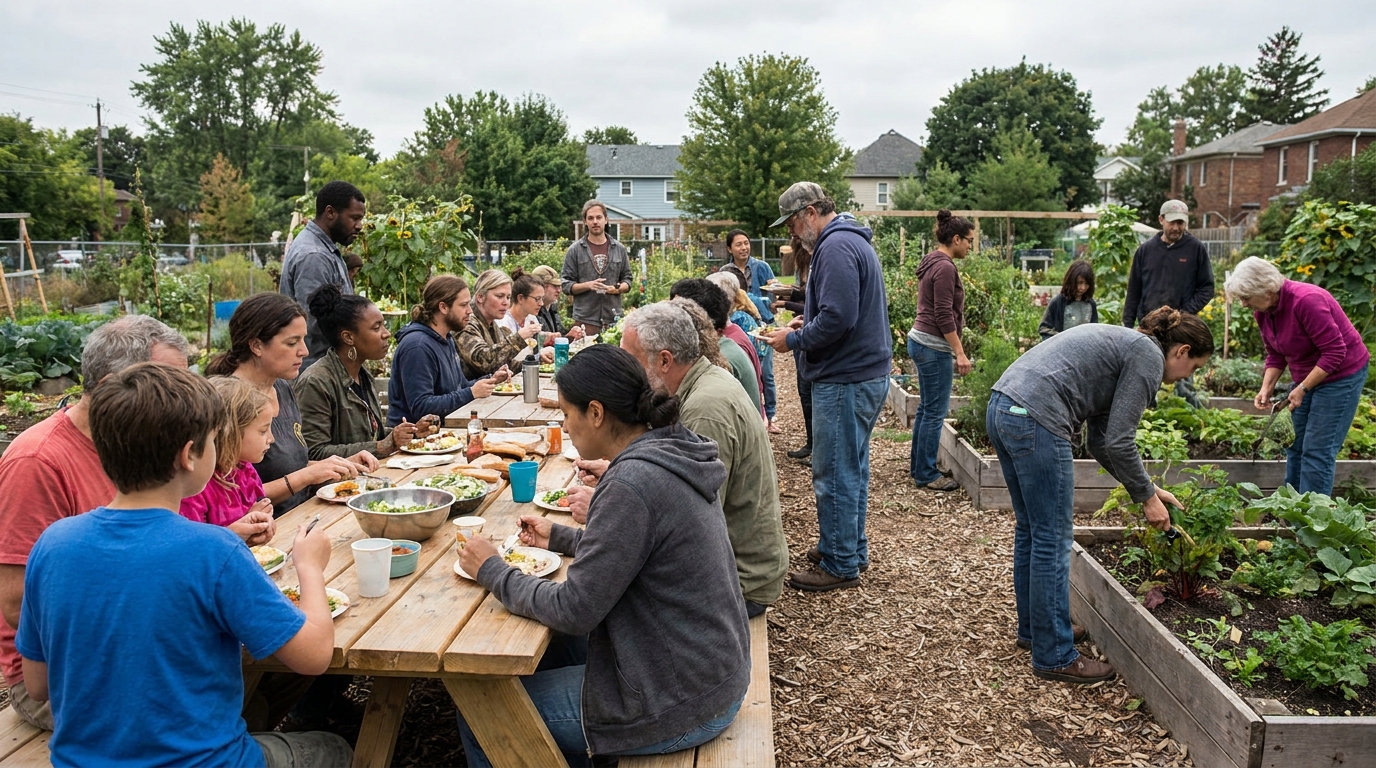
Bhakti Yoga is a path of the heart, but it is not sentimental. It is rooted in deep spiritual wisdom found in scriptures such as the Bhagavad-gītā, the Śrīmad-Bhāgavatam, and the teachings of great saints.
The Bhagavad-gītā is a sacred dialogue between Śrī Krishna and Arjuna. Krishna is understood in the Bhakti tradition as the Supreme Lord, and Arjuna is His friend and student. In this text, Krishna teaches about the soul, duty, devotion, meditation, and surrender.
Hearing Together Makes Wisdom Practical
Sacred texts can sometimes feel difficult when read alone. Sanskrit terms may seem unfamiliar. Philosophical ideas may feel far away from daily life. But in community, we can learn together.
A teacher or experienced practitioner may explain a verse in simple language. Someone may ask the very question we were afraid to ask. Another person may share how a teaching helped them forgive, serve, or pray during a difficult time.
This kind of shared learning makes scripture practical.
For example, in the Bhagavad-gītā, Krishna says, “Always think of Me, become My devotee, worship Me, and offer your homage to Me.” This is a deeply devotional instruction. In community, we learn how to live it in ordinary life: remembering God while cooking, offering our work, chanting in the morning, serving guests, forgiving others, and choosing compassion.
Questions Are Welcome
A healthy Bhakti community welcomes sincere questions. Spiritual growth does not mean pretending to understand everything. It means approaching truth with humility.
Someone may wonder: Who is God? Why do we suffer? What is the soul? How can I pray if I feel distant from God? What if I come from another religious background? What if I have doubts?
These questions are not obstacles. They can become doorways.
In the Bhakti House spirit, people of all backgrounds are welcome. You do not have to know Sanskrit. You do not have to dress a certain way. You do not have to have everything figured out. You can come with curiosity, sincerity, and an open heart.
Wisdom Protects Devotion
Devotion is like a tender plant. It needs watering, sunlight, and protection. Chanting and prayer water the plant of devotion. Sacred wisdom gives it healthy direction.
Without wisdom, devotion can become vague or unstable. Without devotion, wisdom can become dry or prideful. In community, both are nourished together. We hear, we chant, we reflect, we serve, and slowly our spiritual life becomes balanced.
Please visit our website for more information on our articles: articles.
Service Becomes Joyful When Done Together

Another essential part of Bhakti Yoga is seva, which means service. In Bhakti, service is not merely volunteer work. It is an offering of love to God and to God’s children.
Service can be simple: preparing food, cleaning the temple space, welcoming guests, singing in kirtan, helping with events, sharing spiritual books, cooking for others, listening to someone with kindness, or offering one’s talents for a sacred purpose.
Seva Purifies the Heart
The heart often becomes burdened by the desire to be seen, praised, or in control. Service gently loosens these knots. When we serve, we practice thinking, “How can I please God? How can I help others? How can I offer what I have?”
This shift is deeply healing.
In the Bhagavad-gītā, Krishna teaches that whatever we do, whatever we eat, whatever we offer, and whatever austerity we perform can be offered to Him. This means our whole life can become sacred when offered with love.
Community gives us many opportunities to practice this offering mood. We learn to serve not only when it is convenient, but when it is needed. We learn to appreciate quiet service, unseen service, and humble service.
Everyone Has Something to Offer
In a Bhakti community, every person has value. Some may be wonderful cooks. Some may be musicians. Some may be organizers. Some may be teachers. Some may be good with children. Some may be prayerful listeners. Some may simply bring a sincere smile.
No offering is small when it is made with love.
A flower offered with devotion can be greater than a grand gift offered with pride. A few minutes of sincere help can be spiritually powerful. Bhakti is not measured by external size. It is measured by sincerity.
Serving Together Builds Spiritual Family
When we serve side by side, we begin to see each other more deeply. We are no longer just people attending the same event. We become companions in devotion.
Cooking together for a festival, setting up chairs for a program, cleaning after kirtan, distributing sacred food, or preparing offerings for the altar—all of these activities create bonds. They also teach patience, cooperation, forgiveness, and humility.
Community service reminds us that love is active. Love does something. Love offers itself.
Community Supports Us Through Life’s Challenges
Spiritual life does not remove all difficulty. Even sincere practitioners face grief, illness, loneliness, confusion, family struggles, financial pressure, and inner battles. But Bhakti community helps us face these challenges with faith.
We Need Support When the Heart Feels Weak
There are times when chanting feels difficult. Prayer may feel distant. Doubt may arise. Old habits may return. In such times, isolation can make the struggle heavier.
A compassionate community can help carry us. Sometimes we do not need a lecture. We need someone to sit with us, chant with us, pray for us, or remind us gently, “You are not alone.”
Bhakti teaches that we are eternal souls, connected to God and to one another. Community makes that truth visible.
Shared Prayer Brings Strength
Prayer is central to Bhakti. Prayer may be spoken aloud, whispered, sung, or held silently in the heart. In community, prayer becomes shared shelter.
When we pray for one another, we practice spiritual compassion. We remember that everyone is carrying something. We learn to see beyond surface appearances.
A Bhakti gathering may include prayers for healing, gratitude, guidance, forgiveness, or deeper devotion. These prayers help us bring our real lives into our spiritual practice. Nothing has to be hidden from God.
Community Teaches Forgiveness and Patience
It is important to be honest: community is not always easy. People are human. Misunderstandings happen. Expectations arise. Different personalities may clash.
But even this can become part of our Bhakti practice.
In community, we learn to forgive. We learn to speak with kindness. We learn to apologize. We learn not to demand perfection from others. We learn to see people as souls in progress.
This does not mean ignoring harm or avoiding healthy boundaries. A loving spiritual community should be safe, respectful, and accountable. But when difficulties are approached with humility and care, they can help us grow in genuine compassion.
Spiritual Community Reflects God’s Love
Bhakti Yoga teaches that God is not impersonal or distant. God is a person, full of love, beauty, kindness, and relationship. The soul’s deepest longing is to love and be loved by God.
Because love is relational, community naturally supports Bhakti. We practice love for God by also learning to love God’s parts and parcels—all living beings.
We See God’s Presence in Others
In the Bhagavad-gītā, Krishna explains that a wise person sees with equal vision. This means seeing beyond external labels and recognizing the spiritual nature of every being.
Community helps us practice this vision. We meet people from different backgrounds, cultures, ages, and life experiences. We learn that devotion may appear in many forms. A newcomer’s simple question may carry deep sincerity. An elder’s quiet chanting may reveal years of faith. A child’s joy may remind us of spiritual innocence.
Seeing others spiritually is not theoretical. It happens through relationship.
Hospitality Is a Sacred Practice
Welcoming others is a beautiful expression of Bhakti. When someone comes to a spiritual gathering, they may feel nervous. They may wonder if they belong. A warm smile, a kind explanation, or an invitation to sit can make all the difference.
Hospitality says, “You are welcome here. God’s love is not limited. There is a place for you.”
At The Bhakti House, this spirit of welcome is essential. Bhakti is not about creating an exclusive circle. It is about opening the heart and making room for others to encounter sacred sound, nourishing wisdom, and loving service.
Sacred Food Builds Connection
Many Bhakti communities share prasāda, which means mercy or grace. Prasāda is vegetarian food that has been lovingly prepared and offered to God before being shared.
This practice is simple but profound. We cook with devotion, offer the food in prayer, and then receive it as a blessing. Sharing prasāda nourishes both body and soul.
Sitting together for a meal softens barriers. Conversations become natural. Guests feel cared for. Service becomes tangible. In many ways, prasāda is one of the sweetest forms of community building in Bhakti Yoga.
Community Helps Us Build a Sustainable Daily Practice
Many people feel inspired after a spiritual event but struggle to maintain practice at home. Community helps turn inspiration into a steady way of life.
Morning Practices Become Easier With Support
Bhakti practitioners often begin the day with chanting, prayer, reading sacred texts, or meditation on God’s names. But early mornings can be challenging.
When we know others are also practicing, we feel encouraged. Some communities offer group japa sessions, scripture calls, online satsang, or morning kirtan. These shared commitments help us stay steady.
Even if we practice alone at home, the knowledge that we are part of a devotional family gives strength.
Festivals Renew Our Inspiration
Bhakti Yoga includes many sacred festivals that celebrate the lives and teachings of Krishna, Rama, divine incarnations, saints, and spiritual teachers. These festivals often include kirtan, storytelling, drama, worship, fasting, feasting, and service.
Festivals remind us that spiritual life is joyful. They give us a taste of sacred celebration. They also bring generations together—children, adults, elders, newcomers, and long-time practitioners.
In community, these holy days become living experiences rather than dates on a calendar.
Accountability Can Be Gentle and Loving
Spiritual accountability does not mean pressure or shame. In Bhakti, true accountability is loving support.
A friend may encourage us to chant regularly. A mentor may help us understand scripture. A community may invite us into service. These supports help us grow without feeling alone.
The goal is not to become impressive. The goal is to become sincere, steady, and more loving.
A Healthy Bhakti Community Welcomes All Backgrounds
One of the most beautiful aspects of Bhakti Yoga is its universal invitation. God is not owned by one group, culture, or language. The soul’s relationship with God is eternal and natural.
You Do Not Have to Be “Advanced” to Belong
Sometimes people hesitate to join a spiritual community because they feel unqualified. They may think, “I don’t know enough,” “I’m not pure enough,” “I don’t chant well,” or “I’m not sure what I believe.”
But Bhakti begins with sincerity, not perfection.
A person can begin by listening to kirtan, tasting prasāda, asking a question, offering a simple prayer, or helping with a small service. Every sincere step matters.
Diversity Can Deepen Devotion
A welcoming Bhakti community may include people from many spiritual, cultural, and personal backgrounds. Some may come from Hindu families. Some may come from Christian, Jewish, Muslim, Buddhist, Sikh, or interfaith backgrounds. Some may be seekers with no formal religious identity.
When held with respect, this diversity can enrich the community. We learn humility. We learn to explain teachings clearly. We learn to listen. We learn that God is calling people in many ways.
Bhakti Yoga offers a specific and beautiful path centered on loving devotion to God, especially through the chanting of divine names. At the same time, it honors the sincerity of every soul’s journey.
Clear Teachings Create a Safe Foundation
Being welcoming does not mean being vague. A healthy Bhakti community shares authentic teachings with kindness and clarity. It explains practices, honors scripture, respects teachers, and creates space for gradual growth.
People should feel both welcomed and spiritually nourished. The path should be accessible without being watered down.
This balance—warm welcome and authentic practice—is at the heart of a strong Bhakti community.
The Inner Community: Remembering We Are Never Alone
Even when we are physically alone, Bhakti teaches that we are spiritually connected. God is present in the heart as Paramātmā, the indwelling guide. Paramātmā means the Supreme Soul, the presence of God who witnesses, guides, and accompanies every living being.
God Is the Closest Friend
In the Bhagavad-gītā, Krishna speaks as the well-wishing friend of all living beings. This is a deeply comforting truth. Beneath all external relationships, God is our eternal companion.
Community helps us remember this. Through the love of devotees, we glimpse the love of God. Through shared chanting, we feel less alone. Through service, we discover that our life has sacred purpose.
The Saints Are Also Our Companions
Bhakti tradition is rich with the lives and songs of saints—great devotees who loved God deeply and taught others through their words and actions. Their prayers become our prayers. Their courage gives us hope.
When we read their writings or sing their songs in community, we join a stream of devotion that has flowed for centuries. We are not inventing the path. We are receiving it.
This brings humility and gratitude.
Taking One Sincere Step Together
The importance of community in Bhakti practice cannot be overstated. Community helps us chant when our mind is restless. It helps us learn when scripture feels difficult. It gives us opportunities to serve. It supports us through suffering. It teaches us patience, forgiveness, and love. It welcomes us into a living tradition of devotion.
Most of all, community reminds us that the path to God is walked with others. We are souls journeying home, and by God’s grace, we can encourage one another along the way.
You do not need to have everything figured out to begin. You can come with questions. You can come with doubts. You can come with a tired heart. You can come with gratitude. You can come simply because something within you longs for deeper love.
Bhakti Yoga is practical and beautiful. Chant one name of God. Offer one prayer. Read one sacred verse. Share one meal. Serve one person. Attend one kirtan. Ask one sincere question.
Everyone is welcome to take one sincere step toward God.
FAQs
What is Bhakti?
Bhakti is a spiritual practice in Hinduism that emphasizes devotion and love for a personal god. It is considered one of the paths to spiritual realization and liberation.
Why is community important in Bhakti?
Community is important in Bhakti because it provides support, encouragement, and a sense of belonging for individuals on the spiritual path. It allows for the sharing of knowledge, experiences, and devotion, which can deepen one’s spiritual practice.
How does community support spiritual growth in Bhakti?
Community supports spiritual growth in Bhakti by providing opportunities for collective worship, chanting, and other devotional practices. It also offers a space for learning from experienced practitioners and receiving guidance from spiritual leaders.
What role does seva (selfless service) play in the Bhakti community?
Seva, or selfless service, is an integral part of the Bhakti community. It allows individuals to express their devotion through acts of kindness and service to others, fostering a sense of unity and compassion within the community.
How can one become part of the Bhakti community?
One can become part of the Bhakti community by participating in community events, attending satsangs (spiritual gatherings), volunteering for seva activities, and seeking guidance from experienced practitioners and spiritual leaders.

