
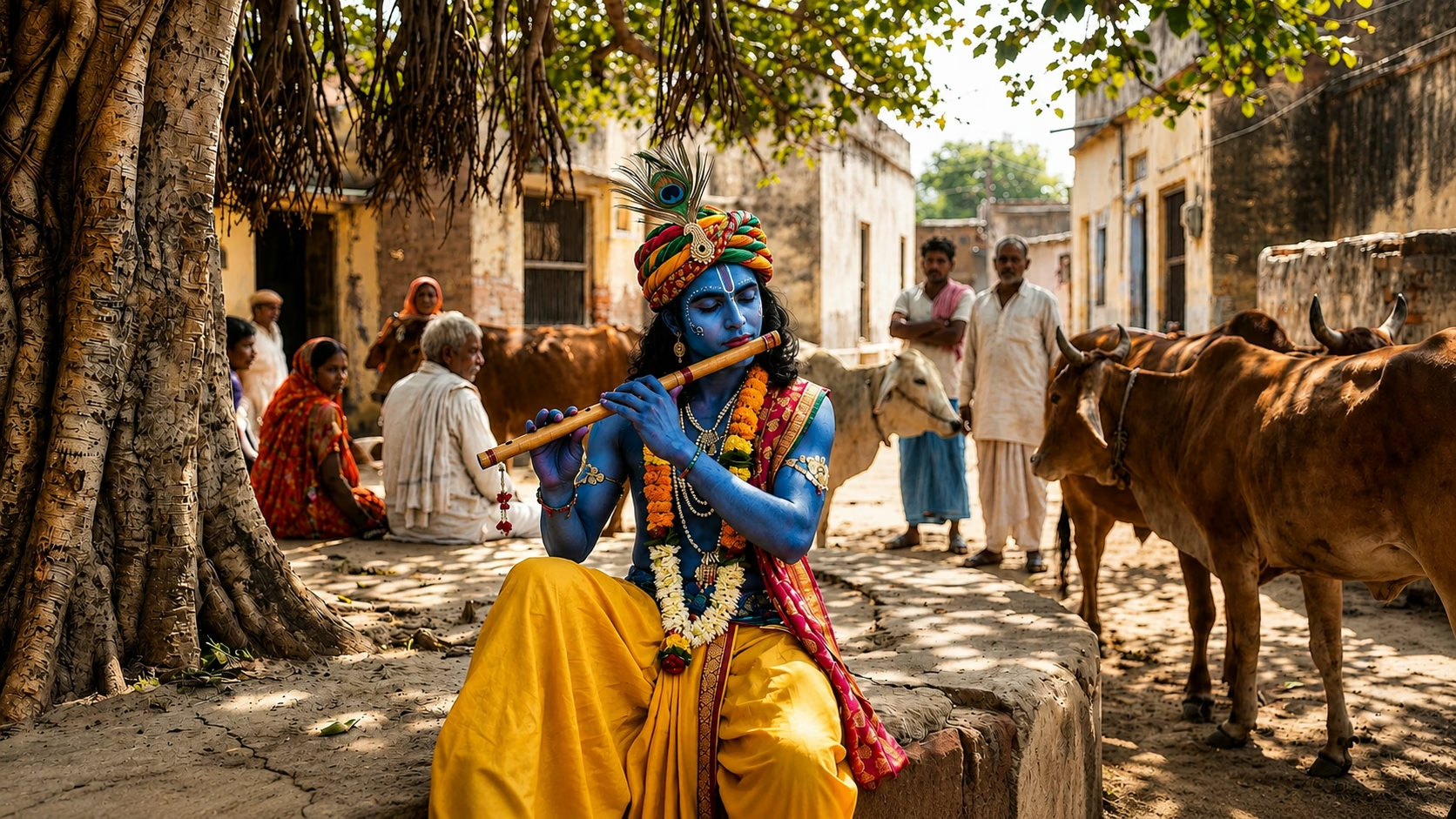
When you picture Krishna, what comes to mind? Perhaps a beautiful blue boy playing a flute in a lush green meadow, surrounded by gentle cows who gaze at Him with pure, unwavering love. This image isn’t just artistic — it’s one of the most profound spiritual teachings in all of Bhakti Yoga.
The relationship between Krishna and the cows reveals something deeply personal about who God is, how He loves, and how we can reconnect with Him through simple, heartfelt devotion. Whether you’re new to this path or have been walking it for years, the story of Krishna and His beloved cows has something beautiful to offer your heart.
Let’s explore this divine connection together.
In the Bhakti tradition, cows are not simply animals — they are considered one of the seven mothers, providing nourishment, sustenance, and gentle love without asking for anything in return. Their nature is selfless, peaceful, and giving. In many ways, the cow embodies the very qualities that devotees aspire to cultivate on the spiritual path.
The Vedic scriptures describe how the cow gives her milk freely, how she is patient and trusting, and how her presence brings auspiciousness wherever she goes. For thousands of years, communities rooted in Bhakti wisdom have honored and protected cows as a sacred responsibility — not out of blind ritual, but out of genuine gratitude and spiritual understanding.
The Cow as a Symbol of Dharma
In the Bhagavad Gita and the Srimad Bhagavatam, the cow often appears as a symbol of dharma — the natural order of righteousness, compassion, and duty. When dharma is upheld, the cow is protected and honored. When dharma declines, the cow suffers. This symbolism teaches us that how a society treats its most gentle and vulnerable members reflects its spiritual health.
In the Srimad Bhagavatam (1.17.3), we find the powerful image of Dharma personified as a bull standing on one leg, trembling, while a cow — representing the Earth — weeps beside him. This scene illustrates how neglecting compassion and care for the innocent leads to suffering for all.
Ahimsa: The Heart of Cow Protection
The principle of ahimsa (non-violence) is central to Bhakti Yoga. Protecting cows is one of the most tangible expressions of ahimsa in daily life. It’s not merely a dietary or cultural choice — it comes from the understanding that every living being is a soul, a beloved child of God, deserving of kindness and care.
When we honor the cow, we practice seeing God’s presence in all of creation. This is devotion made practical, love made visible.
Krishna as Govinda: The One Who Gives Joy to the Cows
One of Krishna’s most cherished names is Govinda, which means “one who gives pleasure to the cows” or “one who is known through the Vedas and the senses.” This isn’t a minor title — it’s one of the names that devotees chant with the deepest affection.
In the Brahma-samhita (5.1), a beautiful prayer offered by Lord Brahma, we find this verse:
> “īśvaraḥ paramaḥ kṛṣṇaḥ sac-cid-ānanda-vigrahaḥ anādir ādir govindaḥ sarva-kāraṇa-kāraṇam”
“Krishna, who is known as Govinda, is the Supreme Godhead. He has an eternal, blissful, spiritual body. He is the origin of all. He has no other origin, and He is the prime cause of all causes.”
Isn’t it remarkable? The Supreme Lord — the cause of all causes — chooses to be known as the one who delights the cows. This tells us so much about who Krishna is. He isn’t a distant, impersonal force. He is personal, tender, and intimate. He finds joy in caring for gentle creatures. He chooses love over grandeur.
Gopala: The Divine Cowherd
Another beloved name for Krishna is Gopala, meaning “protector of the cows.” In Vrindavan — the sacred land where Krishna performed His childhood pastimes — He spent His days herding cows through forests and meadows, playing His flute, and calling each cow by name.
Yes, by name. The scriptures describe that Krishna knew every single cow individually. He knew their personalities, their preferences, and their moods. When even one cow wandered too far, Krishna would feel concern and go searching.
This is not the picture of a distant God. This is the picture of a God who pays attention, who notices, who cares about every single soul — including you.
The Cows of Vrindavan: Love in Its Purest Form

The Srimad Bhagavatam paints vivid and heartwarming pictures of Krishna’s daily life with the cows in Vrindavan. Every morning, Krishna would set out with His cowherd friends and thousands of cows, entering the forests to graze and play.
In Srimad Bhagavatam (10.35.25), the gopis (the cowherd women of Vrindavan) describe the cows’ response to Krishna’s flute:
> “When Krishna plays His flute, the cows stand still, their ears raised, and they drink the nectar of the flute song through their ears, as if they are calves drinking milk from their mothers.”
Imagine that — cows standing perfectly still, completely absorbed in the sound of God’s love. They stop eating. They stop moving. They simply listen, captivated by the sweetest sound in all of creation.
The Cows’ Pure Devotion
What makes the cows’ love for Krishna so extraordinary is its simplicity. The cows didn’t study scripture. They didn’t perform elaborate rituals. They didn’t debate philosophy. They simply loved Krishna with everything they had.
Their eyes would fill with tears of joy when they saw Him. Their bodies would tremble with happiness when He touched them. When Krishna returned home in the evening, the cows would rush toward Him, mooing with excitement, licking His face and hands.
This is bhakti — pure, uncomplicated, overwhelming love for God.
And here’s the beautiful truth: Krishna didn’t love the cows because they were perfect. He loved them because love is His nature. And their love for Him flowed naturally because, in His presence, love is the only possible response.
What the Cows Teach Us About Surrender
The cows teach us one of the most important lessons in spiritual life: surrender doesn’t require sophistication — it requires sincerity. You don’t need to be a scholar to love God. You don’t need to have all the answers. You simply need to turn toward Him with whatever love you have, however small it may seem.
In the Bhagavad Gita (9.26), Krishna Himself says:
> “patraṁ puṣpaṁ phalaṁ toyaṁ yo me bhaktyā prayacchati tad ahaṁ bhakty-upahṛtam aśnāmi prayatātmanaḥ”
“If one offers Me with love and devotion a leaf, a flower, a fruit, or water, I will accept it.”
If Krishna accepts a simple leaf offered with love, how much more does He cherish the heartfelt moo of a cow who adores Him? And how much more will He cherish your sincere prayer, your quiet chant, your humble offering of whatever you have?
Check out our website for more articles: more articles.
Cow Protection as a Living Practice of Bhakti
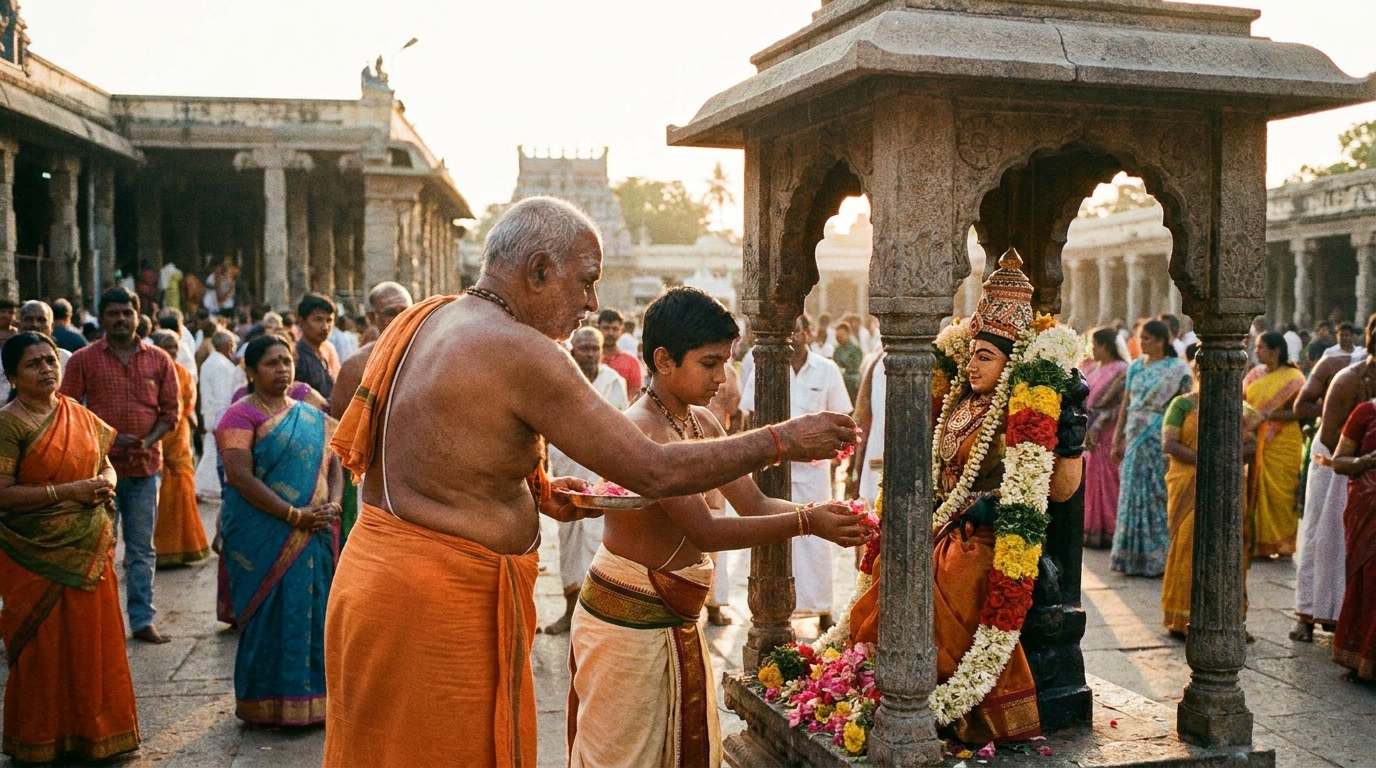
For those walking the path of Bhakti Yoga, honoring and protecting cows isn’t just a tradition from the past — it’s a living, breathing practice that continues today around the world.
Go-seva: Service to Cows as Service to God
Go-seva means “service to cows,” and it is considered one of the most auspicious forms of devotional service. Many Bhakti communities maintain goshalas (cow shelters) where cows are cared for throughout their entire lives — not for profit, but out of love and spiritual duty.
Caring for a cow — feeding her, brushing her, giving her a safe place to live — is a tangible way to express the values of compassion, gratitude, and devotion that define the Bhakti path. It’s love in action.
How You Can Honor This Connection Today
You don’t need to live on a farm to honor the sacred relationship between Krishna and the cows. Here are some simple, heartfelt ways to bring this teaching into your life:
- Chant the name Govinda. When you chant “Govinda,” you’re calling on the Lord who tenderly cares for the most gentle beings. Let that tenderness touch your own heart.
- Practice ahimsa in your daily choices. Consider how your actions affect other living beings, and choose compassion wherever you can.
- Support a goshala. Many Bhakti communities welcome donations and volunteers to help care for cows. Even a small contribution is a beautiful act of devotion.
- Reflect on simplicity. The cows didn’t complicate their love for Krishna. Let their example inspire you to simplify your own spiritual practice — one sincere prayer, one heartfelt chant, one moment of genuine gratitude.
What Krishna and the Cows Reveal About God’s Love for You
Perhaps the most powerful lesson in all of this is what it reveals about how God sees you.
If Krishna — the Supreme Lord, the cause of all causes — spends His days lovingly herding cows, calling them by name, and rushing to find them when they wander off, what does that tell you about how He feels about you?
It tells you that God is not too busy for you. He is not too great to notice you. He is not too distant to care.
In the Srimad Bhagavatam (10.14.8), Lord Brahma offers this prayer to Krishna:
> “tat te ‘nukampāṁ su-samīkṣamāṇo bhuñjāna evātma-kṛtaṁ vipākam hṛd-vāg-vapurbhir vidadhan namas te jīveta yo mukti-pade sa dāya-bhāk”
“My dear Lord, one who earnestly waits for You to bestow Your causeless mercy upon him, all the while patiently suffering the reactions of his past misdeeds and offering You respectful obeisances with his heart, words, and body — is surely eligible for liberation, for it has become his rightful claim.”
God’s mercy is causeless. You don’t have to earn it. You simply have to be open to receiving it — just as the cows of Vrindavan opened their hearts completely to Krishna’s love.
You Are Already Known by Name
Just as Krishna knew every cow in Vrindavan by name, He knows you. He knows your struggles, your hopes, your quiet prayers in the middle of the night. He knows the love in your heart, even when you feel like it isn’t enough.
It is enough. You are enough. And you are deeply, personally loved.
A Gentle Invitation to Begin
Wherever you are on your journey — whether you’ve been chanting for decades or you’re hearing the name “Krishna” for the very first time — you are welcome here. The path of Bhakti Yoga doesn’t require perfection. It simply asks for sincerity.
Take one small step today. Chant “Govinda” softly, even once. Offer a moment of gratitude for the gentle, giving nature of the cow. Open your heart, even just a crack, and let God’s love pour in.
The cows of Vrindavan teach us that the simplest love is often the most powerful. Your love — however small, however imperfect it may feel — is precious to Krishna. He is already reaching out to you, flute in hand, calling you by name.
Come as you are. You are welcome. You are loved. And you are never, ever too far from home.
FAQs
What is the significance of Krishna and the cows in Hinduism?
In Hinduism, Krishna is often depicted as a cowherd, and the cows are considered sacred animals. The relationship between Krishna and the cows symbolizes the loving and nurturing bond between humans and nature, as well as the importance of protecting and caring for all living beings.
What is the story of Krishna and the cows?
According to Hindu mythology, Krishna spent his childhood in Vrindavan, where he herded cows with his friends. The stories of Krishna’s playful interactions with the cows and his compassionate nature towards them are often depicted in Hindu scriptures and folklore.
How are cows revered in Hinduism?
Cows are revered in Hinduism as symbols of abundance, fertility, and the divine mother. They are considered sacred and are often treated with great respect and care. Cows are also associated with the goddess Kamadhenu, who is believed to fulfill all wishes and desires.
What lessons can be learned from the relationship between Krishna and the cows?
The relationship between Krishna and the cows teaches the importance of compassion, love, and harmony with nature. It emphasizes the value of nurturing and protecting all living beings, as well as the interconnectedness of all life.
How is the relationship between Krishna and the cows celebrated in Hindu festivals?
The bond between Krishna and the cows is celebrated in various Hindu festivals, such as Govardhan Puja and Gopashtami, where devotees honor and worship cows as a symbol of Krishna’s love and care for all living beings. These festivals also highlight the significance of sustainable and compassionate living.

