
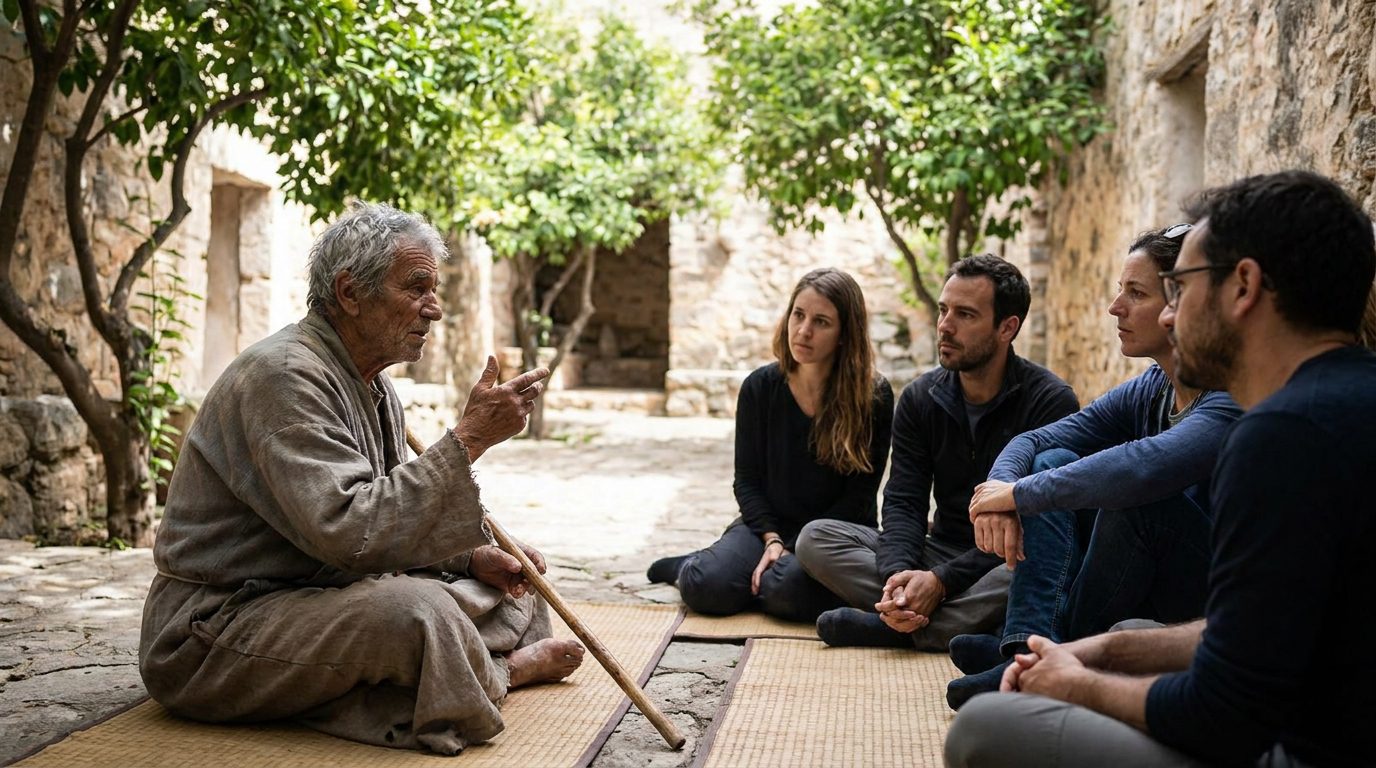
Every sincere soul, at some point, feels a quiet longing: “Is there more to life than what I can see, buy, achieve, or control?” This longing is sacred. In the Bhakti tradition, it is understood as the soul’s natural yearning for loving connection with God.
Bhakti Yoga is the path of devotion—the practical path of love. It invites us to grow through chanting God’s names, heartfelt prayer, humble service, sacred study, and loving community. Yet because the spiritual path touches the deepest parts of our heart, we often need guidance from those who have walked before us.
A genuine spiritual guide does not replace our relationship with God. Rather, they help us remember it.
In Sanskrit, the word guru can be understood as “one who brings light to darkness.” A true guru, teacher, mentor, or spiritual guide helps remove confusion and awakens faith, wisdom, humility, and love. They do not demand blind following. They help us see more clearly.
For seekers of all backgrounds—whether you were raised in a religious tradition, are returning to spiritual life after many years, or are exploring devotion for the first time—discovering genuine spiritual guides can be one of the most meaningful steps in your journey.
The Heart of a True Spiritual Guide
A guide points beyond themselves
A genuine spiritual guide does not make themselves the final destination. They point us toward God.
In Bhakti Yoga, the teacher’s role is to help us deepen our relationship with the Divine, often addressed through names such as Krishna, Rama, Govinda, or Hari. These names are not sectarian labels meant to exclude anyone. They are sacred names that reveal God as loving, beautiful, personal, and close to the heart.
A true guide encourages us to chant, pray, serve, and develop our own sincere connection. They may offer teachings, corrections, encouragement, and example, but they never try to possess the soul of another person.
The Bhagavad-gita, one of the most treasured scriptures of Bhakti, describes spiritual wisdom as something received through humility, sincere inquiry, and service. In Bhagavad-gita 4.34, Krishna says that those who have seen the truth can share knowledge with a sincere seeker. This verse does not encourage blind submission, but a loving process: approach with respect, ask thoughtful questions, and serve with sincerity.
A guide lives what they teach
Words can inspire us, but character teaches us.
A genuine spiritual guide tries to live according to the truths they share. They may not present themselves as perfect in a worldly sense, but their life shows integrity, compassion, discipline, humility, and devotion.
In Bhakti, spiritual advancement is not measured by how many followers someone has, how beautifully they speak, or how impressive their external appearance may be. It is measured by qualities of the heart.
Are they becoming more humble?
Do they serve others?
Do they honor scripture?
Do they encourage love for God?
Do they treat people with care?
Do they help others grow without exploiting them?
These questions matter.
A guide awakens devotion, not fear
Fear may control people for a time, but love transforms the heart.
A genuine spiritual guide may speak honestly and even firmly when needed, but their purpose is healing, not domination. They help us face our ego, our selfish habits, and our forgetfulness of God—but always with compassion.
In Bhakti Yoga, the goal is prema, pure love for God. This love is not forced. It awakens naturally when the heart is nourished through sacred sound, good association, service, and grace.
If a teacher constantly makes people feel afraid, ashamed, manipulated, or dependent on them, we should pause and seek guidance from trusted, mature devotees. Genuine spiritual guidance should gradually make us more honest, more hopeful, more prayerful, and more loving.
Signs of Genuine Spiritual Guides

They are rooted in authentic teachings
A real spiritual guide does not invent a path based on personal ambition. They are connected to a living tradition of wisdom.
In Bhakti, this often means they honor guru, sadhu, and shastra. These Sanskrit words are simple but important:
Guru means spiritual teacher.
Sadhu means saintly people or sincere devotees who live with spiritual purpose.
Shastra means sacred scripture.
Together, these three provide balance. A teacher’s words should harmonize with scripture and with the wisdom of saintly persons. This protects both the guide and the seeker from confusion.
The Srimad-Bhagavatam, a beloved Bhakti scripture, repeatedly emphasizes hearing from realized and sincere devotees. Hearing sacred wisdom from those who practice it can purify the heart and awaken devotion.
They encourage personal practice
A genuine guide does not simply entertain us with spiritual ideas. They encourage practical transformation.
In Bhakti Yoga, this often includes:
Chanting sacred names, especially the maha-mantra: Hare Krishna, Hare Krishna, Krishna Krishna, Hare Hare / Hare Rama, Hare Rama, Rama Rama, Hare Hare.
Prayer, offered in our own words or through traditional prayers.
Seva, which means service offered with love.
Satsanga, spiritual association with sincere seekers and devotees.
Study of sacred texts like the Bhagavad-gita and Srimad-Bhagavatam.
A genuine guide helps us take the next step, not merely admire the path from a distance.
They may say, “Begin with a few minutes of chanting each day.” Or, “Offer your food with gratitude.” Or, “Read one verse of the Gita and reflect on how to live it.” Such guidance is simple, practical, and powerful.
They respect your free will
Love requires freedom.
A true spiritual guide honors the sacred individuality of each person. They may advise, encourage, and warn, but they do not coerce. They understand that every soul grows through sincerity, not pressure.
Krishna Himself honors free will in the Bhagavad-gita. After teaching Arjuna profound spiritual wisdom, Krishna says in Bhagavad-gita 18.63, “Deliberate on this fully, and then do what you wish to do.” This is astonishing. God gives guidance, but He does not remove Arjuna’s freedom.
A genuine guide follows that divine example. They help us make wise choices, but they do not control our conscience.
They show compassion to all
Bhakti is not meant to make the heart narrow. It is meant to make the heart wide.
A genuine spiritual guide sees every living being as part of God. They may have clear spiritual principles, but they do not use those principles as weapons of pride. They welcome sincere people from all backgrounds.
The Bhagavad-gita teaches that the wise see with equal vision. This does not mean they ignore differences, but they recognize the spiritual essence within everyone. Whether someone is new to chanting, uncertain about theology, wounded by religion, or deeply committed, a true guide responds with patience and care.
At The Bhakti House, this mood is essential: everyone is welcome to come closer to God, one sincere step at a time.
Check out our latest articles at https://thebhaktihouse.org/blog.
The Difference Between Inspiration and Authority
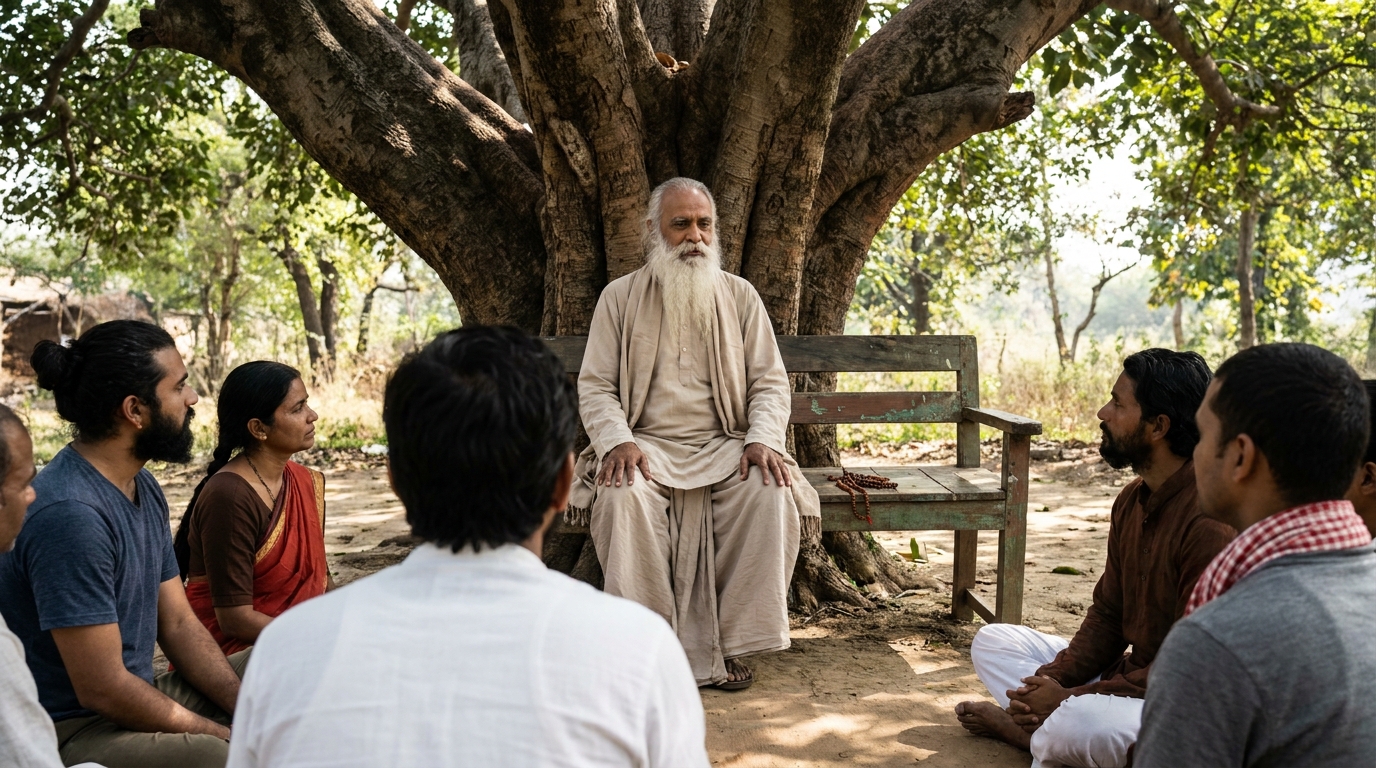
Many people can inspire us
On the spiritual path, we may receive inspiration from many sources. A kirtan leader may open our heart through chanting. A devotee cooking prasada—sanctified food offered to God—may teach us love through hospitality. A friend may encourage our daily practice. A speaker may help us understand scripture in a new way.
All of these people can be meaningful guides in a broad sense.
We should be grateful for anyone who helps us remember God.
Not every inspiring person should become our main guide
At the same time, inspiration is not the same as spiritual authority.
Someone may speak beautifully but not be ready to deeply guide others. Someone may be popular but not spiritually mature. Someone may have charisma but lack accountability.
In Bhakti, spiritual life grows through relationship, and relationships require discernment. Discernment does not mean cynicism. It means thoughtful, prayerful observation.
Before accepting someone as a primary spiritual guide, it is wise to observe:
How do they behave when they are not being praised?
How do they treat those who cannot benefit them?
Do they welcome questions?
Are they accountable to others?
Do they honor their own teachers?
Do they live with spiritual discipline?
Do they encourage dependence on God or dependence on themselves?
A sincere seeker does not need to rush. Spiritual guidance is precious. It is worth approaching carefully.
Healthy authority serves the soul
In devotional life, authority should be an expression of service.
A genuine guide may sometimes challenge us, because spiritual growth requires honesty. But their challenge is meant to help us become free from ego, not trapped by another person’s ego.
Healthy spiritual authority brings clarity, shelter, and encouragement. It does not isolate us from community, shame us into obedience, or make us feel spiritually worthless.
A true guide helps us stand before God with humility and hope.
Warning Signs to Notice with Care
When a teacher demands unquestioning loyalty
Faith is beautiful. Blindness is dangerous.
If a teacher discourages all questions, demands absolute loyalty, or says that doubt itself is sinful, we should be cautious. Honest questions can be part of sincere spiritual growth.
Arjuna asked Krishna many questions in the Bhagavad-gita. He was confused, emotional, and uncertain. Krishna did not reject him. He lovingly guided him.
A genuine teacher welcomes sincere inquiry. They may not always have immediate answers, but they respect the seeker’s heart.
When money, power, or control becomes central
Spiritual communities need practical support, and offerings can be sacred when given freely and used responsibly. But if a teacher appears overly focused on wealth, status, luxury, or control, this is a serious concern.
Bhakti teaches that everything belongs to God and should be used in service. A genuine guide lives as a caretaker, not an owner. They understand that people’s trust is sacred.
We should be wary of any spiritual leader who uses devotion to exploit others financially, emotionally, physically, or socially.
When secrecy replaces transparency
Some spiritual matters are personal and confidential. However, secrecy that protects abuse, manipulation, or hypocrisy is not spiritual.
Healthy spiritual communities have accountability. Mature guides accept correction. They do not place themselves above ethical standards.
In Bhakti, humility is not decorative. It is essential. A guide who cannot be questioned, corrected, or held accountable may be walking a dangerous path.
When people become smaller instead of stronger
A genuine guide helps people grow in faith, responsibility, compassion, and courage.
If disciples or followers become increasingly anxious, isolated, dependent, judgmental, or afraid, something may be unhealthy. Bhakti should soften the heart and strengthen the soul.
Of course, spiritual growth can bring discomfort. We may have to face our pride, attachments, and habits. But over time, authentic guidance should help us become more loving, more truthful, more balanced, and more connected to God and others.
How to Prayerfully Seek a Genuine Guide
Begin with sincere prayer
The search for spiritual guidance should begin with prayer.
You can pray simply:
“Dear Lord, please guide me. Please send people into my life who help me love You. Please protect me from illusion and pride. Please help me recognize genuine devotion.”
Prayer opens the heart. It reminds us that the ultimate guide is God within.
In the Bhakti tradition, Paramatma means the Lord in the heart—the indwelling presence of God who accompanies every soul. A genuine external guide helps us hear that inner guidance more clearly.
Spend time in uplifting association
Satsanga, or spiritual association, is one of the great gifts of Bhakti Yoga. When we spend time with sincere devotees, our faith becomes nourished.
This may include joining kirtan, attending classes, sharing prasada, reading scripture together, or serving in community. Over time, we begin to notice who inspires trust, humility, steadiness, and devotion.
Do not underestimate the power of simply being around people who are trying to love God.
The Srimad-Bhagavatam teaches that hearing and chanting in the company of devotees cleanses the heart. This cleansing may happen gently, like rain softening dry earth.
Study sacred scripture
Scripture gives us a spiritual compass.
The Bhagavad-gita helps us understand the soul, God, karma, devotion, and the purpose of life. Karma means action and reaction—the principle that our choices shape our consciousness and future experiences. Bhakti offers a way to spiritualize our actions by offering them to God.
The Srimad-Bhagavatam reveals the beauty of loving devotion and the lives of saints who fully gave their hearts to God.
By studying scripture, we become less likely to be misled by personality alone. We learn to recognize teachings that are aligned with divine wisdom.
Even reading one verse a day can transform our inner life.
Observe over time
Trust should be built slowly.
In today’s world, we may encounter spiritual teachers through social media, videos, podcasts, retreats, and online communities. These can be wonderful doors, but they also show only part of a person’s life.
If possible, observe how a guide lives over time. Notice their relationships. Notice their consistency. Notice how they respond to difficulty. Notice whether their students are growing in healthy ways.
Bhakti is a lifelong path. We do not need to rush sacred commitments.
Ask mature devotees for counsel
If you are considering accepting someone as a spiritual guide, speak with mature practitioners you trust. Ask thoughtful questions. Listen carefully.
In healthy Bhakti communities, guidance is not isolated. There is a network of elders, teachers, peers, and scriptures that help support the seeker.
Humility means we accept that we may not see everything clearly on our own. Asking for help is not weakness. It is wisdom.
The Role of the Spiritual Guide in Bhakti Yoga
Helping us chant with attention and feeling
Chanting is central to Bhakti Yoga.
The Sanskrit word mantra means a sacred sound that frees the mind. The maha-mantra is called “great mantra” because it is a powerful prayer of the heart:
Hare Krishna, Hare Krishna, Krishna Krishna, Hare Hare
Hare Rama, Hare Rama, Rama Rama, Hare Hare
This chanting is not merely music or meditation technique. It is a call to God. “Hare” addresses divine energy, the loving energy of the Lord. “Krishna” means the all-attractive Lord. “Rama” means the source of joy.
A genuine guide helps us chant not mechanically, but with sincerity. They may encourage us to set aside daily time, listen carefully to the sound, and offer our heart honestly.
Even distracted chanting has value when we continue with humility.
Teaching us how to serve
Seva means loving service. In Bhakti, service is not just a task. It is a way of offering our life to God.
A spiritual guide may help us discover service that suits our nature. Some serve through music, teaching, cooking, organizing, cleaning, writing, caring for guests, gardening, supporting families, or simply encouraging others.
No service is small when offered with love.
One person may speak to hundreds. Another may wash the floor after everyone leaves. In the eyes of Bhakti, both can be sacred if offered sincerely.
A genuine guide helps us serve without pride and without burnout. They remind us that we are not servants of ego or institution, but servants of God and God’s beloved children.
Helping us face the ego gently but honestly
The ego is the false sense of self—the idea that “I am the center, I am the controller, I am separate from God.” Spiritual life gradually softens this illusion.
A genuine guide helps us see our patterns: our need for approval, our anger, our envy, our fear, our attachments. This can be uncomfortable, but it is also merciful.
Bhakti does not ask us to hate ourselves. It asks us to remember who we truly are: eternal souls, beloved by God, meant for loving service.
A guide who understands this will correct with compassion. They will not crush the heart. They will help heal it.
Encouraging steady spiritual growth
Spiritual growth is often gradual.
We may have days of deep inspiration and days of dryness. We may chant with tears one morning and struggle with distraction the next. We may feel close to God, then feel far away.
A genuine guide teaches us steadiness.
In Sanskrit, sadhana means regular spiritual practice. Sadhana may include daily chanting, prayer, study, worship, and service. It is how we show up for our relationship with God, even when our emotions rise and fall.
Just as a garden needs regular watering, the heart needs daily spiritual nourishment.
A true guide helps us continue.
Receiving Guidance Without Losing Personal Responsibility
A guide can help, but cannot do the work for us
No one can love God on our behalf.
A spiritual guide can encourage us, teach us, pray for us, and walk beside us. But we must also practice. We must chant. We must pray. We must make choices that support our spiritual life.
Bhakti is deeply personal. It is not passive.
Krishna invites us in the Bhagavad-gita to remember Him, become His devotee, worship Him, and offer our love. These are active invitations. They involve the heart, the mind, the body, and daily life.
Keep your conscience awake
Healthy spiritual guidance does not require us to shut down our conscience.
If something feels deeply wrong, manipulative, or harmful, we should not ignore that inner warning. We can pray, seek counsel, consult scripture, and speak with trusted devotees.
A genuine guide will not ask us to violate basic morality in the name of devotion. Bhakti purifies character. It does not excuse harm.
Let guidance lead to deeper dependence on God
The best spiritual guides help us become more dependent on God, not more dependent on them.
They may become dear to us, and gratitude toward them is natural. But the relationship is healthy when it strengthens our own prayer, our own chanting, our own service, and our own trust in divine grace.
A true guide is like a clear window. Through them, we see the light more clearly. But the light belongs to God.
Welcoming Guidance in Community
Spiritual family supports the journey
Bhakti is personal, but it is not meant to be lonely.
Community helps us grow. We learn patience by serving with others. We learn humility by listening. We learn compassion by welcoming newcomers. We learn steadiness by practicing together.
In a devotional community, guidance may come through many loving channels: elders, teachers, friends, kirtan leaders, scripture study groups, and quiet servants whose lives speak louder than words.
A genuine spiritual culture does not create dependence on one personality alone. It creates an environment where everyone is encouraged to remember God.
Hospitality is also guidance
Sometimes guidance comes through a warm meal, a kind smile, or someone remembering your name.
In Bhakti, prasada means mercy—especially food that has been offered to God with love and then shared. Receiving prasada reminds us that spiritual life is not only philosophy. It is nourishment, relationship, and grace.
A community that welcomes people with kindness reflects the heart of genuine guidance.
Everyone has something to offer
You do not need to be advanced to begin serving. You do not need to know every Sanskrit word. You do not need to have your life perfectly arranged.
Come as you are, and bring your sincerity.
Bhakti grows through offering what we have. A voice, a question, a helping hand, a prayer, a tear, a flower, a meal, a few minutes of chanting—God receives love more than external perfection.
Taking the Next Step with Humility and Hope
Start small and sincere
If you are seeking a genuine spiritual guide, begin with simple steps.
Chant a little each day.
Pray for guidance.
Read a verse from the Bhagavad-gita.
Spend time with sincere devotees.
Serve in a small way.
Ask thoughtful questions.
Observe carefully.
Let your heart be open, but not careless. Let your mind be thoughtful, but not cynical. Let your spiritual life grow with both faith and wisdom.
Trust that God sees your sincerity
The Bhakti scriptures assure us that God is not far away. He is present in the heart, aware of every sincere effort.
Even if we have been confused before, disappointed by leaders, hurt by religion, or uncertain about where we belong, the path of devotion remains open.
God can guide us again.
Sometimes He guides through scripture. Sometimes through chanting. Sometimes through a teacher. Sometimes through a friend. Sometimes through a quiet moment of prayer when the heart finally softens.
A genuine guide helps us love more deeply
The purpose of spiritual guidance is not to make us proud, sectarian, or spiritually superior. It is to help us love.
Love God.
Love God’s names.
Love service.
Love truth.
Love all living beings as beloved parts of the Divine.
This is the heart of Bhakti Yoga.
A genuine guide helps awaken that love—not by force, but by example, wisdom, compassion, and grace.
A Prayer for Discovering Genuine Spiritual Guides
Dear Lord, please guide my heart toward truth.
Please help me recognize those who genuinely serve You.
Protect me from pride, illusion, and harmful influence.
Give me humility to learn, courage to ask, and sincerity to practice.
May I find guidance that brings me closer to You.
May my life become an offering of love.
And may every step I take lead me deeper into devotion.
Everyone Is Welcome to Take One Sincere Step
Discovering genuine spiritual guides is not about joining an exclusive circle or proving spiritual qualification. It is about receiving help on the soul’s journey back to love.
Whether you are new to Bhakti Yoga, returning after time away, exploring God with questions, or longing for deeper devotion, you are welcome.
Come chant. Come pray. Come serve. Come listen. Come share prasada. Come sit with sincere seekers. Come with your questions and your hopes.
God sees the heart, and one sincere step toward Him is never wasted.
Everyone is welcome to take that one sincere step today.
FAQs
What is the importance of finding an authentic spiritual teacher?
Finding an authentic spiritual teacher is important because they can provide guidance, support, and wisdom on the spiritual path. A genuine teacher can help individuals navigate their spiritual journey and avoid potential pitfalls or misunderstandings.
How can one identify an authentic spiritual teacher?
Authentic spiritual teachers often exhibit qualities such as humility, compassion, wisdom, and a genuine desire to help others. They may also have a lineage or a proven track record of guiding students towards spiritual growth and transformation.
What are some red flags to watch out for when seeking a spiritual teacher?
Some red flags to watch out for when seeking a spiritual teacher include a focus on material gain, manipulation or control tactics, lack of transparency, and a disregard for individual autonomy and free will. It’s important to trust one’s intuition and be discerning when evaluating potential teachers.
Why is it important to do thorough research before committing to a spiritual teacher?
Thorough research is important before committing to a spiritual teacher because the relationship between a teacher and student is deeply influential and can have a significant impact on one’s spiritual development. It’s crucial to ensure that the teacher’s values, teachings, and methods align with one’s own spiritual goals and beliefs.
What are some common misconceptions about spiritual teachers?
Common misconceptions about spiritual teachers include the belief that they are infallible or perfect, that they have all the answers, and that they can single-handedly bring about spiritual enlightenment in their students. In reality, authentic spiritual teachers are human and may have their own limitations and imperfections.

