
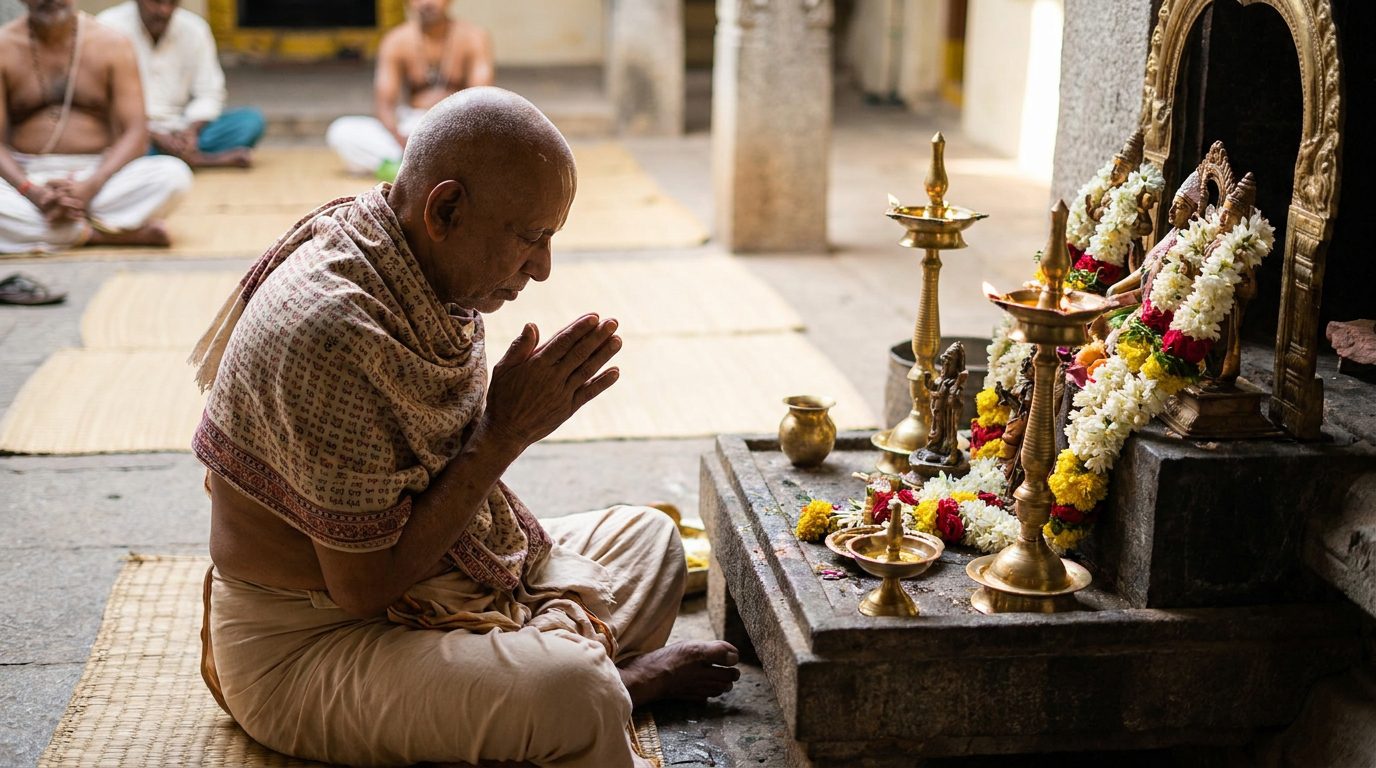
Prayer is one of the most natural expressions of the soul. Long before we have perfect philosophy, perfect discipline, or perfect words, the heart knows how to call out. In the Vaishnava tradition of Bhakti Yoga, prayer is a loving conversation with God, especially in His personal forms such as Krishna, Rama, Vishnu, Narayana, and their divine expansions.
Vaishnava prayers are not only ancient Sanskrit verses. They are living doorways into devotion, humility, surrender, gratitude, and spiritual courage. They help us remember who we are: eternal souls, beloved parts of the Supreme, meant to live in loving relationship with God and all beings.
Whether you are new to Bhakti Yoga, returning after many years, or simply curious about spiritual prayer, you are welcome here. You do not need to be Indian, Hindu, Sanskrit-speaking, or “advanced” to begin. A sincere heart is the real qualification.
Vaishnava prayers are devotional prayers offered to the Supreme Lord, His divine names, His incarnations, His devotees, His sacred scriptures, and the spiritual teacher. “Vaishnava” means a devotee of Vishnu or Krishna. In simple terms, a Vaishnava is someone who seeks to love and serve God with humility, compassion, and devotion.
These prayers may be spoken, sung, whispered, read, memorized, or simply held in the heart. Some are found in sacred texts like the Bhagavad Gita, Srimad Bhagavatam, Vishnu Purana, and the writings of great saints such as Sri Chaitanya Mahaprabhu, the Goswamis of Vrindavan, and many acharyas, or spiritual teachers.
Prayer as Relationship
In Bhakti Yoga, prayer is not only asking God for things. It is relationship.
We may pray:
- “Please guide me.”
- “Please forgive me.”
- “Please help me remember You.”
- “Please let me serve.”
- “Please let my heart become softer.”
- “Thank You for staying with me.”
This kind of prayer brings us closer to God because it opens the heart. It is honest, personal, and deeply human.
Prayer as Surrender
One important Sanskrit word in Vaishnava prayer is sharanagati, which means surrender or taking shelter. This does not mean giving up in a hopeless way. It means placing our trust in divine love.
Sharanagati is the heart saying, “I cannot control everything. I cannot save myself by my own strength alone. O Lord, please guide me. I belong to You.”
In the Bhagavad Gita 18.66, Krishna lovingly says:
“Abandon all varieties of separate duty and simply surrender unto Me. I shall deliver you from all sinful reactions. Do not fear.”
For a devotee, this is not a threat. It is an embrace. Krishna is inviting the soul to come home.
Why Vaishnava Prayers Matter in Bhakti Yoga
Bhakti Yoga is the yoga of devotion, the path of love. The word bhakti means loving devotion or loving service. While some forms of yoga emphasize physical postures, breath control, or meditation on the impersonal absolute, Bhakti Yoga focuses on awakening our loving relationship with the Supreme Person.
Prayer is central to this path because love grows through communication. Just as friendship deepens through conversation, our relationship with God deepens through prayer, chanting, hearing, and service.
Prayer Purifies the Heart
The heart carries many impressions: fear, pride, grief, desire, envy, regret, and longing. Vaishnava prayers gently cleanse the heart by bringing our attention back to God.
In the Sri Shikshashtakam, the eight prayers of Sri Chaitanya Mahaprabhu, the first verse describes the chanting of God’s names as cleansing the mirror of the heart. This means that our original spiritual nature is already there, but it becomes covered. Through prayer and chanting, the soul begins to shine again.
Prayer Gives Strength in Difficulty
Life brings uncertainty. We face illness, loss, anxiety, relationship struggles, and questions about purpose. Vaishnava prayer does not always remove difficulty immediately, but it gives us shelter within difficulty.
When we pray, we remember: “I am not alone. God is present. The saints have walked this path before me. I can take one more step.”
In the Srimad Bhagavatam, we find many prayers offered in moments of crisis. Queen Kunti prays with deep wisdom after great suffering. Prahlada Maharaja prays even while being persecuted. Dhruva Maharaja prays as a child seeking shelter. Their prayers remind us that devotion can grow in any circumstance.
Prayer Softens Our Dealings With Others
True prayer does not make us proud. It makes us kind.
If our prayers are sincere, we begin to see others as souls, not as enemies, objects, or labels. Vaishnava saints teach that humility, compassion, and service are signs of spiritual progress.
A famous teaching from Sri Chaitanya Mahaprabhu says:
“One should chant the holy name of the Lord in a humble state of mind, thinking oneself lower than a blade of grass, more tolerant than a tree, offering respect to all, and expecting no honor for oneself.”
This is not self-hatred. It is freedom from ego. It is the beginning of real love.
Types of Vaishnava Prayers
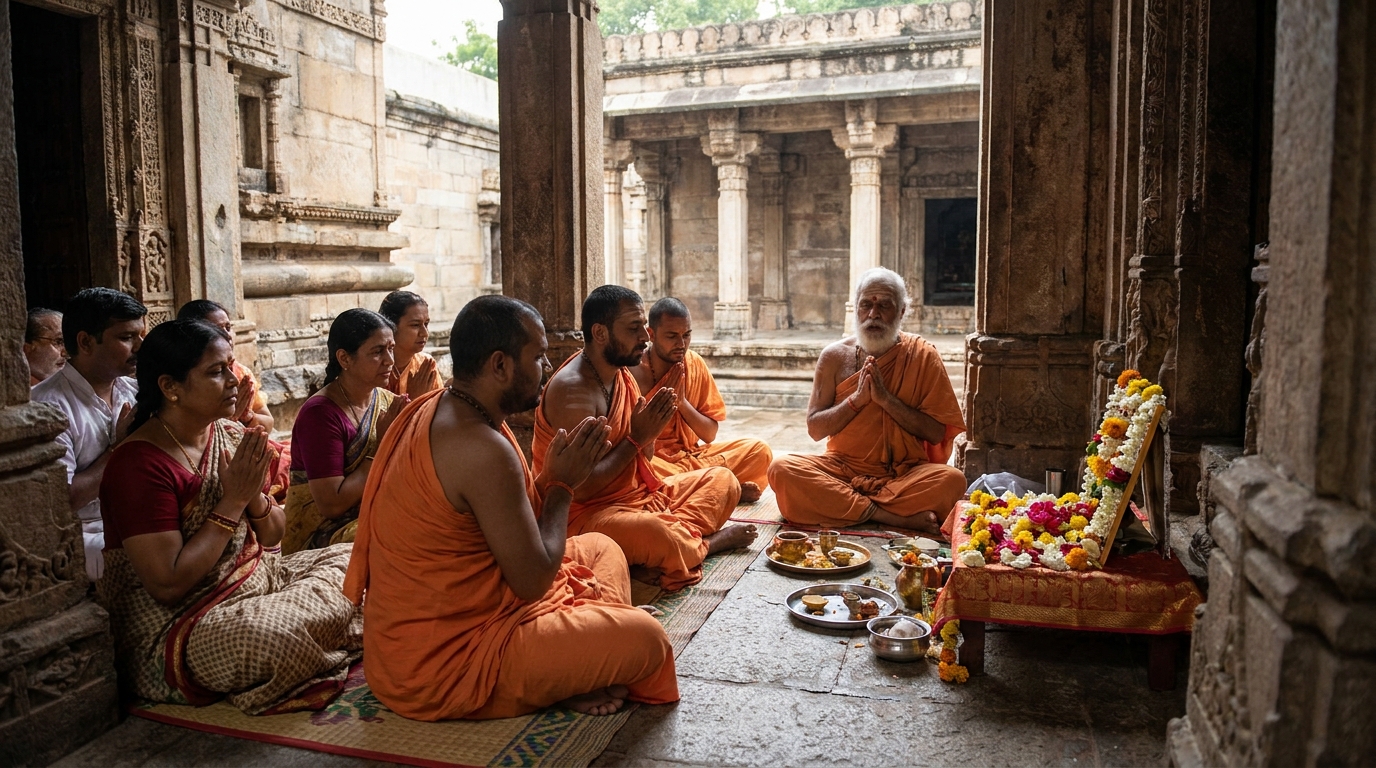
Vaishnava prayers come in many forms. Some are formal and scriptural. Others are simple and spontaneous. Both are valuable when offered with sincerity.
Mantra Prayer
A mantra is a sacred sound vibration that helps focus the mind and awaken spiritual consciousness. The word mantra can be understood as “that which delivers the mind.”
The most well-known Vaishnava mantra is the Maha Mantra, or “great mantra”:
Hare Krishna Hare Krishna
Krishna Krishna Hare Hare
Hare Rama Hare Rama
Rama Rama Hare Hare
This mantra is a prayer to the Lord and His divine energy. “Hare” calls upon God’s loving spiritual energy. “Krishna” means the all-attractive Lord. “Rama” means the source of spiritual joy.
A simple meaning is: “O Lord, O divine energy of the Lord, please engage me in Your loving service.”
This mantra can be sung in kirtan, chanted softly on beads in japa meditation, or repeated quietly during the day.
Stotra and Stuti Prayers
Stotra and stuti are Sanskrit words for prayers of praise. These prayers glorify the qualities, activities, beauty, mercy, and names of the Lord.
Examples include:
- Vishnu Sahasranama, the thousand names of Lord Vishnu
- Damodarastakam, prayers to baby Krishna as Damodara
- Govindam Adi Purusham, prayers glorifying Krishna as the original person
- Sri Nrisimha Prayers, prayers to Lord Nrisimhadeva for protection
- Gajendra’s prayers from the Srimad Bhagavatam
These prayers help the mind become absorbed in God’s qualities. Instead of constantly meditating on problems, fears, and worldly distractions, the heart learns to meditate on divine beauty and mercy.
Prayers of Repentance and Humility
Sometimes prayer means admitting our weakness. This is not meant to make us feel unworthy of love. Rather, it makes us honest before God.
Vaishnava acharyas often pray, “I am fallen. I am distracted. I have forgotten You. Please lift me up.”
This humility is precious because it removes the false idea that we are spiritually independent. We need grace. We need guidance. We need mercy. And the beautiful truth of Bhakti Yoga is that God is eager to give that mercy.
Prayers for Service
In Bhakti, we do not only pray, “Please serve me.” We learn to pray, “Please let me serve You.”
Service is called seva in Sanskrit. Seva means loving service offered for the pleasure of God and the benefit of others. It may include cooking, cleaning, teaching, singing, caring for family, feeding others, welcoming guests, supporting a temple, or simply offering kindness.
A service prayer may be very simple:
“Dear Krishna, please let my words, work, and thoughts become an offering to You today.”
Please visit our website for more information on our articles: articles.
Essential Vaishnava Prayers to Know
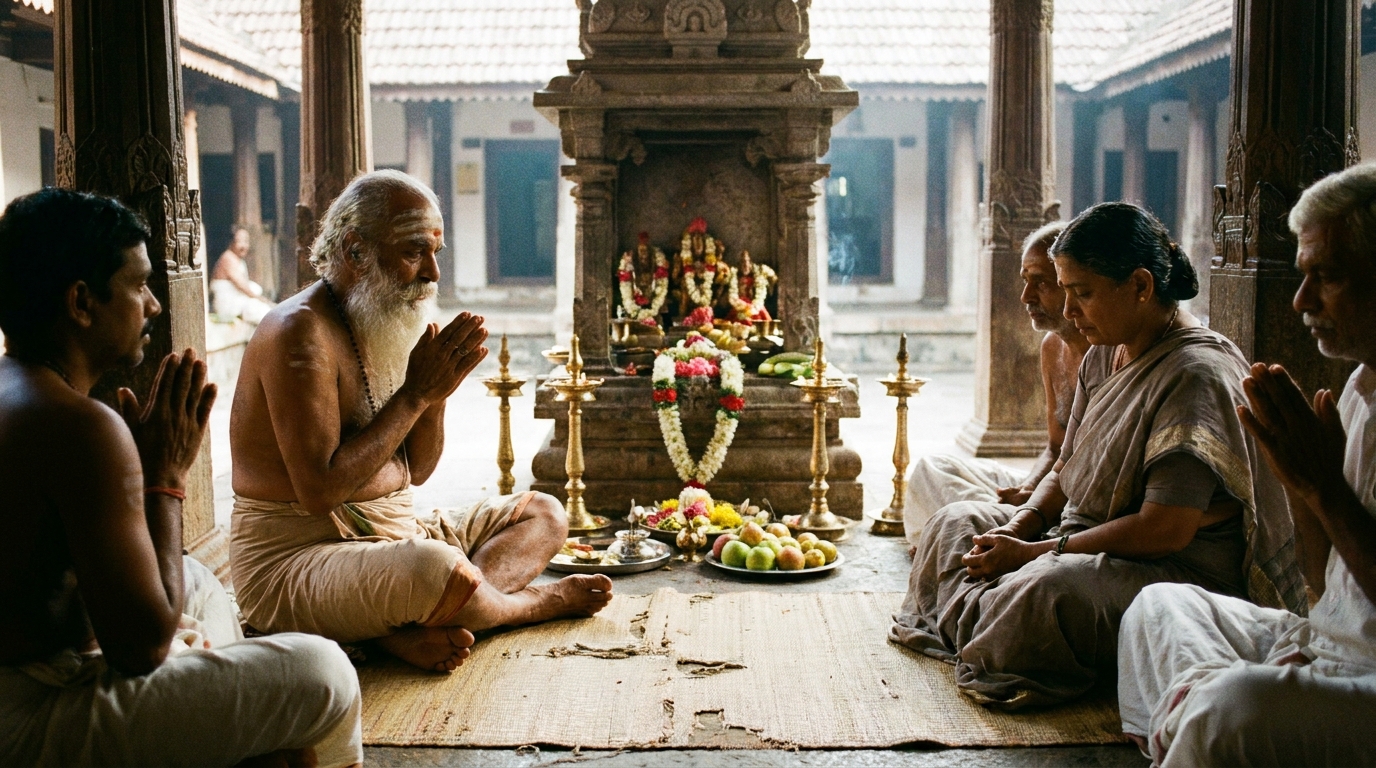
There are many beautiful Vaishnava prayers. A beginner does not need to learn everything at once. One sincere prayer practiced daily can transform the heart.
The Maha Mantra
The Maha Mantra is the heart of the chanting tradition, especially in the line of Sri Chaitanya Mahaprabhu. It is both simple and profound. Anyone can chant it, regardless of background, age, education, or spiritual history.
Chanting can be done in two main ways:
Japa is personal mantra meditation, often practiced with beads. One repeats the mantra softly and attentively.
Kirtan is congregational singing, often with instruments, call-and-response, clapping, and joyful participation.
Both forms are powerful. Japa brings personal focus. Kirtan brings shared devotion and spiritual community.
Sri Shikshashtakam
Sri Shikshashtakam means “eight instructions.” These are eight prayers given by Sri Chaitanya Mahaprabhu, who is honored in the Gaudiya Vaishnava tradition as Krishna Himself appearing in the mood of a devotee.
These prayers describe the whole journey of Bhakti Yoga: from cleansing the heart through chanting, to humility, to longing, to complete surrender in divine love.
One especially beloved line expresses pure devotion:
“O Lord, I do not want wealth, followers, beautiful companions, or even liberation. I only want causeless devotion to You, birth after birth.”
This prayer teaches us that the highest gift is not material success or even escape from suffering. The highest gift is love for God.
Prayers to the Spiritual Teacher
In Vaishnava tradition, the spiritual teacher is called guru, meaning one who helps remove darkness by giving spiritual knowledge. A genuine guru does not ask to be worshiped independently of God. Rather, the guru guides the soul toward loving service to Krishna.
Prayers to the guru express gratitude for spiritual guidance, humility, and the desire to follow divine teachings.
A simple prayer may be:
“May I receive guidance with sincerity. May I honor the wisdom given by the saints. May I use what I learn to serve God and others.”
Prayers to Lord Nrisimhadeva
Lord Nrisimhadeva is the half-man, half-lion form of the Lord who appeared to protect His young devotee Prahlada. Many Vaishnavas pray to Nrisimhadeva for protection, courage, and the removal of obstacles in spiritual life.
These prayers remind us that God protects devotion. Even when circumstances seem frightening, divine love is stronger than fear.
Damodarastakam
Damodarastakam is a beloved set of eight prayers sung especially during the month of Kartik. It glorifies Krishna as Damodara, the child form of Krishna who was bound around the waist by Mother Yashoda’s love.
The word Damodara comes from dama, meaning rope, and udara, meaning belly. The Lord who cannot be bound by the universe becomes bound by the love of His devotee.
This prayer reveals one of the sweetest truths of Bhakti Yoga: God is not only majestic and powerful. He is also intimate, playful, and conquered by love.
How to Practice Vaishnava Prayer Daily
A devotional prayer practice does not need to be complicated. The most important qualities are sincerity, regularity, and a willingness to grow.
Begin With a Small Commitment
Start with something realistic. You might choose five minutes each morning to chant the Maha Mantra, read one verse from the Bhagavad Gita, or offer a simple prayer before beginning your day.
A small daily practice is often more helpful than a big promise we cannot maintain. Bhakti grows through steady, loving repetition.
You could begin with:
“Dear Lord, thank You for this day. Please help me remember You. Please guide my thoughts, words, and actions. Please let me be of service.”
Create a Sacred Space
A sacred space helps the mind settle. It does not need to be elaborate. You may keep a clean corner with a picture of Krishna, Rama, Vishnu, Sri Chaitanya, or a sacred symbol. You may light a candle or incense, offer flowers, or keep your prayer beads there.
The purpose is not decoration. The purpose is remembrance.
When you return to the same place each day, the heart begins to recognize: “This is where I pause. This is where I listen. This is where I turn toward God.”
Pray Before Eating
In Bhakti Yoga, food offered to God with love becomes prasadam, which means mercy. Before eating, we can pause and offer gratitude.
A simple prayer may be:
“Dear Krishna, thank You for this food. Please accept this offering. May it nourish me for service.”
This practice transforms eating from consumption into communion. It helps us remember that life is sustained by divine grace.
Chant While Walking, Cooking, or Driving
Prayer does not have to stay in one place. The holy names can accompany daily life. You can chant quietly while walking, cooking, cleaning, or commuting.
Of course, when driving or working, remain attentive and safe. But even a gentle remembrance can spiritualize ordinary moments.
Bhakti Yoga is practical. It brings devotion into real life, not only into temples or retreats.
Understanding Sanskrit Terms in Vaishnava Prayers
Sanskrit can feel unfamiliar at first, but it is not meant to create distance. These sacred words are like spiritual seeds. When understood and practiced, they grow into realization.
Bhakti
Bhakti means devotion, loving service, or divine love. It is not just emotion. It is love expressed through action: chanting, prayer, service, hearing scripture, remembering God, and caring for others.
Krishna
Krishna means “the all-attractive one.” In Vaishnava understanding, Krishna is the Supreme Personality of Godhead, the original source of all divine forms. He attracts the heart through beauty, wisdom, compassion, playfulness, and love.
Vishnu or Narayana
Vishnu means the all-pervading Lord who sustains the universe. Narayana refers to the Supreme Lord as the shelter of all beings. Vaishnavas honor Vishnu, Narayana, Krishna, Rama, and other forms as the same Supreme Lord appearing in different loving relationships.
Seva
Seva means service offered with love. In Bhakti Yoga, service is not considered low or burdensome. It is sacred. Through seva, we express love in practical ways.
Prasadam
Prasadam means mercy. It often refers to food that has been lovingly offered to God and then received as a blessing. Sharing prasadam is one of the sweetest forms of Vaishnava hospitality.
Nama
Nama means name. In Bhakti, God’s names are not considered ordinary sound. The divine name carries the presence and mercy of the Lord. Chanting nama is a direct way to associate with God.
Scriptural Foundations for Vaishnava Prayer
Vaishnava prayers are rooted in sacred texts and lived experience. Scripture gives us language for devotion and examples of how great souls prayed.
Bhagavad Gita: Prayer and Surrender
The Bhagavad Gita is a sacred conversation between Krishna and Arjuna. Arjuna begins confused, grieving, and overwhelmed. Instead of pretending to be strong, he turns to Krishna and says, “I am Your disciple. Please instruct me.”
This is prayer in action. Arjuna’s openness becomes the doorway to divine wisdom.
Krishna teaches that we can offer everything to Him:
“Whatever you do, whatever you eat, whatever you offer or give away, and whatever austerities you perform, do that as an offering to Me.”
Bhagavad Gita 9.27
This verse makes Bhakti practical. Our whole life can become prayer.
Srimad Bhagavatam: Prayers of the Devotees
The Srimad Bhagavatam is filled with prayers from kings, children, sages, queens, animals, and even beings in distress. This shows us that prayer belongs to everyone.
Gajendra, the elephant king, prayed while trapped by a crocodile. Prahlada prayed as a child surrounded by danger. Queen Kunti prayed after immense suffering. Their examples teach us that prayer does not require perfect conditions.
Sometimes the most sincere prayer comes when we finally realize we need God.
The Teachings of Sri Chaitanya Mahaprabhu
Sri Chaitanya Mahaprabhu emphasized the chanting of the holy names as the most accessible spiritual practice for this age. He welcomed people from many backgrounds and showed that divine love is not limited by birth, social status, scholarship, or past mistakes.
His movement centered on sankirtan, the congregational chanting of God’s names. Sankirtan is both prayer and celebration. It invites the heart to soften, the voice to open, and the community to gather in shared devotion.
Common Questions About Vaishnava Prayers
Many sincere seekers have questions when beginning a prayer practice. Questions are welcome. Bhakti is not blind sentiment; it is a living path of the heart guided by wisdom.
Do I Need to Know Sanskrit?
No. Sanskrit prayers are powerful and beautiful, but God hears the heart. You may pray in English or any language. You may also gradually learn Sanskrit prayers with simple meanings.
Understanding helps deepen attention, but sincerity is most important.
Can I Pray If I Am Not Initiated?
Yes. Anyone can pray. Anyone can chant the holy names. Initiation, when received from a genuine spiritual teacher, is a sacred deepening of commitment. But the doorway of prayer is open to all.
The holy name is not restricted. Divine mercy is not restricted.
What If My Mind Wanders?
A wandering mind is common. Do not be discouraged. Gently bring the mind back to the prayer, the mantra, or the meaning. Each return is part of the practice.
Prayer is not about performing perfectly. It is about returning sincerely.
Can I Ask God for Help With Material Problems?
Yes, you can bring your whole life to God. If you are worried about family, health, work, or safety, pray honestly. Over time, Bhakti also teaches us to pray for wisdom, devotion, and the strength to serve in all circumstances.
A mature prayer may become:
“Please give me what will help me come closer to You, and please protect me from what will take me away from You.”
Bringing Vaishnava Prayer Into Community
Prayer deepens beautifully in community. In Bhakti Yoga, spiritual life is not meant to be lonely. We grow by hearing from others, chanting together, serving together, and encouraging one another.
Kirtan and Shared Devotion
Kirtan is one of the most joyful expressions of Vaishnava prayer. A leader sings a mantra, and the group responds. The music may be soft and meditative or lively and ecstatic. But the purpose is the same: to call upon God with love.
In kirtan, no one needs to be a professional singer. The offering is the heart.
Satsang: Keeping Spiritual Company
Satsang means association with truth or spiritual community. Spending time with devotees helps us remember our values and stay inspired.
In good spiritual company, we learn by example. We see how others pray, serve, forgive, struggle, and keep going. This gives us hope.
Service as Prayer in Action
Prayer becomes complete when it flows into service. If we chant God’s names but ignore the suffering of others, our practice remains incomplete.
Vaishnava service may include feeding people prasadam, caring for guests, helping maintain a temple or spiritual center, supporting spiritual education, listening with compassion, or living more gently with the earth and all beings.
Love becomes real when it becomes practical.
A Simple Vaishnava Prayer Practice for Beginners
If you are wondering where to begin, here is a gentle daily rhythm. You can adapt it according to your life.
Morning: Offer the Day
When you wake up, pause before reaching for your phone. Place your hand on your heart or bow your head.
Pray:
“Dear Lord, thank You for another day. Please help me remember You. Please guide me to speak kindly, act honestly, and serve with love.”
Then chant the Maha Mantra for five minutes, or even one minute if that is what you can sincerely do.
Midday: Remember Through Service
Before lunch, offer your food with gratitude. If possible, choose food that is prepared with care and compassion. Offer it to God in your heart.
During the day, choose one act of seva. It may be encouraging someone, cleaning a shared space, giving your full attention to a child, helping a coworker, or offering a kind word.
Think, “Let this be for You.”
Evening: Reflect and Return
Before sleep, take a few quiet moments.
Ask:
- Where did I remember God today?
- Where did I forget?
- Whom did I hurt, and how can I make it right?
- What mercy did I receive?
Then pray:
“Dear Krishna, thank You for staying with me today. Please forgive my mistakes. Please help me grow in love and devotion. May I remember You again tomorrow.”
This simple rhythm can gradually transform the atmosphere of the heart.
The Mood of Vaishnava Prayer
The mood matters more than the outer form. Beautiful words are helpful, but the inner offering is what gives prayer life.
Humility
Humility means seeing clearly. We are not the supreme controller. We are dependent on grace, air, water, food, community, and God’s mercy at every moment.
Humility does not make us weak. It makes us real.
Gratitude
Gratitude opens the heart. Even in difficulty, we can look for mercy: the breath we are given, the chance to learn, the people who support us, the holy names, the scriptures, and the opportunity to begin again.
Longing
Vaishnava prayer often carries longing. The soul longs to return to loving relationship with God. This longing may appear as tears, quiet yearning, or a simple desire to become sincere.
Longing is not emptiness. It is the beginning of love awakening.
Trust
Trust grows slowly. Through prayer, chanting, scripture, and service, we begin to feel that God is present and guiding us. Even when life does not unfold according to our plan, we can pray for the faith to remain connected.
Taking Vaishnava Prayers Into Everyday Life
The beauty of Bhakti Yoga is that everything can become connected to God. Prayer is not only for a temple room. It can live in the kitchen, workplace, car, classroom, hospital, garden, and home.
When you speak gently, that can be prayer.
When you forgive, that can be prayer.
When you chant while washing dishes, that can be prayer.
When you feed someone with love, that can be prayer.
When you admit a mistake and try again, that can be prayer.
When you sit quietly and whisper, “Krishna, please help me,” that is prayer too.
Vaishnava prayers give us sacred language, but they also teach us a sacred way of living. They invite us to become more loving, more truthful, more compassionate, and more surrendered.
Everyone Is Welcome to Pray
You do not need to be perfect to begin Vaishnava prayer. In fact, prayer is often where we bring our imperfection. Bring your questions, your hopes, your doubts, your longing, your gratitude, and your tired heart.
God is not far away. The holy names are near. The path of Bhakti Yoga is practical and merciful: chant, pray, serve, hear sacred wisdom, honor prasadam, keep good company, and take one sincere step at a time.
At The Bhakti House, the invitation is simple and heartfelt: come as you are, and begin where you are. Everyone is welcome to take one sincere step toward God today.
FAQs
What are Vaishnava prayers?
Vaishnava prayers are devotional prayers and hymns that are recited by followers of the Vaishnavism tradition, which is a major tradition within Hinduism. These prayers are dedicated to Lord Vishnu and his various incarnations, and are an important part of Vaishnava worship.
What is the significance of Vaishnava prayers?
Vaishnava prayers are considered to be a means of expressing devotion and seeking the blessings of Lord Vishnu. They are believed to purify the mind and heart, and help the practitioner develop a deeper connection with the divine.
What are some popular Vaishnava prayers?
Some popular Vaishnava prayers include the Vishnu Sahasranama (the thousand names of Lord Vishnu), the Hare Krishna mantra, the Govinda prayers, and various hymns and stotras dedicated to Lord Vishnu and his avatars such as Rama and Krishna.
How are Vaishnava prayers recited?
Vaishnava prayers are typically recited in a devotional manner, often accompanied by the use of prayer beads (japa mala) for counting repetitions. They can be recited individually or in a group setting, and are often chanted or sung melodiously.
Are Vaishnava prayers only for Vaishnavas?
While Vaishnava prayers are an integral part of Vaishnavism, they are not restricted to Vaishnavas alone. Many Hindus from different traditions also recite Vaishnava prayers as a way of expressing devotion to Lord Vishnu and seeking his blessings.

