
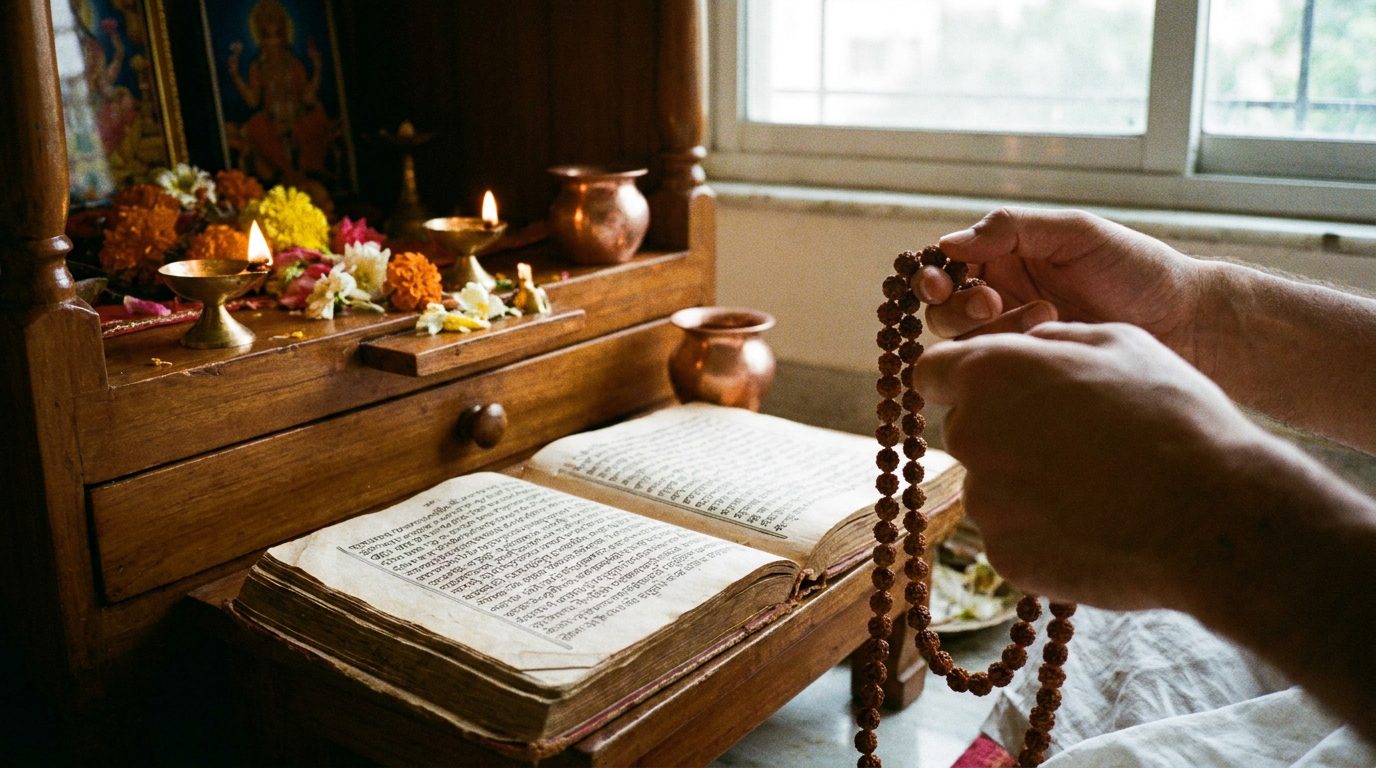
Sanskrit prayers carry a special kind of spiritual beauty. Even when we do not yet understand every word, we may feel that something sacred is moving through the sound. The syllables can soften the heart, steady the mind, and gently turn us toward God.
In the Bhakti Yoga tradition, Sanskrit is not approached as something distant, academic, or only for scholars. It is welcomed as a language of devotion—a way to pray, chant, remember, and serve with love. Bhakti means “loving devotion,” and Bhakti Yoga is the practical path of awakening our relationship with the Divine through heartfelt practices like chanting God’s names, prayer, service, study, and community.
This guide is for everyone: beginners, seekers, lifelong practitioners, curious readers, and anyone who has heard a mantra and wondered, “What does this mean? How do I begin?” You do not need to be born into a particular culture, know perfect pronunciation, or have a long spiritual background. A sincere heart is the most important qualification.
Sanskrit is an ancient sacred language of India. Many of the world’s great yoga texts, including the Bhagavad-gītā, Śrīmad-Bhāgavatam, Upaniṣads, and many devotional hymns, were preserved in Sanskrit.
A Sanskrit prayer may be a mantra, a verse, a hymn, or a simple offering of praise. Some prayers glorify the qualities of God. Some ask for wisdom, protection, purity, or devotion. Others simply repeat the holy names of the Divine.
Sanskrit as Sacred Sound
In Bhakti Yoga, sound is understood to have spiritual power. This is called śabda, meaning “sound” or “spiritual vibration.” Sacred sound is not only information for the mind; it is nourishment for the soul.
When we chant a Sanskrit prayer, we are not merely reciting beautiful poetry. We are entering a living stream of devotion passed down through generations of saints, teachers, and sincere practitioners.
The Bhagavad-gītā explains that among spiritual practices, remembering and glorifying God is deeply purifying. In the Bhakti tradition, chanting is a simple and powerful way to remember the Divine in daily life.
Prayer as Relationship
Prayer is not just asking for things. It is relationship.
When we pray, we turn our attention toward God. We may speak with gratitude, longing, honesty, repentance, wonder, or love. Sanskrit prayers give us sacred language for this inner conversation.
Sometimes our own words feel small or scattered. Traditional prayers help guide the heart. They teach us how saints have prayed—with humility, surrender, gratitude, and deep affection.
Why Sanskrit Prayers Are Powerful in Bhakti Yoga
The power of Sanskrit prayers is not mechanical. It does not come from sounding impressive or performing perfectly. Their power awakens when sacred sound meets sincerity.
Bhakti Yoga teaches that God responds to love. Even a simple prayer, offered with genuine feeling, can become spiritually transformative.
They Help Focus the Mind
The mind is often restless. It jumps from memory to worry, from desire to distraction. Sanskrit prayers give the mind a sacred place to rest.
When we repeat a mantra or prayer, the sound becomes an anchor. Gradually, the heart may become calmer, and the mind may become more clear. This does not always happen instantly, but with steady practice, prayer creates inner space.
For example, chanting a simple mantra each morning can help set the tone for the day. Instead of beginning with anxiety or phone notifications, we begin with remembrance.
They Open the Heart
Bhakti is the path of the heart. Sanskrit prayers often contain deep emotional moods: humility, gratitude, dependence on God, longing for divine love, and appreciation for creation.
Many people discover that chanting softens them. It may bring tears, peace, or a sense of being held. Other times, it may simply feel quiet and grounding. All of this is welcome.
The heart opens gradually, like a flower turning toward the sun.
They Connect Us to a Lineage
When we chant ancient prayers, we are not alone. We join a family of seekers who have sung these same sounds for centuries.
This connection is called paramparā, meaning a lineage or tradition passed from teacher to student. In Bhakti Yoga, lineage is important because it protects the meaning and mood of the practice.
Through Sanskrit prayers, we receive more than words. We receive the blessings of those who lived with faith, served with compassion, and remembered God with love.
Common Sanskrit Terms Made Simple
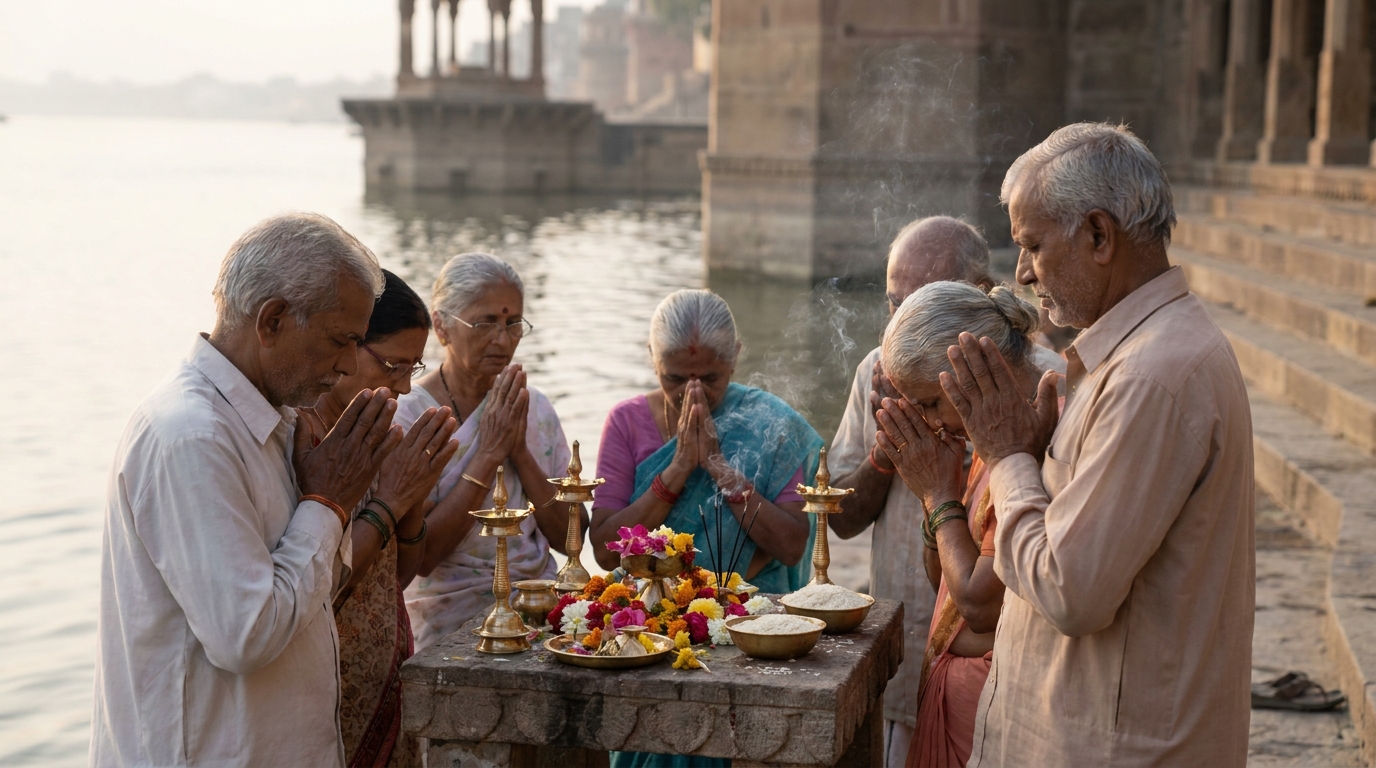
Sanskrit can feel unfamiliar at first, but many key terms are simple and beautiful once explained. Understanding a few of them can make prayer practice more meaningful.
Mantra
A mantra is a sacred sound, word, or phrase repeated for spiritual focus and transformation. The word is often explained as coming from roots connected to “mind” and “liberation,” suggesting that mantra helps free the mind from suffering and distraction.
In Bhakti Yoga, mantras often include names of God. The holy name is considered especially powerful because God and God’s name are understood to be spiritually connected.
Japa
Japa means quiet or personal repetition of a mantra. Many practitioners use prayer beads, called mālā beads, to help count repetitions.
Japa can be done softly aloud, whispered, or silently in the mind. It is a personal practice, often done in the morning or during a peaceful time of day.
Kīrtan
Kīrtan means devotional singing or chanting, usually in a group. Often one person leads and others respond. This call-and-response style makes chanting accessible, joyful, and communal.
Kīrtan is one of the most beloved practices of Bhakti Yoga because it welcomes everyone. You do not need a trained voice. You only need a willing heart.
Śloka
A śloka is a Sanskrit verse. Many scriptures are written in ślokas. These verses may be chanted, studied, memorized, and reflected upon.
A śloka can become a daily meditation. Even one verse from the Bhagavad-gītā, contemplated deeply, can guide a person’s choices and spiritual growth.
Prasāda
Prasāda means “mercy” or “grace.” In Bhakti communities, it often refers to vegetarian food that has been lovingly offered to God and then shared.
This reminds us that spiritual life is not separate from daily life. Eating, cooking, singing, working, and caring for others can all become offerings.
Please visit our website for more information on our articles: articles.
Essential Sanskrit Prayers and Mantras for Beginners
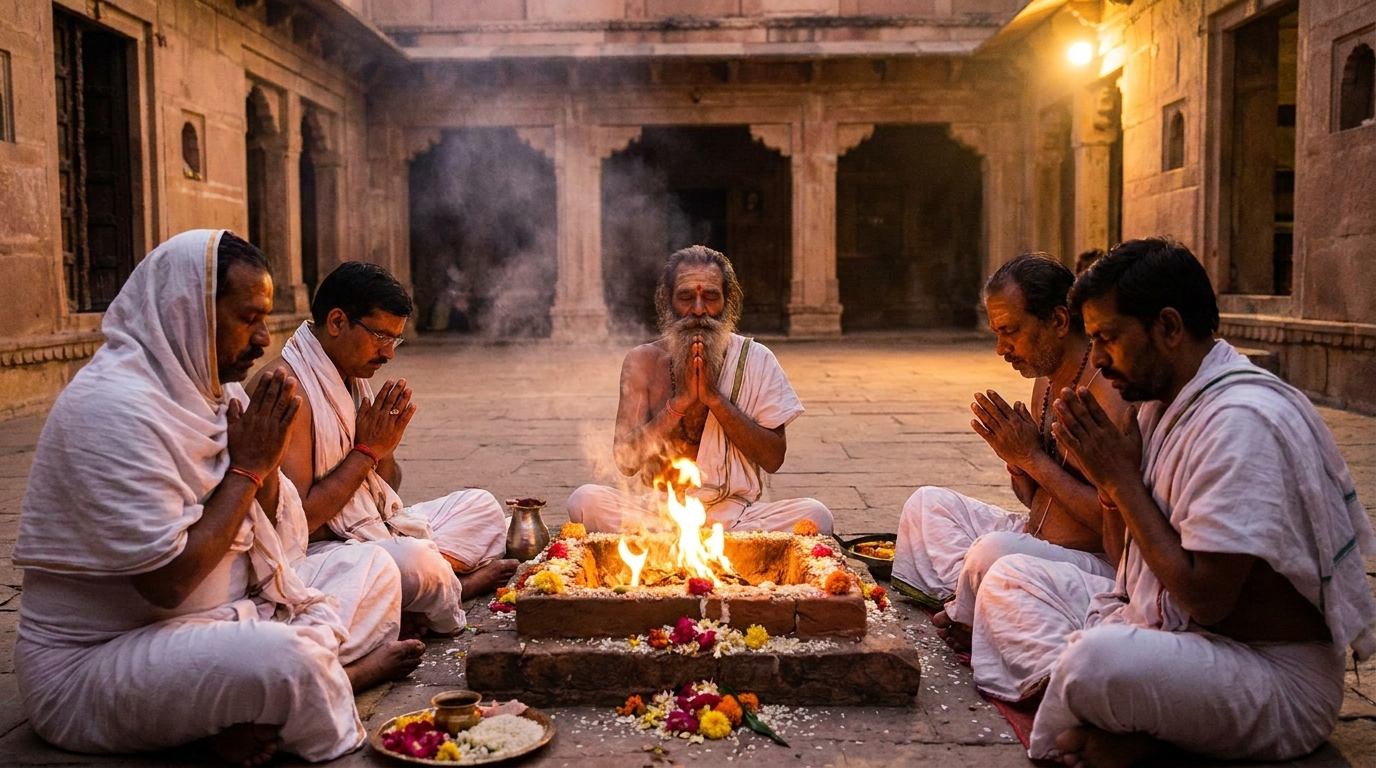
There are many Sanskrit prayers, and it can be difficult to know where to begin. The best starting point is usually simple, steady, and heartfelt.
Below are a few widely cherished prayers in the Bhakti Yoga tradition.
The Hare Krishna Mahā-Mantra
The Hare Krishna mantra is one of the most well-known mantras in the Bhakti tradition:
Hare Krishna Hare Krishna
Krishna Krishna Hare Hare
Hare Rama Hare Rama
Rama Rama Hare Hare
Mahā-mantra means “great mantra.” This mantra is composed of names of God: Krishna, Rama, and Hare.
Krishna means “the all-attractive one.” Rama can mean “the source of joy” or refer to Lord Rama, a beloved form of God. Hare addresses the divine energy of God, especially the compassionate energy that helps us reconnect with the Divine.
A simple way to understand this prayer is: “O Lord, O divine energy of the Lord, please engage me in loving service.”
This mantra does not require elaborate preparation. It can be sung in kīrtan, repeated on beads in japa, or softly chanted while walking, cooking, or resting.
Oṁ: The Sacred Syllable
Oṁ, or Om, is considered a sacred sound representing the Supreme Truth. It appears throughout the Vedic scriptures and is often chanted at the beginning of prayers.
In the Bhagavad-gītā, Krishna says, “I am the syllable Om in the Vedic mantras” (Bhagavad-gītā 7.8). This helps us understand Om not as an abstract sound only, but as a reminder of the presence of God in sacred vibration.
For Bhakti practitioners, Om may be chanted with reverence, but personal names of God are often emphasized because they invite relationship, affection, and loving remembrance.
The Gāyatrī Mood of Illumination
The Gāyatrī mantra is one of the most ancient and respected Sanskrit prayers. Traditionally, it is received through initiation in certain lineages, so it should be approached respectfully.
Its general mood is a prayer for divine illumination: “May the Supreme Light guide and awaken our understanding.”
Even if one does not formally chant the Gāyatrī mantra, we can appreciate its spirit. We can pray daily, “May my mind be guided by divine wisdom. May my heart move toward truth.”
Prayers to the Spiritual Teacher
Many Bhakti traditions begin with prayers honoring the guru, or spiritual teacher. Guru means “one who brings light” or “one who removes darkness.” A genuine spiritual teacher helps us remember God and live with devotion.
A common prayer begins:
oṁ ajñāna-timirāndhasya
jñānāñjana-śalākayā
cakṣur unmīlitaṁ yena
tasmai śrī-gurave namaḥ
A simple meaning is: “I was born in darkness, but my spiritual teacher opened my eyes with the light of knowledge. I offer respectful gratitude.”
This prayer teaches humility. None of us grows spiritually alone. We receive guidance from teachers, scriptures, saints, family, community, and the grace of God.
Prayers from the Bhagavad-gītā
The Bhagavad-gītā is a sacred dialogue between Krishna and Arjuna. It offers practical wisdom for life, duty, devotion, and spiritual surrender.
One beloved verse is:
man-manā bhava mad-bhakto
mad-yājī māṁ namaskuru
Krishna says, “Always think of Me, become My devotee, worship Me, and offer your homage to Me” (Bhagavad-gītā 18.65).
This is the heart of Bhakti Yoga. Remember God. Offer love. Bow the heart. Live in relationship with the Divine.
How to Begin a Sanskrit Prayer Practice
Starting a Sanskrit prayer practice does not need to be complicated. The key is consistency, sincerity, and kindness toward yourself.
Create a Small Sacred Space
You may create a simple space in your home for prayer. It could include a candle, flowers, sacred images, a scripture, prayer beads, or anything that helps you remember God with reverence.
The space does not need to be elaborate. Even a clean corner can become sacred when used with devotion.
Before chanting, you might pause, take a breath, and inwardly say, “I am here to remember You.”
Start with One Prayer
Rather than trying to learn many prayers at once, begin with one. The Hare Krishna mantra is a beautiful starting point because it is simple, complete, and deeply central to many Bhakti traditions.
You might chant for five minutes each morning. Or chant one round on mālā beads. Or sing along with a kīrtan recording.
Let the practice be humble and doable. A small daily offering is often more powerful than an intense practice done only once in a while.
Learn the Meaning
Sound itself is powerful, but meaning helps the heart enter more deeply.
When you learn a Sanskrit prayer, take time to understand its translation. Reflect on the mood. Ask: What is this prayer teaching me? Is it asking for wisdom? Service? Protection? Devotion? Surrender?
Understanding prevents chanting from becoming empty repetition. It turns prayer into meditation.
Chant with Attention, Not Perfection
Many beginners worry about pronunciation. It is good to learn respectfully, but do not let fear stop you.
God is not waiting to reject us for a misplaced syllable. In Bhakti, sincerity is central. Like a loving parent hearing a child speak, the Divine receives the heart behind the sound.
Over time, you can improve pronunciation by listening to experienced practitioners, chanting slowly, and learning one line at a time.
Make Prayer Part of Daily Life
Sanskrit prayers are not only for temples or retreats. They can become companions throughout the day.
You can chant while driving, walking, cooking, cleaning, or before beginning work. You can say a short prayer before meals. You can listen to kīrtan instead of background noise.
In this way, daily life becomes spiritualized—not by escaping responsibilities, but by bringing remembrance into them.
The Role of Chanting in Spiritual Growth
Chanting is one of the most practical and accessible limbs of Bhakti Yoga. It meets us where we are and gradually transforms us from within.
Chanting Cleanses the Heart
Bhakti scriptures often describe chanting as a cleansing process. The heart may hold fear, envy, grief, pride, and many layers of forgetfulness. Sacred sound helps wash these coverings away.
The Śrīmad-Bhāgavatam praises hearing and chanting about God as deeply purifying. It teaches that through sincere hearing, the heart becomes cleansed and devotion awakens.
This cleansing is not always dramatic. Sometimes it appears as more patience, more honesty, more compassion, or a growing desire to live in alignment with the soul.
Chanting Builds Inner Strength
Life brings difficulty to everyone. Sanskrit prayers give us a way to turn toward God in the middle of uncertainty.
When we chant regularly, we develop spiritual memory. In hard moments, the mantra may arise naturally, like a friend. Instead of being completely carried away by fear, we have a sacred sound to hold onto.
This is one reason daily practice matters. We chant in peaceful times so the prayer is alive within us during difficult times.
Chanting Invites Service
True prayer does not end with our own peace. It opens us to service.
As the heart becomes nourished, we naturally want to help others. We may become more thoughtful with our words, more generous with our time, more compassionate toward suffering, and more willing to offer our talents to God.
In Bhakti Yoga, service is called sevā. Sevā means loving service offered without selfish expectation. Chanting and service support each other: chanting softens the heart, and service expresses that softened heart in action.
Understanding Sanskrit Prayers Through Scripture
Authentic Bhakti practice is nourished by scripture. Sacred texts help us understand why chanting matters and how prayer fits into a life of devotion.
The Bhagavad-gītā: Offering the Heart
In the Bhagavad-gītā, Krishna teaches that devotion is not dependent on wealth, status, or external qualification. He says:
“If one offers Me with love and devotion a leaf, a flower, a fruit, or water, I accept it” (Bhagavad-gītā 9.26).
This verse is very important. God is not hungry for our possessions. God receives our love.
Sanskrit prayers are like offerings of flowers from the heart. Even if the prayer is simple, when it is offered with love, it becomes spiritually meaningful.
The Śrīmad-Bhāgavatam: Hearing and Chanting
The Śrīmad-Bhāgavatam emphasizes śravaṇam and kīrtanam—hearing and chanting about God—as foundational practices of Bhakti.
Hearing sacred sound prepares the heart. Chanting allows us to participate. Together, they awaken remembrance.
This is why Bhakti communities gather for kīrtan, scripture study, and shared reflection. Spiritual growth becomes easier when we hear and chant in uplifting company.
The Teachings of the Saints
Many Bhakti saints taught that the holy name of God is accessible to all. They carried chanting into streets, homes, villages, and hearts.
Their message was beautifully inclusive: no one is too fallen, too busy, too new, too wounded, or too unqualified to begin chanting. The holy name is a gift of grace.
This is central to the mood of The Bhakti House: everyone is welcome, and everyone can begin with one sincere step.
Practical Tips for Pronunciation and Memorization
Learning Sanskrit prayers can be joyful when approached patiently. You do not have to master everything at once.
Listen First
Before trying to recite a prayer, listen to a trusted recording several times. Let the rhythm and sound enter your ear.
Sanskrit is musical. Listening helps you absorb the natural flow.
Break It into Small Parts
Take one line at a time. Repeat slowly. Then add the next line.
For example, with the Hare Krishna mantra, begin with:
Hare Krishna Hare Krishna
Once that feels natural, add:
Krishna Krishna Hare Hare
Small steps build confidence.
Use Transliteration
Transliteration means Sanskrit written in Roman letters. This helps English readers pronounce Sanskrit without needing to learn the original script right away.
Some transliterations use marks, such as ā, ī, or ṛ. These show pronunciation details. They may look unfamiliar at first, but over time they become helpful.
Keep a Prayer Journal
Write down the Sanskrit prayer, its translation, and your reflections. You might note how the prayer feels, what it brings up, or how it applies to your life.
A prayer journal turns chanting into a personal relationship. It also helps you see your growth over time.
Practice with Community
If possible, chant with others. Kīrtan, satsang, temple gatherings, or online Bhakti groups can help you learn naturally.
Satsang means “association with truth” or gathering with spiritually minded people. Good company strengthens devotion.
Bringing Sanskrit Prayers into Modern Life
Many people today feel overwhelmed, distracted, and spiritually hungry. Sanskrit prayers can become a gentle and practical support for modern life.
Morning Prayer
The morning is a powerful time for spiritual practice. Before the world becomes loud, we can give the first moments of the day to God.
A simple morning practice might be:
Wake up and wash your face.
Sit quietly for five minutes.
Offer gratitude.
Chant one mantra.
Read one verse from the Bhagavad-gītā.
Pray for guidance in your day.
This small routine can change the atmosphere of your life.
Prayer Before Meals
Before eating, pause and offer gratitude. In Bhakti Yoga, food can be offered to God with love and then honored as prasāda, divine mercy.
You might say, “Dear Lord, thank You for this food. May it nourish my body and help me serve with love.”
This simple act transforms eating from consumption into connection.
Prayer During Stress
When stress rises, chant softly. Even one minute can help.
You might repeat:
Hare Krishna Hare Krishna
Krishna Krishna Hare Hare
Hare Rama Hare Rama
Rama Rama Hare Hare
Let the sound carry your worry. Let the prayer remind you that you are not alone.
Evening Reflection
At night, you can close the day with prayer. Reflect gently:
Where did I remember God today?
Where did I forget?
Whom did I serve?
Whom do I need to forgive?
What can I offer tomorrow?
This kind of reflection is not meant for shame. It is meant for growth. Bhakti is a loving path of returning again and again.
Common Questions About Sanskrit Prayers
It is natural to have questions, especially when entering a tradition with ancient roots and sacred practices.
Do I Need to Be Hindu to Chant Sanskrit Prayers?
No. Bhakti Yoga welcomes sincere seekers of all backgrounds.
Sanskrit prayers come from the Vedic tradition, and they should be approached respectfully. But the practice of calling on God with love is universal. People from many cultures and spiritual histories find nourishment in chanting.
The invitation is not to imitate externally, but to engage sincerely.
What If I Do Not Understand the Prayer Yet?
You can still begin. Sacred sound works on the heart, and understanding can grow over time.
That said, learning the meaning is very helpful. Try to study translations from authentic sources and hear explanations from trusted Bhakti teachers.
Let sound and meaning develop together.
Can I Chant in English Too?
Yes. Sanskrit prayers are powerful, but God hears every language.
You can chant Sanskrit mantras and also pray in your own words. Speak honestly. Tell God your hopes, fears, gratitude, confusion, and longing.
Bhakti is personal. Formal prayers and spontaneous prayers both have a place.
How Long Should I Chant?
Begin with what is realistic. Five minutes daily is better than one hour once a month.
As your taste grows, you may naturally want to chant more. Do not force devotion harshly. Let discipline be guided by love.
What If My Mind Wanders?
It will. This is normal.
When you notice the mind has wandered, gently return to the sound. Each return is part of the practice. Do not be discouraged.
Chanting is not about proving that we are already peaceful. It is about allowing sacred sound to gradually bring us home.
The Deeper Gift: From Sound to Love
The true purpose of Sanskrit prayers is not simply calmness, beauty, or cultural knowledge. These may come, and they are wonderful. But the deeper gift is love of God.
Bhakti Yoga teaches that the soul is naturally loving. Our deepest fulfillment is found in relationship with the Divine. Through chanting, prayer, service, and sacred remembrance, that love gradually awakens.
Prayer Becomes Presence
At first, we may feel that we are saying a prayer. Over time, we may begin to feel that prayer is a place we enter.
The mantra becomes less like an activity and more like a shelter. The holy name becomes a companion. The heart begins to recognize God’s presence in ordinary moments.
Love Becomes Service
As prayer deepens, we become more available to serve. We may serve in a temple, in our home, in our workplace, in our family, or in our community.
Service does not have to be dramatic. Washing dishes with gratitude, listening with compassion, offering food, encouraging someone, caring for the earth, or supporting a spiritual gathering can all become sevā when offered with love.
Growth Becomes Grace
Spiritual growth is not always linear. Some days feel inspired. Other days feel dry. Sometimes prayer feels sweet; sometimes it feels like effort.
All of this is part of the path.
The important thing is to keep returning. Return to the sound. Return to the heart. Return to God.
Bhakti is not about becoming perfect before we approach the Divine. It is about approaching the Divine and allowing love to purify us.
A Simple Sanskrit Prayer Practice You Can Try Today
If you are ready to begin, here is a gentle practice you can try.
Step One: Sit and Breathe
Find a quiet place. Sit comfortably. Take a few slow breaths.
Let your body settle. Let your mind arrive.
Step Two: Offer Your Intention
In your own words, pray:
“Dear God, please guide me. Please help me chant with sincerity. Please awaken love in my heart.”
Step Three: Chant the Hare Krishna Mantra
Chant slowly:
Hare Krishna Hare Krishna
Krishna Krishna Hare Hare
Hare Rama Hare Rama
Rama Rama Hare Hare
Repeat for five minutes, or as long as feels manageable.
Step Four: Sit in Silence
After chanting, pause. Notice how you feel. Offer gratitude.
Even if nothing dramatic happens, trust the practice. Seeds grow quietly.
Step Five: Offer One Act of Service
Choose one simple act of kindness today. Encourage someone. prepare food with love. Help without needing recognition. Speak gently.
Let your prayer become action.
Everyone Is Welcome on the Path of Bhakti
Sanskrit prayers are a doorway into sacred sound, spiritual wisdom, and loving relationship with God. They invite us to slow down, listen deeply, chant sincerely, and live with more devotion.
You do not need to know everything to begin. You do not need perfect pronunciation, a perfect mind, or a perfect life. Bring what you have: your voice, your questions, your longing, your gratitude, your honest heart.
Bhakti Yoga is a practical path of love. Through chanting, prayer, service, scripture, and community, we gradually remember who we are and who we belong to.
Wherever you are coming from, you are welcome. Take one sincere step toward God today. Chant one mantra. Offer one prayer. Serve one person with love. That one step matters, and grace can meet you there.
FAQs
What is Sanskrit?
Sanskrit is an ancient Indo-European language that is the liturgical language of Hinduism, as well as the classical language of ancient Indian literature and philosophy.
What are Sanskrit prayers?
Sanskrit prayers are religious or spiritual invocations, hymns, or mantras that are recited or chanted in the Sanskrit language as part of Hindu rituals, ceremonies, and daily worship.
Why are Sanskrit prayers significant?
Sanskrit prayers are considered significant because they are believed to have a sacred and powerful vibration that can invoke divine blessings, protection, and spiritual growth. They are also seen as a way to connect with the divine and express devotion.
How are Sanskrit prayers used?
Sanskrit prayers are used in various religious and spiritual contexts, including daily puja (worship), meditation, festivals, and ceremonies such as weddings, funerals, and other rituals. They are often recited or chanted by individuals or groups.
Can non-Hindus use Sanskrit prayers?
Yes, non-Hindus can use Sanskrit prayers for spiritual or meditative purposes, as the language and the prayers themselves are not exclusive to any particular religious tradition. Many people of different faiths and spiritual beliefs find value in Sanskrit prayers for their universal spiritual themes and the beauty of the language.

