
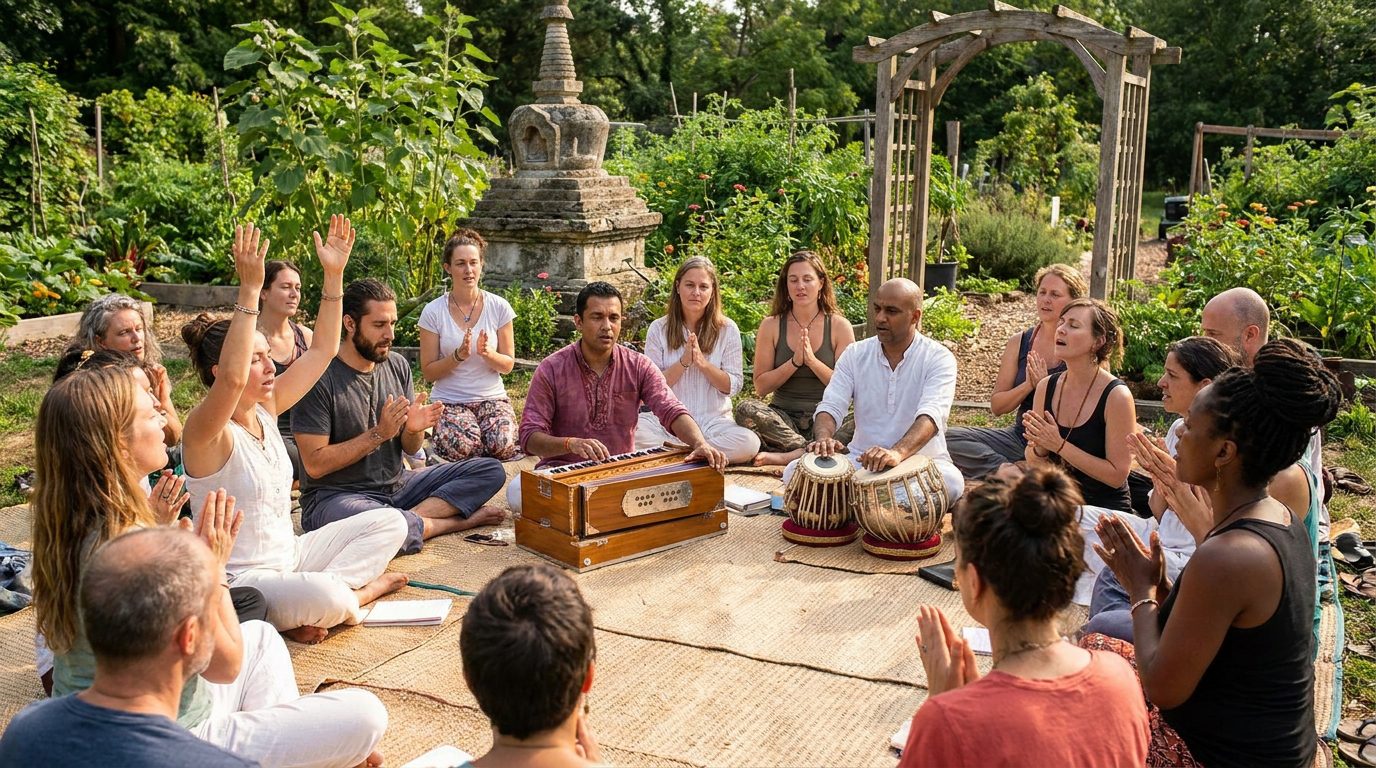
Many sincere people ask, “Can Bhakti Yoga coexist with other faiths?” This is a beautiful and important question. It comes from a place of care—care for truth, for family, for spiritual integrity, and for peace in the heart.
Bhakti Yoga is the path of devotion, the path of loving relationship with God. The Sanskrit word bhakti means loving devotion, and yoga means connection or union. So Bhakti Yoga means reconnecting the soul with the Supreme through love.
At The Bhakti House, we welcome seekers from all backgrounds—Hindu, Christian, Muslim, Jewish, Buddhist, Sikh, spiritual-but-not-religious, questioning, returning, and simply curious. Bhakti Yoga does not ask us to reject sincerity wherever it is found. Rather, it invites us to deepen our love for God, cultivate humility, chant sacred names, serve others, and live with a heart softened by devotion.
For many people, Bhakti Yoga can beautifully coexist with their faith tradition. For others, it may become their primary spiritual path. The journey is personal, and it is best walked with honesty, prayer, and respect.
Understanding Bhakti Yoga as a Path of Love
Bhakti Means Devotion
Bhakti is not merely a philosophy or a set of rituals. It is the heart’s natural longing to love and be loved by the Divine.
In the Bhagavad-gita, one of the most beloved scriptures of Bhakti Yoga, Krishna says:
“Always think of Me, become My devotee, worship Me, and offer your homage unto Me. Thus you will come to Me without fail.”
— Bhagavad-gita 18.65
This verse expresses the essence of Bhakti Yoga: remembrance, devotion, worship, and loving surrender. These are not meant to be dry religious duties, but living expressions of love.
A person practicing Bhakti may chant God’s names, offer food with gratitude, pray, read sacred texts, sing devotional songs, serve others, or simply try to remember God while walking through daily life.
Yoga Means Connection
In the modern world, the word “yoga” often brings to mind physical postures. While those practices can support health and mindfulness, the deeper meaning of yoga is connection.
Bhakti Yoga is the yoga of the heart. It teaches that the soul is not separate from God in purpose. We are meant for loving relationship with the Divine and compassionate relationship with all living beings.
This makes Bhakti Yoga deeply practical. It is not limited to a temple, church, mosque, synagogue, yoga studio, or meditation room. It can be practiced in the kitchen, at work, in the car, while caring for children, while grieving, while celebrating, and while trying again after a difficult day.
Bhakti Is Personal and Relational
Bhakti Yoga often understands God as personal—full of qualities such as love, mercy, beauty, wisdom, and compassion. In many Bhakti traditions, God is worshiped as Krishna, Rama, Vishnu, Narayana, or another sacred form of the Divine.
For those from other faith backgrounds, this personal approach may feel familiar. Many traditions teach prayer, surrender, devotion, praise, and service. Bhakti Yoga offers a rich spiritual language for these same heart movements.
The question becomes not, “Must I abandon everything I have known?” but rather, “How can I grow in sincere love for God and all beings?”
Can Bhakti Yoga Coexist with Other Faiths?
Yes, When Practiced with Respect and Sincerity
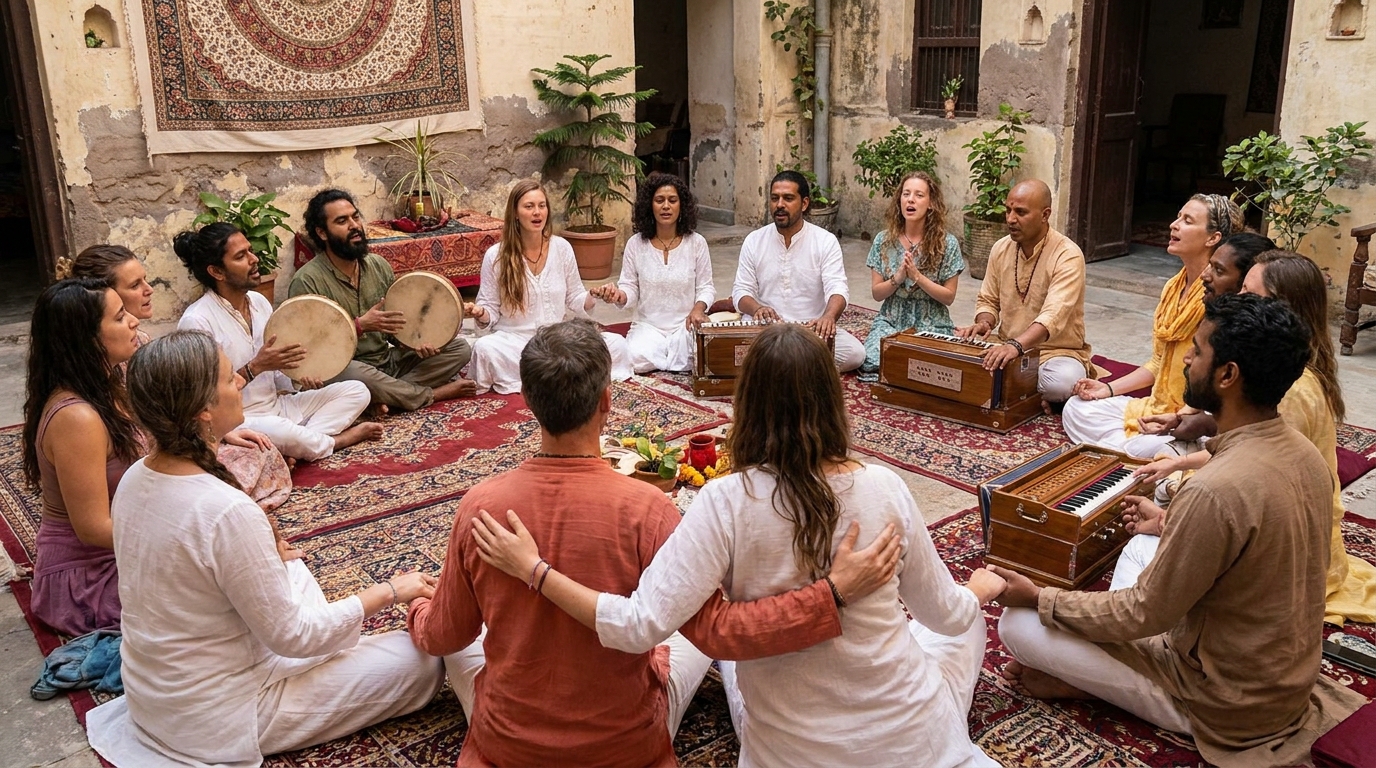
Bhakti Yoga can coexist with other faiths when it is approached humbly, respectfully, and sincerely. It is not meant to be a spiritual costume or a casual collection of exotic practices. It is a sacred path rooted in deep wisdom and devotion.
A Christian may find that chanting the holy names opens the heart to deeper prayer. A Muslim may recognize the beauty of surrender to the will of God. A Jew may appreciate the emphasis on sacred sound, remembrance, and devotion. A Buddhist may connect with the practices of compassion, discipline, and purification of the heart. A person with no formal religion may discover a personal relationship with the Divine through chanting and service.
Of course, each faith tradition has its own theology, sacred boundaries, and understanding of worship. Because of this, a thoughtful practitioner should move with care. Bhakti Yoga does not require anyone to be dishonest with their conscience. Rather, it invites each person to ask: “Does this practice help me become more loving, humble, truthful, and devoted to God?”
Shared Spiritual Values Across Traditions
Many faith traditions share values that are central to Bhakti Yoga:
- Love of God
- Prayer and remembrance
- Compassion for others
- Service to the poor, vulnerable, and suffering
- Humility
- Gratitude
- Moral living
- Sacred song or chanting
- Community worship
- Spiritual discipline
- Surrender to divine guidance
Bhakti Yoga does not claim that love, prayer, or service belong to only one group. These are universal movements of the awakened heart.
In the Srimad Bhagavatam, another central Bhakti scripture, pure devotion is described as devotion that is uninterrupted and without selfish motivation. This means the heart is not approaching God merely for wealth, power, fame, or personal gain, but for loving service.
This principle can inspire people of many faiths. Whatever name we use in prayer, we can ask: “Am I approaching God with sincerity? Am I seeking to love, not just to receive?”
The Difference Between Syncretism and Respectful Practice
It is helpful to understand the difference between respectful spiritual learning and careless mixing.
Respectful practice means we honor the tradition we are learning from. We try to understand Sanskrit terms properly. We do not reduce sacred mantras to background music or spiritual decoration. We approach teachers, texts, and practices with humility.
Careless mixing means taking pieces from many traditions without depth, accountability, or reverence. This can sometimes lead to confusion or even disrespect.
Bhakti Yoga invites depth. It is not a quick spiritual trend. It is a lifelong path of transformation through love. If someone from another faith tradition feels drawn to Bhakti practices, they can begin gently—with chanting, prayer, reading, service, and honest reflection—while also honoring the roots of their own tradition.
Check out our latest posts at https://thebhaktihouse.org/blog.
Chanting the Holy Names in an Interfaith Context
What Is Mantra?
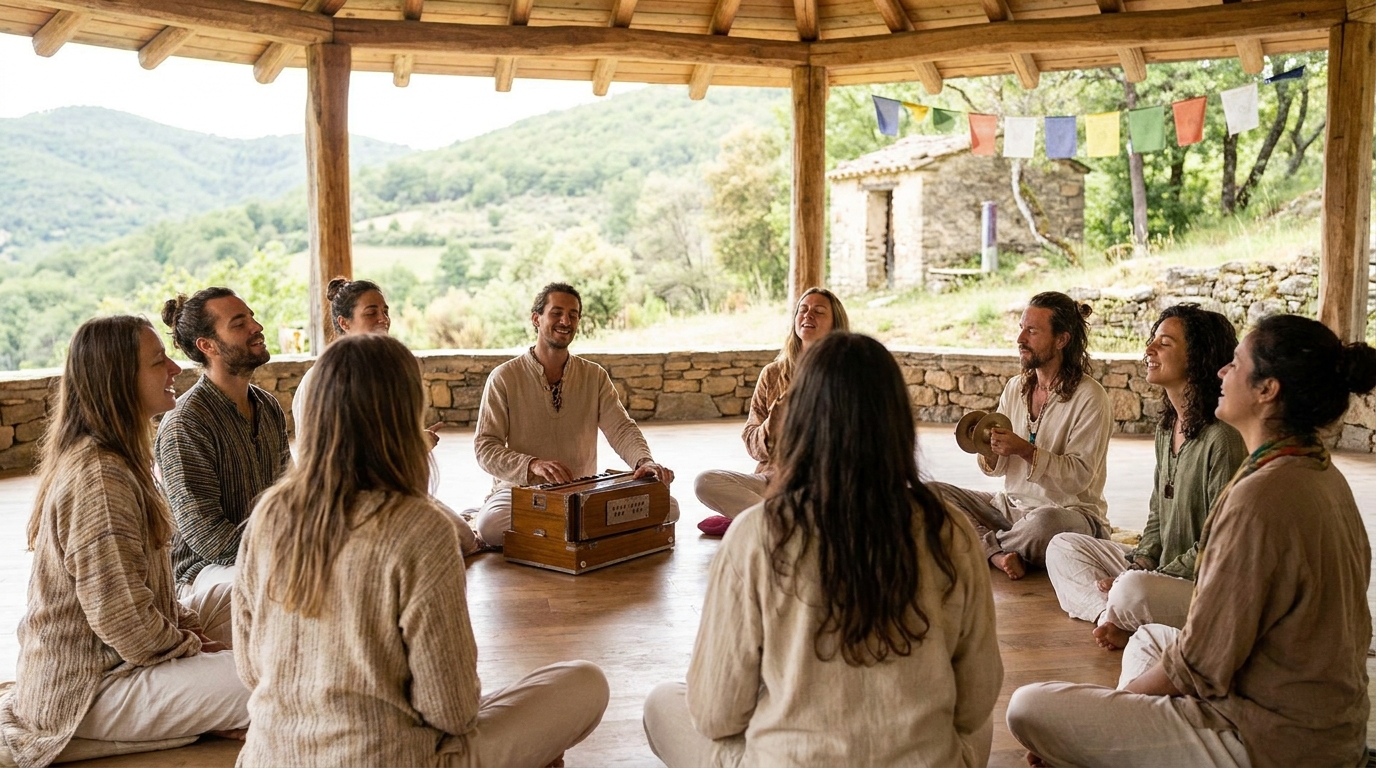
One of the most loved practices in Bhakti Yoga is chanting mantra. The Sanskrit word mantra can be understood as a sacred sound vibration that helps free the mind and awaken the heart.
A mantra is not simply a positive affirmation. In Bhakti Yoga, the names of God are considered spiritually powerful because God and God’s names are understood to be intimately connected.
The most well-known mantra in many Bhakti communities is the Hare Krishna maha-mantra:
Hare Krishna Hare Krishna
Krishna Krishna Hare Hare
Hare Rama Hare Rama
Rama Rama Hare Hare
The word maha means “great,” so maha-mantra means “great mantra.” “Krishna” is a name of God meaning the all-attractive one. “Rama” refers to the source of joy and divine pleasure. “Hare” is an address to the divine energy of the Lord, calling for grace and loving service.
A simple meaning of this mantra is: “O Lord, O divine energy of the Lord, please engage me in loving service.”
Is Chanting Compatible with Other Faiths?
For some people, chanting Sanskrit names of God feels deeply natural and uplifting. For others, it raises theological questions. Both responses deserve respect.
A person from another faith may ask, “Am I praying to a different God?” Bhakti Yoga teaches that there is one Supreme Reality, known by many names and approached in many ways. At the same time, Bhakti traditions honor the specific names, forms, and qualities of God revealed in their scriptures.
The Bhagavad-gita says:
“As all surrender unto Me, I reward them accordingly. Everyone follows My path in all respects.”
— Bhagavad-gita 4.11
This verse is often understood to mean that God responds to the sincerity of each soul. People may approach the Divine through different traditions, languages, and forms of worship, yet the Lord sees the heart.
Still, if chanting a particular mantra conflicts with someone’s conscience or religious commitments, they should not force themselves. Bhakti is not built on pressure. One can begin by chanting names of God from one’s own tradition, praying sincerely, or simply listening respectfully.
Sacred Sound Softens the Heart
Chanting is powerful because it engages the whole person. The voice speaks, the ears hear, the mind focuses, and the heart gradually opens.
Many people experience that chanting helps reduce anxiety, soften anger, increase gratitude, and bring a sense of divine presence. These fruits are not meant only for one community. The heart of chanting is remembrance of God.
A simple daily practice might be:
- Set aside five or ten minutes in the morning.
- Sit quietly and take a few deep breaths.
- Chant a sacred name or prayer with attention.
- Ask God for guidance and humility.
- Offer the day in service.
This is Bhakti Yoga in practical form.
Prayer, Service, and Daily Devotion
Prayer as Honest Conversation with God
Prayer is central to Bhakti Yoga. It does not have to be perfect, poetic, or long. A sincere prayer may be as simple as:
“Dear God, please help me remember You.”
“Please make me an instrument of compassion.”
“Please guide me to love and serve better.”
“Please forgive my mistakes and help me grow.”
In Bhakti, prayer is not only asking for things. It is relationship. It is turning toward God with trust.
People from many faiths already know this. A grandmother praying with folded hands, a monk chanting in silence, a child whispering gratitude before bed, a grieving person asking for strength—these are sacred moments.
Bhakti Yoga encourages us to make prayer a living thread through the day.
Seva: The Practice of Loving Service
Another essential Bhakti practice is seva, which means service. In Bhakti Yoga, service is not merely volunteering or doing good deeds. It is offering our energy for the pleasure of God and the welfare of others.
Seva may look like cooking a meal, cleaning a sacred space, feeding guests, listening to someone in pain, sharing wisdom, caring for the earth, supporting spiritual community, or doing one’s work with integrity.
The Bhagavad-gita teaches that we can offer our actions to God:
“Whatever you do, whatever you eat, whatever you offer or give away, and whatever austerities you perform—do that as an offering unto Me.”
— Bhagavad-gita 9.27
This verse makes Bhakti Yoga wonderfully accessible. It means that daily life can become sacred. Parenting, working, studying, cooking, creating, cleaning, and helping can all become offerings when done with devotion.
Food Offered with Love
In Bhakti Yoga, food is often prepared and offered to God before being eaten. This offering is called prasadam, which means mercy or grace.
The practice is simple. We prepare vegetarian food with care, place it before the Lord, and offer a prayer of gratitude. Then we receive the food as sacred nourishment.
For people from other faiths, this may feel similar to blessing food, giving thanks, or eating with mindfulness. The heart is the same: “This food is not mine alone. It is a gift. May it nourish me for service.”
Prasadam teaches humility, gratitude, and reverence for life. It reminds us that eating can also be part of our spiritual path.
Honoring Differences Without Fear
Unity Does Not Mean Sameness
Interfaith harmony does not require pretending that all religions are identical. They are not. Different traditions have different scriptures, practices, views of God, understandings of the soul, rituals, histories, and communities.
Bhakti Yoga has its own sacred foundations, including texts like the Bhagavad-gita, Srimad Bhagavatam, and writings of great saints and teachers. These should be honored, not watered down.
At the same time, difference does not have to create hostility. We can be deeply rooted in our own path while honoring the sincerity of others. A tree with strong roots can offer shade widely.
Bhakti teaches us to see every living being as a child of God. This vision naturally encourages respect.
Avoiding Spiritual Pride
One of the greatest dangers in any faith is pride. We may start thinking, “My path makes me better than others,” or “God loves my group more than everyone else.” Bhakti Yoga warns against this kind of arrogance.
True devotion makes the heart humble.
Sri Chaitanya Mahaprabhu, a great saint in the Bhakti tradition, taught:
“One should chant the holy name of the Lord in a humble state of mind, thinking oneself lower than a blade of grass, more tolerant than a tree, offering all respect to others and expecting none in return.”
This teaching is profound for interfaith life. If we truly want to chant God’s names, we must learn to respect others. We do not have to agree with every belief, but we can honor the soul within every person.
Listening as a Spiritual Practice
In a world full of arguments, listening can be an act of devotion.
When speaking with people of other faiths, we can ask:
- What does prayer mean to you?
- How do you experience God’s presence?
- What practice helps you become more compassionate?
- What sacred teaching has shaped your life?
- How can we serve together?
These questions create bridges. They help us meet one another as human beings, not as labels.
Bhakti Yoga is not threatened by sincere conversation. Truth does not need harshness to be strong.
Bhakti Scriptures and the Vision of Spiritual Inclusivity
The Bhagavad-gita on Approaching God
The Bhagavad-gita is a conversation between Krishna and Arjuna on a battlefield, but its teachings are for the battlefield of every human heart. Arjuna is confused, overwhelmed, and unsure of his duty. Krishna guides him toward wisdom, devotion, and surrender.
One of the most inclusive teachings is found in Krishna’s assurance that anyone can approach Him:
“Even if one is considered to be of lower birth, those who take shelter in Me can attain the supreme destination.”
— Bhagavad-gita 9.32
The practical meaning is that spiritual life is not limited by social status, background, gender, nationality, education, or past mistakes. God’s mercy is greater than human categories.
This is deeply relevant today. Bhakti Yoga is not only for people born into a particular culture. It is for every sincere soul.
The Srimad Bhagavatam on Pure Devotion
The Srimad Bhagavatam teaches that the highest spiritual practice is that which awakens loving devotion to the Supreme Lord.
It says that true religion is that which brings about unmotivated and uninterrupted love for God, completely satisfying the self.
This teaching gives us a way to evaluate spiritual life. Does our practice awaken love? Does it make us more truthful, compassionate, humble, and steady? Does it help us remember God not only in public worship, but also in private choices?
Bhakti Yoga can coexist with other faiths when the goal is genuine transformation, not competition.
Seeing All Beings with Equal Vision
In the Bhagavad-gita, Krishna describes the wise person as one who sees with equal vision:
“The humble sages, by virtue of true knowledge, see with equal vision a learned and gentle person, a cow, an elephant, a dog, and a person considered an outcaste.”
— Bhagavad-gita 5.18
This is not a shallow idea of equality. It means seeing the soul beyond the body and beyond social labels. It means recognizing that every living being is spiritually significant.
If we practice Bhakti but look down on others, we have missed the heart of the path.
Practical Ways to Practice Bhakti While Honoring Another Faith
Begin with Sincerity, Not Pressure
If you are drawn to Bhakti Yoga but belong to another faith, begin gently. You do not need to rush into identity decisions. Let your first step be sincere practice.
You might begin with:
- Daily prayer
- Listening to kirtan, or devotional chanting
- Reading a few verses from the Bhagavad-gita
- Offering your food with gratitude
- Practicing kindness as service to God
- Visiting a Bhakti gathering respectfully
- Speaking with a trusted teacher or practitioner
Let the fruits of the practice guide you. Are you becoming more loving? More peaceful? More dedicated to truth? More willing to serve?
Speak Honestly with Loved Ones
Sometimes people worry about how family or religious community members will respond. This is understandable. Spiritual exploration can feel sensitive.
If you speak with loved ones, try to do so with gentleness. You might say:
“I am learning about Bhakti Yoga because it helps me pray and remember God.”
“I am not trying to reject you or disrespect our tradition.”
“I want to become more loving, humble, and spiritually grounded.”
Avoid debating when hearts are heated. Let your character speak. If Bhakti is making you kinder, more patient, and more devoted, people may gradually understand.
Learn from Authentic Sources
Because Bhakti Yoga is becoming more widely known, it is important to learn from authentic sources. Seek teachers and communities that value scripture, humility, service, and compassion.
A healthy Bhakti community should encourage sincerity, not manipulation. It should welcome questions. It should respect people’s backgrounds. It should help you grow in devotion and moral integrity.
At The Bhakti House, the mood is simple: come as you are, chant, pray, serve, learn, and grow. No one needs to pretend to be advanced. We are all learning how to love God more deeply.
Common Concerns About Bhakti Yoga and Other Religions
“Am I Betraying My Faith?”
This depends on your tradition, your conscience, and how you engage with Bhakti Yoga. Some people experience Bhakti practices as complementary. Others may feel a theological conflict.
The humble approach is to pray for guidance, study carefully, and speak with trusted spiritual mentors. Do not ignore your conscience. Bhakti is meant to bring integrity, not inner division.
At the same time, learning from another tradition does not automatically mean betrayal. Many people grow spiritually through respectful encounter. They may discover deeper prayer, renewed devotion, or a more expansive appreciation of God’s mercy.
“Do I Have to Become Hindu?”
Bhakti Yoga is historically rooted in the Vedic tradition, often associated with what is broadly called Hinduism. However, Bhakti itself—the soul’s loving devotion to God—is universal.
Some practitioners formally identify with a particular Bhakti lineage. Others participate in chanting, study, and service while maintaining another religious identity. Some simply learn from Bhakti teachings as part of their spiritual growth.
The important question is not only the label, but the heart: Are we becoming servants of God? Are we developing love? Are we living with compassion?
“Can I Chant If I Don’t Understand Sanskrit?”
Yes. Sanskrit is a sacred language in the Bhakti tradition, but understanding can grow over time. Many people begin by chanting with simple faith and gradually learn the meanings.
Just as a child may call a parent before understanding grammar, the soul can call upon God with sincerity before mastering philosophy.
Still, learning the meaning of mantras is valuable. It helps us chant with attention and reverence. For example, when chanting the Hare Krishna mantra, we can remember: “Please engage me in loving service.”
“Is Bhakti Yoga Only About Emotion?”
Bhakti includes emotion, but it is not merely emotionalism. It is a complete spiritual path involving philosophy, discipline, ethics, community, practice, and grace.
Real devotion changes how we live. It affects how we speak, eat, work, forgive, serve, and treat others. Tears in prayer may be beautiful, but daily kindness is also devotion.
Bhakti Yoga trains the heart to love steadily, not only sentimentally.
Building Interfaith Harmony Through Bhakti
Chanting Together in a Spirit of Peace
Kirtan, or devotional call-and-response chanting, can be a powerful space for interfaith connection. People may come from many backgrounds and still experience the beauty of sacred sound.
In a kirtan gathering, no one needs to perform. The mood is offering. Voices may be polished or imperfect. The heart is what matters.
For newcomers, kirtan can feel both unfamiliar and deeply comforting. The repetition allows the mind to rest and the heart to open. Many people describe it as prayer through song.
Serving Together Across Traditions
One of the most beautiful ways Bhakti Yoga can coexist with other faiths is through shared service.
People of different traditions can feed the hungry, care for the lonely, protect the environment, support families, visit the sick, and create spaces of healing. Service reveals our shared humanity.
When we serve together, we may discover that love is stronger than division.
Creating a Culture of Welcome
A Bhakti community should be a place where people feel spiritually invited, not socially judged. Someone may not know when to bow, how to pronounce Sanskrit, what to wear, or what the philosophy teaches. That is okay.
A welcoming community explains things simply. It honors questions. It does not shame people for being new.
The path of Bhakti is not about proving we belong. It is about remembering that we already belong to God.
The Heart of the Matter: Love of God and Love for All
Devotion Should Make Us More Compassionate
If our spiritual practice makes us harsh, proud, or dismissive of others, we should pause and examine our heart.
Bhakti Yoga should soften us. It should make us more patient with our family, more honest in our work, more compassionate toward strangers, and more grateful for life.
The test of devotion is not how much we know, but how deeply we love and serve.
God Is Not Limited by Our Smallness
Human beings often divide the world into “us” and “them.” God is not so small.
Bhakti scriptures reveal a Supreme Being who is infinitely loving, beautiful, and merciful. The Lord is present in the heart of every living being as the witness, guide, and friend.
When we remember this, interfaith respect becomes natural. We can be devoted to our path without denying God’s work in the lives of others.
One Sincere Step Matters
In the Bhagavad-gita, Krishna promises that even a little progress on the spiritual path can protect one from great fear. This is a deeply comforting teaching.
You do not have to understand everything today. You do not have to resolve every theological question before you pray. You do not have to become perfect before you chant.
You can begin with one sincere step.
A sincere step might be listening to one mantra. Offering one prayer. Reading one verse. Serving one person. Forgiving one wound. Asking God, “Please guide me.”
Bhakti Yoga can coexist with other faiths when it is practiced as a path of humility, love, and sincere devotion. It does not ask us to hate where we came from. It invites us to bring our whole heart before God and grow in love.
Wherever you are coming from, you are welcome. Come with your questions, your hopes, your doubts, and your longing. Take one sincere step toward God today—through chanting, prayer, service, study, or simple remembrance—and trust that the Lord lovingly sees your heart.
FAQs
What is Bhakti Yoga?
Bhakti Yoga is a spiritual practice that emphasizes devotion and love towards a personal god. It is one of the paths of yoga mentioned in ancient Indian texts and is often associated with Hinduism.
Can Bhakti Yoga be practiced by people of other faiths?
Yes, Bhakti Yoga can be practiced by people of other faiths. The practice of devotion and love towards a personal god is not exclusive to Hinduism, and individuals from different religious backgrounds can incorporate Bhakti Yoga into their spiritual practices.
How can Bhakti Yoga coexist with other faiths?
Bhakti Yoga can coexist with other faiths by emphasizing the universal principles of love, devotion, and spiritual connection. Practitioners can integrate Bhakti Yoga into their existing religious beliefs and practices, using it as a means to deepen their connection with their chosen deity or spiritual figure.
Are there any potential conflicts between Bhakti Yoga and other faiths?
While Bhakti Yoga itself does not inherently conflict with other faiths, potential conflicts may arise if certain religious doctrines or practices are seen as incompatible with the principles of Bhakti Yoga. It is important for individuals to approach the integration of Bhakti Yoga with sensitivity and respect for their existing religious traditions.
What are some examples of Bhakti Yoga being practiced alongside other faiths?
There are numerous examples of individuals practicing Bhakti Yoga alongside other faiths. For instance, some Christians incorporate Bhakti Yoga practices such as chanting, prayer, and devotional singing into their worship. Similarly, individuals of other faiths, including Islam and Buddhism, have found ways to integrate Bhakti Yoga into their spiritual lives without compromising their religious beliefs.

