
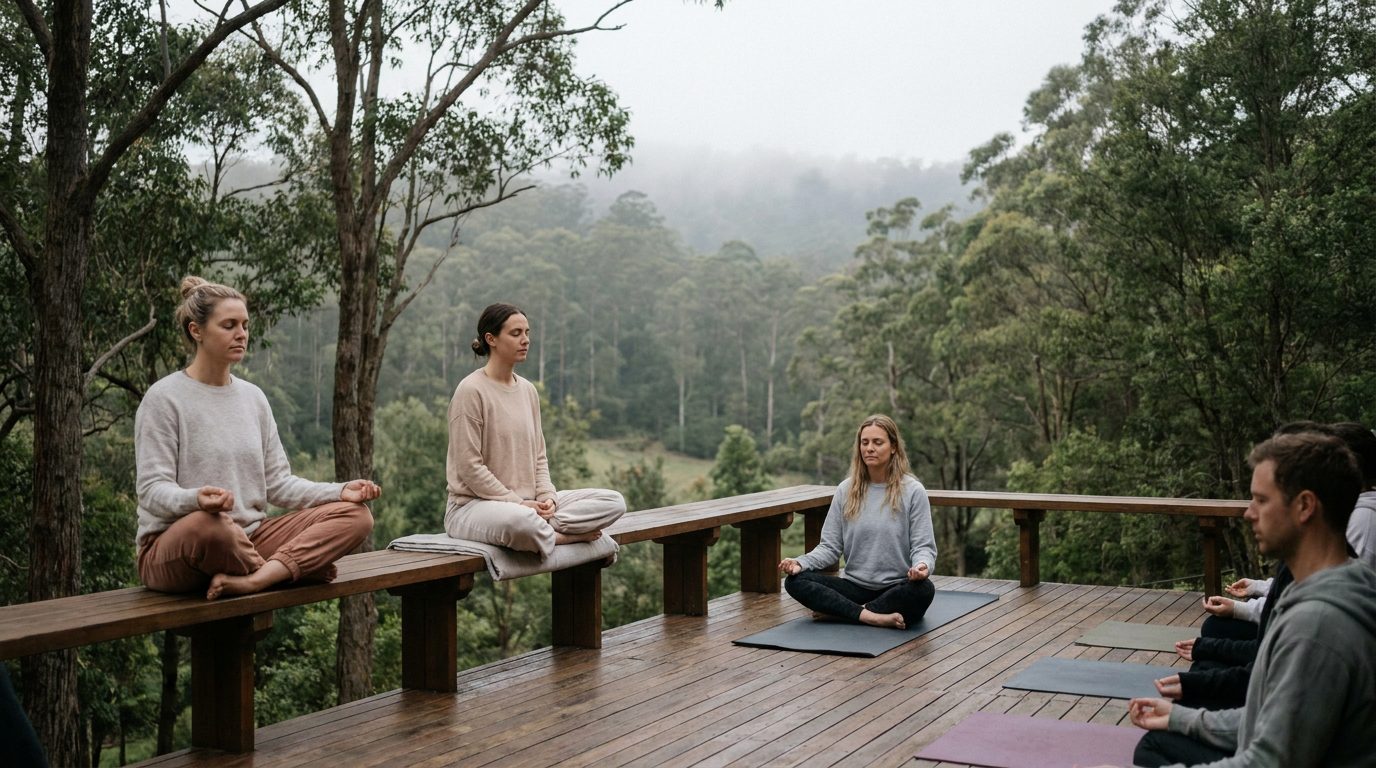
A spiritual retreat is a gentle step away from the noise of everyday life so the heart can remember what truly matters.
It may be a weekend in the countryside, a day at a temple, a few hours in silence, or a longer stay in a devotional community. But at its heart, a spiritual retreat is not mainly about the location. It is about intention.
We pause from ordinary routines to reconnect with God, the soul, and the deeper purpose of life.
In the Bhakti Yoga tradition, this sacred pause is not an escape from life. It is a return to life with more love, clarity, humility, and strength. We step back from distractions so we can step forward with a softer heart.
The word “retreat” can sound like withdrawing from the world, but spiritually it means creating space for remembrance. In Sanskrit, one beautiful word is smaranam, which means “remembering.” Bhakti Yoga invites us to remember our eternal relationship with the Divine through prayer, chanting, service, sacred study, and loving community.
A spiritual retreat helps us ask:
Who am I beneath my roles and responsibilities?
What does my heart truly long for?
How can I live with more love?
How can I serve God and others more sincerely?
These questions are not only for monks, priests, yogis, or people who feel “spiritual enough.” They are for everyone. A spiritual retreat welcomes the tired parent, the searching student, the busy professional, the grieving heart, the curious beginner, and the lifelong seeker.
Wherever you are on your journey, a retreat can become a doorway back to peace.
Why Do People Go on Spiritual Retreats?
People come to spiritual retreats for many reasons. Some are seeking rest. Some are seeking healing. Some are seeking answers. Some simply feel a quiet pull toward something sacred.
In the modern world, our minds are often overstimulated. Phones, deadlines, social media, responsibilities, and worries can fill every corner of our attention. Even when the body is still, the mind may continue racing.
A spiritual retreat gives the mind and heart a chance to breathe.
To Reconnect With the Soul
In Bhakti Yoga, the Sanskrit word atma means the soul, the true self beyond the temporary body and changing mind. We all have identities in this world—our name, work, family role, nationality, personality—but Bhakti teaches that beneath all of these we are spiritual beings, beloved parts of God.
The Bhagavad-gita, one of the most cherished texts of yoga wisdom, explains that the soul is eternal and cannot be destroyed. This teaching is not meant to make us distant from life. Rather, it helps us live with courage, compassion, and perspective.
On retreat, we make time to remember: “I am not only my worries. I am not only my mistakes. I am not only what others think of me. I am a soul, loved by God.”
This remembrance can be deeply healing.
To Rest From Constant Distraction
Many people carry a subtle exhaustion that sleep alone does not fully heal. We may be physically rested but spiritually dry. We may have entertainment but not nourishment. We may have connection online but still feel lonely inside.
A spiritual retreat offers a different kind of rest.
It may include quiet mornings, shared meals, sacred music, time in nature, meaningful conversations, prayer, and the simple gift of not rushing. These experiences can help us become present again.
In Bhakti, presence is important because love grows where attention is given. When we are fully present, we can hear the Holy Name more deeply, listen to others more kindly, and notice God’s grace in small things.
To Heal and Begin Again
Some people come to retreat carrying grief, disappointment, anxiety, or spiritual confusion. A retreat does not magically remove all pain, but it can create a safe and sacred environment where healing begins.
In devotional life, healing often comes through sanga, or spiritual association. Sanga means keeping company with people who support our spiritual growth. When we sit with others who are sincerely trying to love God, chant, serve, and live with compassion, our own faith can awaken.
A spiritual retreat reminds us that we do not have to walk alone.
To Deepen an Existing Practice
For those who already have a spiritual practice, a retreat can bring renewed inspiration.
Perhaps you chant regularly but want to chant with more feeling. Perhaps you read scripture but want to understand it more practically. Perhaps you serve others but feel your heart becoming tired. A retreat can refresh your devotion and help you return to daily life with deeper purpose.
Bhakti Yoga is a path of relationship. Like any loving relationship, it needs time, attention, and care. A retreat gives us focused time to nourish our relationship with the Divine.
What Happens at a Spiritual Retreat?
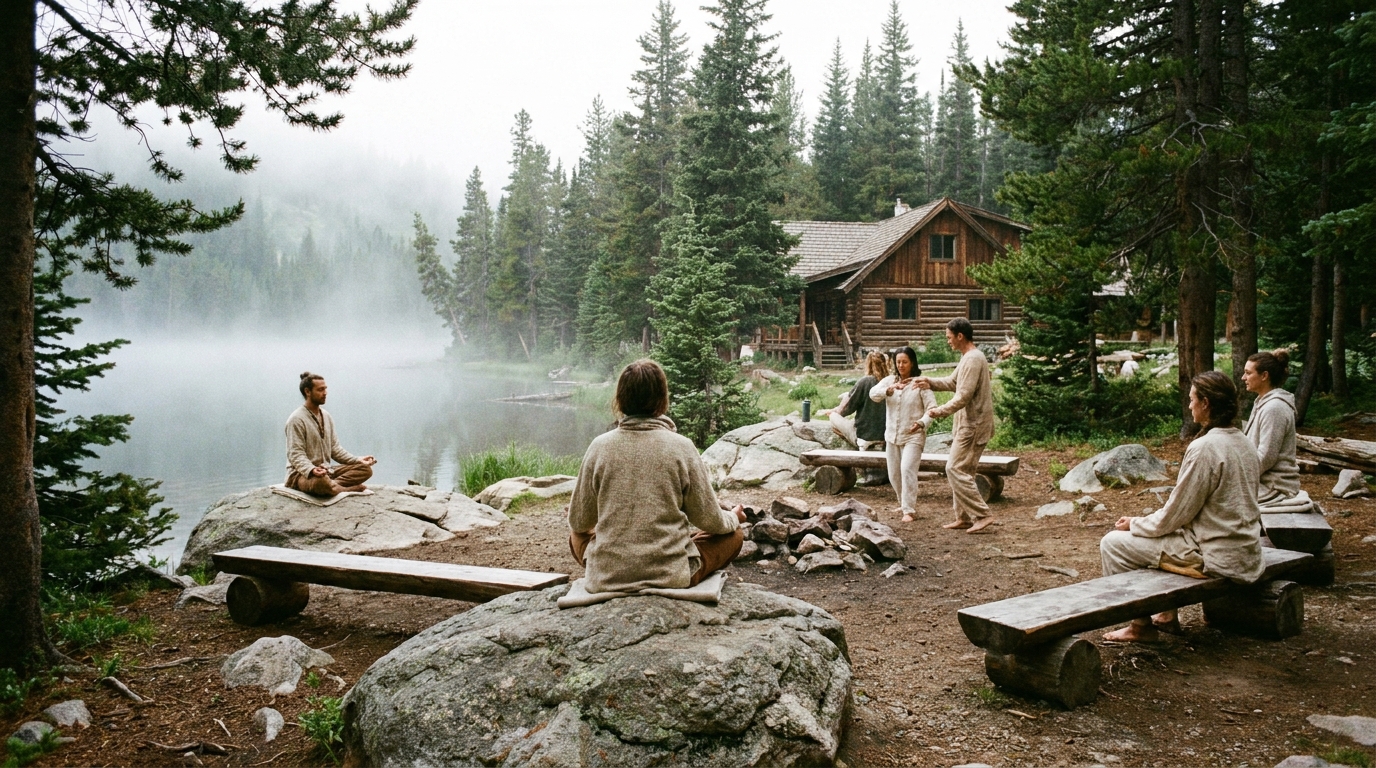
Every spiritual retreat is different, depending on the tradition, teachers, location, and purpose. Some are silent. Some are filled with joyful chanting. Some include yoga postures, meditation, workshops, sacred study, nature walks, or service projects.
In a Bhakti Yoga retreat, the focus is usually on awakening love for God through practical devotional activities.
Chanting and Sacred Sound
One of the central practices of Bhakti Yoga is kirtan, the singing or chanting of sacred names of God. Kirtan is often done with music, call-and-response singing, and a mood of heartfelt offering.
You do not need to be a singer to participate. You do not need to know Sanskrit. You do not need to have any previous experience.
In Bhakti, sacred sound is considered spiritually powerful. The Divine Name is not seen as ordinary sound but as a direct way to connect with God. The practice is simple: we listen, we chant, and we allow the heart to soften.
A well-known mantra in the Bhakti tradition is the Maha Mantra, meaning “the great mantra”:
Hare Krishna Hare Krishna
Krishna Krishna Hare Hare
Hare Rama Hare Rama
Rama Rama Hare Hare
“Krishna” means the all-attractive Lord. “Rama” refers to the source of spiritual joy. “Hare” is a call to God’s divine energy, asking to be engaged in loving service.
Chanting can be joyful, peaceful, emotional, or quiet. There is no need to perform. The invitation is simply to come as you are and offer your voice, or even just your listening, with sincerity.
Prayer and Personal Reflection
A retreat often includes time for prayer. Prayer does not have to be formal or complicated. It can be as simple as speaking honestly to God:
“Please guide me.”
“Please help me forgive.”
“Please teach me how to love.”
“Please let me serve.”
In the Bhakti tradition, prayer is not only asking for things. It is opening the heart. It is becoming honest before the Divine.
Many retreats also include journaling or quiet reflection. This helps us notice what is happening inside. In the stillness, we may see where we are holding fear, where we need forgiveness, or where God has been gently guiding us all along.
Spiritual Study
A Bhakti retreat may include talks or discussions on sacred texts such as the Bhagavad-gita or Srimad-Bhagavatam.
The Bhagavad-gita is a conversation between Lord Krishna and His friend Arjuna, who is confused and overwhelmed before a great battle. Krishna teaches him about the soul, duty, devotion, meditation, and surrender.
This setting is deeply relatable. Arjuna is not sitting peacefully in a cave. He is facing a crisis. In the same way, spiritual wisdom is not only for quiet moments. It is meant to guide us in the real struggles of life.
The Srimad-Bhagavatam is another beloved Bhakti scripture, filled with stories, prayers, philosophy, and descriptions of loving devotion. It teaches that the highest purpose of life is to awaken pure love for God.
During a retreat, scripture is usually explained in practical ways. The goal is not to collect information but to transform the heart.
Seva: Service With Love
Another essential part of Bhakti Yoga is seva, which means service. Seva is not just volunteering or helping out, though it may look like that externally. Seva means offering our time, energy, talents, and care to God and others with love.
At a retreat, seva might include helping prepare food, cleaning the space, welcoming guests, arranging flowers, serving meals, or supporting the program in simple ways.
This may sound ordinary, but in Bhakti, ordinary acts become sacred when offered with devotion.
Washing a pot can become prayer.
Serving a plate can become worship.
Sweeping the floor can become an offering of love.
Seva helps us move from “What can I get?” to “How can I serve?” This shift is one of the great gifts of a spiritual retreat.
Honoring Sacred Food
Many Bhakti retreats include vegetarian meals prepared with prayer and offered to God before being served. This is called prasadam, which means “mercy” or “grace.”
Prasadam is not just food. It is food that has been lovingly offered to the Divine. When we receive it, we practice gratitude. We remember that nourishment is a gift.
Eating in this mood can change our relationship with food. Instead of rushing or consuming unconsciously, we learn to receive. We become aware of the earth, the cooks, the community, and God’s kindness.
For many people, sharing prasadam is one of the most heartwarming parts of a Bhakti retreat.
Sure, here is the sentence with the clickable link:
Check out our latest posts on posts.
The Difference Between a Vacation and a Spiritual Retreat
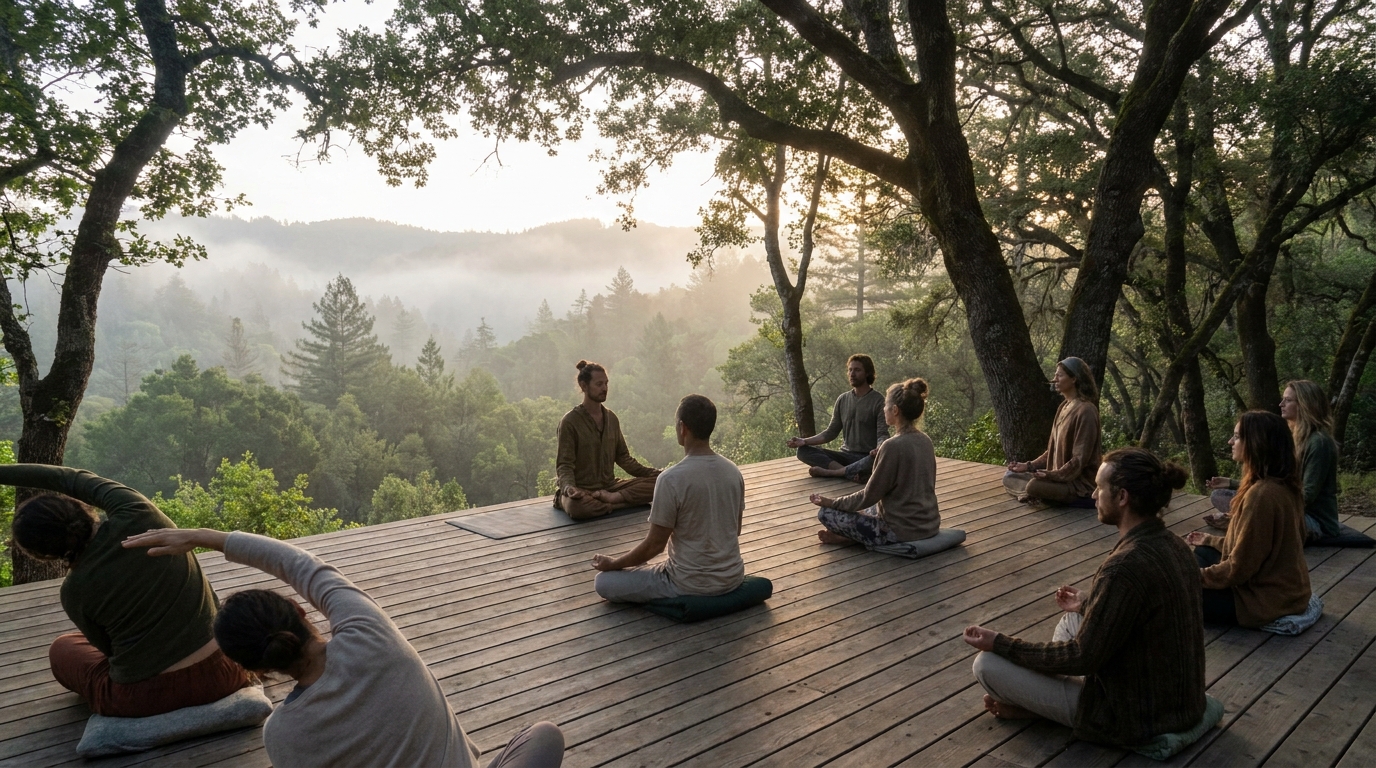
A vacation and a spiritual retreat can both be restful, but they are not exactly the same.
A vacation often focuses on enjoyment, comfort, sightseeing, or entertainment. There is nothing wrong with rest and recreation. They are needed. But sometimes we return from a vacation still feeling inwardly unchanged.
A spiritual retreat has a different center. It is designed to nourish the soul.
A Retreat Has Sacred Intention
The main difference is intention.
On a spiritual retreat, we consciously create space for God. We may still rest, laugh, eat well, and enjoy beauty, but these things are held within a deeper purpose.
We are not only asking, “How can I relax?”
We are also asking, “How can I remember God?”
“How can I become more loving?”
“How can I live with more integrity?”
“How can I listen to my soul?”
This intention gives the whole experience spiritual depth.
A Retreat Invites Inner Simplicity
Many retreats encourage simplicity. This may mean less time on the phone, simpler meals, quiet hours, shared rooms, or a slower schedule.
Simplicity is not punishment. It is a gift.
When life becomes simpler, the heart becomes easier to hear. We begin to notice how much energy is spent on wanting, comparing, planning, and reacting. In that awareness, we may feel a new freedom.
Bhakti does not teach that the world is bad. It teaches that everything can be connected to God. Simplicity helps us see what supports that connection and what distracts from it.
A Retreat Continues After You Leave
A true spiritual retreat does not end when the program ends. It continues in the way you return home.
Maybe you begin chanting for five minutes each morning.
Maybe you offer your meals with gratitude.
Maybe you read one verse of the Bhagavad-gita each day.
Maybe you forgive someone.
Maybe you serve your family with more patience.
Maybe you remember to pray before making decisions.
The retreat becomes a seed. Daily life becomes the garden.
Who Is a Spiritual Retreat For?
A spiritual retreat is for anyone who feels called to pause, reflect, heal, learn, and grow.
You do not need to belong to a particular religion. You do not need to be advanced in yoga. You do not need to know Sanskrit. You do not need to have your life perfectly arranged.
In fact, many people come because life feels messy, uncertain, or spiritually dry.
For Beginners
If you are new to spirituality or Bhakti Yoga, a retreat can be a gentle introduction. You can ask questions, experience chanting, meet sincere practitioners, and learn simple practices without pressure.
A good spiritual retreat will not demand that you pretend to be something you are not. It will offer a welcoming space where curiosity is respected.
You may not understand everything at first, and that is okay. Spiritual growth often begins with openness, not certainty.
For People of Faith
If you already follow a religious path, a Bhakti retreat can deepen your love for God. Bhakti Yoga is centered on devotion, prayer, surrender, and service—values found in many faith traditions.
The Sanskrit word bhakti means loving devotion. It is the path of offering the heart to God. While Bhakti has its own rich scriptures, practices, and theology, its essence—love of God—is something many people can appreciate.
A retreat can help you return to your own faith with renewed sincerity and tenderness.
For the Burned Out and Overwhelmed
Many people arrive at retreats feeling tired from carrying too much for too long. They may not even know what they need. They only know they need to stop.
A spiritual retreat can provide a safe rhythm: wake, pray, chant, eat, listen, walk, serve, rest.
This rhythm gently holds the nervous system and the heart. It reminds us that we are not machines. We are souls, made for love and relationship.
For Those Seeking Community
Spiritual loneliness is real. Many people long for conversations that go deeper than small talk. They want friendships rooted in meaning, humility, and shared values.
A retreat often creates this kind of connection naturally. When people chant together, serve together, and share honest reflections, hearts open.
Community does not mean everyone is perfect. It means we are trying together. In Bhakti, spiritual friendship is a great blessing because it supports us when our own inspiration becomes weak.
The Bhakti Yoga Approach to Spiritual Retreats
Bhakti Yoga is the yoga of love and devotion. The word yoga means connection, and Bhakti Yoga means connecting with God through loving devotion.
A Bhakti retreat is therefore not only about silence or self-improvement. It is about relationship—with God, with others, with nature, and with our own soul.
Love Is the Center
In the Bhagavad-gita, Krishna says, “Always think of Me, become My devotee, worship Me, and offer your homage unto Me.” This is an invitation into relationship. The heart of Bhakti is not fear or obligation but loving remembrance.
A retreat helps us practice this remembrance in simple ways:
Chanting God’s names.
Listening to sacred wisdom.
Offering food.
Serving others.
Praying sincerely.
Spending time with devotees.
These practices awaken love gradually. We may not feel dramatic change immediately, but every sincere effort matters.
Chanting Cleanses the Heart
Bhakti scriptures describe the heart as naturally pure but covered by layers of distraction, envy, fear, pride, and forgetfulness. Chanting is compared to cleansing a mirror. As the mirror of the heart becomes clearer, we begin to see ourselves and God more truthfully.
This does not mean we become perfect overnight. It means we begin a process.
A retreat gives us concentrated time for that process. When we chant together, especially in kirtan, we may feel burdens lift. We may feel joy arise without external reasons. We may feel tears, peace, or gratitude.
All of these can be signs that the heart is being touched.
Service Makes Spirituality Practical
Bhakti is not only something we feel during meditation. It becomes real in how we treat others.
Do we listen with care?
Do we speak truthfully and kindly?
Do we help when help is needed?
Do we honor the dignity of every person?
Do we use our gifts in service?
A Bhakti retreat gives many opportunities to practice love in action. Sometimes the most spiritual moment of a retreat is not during a formal session, but when someone notices another person needs support and quietly serves them.
Humility Opens the Door
The Bhakti tradition honors humility. Humility does not mean thinking we are worthless. It means recognizing that everything we have is a gift and that we are always dependent on grace.
A retreat can help soften the ego. We may realize we do not have all the answers. We may notice our habits more clearly. We may become more willing to ask for help, offer forgiveness, or begin again.
This humility is beautiful. It makes the heart ready to receive spiritual wisdom.
What Are the Benefits of a Spiritual Retreat?
The benefits of a spiritual retreat can be felt in the body, mind, heart, and soul. Some benefits are immediate, while others unfold slowly over time.
Peace and Clarity
When we step away from constant input, the mind often becomes clearer. We may see our priorities more honestly. We may recognize what is draining us or what we have been avoiding.
Through prayer and reflection, we may receive guidance—not always as a dramatic revelation, but as a quiet inner knowing.
Renewed Devotion
For those on a spiritual path, retreats can reignite devotion. Chanting with others, hearing sacred teachings, and spending time in a devotional atmosphere can awaken inspiration that may have become dim.
This renewed devotion can help us return to daily practices with joy rather than duty.
Emotional Healing
A retreat may bring emotions to the surface. This can feel tender, but it is often part of healing. In a sacred environment, with prayer and support, we can allow the heart to release what it has been holding.
Bhakti teaches that God is not distant from our pain. We can bring everything into prayer—our grief, anger, longing, confusion, and hope.
A Healthier Relationship With Daily Life
A spiritual retreat can help us see that daily life itself can become spiritual.
We do not need to live in a retreat center forever to be close to God. We can chant while commuting, pray before work, serve our family, offer our meals, read sacred wisdom, and remember God throughout the day.
The retreat teaches us how to carry sacredness home.
Deeper Community
Many people leave retreats with new friendships and a sense of belonging. Being with others who value spiritual growth can be deeply encouraging.
In Bhakti, community is not meant to replace personal responsibility. Rather, it supports it. We grow together by hearing, chanting, serving, and reminding one another of our highest purpose.
How to Prepare for a Spiritual Retreat
Preparing for a spiritual retreat does not need to be complicated. The most important preparation is internal: come with an open heart.
Set a Gentle Intention
Before arriving, ask yourself what you are seeking. Your intention may be simple:
“I want to reconnect with God.”
“I want to learn how to pray.”
“I want to rest.”
“I want to heal.”
“I want to understand Bhakti Yoga.”
“I want to become more loving.”
Hold your intention lightly. Sometimes God gives us what we need in a different way than we expected.
Be Willing to Participate
You do not have to do everything perfectly. Just participate sincerely.
If there is chanting, try listening or singing softly. If there is service, offer help. If there is discussion, listen with respect. If something feels unfamiliar, stay curious.
Spiritual growth often happens when we step gently beyond our comfort zone.
Reduce Distractions
If possible, let loved ones know you may be less available during the retreat. Put your phone away during sessions. Give yourself permission to be present.
This can feel difficult at first, especially if you are used to constant connection. But many people find that reduced screen time becomes one of the greatest gifts of retreat.
Bring Respectful Curiosity
If the retreat includes Sanskrit mantras, devotional rituals, or teachings unfamiliar to you, you are welcome to ask questions. A healthy spiritual environment welcomes sincere inquiry.
In the Bhagavad-gita, Krishna encourages Arjuna to ask questions and seek wisdom with humility. Spiritual understanding grows through hearing, reflection, and honest dialogue.
What to Expect After a Spiritual Retreat
Returning home after a retreat can feel beautiful, challenging, or both. You may feel inspired and peaceful, but daily responsibilities will return. The key is to carry the essence of the retreat into ordinary life.
Start Small
Do not feel pressure to change everything at once. Choose one simple practice.
Chant one round of japa, or personal mantra meditation.
Read one verse of the Bhagavad-gita.
Offer one prayer in the morning.
Eat one meal with gratitude.
Do one act of seva each day.
Small sincere steps are powerful.
Create a Daily Sacred Pause
A retreat teaches us the value of pausing. You can continue this at home by creating a small daily sacred pause.
It may be five minutes at your bedside, a candle in a quiet corner, a walk in nature, or chanting in your car before work. The form can be simple. The sincerity is what matters.
Stay Connected
If you found nourishment in the retreat community, stay connected. Attend kirtan, join a study group, volunteer, or keep in touch with spiritual friends.
In Bhakti, steady progress is supported by regular association. We need reminders. We need encouragement. We need people who help us remember God.
Be Patient With Yourself
After a retreat, old habits may return. This does not mean you failed. Spiritual growth is a journey.
Bhakti Yoga is not based on perfectionism. It is based on sincere effort and divine grace. Each time we remember, each time we chant, each time we choose love over selfishness, we are moving forward.
A Spiritual Retreat Is an Invitation to Love
So, what is a spiritual retreat?
It is a sacred pause.
It is a place to remember the soul.
It is a time to listen for God’s guidance.
It is an opportunity to chant, pray, serve, reflect, and grow.
It is a gentle doorway into a more conscious, loving way of life.
In the Bhakti tradition, the deepest purpose of retreat is not simply to feel calm, though calm may come. It is not only to gain knowledge, though wisdom may come. It is not even just to heal, though healing may come.
The deepest purpose is to awaken love for God and learn how to live that love in everyday life.
Whether you are new to spirituality or have walked a devotional path for many years, you are welcome. You do not need to arrive with perfect faith. You do not need to know all the answers. You only need a sincere heart and a willingness to take one step.
May your next retreat—whether for a day, a weekend, or a quiet hour at home—bring you closer to the Divine presence already calling within your heart.
Everyone is welcome to take one sincere step toward God. Begin with a prayer, a chant, an act of service, or a moment of honest remembrance. That one step matters, and by grace, it can open the way to a lifetime of love.
FAQs
What is a spiritual retreat?
A spiritual retreat is a period of time set aside for individuals to withdraw from their everyday lives and focus on their spiritual growth and connection with a higher power or inner self.
What activities are typically included in a spiritual retreat?
Activities at a spiritual retreat can vary, but they often include meditation, prayer, reflection, yoga, nature walks, and other mindfulness practices aimed at promoting inner peace and spiritual renewal.
Where are spiritual retreats typically held?
Spiritual retreats can be held in a variety of settings, including retreat centers, monasteries, ashrams, and natural environments such as mountains, forests, or by the ocean. Some retreats may also take place in urban settings, such as meditation centers or yoga studios.
What are the benefits of attending a spiritual retreat?
Attending a spiritual retreat can provide individuals with an opportunity to recharge, gain clarity, and deepen their spiritual practice. It can also offer a sense of community and support from like-minded individuals on a similar spiritual journey.
How long do spiritual retreats typically last?
The duration of a spiritual retreat can vary widely, ranging from a single day to several weeks. Some retreats may be structured as weekend getaways, while others may offer longer immersive experiences for those seeking a more intensive spiritual journey.

