
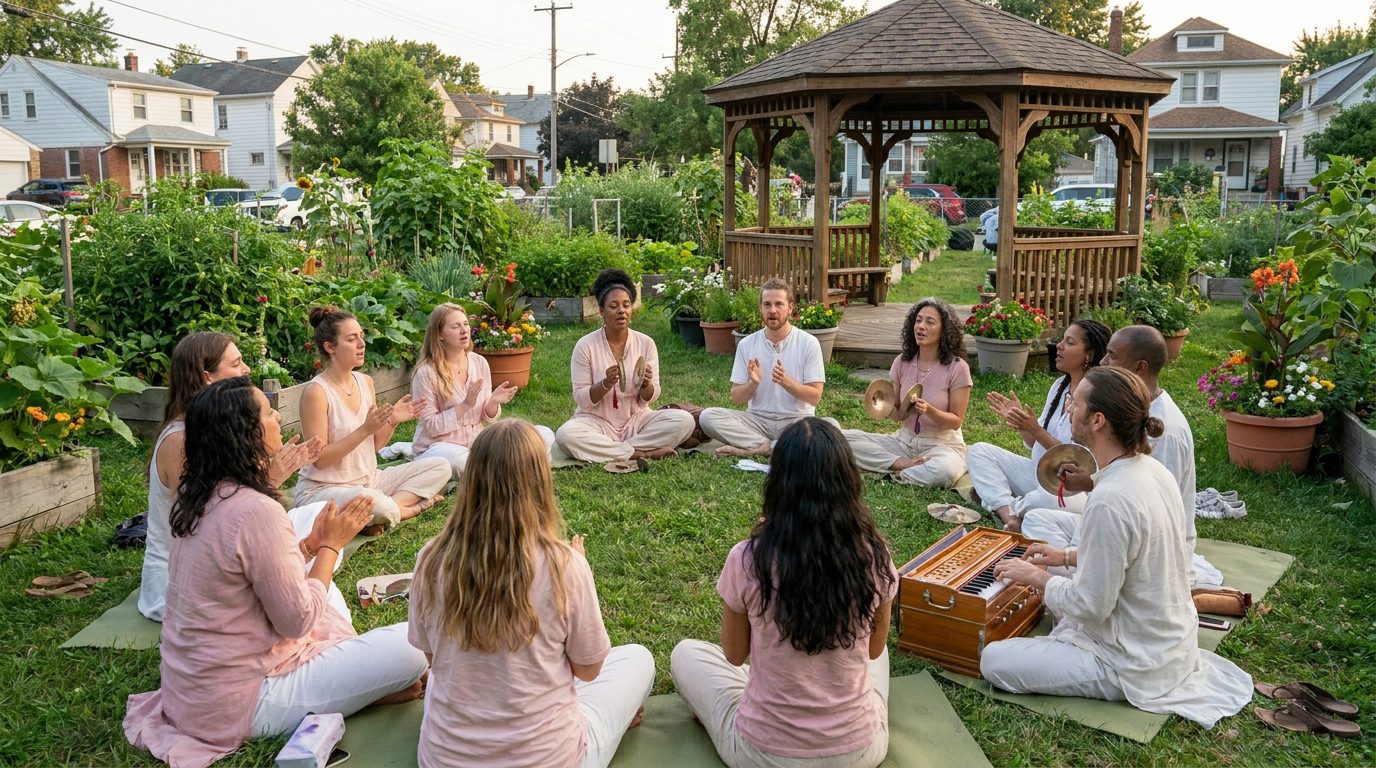
If you have been searching for “Bhakti Yoga near me,” something beautiful may already be awakening in your heart.
Maybe you are looking for a spiritual community. Maybe you want to learn how to chant mantras, deepen your prayer life, understand the Bhagavad-gītā, or simply find a peaceful place where people are sincerely trying to love God and serve others.
Wherever you are coming from—any faith background, no faith background, curious, experienced, wounded, hopeful, skeptical, or devoted—you are welcome on the path of Bhakti.
Bhakti Yoga is the yoga of love and devotion. The word bhakti means loving devotion, and yoga means connection. So Bhakti Yoga means reconnecting the heart with the Divine through love. It is not just a philosophy or a practice for a certain culture. It is a living path of chanting, prayer, service, sacred study, community, and spiritual growth.
If you are searching for a Bhakti Yoga center, kirtan gathering, temple, satsang, or devotional community near you, here are some gentle and practical things to look for.
Bhakti Yoga is a spiritual path centered on developing a loving relationship with God.
In the Bhakti tradition, God is often lovingly addressed by many names, such as Krishna, Rama, Govinda, Hari, or the Supreme Beloved. These names point to the personal, loving nature of the Divine. Different traditions may use different names, but the heart of Bhakti is universal: to remember God, love God, and live in a way that pleases God.
Bhakti Means Love in Action
Bhakti is not only an emotion. It is love expressed through daily life.
This may include:
- Chanting sacred names
- Offering prayers
- Serving others
- Reading wisdom texts
- Singing devotional songs
- Preparing and sharing sanctified food
- Living with compassion and humility
- Remembering God throughout the day
In the Bhagavad-gītā, Krishna says, “Whatever you do, whatever you eat, whatever you offer or give away, and whatever austerities you perform—do that as an offering to Me” (Bhagavad-gītā 9.27).
This verse gives a very practical vision. Bhakti Yoga is not limited to a temple or yoga mat. Cooking, working, parenting, studying, resting, and serving can all become spiritual when offered with love.
Bhakti Is for Everyone
A sincere Bhakti community should make this truth clear: devotion is not limited by nationality, age, gender, income, education, or spiritual experience.
In the Bhagavad-gītā 9.26, Krishna says that if someone offers Him a leaf, a flower, fruit, or water with love and devotion, He accepts it.
This is very simple and very profound. God is not hungry for our wealth or outer display. God is moved by sincerity.
So when you search for “Bhakti Yoga near me,” you are not looking for a place where you must become perfect before entering. You are looking for a place where you can begin, honestly and humbly, from where you are.
Look for a Welcoming Spiritual Community
One of the first things to look for in a Bhakti Yoga center is the feeling of welcome.
A true devotional space should help people feel seen, respected, and spiritually encouraged. It should not feel like a closed club or a place where only certain people belong.
A Warm First Visit
When you attend a Bhakti gathering for the first time, notice how you are received.
Are people kind? Do they explain things simply? Are newcomers guided with patience? Is there space to ask questions without feeling judged?
A healthy Bhakti community understands that everyone is on a journey. Some people may know many Sanskrit words. Others may not know any. Some may chant confidently. Others may simply listen quietly. All of these are valid beginnings.
The heart of Bhakti is hospitality. In many devotional traditions, guests are honored because every soul is beloved by God.
Respect for Your Background
A good Bhakti Yoga community will welcome your sincere spiritual search without pressuring you to reject your whole life history.
You may come from a Christian, Muslim, Jewish, Hindu, Buddhist, Sikh, interfaith, spiritual-but-not-religious, or non-religious background. Bhakti Yoga can offer practices that deepen your relationship with God, awaken love, and purify the heart.
While Bhakti has its own sacred teachings, lineages, and practices, authentic teachers present them with humility—not with arrogance or spiritual competition.
Community That Feels Like Service, Not Performance
Some spiritual spaces can unintentionally become places of performance: Who knows the most? Who dresses the best? Who chants the loudest? Who appears most advanced?
Bhakti Yoga invites us into something more honest.
The Śrīmad-Bhāgavatam, a central Bhakti scripture, describes pure devotion as service to the Divine without selfish motive and without interruption. This kind of devotion satisfies the soul completely.
When visiting a community, look for humility. Look for kindness in ordinary moments. Look for how people treat children, elders, guests, volunteers, and those who are struggling.
Devotion is not proven by how spiritual someone appears on stage. It is revealed in how gently they serve.
Look for Authentic Chanting and Kirtan
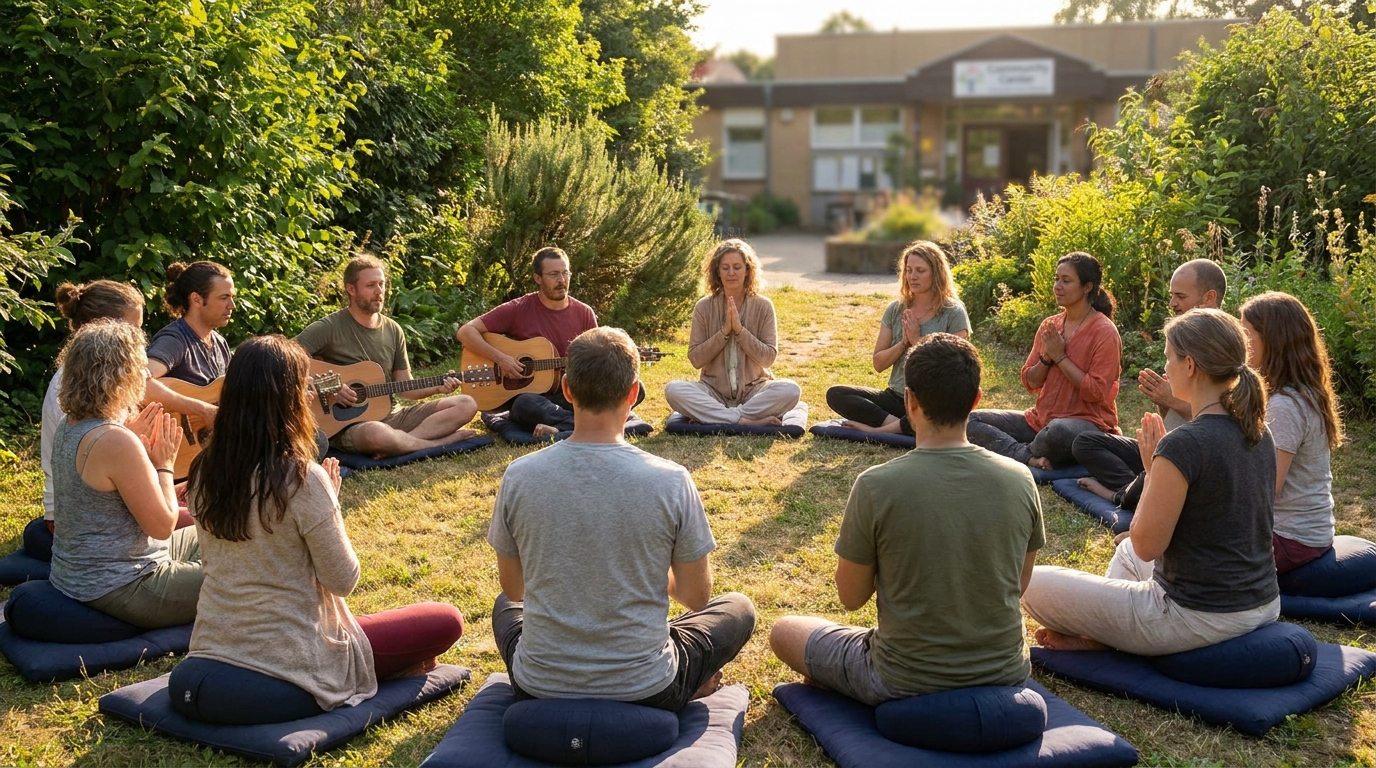
Many people discover Bhakti Yoga through kirtan.
Kirtan means devotional chanting, often in a call-and-response style. A leader sings a sacred mantra, and the group responds. Instruments may include harmonium, drum, cymbals, guitar, or simply clapping hands.
Kirtan can be joyful, meditative, healing, and deeply moving.
What Is Mantra?
A mantra is a sacred sound vibration that helps focus and purify the mind. In Bhakti Yoga, mantras often consist of names of God.
One well-known mantra is the Hare Krishna maha-mantra:
Hare Krishna Hare Krishna
Krishna Krishna Hare Hare
Hare Rama Hare Rama
Rama Rama Hare Hare
Maha-mantra means “great mantra.” Hare calls upon the divine energy of the Lord. Krishna means the all-attractive Supreme Person. Rama means the source of spiritual joy.
The mantra is a prayer: “O Lord, O divine energy of the Lord, please engage me in Your loving service.”
You do not have to fully understand everything intellectually before chanting. Like sitting in sunlight, the heart can receive warmth simply by being present and sincere.
Kirtan Should Invite the Heart
When searching for “kirtan near me” or “Bhakti Yoga near me,” look for gatherings where chanting is offered as prayer, not entertainment alone.
Beautiful music is wonderful. Skilled musicians can help create a sacred atmosphere. But in Bhakti, the mood matters most.
Is the chanting centered on devotion? Does it help people remember God? Is there humility in the offering? Are participants encouraged to chant from the heart, whether their voice is polished or imperfect?
In Bhakti Yoga, everyone’s voice is welcome. The goal is not to impress others. The goal is to call out sincerely.
Japa Meditation
In addition to group kirtan, many Bhakti communities teach japa, which is personal mantra meditation.
Japa usually means softly repeating a mantra on prayer beads. This daily practice helps calm the mind and bring the heart back to God. It can be done in the morning, during a quiet break, or anytime you can create sacred space.
A good Bhakti Yoga center may offer guidance on how to chant japa with attention, patience, and devotion.
Check out our latest posts at https://thebhaktihouse.org/blog.
Look for Practical Spiritual Education
Bhakti Yoga is not only singing. It is also a path of wisdom.
A strong Bhakti community will offer spiritual education in a way that is both faithful to scripture and practical for everyday life.
Bhagavad-gītā Study
The Bhagavad-gītā is one of the most beloved texts in the Bhakti tradition. It is a sacred conversation between Krishna and Arjuna, a warrior facing confusion, grief, and moral struggle.
Arjuna’s situation may seem ancient, but his questions are very modern:
- What is my purpose?
- How do I act when life is difficult?
- How do I deal with fear and attachment?
- What is the soul?
- How can I know God?
- How do I live with devotion in the world?
Krishna teaches Arjuna many forms of yoga, and He especially emphasizes devotion. In Bhagavad-gītā 18.66, Krishna invites surrender: “Abandon all varieties of separate duty and simply take refuge in Me. I will deliver you from all sinful reactions. Do not fear.”
This is not a call to irresponsibility. It is an invitation to trust God at the deepest level and live under divine guidance.
A good Bhakti Yoga class will explain such verses carefully, compassionately, and practically.
Śrīmad-Bhāgavatam and Stories of Devotion
The Śrīmad-Bhāgavatam is another central Bhakti scripture. It contains philosophical teachings, prayers, and sacred stories of devotees who lived with courage, surrender, and love.
These stories are not just mythology in the casual sense. For practitioners, they are sacred narratives that reveal spiritual truths.
For example, the story of Prahlāda Mahārāja teaches devotion even in adversity. The prayers of Queen Kuntī teach how suffering can become a doorway to deeper remembrance of God. The lives of the cowherd devotees of Vrindavan reveal the sweetness of intimate love for Krishna.
A good Bhakti teacher helps listeners understand how these teachings apply today—in family life, work, relationships, grief, anxiety, and service.
Questions Should Be Welcome
In authentic spiritual education, questions are not treated as threats.
The Sanskrit word satsang means association with truth or gathering with spiritually minded people. In satsang, people hear wisdom, ask questions, reflect together, and support one another’s growth.
When visiting a Bhakti Yoga group, notice whether thoughtful questions are welcomed. Are teachers humble? Do they answer from scripture, personal practice, and compassion? Do they admit when something requires deeper study?
Healthy faith is not afraid of sincere inquiry.
Look for a Culture of Service
Service is at the heart of Bhakti Yoga.
The Sanskrit word seva means devotional service. It is service offered not for ego, recognition, or control, but as an expression of love for God and care for God’s creation.
Serving God Through Serving Others
In Bhakti, service can take many forms:
- Cooking for the community
- Cleaning the temple or gathering space
- Welcoming guests
- Singing or playing instruments for kirtan
- Teaching children
- Distributing sacred food
- Supporting outreach
- Helping with events
- Caring for those in need
- Offering professional skills
- Praying for others
No service is too small when done with devotion.
Sweeping the floor can be sacred. Washing dishes can be sacred. Smiling at a newcomer can be sacred.
The Bhagavad-gītā teaches that work offered to God frees the heart from selfish attachment. This means we do not have to leave the world to live spiritually. We can transform our work by changing our intention.
Beware of Burnout and Pressure
A healthy Bhakti community encourages service but does not exploit people.
Service should be nourishing, not manipulative. Volunteers should be respected. Boundaries should be honored. People should not be shamed for needing rest, family time, emotional care, or personal space.
Bhakti is a path of love. Love cannot be forced.
If a community constantly pressures people to give beyond their capacity, or uses guilt to control them, that is a concern. Authentic seva grows from gratitude and inspiration.
Service Helps the Heart Grow
When practiced in a healthy way, seva softens the heart.
It teaches humility because we learn to serve without needing to be the center. It teaches patience because community life is not always easy. It teaches compassion because we begin to see others as souls, not obstacles.
A good Bhakti Yoga center will help you find service that fits your nature, time, and stage of life.
Look for Sacred Food and Hospitality
One of the most beautiful parts of Bhakti Yoga is the practice of offering food to God and sharing it with others.
In many Bhakti communities, you may hear the word prasadam or prasāda. It means mercy, grace, or sanctified food. Food is prepared with devotion, offered to Krishna, and then shared.
Why Food Matters in Bhakti
Eating is something we do every day. Bhakti Yoga teaches us to spiritualize daily life, so even cooking and eating can become offerings of love.
Krishna says in the Bhagavad-gītā that He accepts simple offerings made with devotion: a leaf, flower, fruit, or water. From this teaching, devotees prepare vegetarian offerings with care, cleanliness, and prayer.
When food is offered to God, it is received as grace.
A Place Where Everyone Can Be Fed
Sharing prasadam is more than a meal. It is community. It is welcome. It is a reminder that spiritual life is not dry or disconnected from the body.
A good Bhakti Yoga gathering often includes a shared vegetarian meal or snacks after kirtan, class, or worship.
If you are new, do not worry if you do not know the etiquette. You can simply receive with gratitude. Ask questions if you are unsure.
Hospitality Reveals the Heart
Notice how food is shared.
Are guests served kindly? Are dietary needs considered when possible? Is there gratitude in the atmosphere? Do people sit together and connect?
Sacred hospitality can help a newcomer feel, “There is a place for me here.”
Look for Integrity, Safety, and Humility
When searching for any spiritual community, it is wise to look not only for inspiration, but also for integrity.
Bhakti Yoga is a sacred path, but communities are made of human beings. A healthy community takes responsibility for creating a safe, respectful environment.
Teachers Should Be Accountable
A Bhakti teacher may be inspiring, learned, and deeply devotional. Still, teachers should remain accountable to scripture, tradition, peers, and ethical standards.
Look for teachers who:
- Speak with humility
- Do not demand blind loyalty
- Encourage personal responsibility
- Honor appropriate boundaries
- Do not exploit students financially, emotionally, or spiritually
- Are connected to a genuine lineage or serious practice
- Welcome sincere questions
- Point people toward God, not toward themselves
In Bhakti, the teacher is respected as a guide, but the true center is always God.
Healthy Community Practices
A trustworthy Bhakti Yoga center should care about safety and transparency.
This may include clear communication, financial honesty, child protection policies, respectful leadership structures, and ways to raise concerns.
Spiritual communities should help people become more whole, honest, and loving—not fearful or dependent.
Humility Is a Sign of Depth
In the Bhakti tradition, humility is not self-hatred. It means seeing ourselves truthfully: we are small, dependent on grace, and deeply loved by God.
Sri Chaitanya Mahaprabhu, a great saint in the Bhakti tradition, taught that one should chant the holy names with humility, tolerance, and respect for others.
This teaching is very practical. If a community values humility, people will be less interested in status and more interested in serving.
Look for Practices You Can Bring Home
A good Bhakti Yoga community does not only create a beautiful experience once a week. It helps you build a devotional life at home.
Daily Chanting
Even five or ten minutes of daily mantra meditation can begin to change the heart.
If you attend a Bhakti Yoga center, ask how to begin a simple chanting practice. You might start by chanting the maha-mantra softly each morning or listening to kirtan during your commute.
The key is sincerity and consistency.
Simple Prayer
Prayer in Bhakti does not need to be complicated.
You can pray:
“Dear Lord, please guide me.”
“Please help me remember You.”
“Please let me serve with love.”
“Please purify my heart.”
“Please help me take one step closer to You.”
Prayer opens the heart. It makes spiritual life personal.
A Small Sacred Space
You may create a small altar or sacred space at home with a picture of Krishna, sacred texts, flowers, a candle, or anything that helps you remember God respectfully.
This is not required to begin, but it can help make devotion part of daily life.
Reading a Little Each Day
Even a few verses of the Bhagavad-gītā, read with reflection, can nourish the mind and heart.
Try asking:
- What is Krishna teaching here?
- How does this apply to my life today?
- What quality can I practice?
- How can I offer my actions with more love?
Bhakti grows through hearing, chanting, remembering, and serving.
Look for a Community That Encourages Spiritual Growth
Bhakti Yoga is simple, but it is also deep. Over time, it invites transformation.
We may come for music, peace, friendship, or curiosity. But gradually, the path asks loving questions:
- What am I attached to?
- Where am I seeking happiness?
- How do I treat others?
- What does God want from my life?
- How can I love more sincerely?
- How can I serve without selfishness?
Growth With Compassion
Spiritual growth should be encouraged with compassion, not shame.
A mature Bhakti community understands that transformation takes time. We may struggle with old habits, doubts, grief, anger, pride, or distraction. The answer is not condemnation. The answer is steady practice, good association, prayer, and grace.
Krishna says in the Bhagavad-gītā 9.30-31 that even if a devotee struggles, if they are sincerely devoted, they should be regarded as saintly because they are rightly resolved. This is a deeply hopeful teaching.
God sees the direction of the heart.
Association Matters
In Sanskrit, sadhu-sanga means association with saintly or sincere spiritual people.
The people we spend time with influence our desires, thoughts, and habits. A Bhakti Yoga community can help us remember what matters most.
Look for people who inspire you to become kinder, more prayerful, more honest, more devoted, and more compassionate.
Not Escaping Life, But Transforming It
Bhakti Yoga is not about running away from responsibilities. It is about bringing God into the center of them.
Your family life can become devotional. Your work can become devotional. Your creativity can become devotional. Your challenges can become places of prayer.
The path of Bhakti is practical because love is practical.
Questions to Ask When Visiting a Bhakti Yoga Center Near You
If you are ready to visit a local Bhakti Yoga gathering, here are some questions you might gently keep in mind.
What Is the Mood of the Community?
Does the atmosphere feel peaceful, joyful, humble, and sincere?
No community is perfect, but the general mood matters. Look for devotion, kindness, and authenticity.
Are Newcomers Helped?
Do people explain the chanting, rituals, and Sanskrit terms? Are you allowed to participate at your own pace?
A welcoming community will not expect you to know everything.
Is Scripture Honored?
Are teachings connected to authentic sources like the Bhagavad-gītā, Śrīmad-Bhāgavatam, and the lives of saints? Are they explained in a way that supports real-life spiritual practice?
Bhakti is rooted in revelation and lived through the heart.
Is There Room for Service?
Are there opportunities to help in simple, meaningful ways?
Service helps us belong and grow.
Do You Feel Encouraged to Remember God?
After attending, notice your heart.
Do you feel more inspired to chant, pray, serve, and live with love? Do you feel invited closer to God?
That is one of the best signs.
Common Types of Bhakti Yoga Gatherings Near You
When searching online for “Bhakti Yoga near me,” you may find different types of gatherings. Each can be meaningful.
Kirtan Nights
These are often musical chanting events. Some may be held in yoga studios, temples, meditation centers, homes, or community spaces.
Kirtan nights are a beautiful entry point because you can participate simply by listening or singing.
Bhagavad-gītā Classes
These classes focus on studying scripture and applying its teachings to daily life.
They are especially helpful if you want philosophical grounding and spiritual direction.
Sunday Feasts or Temple Programs
Many Bhakti temples offer weekly gatherings with chanting, worship, a spiritual talk, and prasadam.
These programs are often very welcoming to newcomers and families.
Home Satsangs
Smaller gatherings in homes can feel intimate and personal. They may include chanting, discussion, prayer, and a shared meal.
Japa or Meditation Circles
These gatherings focus on personal mantra meditation, often with guidance and group support.
They can help you develop a steady daily practice.
How to Prepare for Your First Visit
You do not need to be an expert to attend a Bhakti Yoga gathering. Just come with an open heart.
Dress Comfortably and Respectfully
Some people may dress traditionally, while others may dress casually. Choose something comfortable and modest.
If you are visiting a temple, you may be asked to remove your shoes before entering sacred areas.
Participate at Your Own Pace
You can sing, clap, listen, sit quietly, ask questions, or simply observe.
No one should force you to do anything. Bhakti grows through willingness.
Bring Your Questions
It is okay to ask:
“What does this mantra mean?”
“How do I start chanting?”
“What book should I read first?”
“What is prasadam?”
“Do I need to believe everything before participating?”
Good questions can open doors.
Receive With Gratitude
Whether you receive a mantra, a meal, a conversation, or a moment of peace, receive it as a gift.
Sometimes one sincere evening of chanting can plant a seed that grows for a lifetime.
The Heart of the Search: Finding God Through Love
When someone searches “Bhakti Yoga near me,” they may be looking for a location. But often, the deeper search is for connection.
Connection with God. Connection with the soul. Connection with people who value devotion. Connection with a life of meaning.
Bhakti Yoga teaches that we are not merely bodies or minds. We are eternal souls, beloved parts of God. Our deepest hunger is not only for success, pleasure, or approval. Our deepest hunger is for divine love.
The practices of Bhakti—chanting, prayer, service, study, and sacred community—help uncover that love.
You do not have to do everything at once. You do not have to understand every teaching immediately. You do not have to be free from all doubts or struggles.
Just begin sincerely.
Chant one mantra. Offer one prayer. Read one verse. Serve one person. Visit one gathering. Ask one honest question.
God sees the heart.
And if you are looking for a Bhakti Yoga community near you, may you find a place where devotion is alive, people are welcomed, scriptures are honored, service is joyful, and the holy names are sung with love.
Everyone is welcome to take one sincere step toward God. Wherever you are on your journey, that one step matters—and by grace, it may open the door to a life of deeper love, healing, and spiritual joy.
FAQs
What is Bhakti Yoga?
Bhakti Yoga is a spiritual practice that focuses on devotion and love for a personal god. It is one of the paths of yoga, emphasizing the cultivation of a loving relationship with the divine.
What should I look for in a Bhakti Yoga center near me?
When looking for a Bhakti Yoga center, it’s important to consider the authenticity of the teachings, the experience and qualifications of the instructors, the community atmosphere, and the accessibility of the location.
What are the benefits of practicing Bhakti Yoga?
Practicing Bhakti Yoga can lead to a deeper sense of connection, inner peace, and spiritual fulfillment. It can also help in developing compassion, gratitude, and a sense of purpose in life.
How can I find a genuine Bhakti Yoga center near me?
To find a genuine Bhakti Yoga center, you can start by researching online, reading reviews, and asking for recommendations from friends or family members who have experience with Bhakti Yoga. Visiting the center and talking to the instructors can also help in assessing its authenticity.
What are some common practices in Bhakti Yoga?
Common practices in Bhakti Yoga include chanting, singing devotional songs, reading sacred texts, offering prayers and rituals, and cultivating a loving and selfless attitude towards the divine.

