
In the gentle practice of Bhakti Yoga, sacred things are not meant to make us feel distant from God. They are meant to help us remember that God is close.
A Tulasi mala is one of those sacred gifts.
For many devotees, the Tulasi mala is a daily companion in prayer, chanting, and spiritual life. It may rest softly in the hand during japa meditation, or it may be worn around the neck as a humble sign of devotion. Simple in appearance, it carries a deep spiritual meaning: “I belong to God, and I want to live in loving remembrance.”
Whether you are new to Bhakti Yoga or have been chanting for many years, the sacred power of Tulasi mala can gently support your journey. It is not a symbol of superiority, status, or external religion. It is a reminder of relationship—our eternal relationship with the Divine.
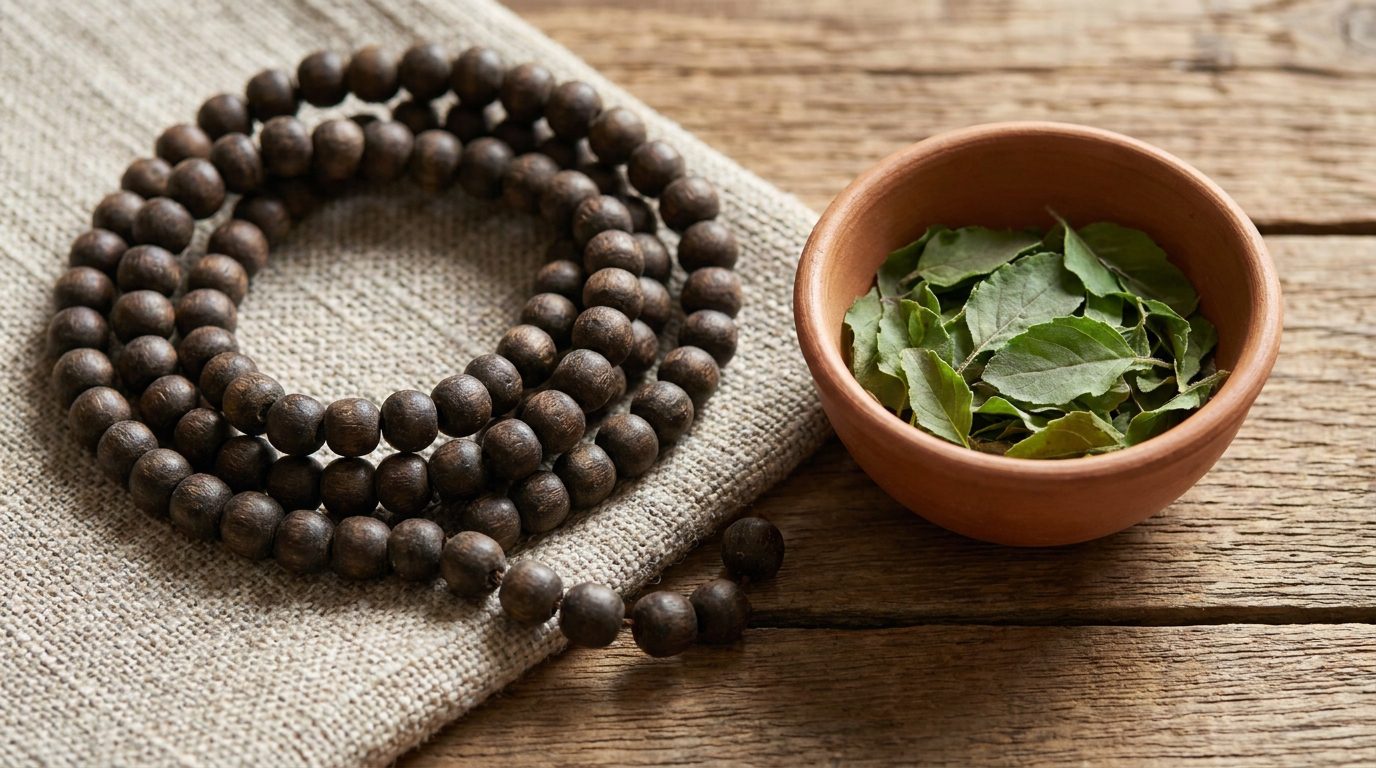
A Tulasi mala is a strand of beads made from the sacred Tulasi plant, also known as holy basil. In Sanskrit, “mala” means a garland or string of beads. In Bhakti Yoga, a mala is often used for chanting mantras, especially the holy names of God.
Tulasi is deeply loved in the Bhakti tradition. She is honored not as an ordinary plant, but as a sacred servant of the Lord. Devotees see her as a compassionate guide who helps the heart grow in devotion.
Tulasi: The Sacred Plant of Devotion
Tulasi is called “Vrinda Devi” in many Bhakti scriptures. She is especially dear to Lord Krishna, who is worshiped as the all-attractive Supreme Person in the Vaishnava tradition. Vaishnava means “one who worships Vishnu or Krishna,” names of God that point to the Divine as the loving source and sustainer of all.
The Padma Purana and other sacred texts glorify Tulasi as especially dear to the Lord. In the Bhagavad-gita, Krishna says:
“Whoever offers Me with devotion a leaf, a flower, fruit, or water, I accept that loving offering from the pure-hearted soul.”
Bhagavad-gita 9.26
Devotees often understand the “leaf” in this verse as including Tulasi leaves, which are offered with love to Krishna. The point is not the material value of the offering. A simple leaf, offered with sincerity, becomes spiritually powerful because it carries love.
Why Beads Are Made from Tulasi Wood
When Tulasi plants naturally complete their life cycle, their wood may be carefully used to make sacred beads. These beads are then strung into a mala. A Tulasi mala can be used for chanting, worn around the neck, or kept respectfully in a clean place for spiritual practice.
The beads themselves are not magic objects. Their sacred power comes from their connection to Tulasi, to the holy names of God, and to the sincere devotion of the person who uses them. Like a prayer book, altar, or sacred image, the mala helps focus the heart.
A Simple Reminder of the Soul’s Purpose
In Bhakti Yoga, the soul is understood to be eternal, conscious, and naturally loving. Our deepest purpose is not only to succeed in the world, but to awaken our love for God and all living beings.
The Tulasi mala quietly reminds us of this purpose.
When we touch the beads, we remember to chant. When we wear the mala, we remember to live with integrity. When we see it resting on our altar, we remember that spiritual life is built one sincere prayer at a time.
The Spiritual Meaning of Wearing Tulasi Mala
Many devotees wear Tulasi beads around the neck. This is sometimes called kanthi mala. “Kanthi” refers to the neck, and “mala” means beads or garland. Wearing Tulasi around the neck is a sacred practice in many Bhakti communities.
It is not simply religious jewelry. It is a devotional commitment.
A Sign of Surrender
In Bhakti Yoga, surrender does not mean weakness. It means trust. It means gradually offering our thoughts, words, actions, and desires to God.
Wearing Tulasi mala can be a gentle way of saying, “Dear Lord, I am Yours. Please guide me.”
This surrender may begin imperfectly. We may still have doubts, struggles, habits, and fears. Bhakti Yoga welcomes honest hearts. The mala does not declare that we are perfect. It reminds us that we are practicing.
A Sacred Protection for the Heart
Many devotees feel that Tulasi mala offers spiritual protection. This does not mean life becomes free from difficulty. Rather, Tulasi helps protect our remembrance of God during difficulty.
Protection in Bhakti is often inward. It is the protection of faith when circumstances are uncertain. It is the protection of humility when pride arises. It is the protection of prayer when the mind feels restless.
The Tulasi mala rests near the heart and throat. These are places connected with feeling and expression. In a practical sense, wearing Tulasi can remind us to speak kindly, choose carefully, and keep the heart soft.
A Daily Call to Live Devotionally
When worn with sincerity, Tulasi mala can influence daily choices. Before speaking harshly, we may remember the beads and pause. Before eating, we may remember to offer gratitude. Before beginning work, we may remember to serve.
This is the beauty of Bhakti Yoga. Spiritual growth is not separate from ordinary life. Cooking, working, parenting, studying, walking, and resting can all become offerings when done with love and remembrance.
Tulasi Mala and the Practice of Japa Meditation
One of the most common uses of a Tulasi mala is for japa meditation. “Japa” means the soft, personal repetition of a sacred mantra. A mantra is a spiritual sound vibration that helps focus and purify the mind.
In Bhakti Yoga, the most widely chanted mantra is the maha-mantra, meaning “great mantra”:
Hare Krishna Hare Krishna
Krishna Krishna Hare Hare
Hare Rama Hare Rama
Rama Rama Hare Hare
“Hare” addresses the divine spiritual energy of the Lord. “Krishna” means the all-attractive Lord. “Rama” means the source of spiritual joy. This mantra is a prayer: “O Lord, O divine energy of the Lord, please engage me in Your loving service.”
How Japa Beads Help the Mind
The mind can be restless. It moves quickly from memory to worry, from hope to distraction. Japa beads give the hands a simple sacred task, helping the mind stay connected to the mantra.
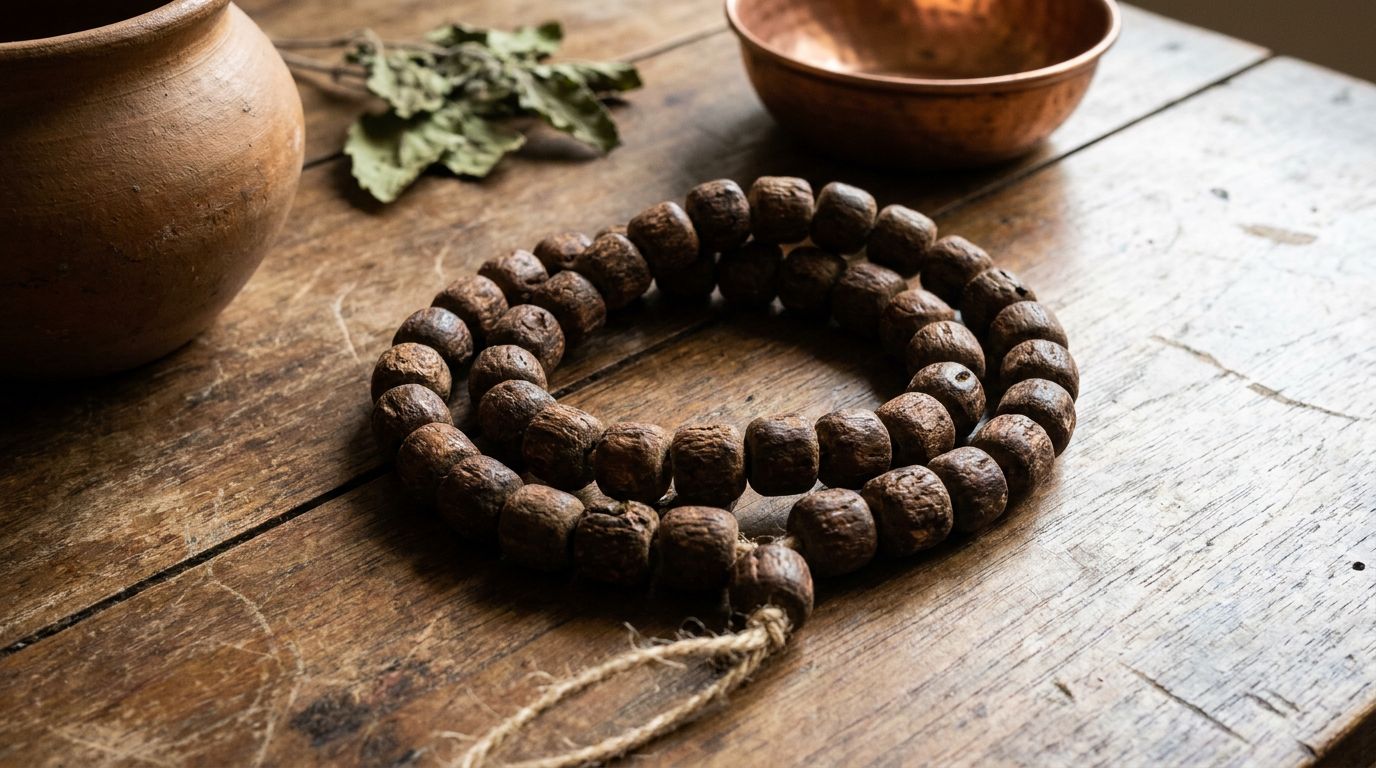
A traditional japa mala usually has 108 beads, plus one larger bead called the Krishna bead, guru bead, or head bead. The chanter softly repeats the mantra once on each bead. After completing the circle, one may turn the mala around and continue, rather than crossing over the head bead.
This physical rhythm supports inner attention. Each bead becomes a small doorway into prayer.
Chanting as a Personal Conversation with God
Chanting is not only repetition. It is relationship.
In the beginning, chanting may feel like a discipline. Over time, it becomes a conversation. We bring our gratitude, confusion, longing, repentance, and hope into the sound of the holy name.
The Srimad-Bhagavatam teaches that hearing and chanting about the Lord cleanses the heart. This cleansing is not harsh or forced. It is like sunlight entering a room. Gradually, what was hidden becomes visible, and what was heavy becomes lighter.
Starting with a Simple Daily Practice
If you are new to Tulasi mala and japa, begin gently. You do not need to imitate someone else’s practice. You can start with one round of chanting, or even a few minutes each morning.
Find a clean and peaceful place. Hold the beads respectfully. Take a breath. Chant clearly enough to hear yourself. When the mind wanders, kindly bring it back to the sound.
No sincere mantra is wasted.
Bhakti Yoga grows through consistency more than intensity. A small daily offering, made with sincerity, can transform the heart.
Check out our latest posts at https://thebhaktihouse.org/blog.
Tulasi in Bhakti Scriptures
The sacred position of Tulasi is celebrated throughout the Bhakti tradition. Scriptures do not present Tulasi as a decoration, but as a beloved servant of the Lord who helps souls come closer to Him.
Tulasi and Loving Offerings
The Bhagavad-gita 9.26 is often remembered when speaking about Tulasi. Krishna says He accepts even a leaf, flower, fruit, or water when offered with devotion.
This verse teaches a revolutionary spiritual truth: God is moved by love.
The world often measures offerings by size, cost, or public recognition. Krishna measures the heart. A single Tulasi leaf offered with devotion can be more pleasing than a grand display offered with pride.
This gives hope to everyone. We do not need wealth, scholarship, or social position to approach God. We need sincerity.
Tulasi in the Puranas
The Puranas are ancient devotional histories and teachings. Texts such as the Padma Purana and Skanda Purana glorify Tulasi as especially dear to Lord Vishnu and Krishna. They describe the spiritual benefit of serving Tulasi, offering her leaves, and wearing Tulasi beads.
These teachings help devotees understand that spiritual life is relational. Tulasi is not honored independently of God, but because of her deep devotion to Him. By honoring Tulasi, we learn to value devotion itself.
The Example of the Saints
Great Bhakti saints, such as the followers of Sri Chaitanya Mahaprabhu, have cherished Tulasi mala and the chanting of the holy names. Sri Chaitanya, a 15th-century saint and incarnation of divine love in the Gaudiya Vaishnava tradition, taught that chanting God’s names is the most accessible spiritual practice for this age.
He did not reserve chanting for a select few. He shared it with everyone—scholars and simple villagers, renunciants and householders, people considered high and low by society. His gift was the message that love of God is the birthright of every soul.
Tulasi mala supports this path of accessible devotion. Anyone can chant. Anyone can pray. Anyone can begin.
How to Use a Tulasi Mala Respectfully
Because Tulasi mala is sacred, it is traditionally treated with care and respect. This respect is not superstition. It is a way of training the heart in gratitude and mindfulness.
Keeping the Mala Clean
If you use Tulasi beads for japa meditation, it is common to keep them in a bead bag. This protects the beads and helps maintain a prayerful mood. Try to keep the mala in a clean place, not on the floor or in unclean areas.
If you wear Tulasi around the neck, you can be mindful when bathing, sleeping, or engaging in daily activities. Different communities may follow different standards. If you are unsure, ask a trusted devotee or spiritual guide.
The main principle is reverence.
Avoiding Casual or Fashion-Based Use
Tulasi mala is beautiful, but its beauty is devotional. Wearing it only as fashion can weaken our awareness of its sacred meaning. If someone is not ready to wear Tulasi as a spiritual commitment, that is okay. Bhakti should never be forced.
It may be better to first keep a Tulasi mala for chanting, learn about its meaning, and gradually develop appreciation.
The spiritual path is not about appearances. It is about the direction of the heart.
Offering Prayer Before Use
Before chanting on Tulasi mala, you may offer a simple prayer:
“Dear Tulasi Devi, please bless me to chant with sincerity. Please help me remember God and grow in love.”
You do not need elaborate words. A humble prayer is enough.
Bhakti Yoga teaches that spiritual objects and practices become alive to us when approached with devotion. Prayer opens that doorway.
Tulasi Mala as a Path of Healing and Growth
Many people come to spiritual life carrying burdens. Some carry grief. Some carry guilt. Some carry stress, loneliness, or disappointment. Tulasi mala can become a tender part of healing because it invites us into steady remembrance.
Healing Through Holy Sound
Chanting with Tulasi mala brings the mind into contact with sacred sound. In Bhakti, the holy name of God is understood to be spiritually non-different from God Himself. This means that when we chant sincerely, we are not merely thinking about the Divine—we are associating with the Divine through sound.
This association gradually softens the heart.
The chanting may not remove every external problem immediately, but it changes how we carry our problems. It gives us shelter. It reminds us that we are not alone.
Growing in Humility
Tulasi teaches humility. She is a plant, yet she is honored by saints. She is simple, fragrant, and always connected to service.
When we wear or chant on Tulasi mala, we can ask to become like her: useful in service, gentle in presence, and devoted in purpose.
Humility in Bhakti is not self-hatred. It is honest clarity. We recognize our dependence on grace, and this frees us from pretending to be in control of everything.
Becoming More Serviceful
True spiritual practice should make us kinder. If our mala helps us chant but we become proud, impatient, or judgmental, we may need to return to the heart of the practice.
Bhakti Yoga is love in action.
The Tulasi mala should inspire service: helping others, offering food to God and sharing it, speaking compassionately, caring for the earth, supporting spiritual community, and remembering that every living being is dear to the Lord.
Common Questions About Tulasi Mala
For those new to Bhakti Yoga, Tulasi mala may raise sincere questions. Questions are welcome. Spiritual life becomes stronger when it is thoughtful and heartfelt.
Can Anyone Wear Tulasi Mala?
In many Bhakti traditions, Tulasi mala is worn by those who want to seriously practice devotion to Krishna or Vishnu. However, “serious” does not mean perfect. It means sincere.
If you feel drawn to Tulasi, take time to learn about her sacred meaning. Speak with devotees. Begin chanting. Pray for guidance. If wearing Tulasi feels like a sincere step of commitment, you may do so respectfully.
Everyone is welcome on the path of Bhakti, but sacred symbols should be approached with understanding.
Is Tulasi Mala Only for Hindus?
Bhakti Yoga comes from the Vedic tradition of India, but its heart is universal: love of God. People from many cultures and backgrounds chant the names of God, honor Tulasi, and practice devotion.
You do not need to change your ethnicity, background, or outer identity to begin chanting. Bhakti speaks to the soul, and the soul is beyond temporary labels.
At the same time, it is important to honor the tradition Tulasi comes from. Respectful learning protects us from turning sacred practices into trends.
What If My Tulasi Mala Breaks?
If a Tulasi mala breaks, do not panic. Beads may break through regular use. Gather the beads respectfully. You may restring them, ask a devotee for help, or place damaged beads in a sacred natural place, such as the base of a Tulasi plant or a clean river, according to local guidance and environmental care.
A broken mala can also be a reminder: spiritual life is not about perfection of objects, but the renewal of devotion.
Can I Chant Without Tulasi Mala?
Yes. You can chant anywhere, with or without beads. The holy name is merciful. Still, Tulasi mala offers a special support for focused practice and devotional connection.
If you do not have Tulasi beads yet, begin with your voice and heart. Chant while walking, driving, cooking, or sitting quietly. When the time is right, you may receive or purchase a Tulasi mala from a trusted devotional source.
Bringing Tulasi Mala into Daily Life
The sacred power of Tulasi mala becomes most visible when it shapes everyday living. A mala is not only for the temple or meditation corner. It can quietly influence how we move through the world.
Morning Remembrance
Morning is a beautiful time for chanting. Before the phone, the news, and the rush of responsibilities, we can offer the first part of the day to God.
Hold your Tulasi mala and chant with attention. Even one sincere round can create a spiritual foundation for the day. If mornings are busy, chant a little. Offer what you can.
God sees the effort.
Prayer During Difficulty
When anxiety rises or the heart feels heavy, Tulasi mala can become an anchor. Hold the beads. Chant slowly. Let each mantra be a breath of surrender.
You may pray:
“Dear Lord, I do not know how to carry this alone. Please help me remember You.”
This is practical Bhakti. It does not require us to hide our pain. It invites us to bring our pain into relationship with God.
Service with Devotional Intention
After chanting, ask: “How can I serve today?”
Service, or seva in Sanskrit, means loving action offered for God’s pleasure and the welfare of others. Seva can be simple: preparing a meal with gratitude, encouraging a friend, cleaning a sacred space, caring for family, volunteering, or sharing spiritual wisdom gently.
Tulasi mala reminds us that devotion must flow from the beads into our behavior.
The Inner Power of Tulasi Mala
The sacred power of Tulasi mala is not loud. It is quiet, steady, and deeply personal.
It helps us remember.
It helps us chant.
It helps us soften.
It helps us live with greater awareness that we belong to God.
In a world that often pulls the mind outward, Tulasi mala turns us inward and upward. It brings the hands, voice, mind, and heart into one simple act of devotion. Bead by bead, mantra by mantra, we are invited to return to our original nature as loving servants of the Divine.
Not a Shortcut, but a Companion
Tulasi mala is not a shortcut that replaces inner work. We still need honesty, patience, discipline, forgiveness, and guidance. But the mala is a companion on that journey.
It reminds us to keep going when enthusiasm fades. It gives form to our intention. It helps us begin again.
Grace Meets Effort
Bhakti Yoga is a path of grace, but grace does not make our effort meaningless. Our effort is the way we open the door. Chanting on Tulasi mala is a simple daily effort that invites divine mercy into the heart.
We chant, and God responds in His own time.
We pray, and the heart slowly changes.
We serve, and love becomes real.
Taking One Sincere Step
If Tulasi mala has touched your heart, begin gently. Learn about Tulasi. Offer a prayer. Chant the holy names. Spend time with devotees who live with kindness and humility. Read the Bhagavad-gita or Srimad-Bhagavatam with guidance. Offer your food, your work, your words, and your day to God.
You do not have to be perfect to begin. You do not have to understand everything. Bhakti Yoga begins with sincerity.
The sacred power of Tulasi mala is the power of remembrance, devotion, and loving connection. She invites us to come closer to God—not with fear, pride, or pressure, but with a humble heart.
Wherever you are coming from, whatever your background, and whatever your next step may be, you are welcome. Take one sincere step toward God today. Chant one mantra. Offer one prayer. Do one act of service with love. The path of Bhakti is open, and grace is already reaching for you.
FAQs
What is Tulasi mala?
Tulasi mala is a string of beads made from the wood of the Tulsi plant, which is considered sacred in Hinduism. It is used for meditation and prayer.
How is Tulasi mala used?
Tulasi mala is used by devotees to chant mantras, prayers, or the names of deities. It is also worn around the neck or wrist as a symbol of devotion and protection.
What are the benefits of wearing Tulasi mala?
Wearing Tulasi mala is believed to bring spiritual benefits, such as increased devotion, protection from negative energies, and purification of the mind and body.
How is Tulasi mala made?
Tulasi mala beads are made from the wood of the Tulsi plant, which is considered sacred. The beads are typically handcrafted and strung together to form a necklace or bracelet.
Is Tulasi mala only used in Hinduism?
Tulasi mala is primarily associated with Hinduism, but it is also used in other spiritual traditions such as Buddhism and Jainism for its spiritual and medicinal properties.

