
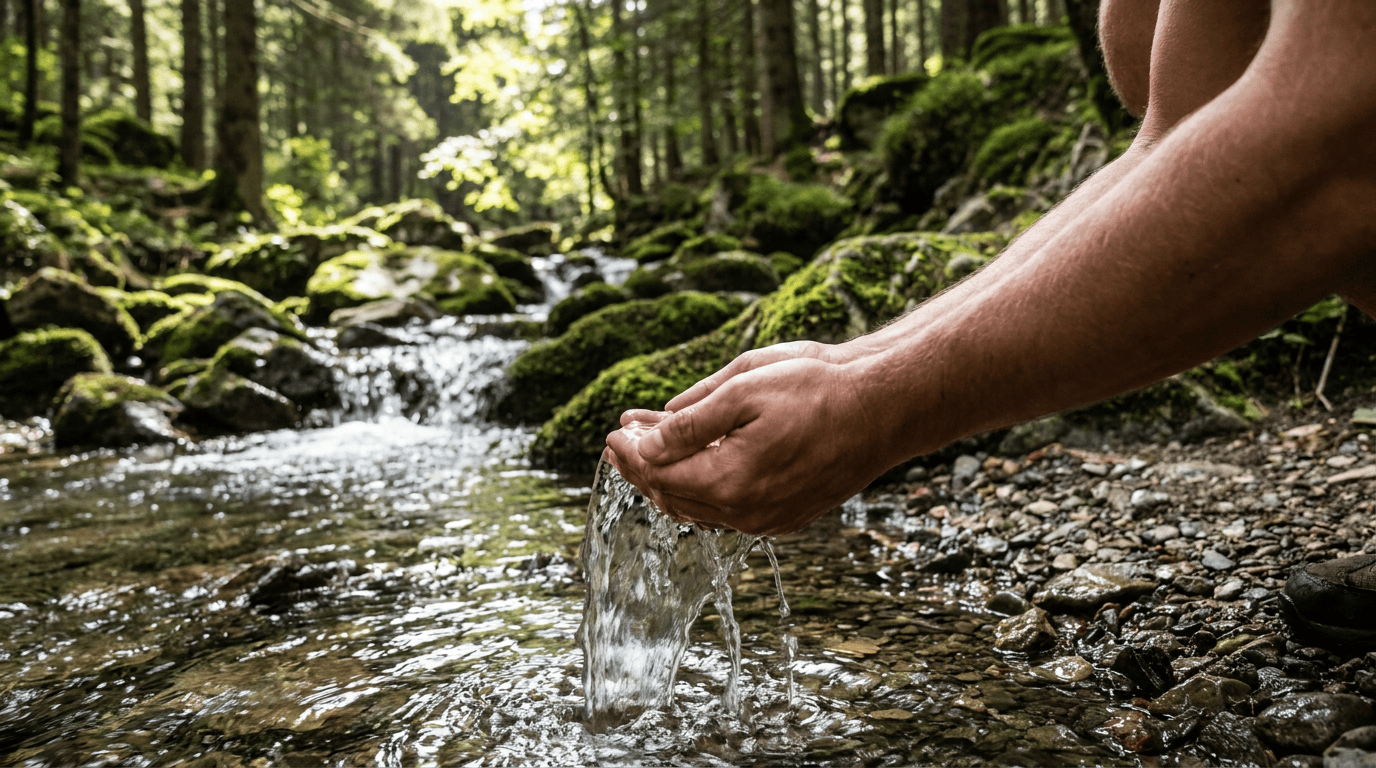
Water is one of God’s simplest and most generous gifts.
Before we speak of ritual, mantra, or altar practice, we can begin here: every living being needs water. A child, a bird, a tree, a saint, and a busy parent rushing to work all depend on the quiet mercy of water. It refreshes the body, cleanses the hands, nourishes the earth, and reminds us that life is sustained by grace.
In Bhakti Yoga, the path of loving devotion, even something as ordinary as water can become sacred. Bhakti means “devotion” or “loving service.” Yoga means “connection.” So Bhakti Yoga is the practice of reconnecting with the Divine through love—through chanting, prayer, service, gratitude, and offering.
One of the most beautiful teachings in the Bhagavad Gita is that God accepts even the simplest offering when it is given with love.
In Bhagavad Gita 9.26, Sri Krishna says:
“If one offers Me with love and devotion a leaf, a flower, a fruit, or water, I will accept it.”
This verse is deeply comforting. Krishna does not say we must be wealthy, scholarly, perfect, or born into a particular background. He says we can offer water.
Water is available to most of us. It is humble. It is pure. It is accessible. And when offered with sincere love, it becomes a bridge between the heart and God.
The Meaning of Offering Water
Offering Is an Act of Relationship
To offer water is not merely to place a cup on an altar. It is to say, “Dear Lord, this belongs to You. My life belongs to You. Please accept this small expression of my love.”
In Bhakti, the external action matters, but the inner mood matters even more. The Sanskrit word bhava means “inner feeling” or “mood of the heart.” A simple cup of water offered with gratitude may be more spiritually powerful than a grand ritual done mechanically.
Offering water teaches us relationship. We are not trying to control God, impress God, or bargain with God. We are learning to love.
Just as we might offer a guest a glass of water when they enter our home, we offer water to Krishna, Rama, Vishnu, Narayana, or any beloved form of the Divine as a gesture of welcome and care. For those from other spiritual backgrounds, the principle is familiar: we give our best to the One who gives everything to us.
Water as a Symbol of Purity and Surrender
Water cleanses. It softens. It flows around obstacles. It takes the shape of the vessel that holds it.
In devotional life, we pray to become like water in this way—pure in intention, soft in heart, and willing to flow toward God.
Offering water can also remind us to release pride. Water always moves downward. Similarly, humility is foundational in Bhakti. Humility does not mean thinking we are worthless. It means recognizing that we are dependent on divine grace, and that love grows best in a heart that is not hardened by ego.
A Practice for Everyone
One of the gifts of Bhakti Yoga is that it welcomes everyone.
You do not need to know Sanskrit perfectly. You do not need an elaborate altar. You do not need to identify with a particular culture. You do not need to have all your beliefs fully figured out.
You can begin with one sincere offering.
A clean cup. Fresh water. A simple prayer.
“Dear God, please accept this water offered with love.”
That is a real beginning.
The Scriptural Foundation for Offering Water

Bhagavad Gita 9.26: Love Is the Main Ingredient
The most well-known scriptural basis for offering water is Bhagavad Gita 9.26:
“Patram pushpam phalam toyam
yo me bhaktya prayacchati
tad aham bhakty-upahritam
ashnami prayatatmanah”
A simple meaning is:
“If someone offers Me a leaf, a flower, a fruit, or water with devotion, I accept that loving offering.”
Let’s look gently at a few Sanskrit words.
Patram means “leaf.”
Pushpam means “flower.”
Phalam means “fruit.”
Toyam means “water.”
Bhaktya means “with devotion” or “with love.”
Krishna is teaching that devotion is the soul of the offering. The item may be simple, but love makes it meaningful.
This is deeply practical. Many people feel, “I am not spiritual enough,” or “I do not have anything worthy to offer.” But Krishna gives us a path beyond discouragement. He says, “Offer what you have, with love.”
The Mood of Service in Bhakti Scriptures
Bhakti scriptures often describe devotional service, or seva. Seva means “service offered with love.” In temple worship, water is offered in many ways: for drinking, bathing the sacred form of the Lord, washing the feet, rinsing the mouth, and honoring divine guests.
These practices are not based on the idea that God is thirsty like we are. God is complete. Rather, the offering transforms us. By serving God personally, we awaken our own personal relationship with Him.
In the Srimad Bhagavatam, a sacred Bhakti text, we see that the Lord is especially moved by the love of His devotees. Again and again, the scriptures show that God accepts the heart behind the offering.
This is why a sincere offering of water can become a daily spiritual anchor.
Offering Water as Remembrance
In Sanskrit, smaranam means “remembering.” Remembrance is one of the core practices of Bhakti Yoga.
When we offer water, we remember:
God is the source of all life.
My body is sustained by divine kindness.
This home can become a sacred space.
My daily routines can become offerings.
Love can be practiced in simple ways.
The practice may take only a minute, but it can reshape the consciousness of the whole day.
Please visit our website for more information on our articles: articles.
How to Offer Water at Home

Create a Simple Sacred Space
You can offer water anywhere clean and respectful. Many people create a small home altar. This does not need to be complicated.
You might include:
A picture or sacred image of Krishna, Rama, Vishnu, Radha-Krishna, Gaura-Nitai, Lord Jagannath, or another form of God you feel drawn to
A clean cloth
A small cup or glass reserved for offerings
A candle or ghee lamp, if safe
Fresh flowers, if available
A scripture such as the Bhagavad Gita
If you are new, begin simply. A clean shelf with a sacred picture and a small cup of water is enough.
The purpose of an altar is not decoration. It is a place of meeting. It reminds the heart, “God is welcome here.”
Use Clean Water and a Clean Cup
Offer fresh, drinkable water. If possible, use a cup that is reserved only for God’s offerings. This helps the mind understand, “This is special. This is for the Lord.”
Cleanliness is a form of respect. In Sanskrit, shaucha means “cleanliness” or “purity.” In Bhakti, cleanliness is both external and internal. We clean the cup, and we also try to clean the heart through prayer, chanting, and sincere intention.
If you have filtered water, you can offer that. If not, offer the best water available to you. Bhakti is not about anxiety or perfectionism. It is about love.
Offer With a Simple Prayer
You can speak in your own language. God understands the heart.
A simple prayer might be:
“Dear Krishna, dear Lord, please accept this water offered with love and gratitude.”
Or:
“Thank You for sustaining my life. Please help me remember You and serve with a kind heart.”
Or simply:
“Please accept this.”
If you know the Hare Krishna maha-mantra, you may chant it:
Hare Krishna Hare Krishna
Krishna Krishna Hare Hare
Hare Rama Hare Rama
Rama Rama Hare Hare
The word mantra means “a sacred sound that helps free the mind.” The Hare Krishna mantra is a prayer asking to be engaged in loving service to the Divine. Hare addresses the Lord’s divine energy, Krishna means “the all-attractive one,” and Rama means “the source of joy.”
You may chant once, three times, or more. Let it be sincere, not rushed.
Allow a Few Moments of Reverence
After placing the water before the Lord, pause.
You may bow your head. You may close your eyes. You may breathe gently and remember that you are seen, known, and loved by God.
This pause is important. In modern life, we often move quickly from one task to another. Offering water invites sacred slowness.
Even one minute of reverence can soften the day.
What to Do With the Water After Offering
After some time—perhaps a few minutes, or after your prayer or chanting—you may remove the water from the altar.
In Bhakti, food and water offered to the Lord with devotion become prasadam. Prasadam means “mercy” or “grace.” It is not ordinary anymore, because it has been offered in love and received back as a blessing.
You may respectfully drink the offered water. You may share it with family. You may also pour it at the base of a plant, especially if you are not drinking it. Try not to waste it.
Receiving offered water reminds us: “I live by grace.”
Daily Hydration as a Devotional Practice
Begin the Morning With Gratitude
Hydration is essential for the body. Many of us wake up slightly dehydrated, and a glass of water in the morning can support energy, digestion, and clarity.
In Bhakti, we can connect this simple act with gratitude.
Before drinking, pause and offer thanks:
“Dear Lord, thank You for this water. May this body be used in service.”
This transforms hydration from a health habit into a devotional habit.
We do not reject the body in Bhakti Yoga. The body is a gift and a vehicle for seva, loving service. When cared for properly, the body can be used for chanting, cooking, working honestly, caring for family, serving community, and growing spiritually.
Drink With Awareness
Many people drink water while distracted, scrolling, rushing, or worrying. Try drinking one glass of water each day with full awareness.
Notice the coolness. Notice the gift. Notice how your body receives it.
This is a simple form of mindfulness, but in Bhakti it becomes remembrance of the Giver.
You might silently chant the holy names while drinking:
Hare Krishna Hare Krishna
Krishna Krishna Hare Hare
Hare Rama Hare Rama
Rama Rama Hare Hare
Or you may repeat a short prayer:
“May my heart become clear. May my life be an offering.”
Caring for the Body Without Becoming Body-Centered
Hydration matters. Sleep matters. Nourishing food matters. Movement matters.
But Bhakti Yoga gently teaches that we are more than the body. The Sanskrit word atma means “self” or “soul.” We are spiritual beings temporarily living in material bodies.
This understanding brings balance. We care for the body because it is sacred equipment for service, but we do not mistake it for the whole self.
Drinking enough water can be an act of responsibility. Offering water can be an act of devotion. Together, they remind us that spiritual life includes both reverence and practicality.
Serving Others With Water
Offering water to God naturally expands into offering water to others.
Give water to guests. Carry water for someone elderly. Place a bowl of clean water for animals where appropriate. Support communities that lack clean water. Volunteer, donate, or raise awareness when possible.
Bhakti is not meant to remain only on the altar. Love must move through the hands.
When we serve living beings with compassion, we honor God in the heart of all. In the Bhagavad Gita, Krishna teaches that He is the source and well-wisher of all beings. So kindness to others is part of devotion.
Common Questions About Offering Water
Do I Need to Be Hindu to Offer Water?
No.
Bhakti Yoga is rooted in the ancient devotional traditions of India, and we honor those roots with respect. At the same time, the heart of Bhakti is universal: love of God.
Anyone can offer water with sincerity. You may be from a Hindu background, Christian background, Muslim background, Jewish background, Buddhist background, interfaith background, spiritual-but-not-religious background, or still searching.
If you approach with respect, humility, and a desire to love God, you are welcome.
What If I Do Not Know Any Mantras?
That is completely okay.
A mantra is beautiful and powerful, but God also hears your simple words. You can pray naturally:
“Dear God, I do not know much, but I want to offer this with love.”
That prayer is precious.
If you would like to learn a mantra, the Hare Krishna maha-mantra is a wonderful place to begin. Maha means “great,” so maha-mantra means “great mantra.” It is considered especially powerful for awakening love of God in the heart.
Can I Offer Tap Water?
Yes, if it is clean and drinkable.
Offer the best you reasonably have. If you have filtered water, offer filtered water. If tap water is what you have, offer tap water with sincerity.
Bhakti is not a path of shame. It is a path of loving growth. Over time, as your devotion deepens, you may naturally want to refine your offerings. But begin where you are.
How Long Should the Water Stay on the Altar?
There is no need to become overly rigid, especially at home.
You may leave the water for a few minutes while you pray or chant. Some people offer water during morning worship and remove it afterward. Others may keep fresh water on the altar for part of the day and replace it daily.
The key is freshness, cleanliness, and attentiveness. Avoid leaving water so long that it becomes stale, dusty, or neglected.
Can I Offer Water for Someone Else?
Yes.
You can offer water and pray for someone’s healing, peace, protection, or spiritual growth. We cannot force outcomes, but we can bring our love and concern before God.
For example:
“Dear Lord, please accept this offering. Please bless my friend with strength and peace. Please guide them toward what is best.”
This is a beautiful way to transform worry into prayer.
What If My Mind Wanders While Offering?
That is normal.
The mind wanders. Bhakti practice gently brings it back.
If you notice distraction, do not condemn yourself. Simply return to the prayer. Return to the name of God. Return to gratitude.
Spiritual growth is not about never getting distracted. It is about returning with sincerity again and again.
A Simple Step-by-Step Water Offering Practice
Step 1: Wash Your Hands
Begin with cleanliness. Wash your hands and prepare your heart.
You may think, “May my actions become clean. May my intentions become sincere.”
Step 2: Fill a Clean Cup With Fresh Water
Use a cup reserved for offerings if possible. Fill it with clean water.
As you fill the cup, remember that water is a gift from God.
Step 3: Place the Water Before the Lord
Set the cup on your altar or before a sacred image.
Do this gently and respectfully.
Step 4: Pray or Chant
Offer a simple prayer:
“Dear Krishna, please accept this water offered with love.”
Then chant the Hare Krishna mantra if you like:
Hare Krishna Hare Krishna
Krishna Krishna Hare Hare
Hare Rama Hare Rama
Rama Rama Hare Hare
You may chant softly, aloud, or in your heart.
Step 5: Sit Quietly for a Moment
Let the offering be personal.
You are not performing for anyone. You are meeting God with sincerity.
Step 6: Receive the Water as Prasadam
After the offering, drink the water respectfully or share it. You may also offer it to a plant.
Remember: prasadam means mercy. Receive it with gratitude.
Offering Water in Temple Worship
The Mood of Welcoming the Divine Guest
In traditional Bhakti temple worship, called puja, the Lord is worshiped with great care. Puja means “worship” or “loving offering.”
Water may be offered in several ways, including:
Water for washing the feet
Water for washing the hands
Water for sipping
Water for bathing the deity
Water for drinking
These offerings are part of honoring the Lord as the most beloved guest.
This does not mean God depends on our service. Rather, by serving God in a personal way, our hearts become trained in love.
Abhisheka: Bathing the Lord
Abhisheka means “sacred bathing.” In many temples and homes, devotees bathe a deity form of the Lord with water and other pure substances, while chanting mantras and prayers.
For newcomers, this may seem unusual at first. But the heart of the practice is tender: “Dear Lord, please allow me to serve You.”
Just as one might care for a beloved child or honored guest, devotees care for the sacred form of God. The act is intimate and full of affection.
If you are new to Bhakti, you do not need to begin with elaborate worship. A simple water offering is already meaningful.
Charanamrita: Sacred Water of Mercy
In some Bhakti traditions, water that has bathed the Lord’s feet is called charanamrita. Charan means “feet,” and amrita means “nectar” or “immortality.” Charanamrita is honored as sacred mercy.
The symbolism is beautiful. The feet of the Lord represent shelter. To receive charanamrita is to remember, “I seek shelter in divine love.”
Even if this practice is unfamiliar, the essence is simple: water connected to God’s service becomes spiritually nourishing.
The Inner Offering: Giving the Heart Like Water
Letting the Heart Become Soft
Sometimes our hearts become dry from stress, disappointment, or pride. We may go through life guarded and thirsty inside.
Offering water can become a daily prayer for softness:
“May my heart become gentle. May I forgive. May I love. May I trust You more.”
In Bhakti, spiritual growth is not only about knowledge. It is about transformation of the heart.
Chanting, prayer, service, and offering gradually soften us. We become more patient, more grateful, more compassionate, and more willing to serve.
Surrender as Flow
The Sanskrit word sharanagati means “surrender” or “taking shelter.” Surrender does not mean giving up in despair. It means placing our life in God’s loving care.
Water teaches surrender by flowing. It does not cling to one shape. It moves toward the ocean.
Likewise, the soul finds fulfillment by moving toward the ocean of divine love.
We can pray:
“Dear Lord, please guide me. Help me flow toward You. Help me release what keeps me separate from love.”
Making the Whole Day an Offering
Offering water in the morning can inspire us to offer the whole day.
Before work: “May my work be honest and helpful.”
Before cooking: “May this food nourish and bless others.”
Before speaking: “May my words be kind.”
Before resting: “Thank You for carrying me through this day.”
This is the beauty of Bhakti Yoga. It does not require us to escape life. It teaches us to spiritualize life through love and remembrance.
Practical Hydration Tips With a Devotional Mood
Keep Water Nearby
A simple way to hydrate better is to keep a water bottle or glass nearby. If you see it, you are more likely to drink.
You might place a small reminder on your bottle:
“Remember.”
“Gratitude.”
“Offer.”
“Hare Krishna.”
Let hydration become a gentle call back to the heart.
Build a Morning and Evening Rhythm
Try drinking water:
After waking
Before or after chanting or prayer
Between meals
After physical activity
In the evening, as appropriate for your body
Everyone’s needs are different depending on health, climate, diet, and activity. Listen to your body and seek medical guidance when needed.
Bhakti is practical. We honor both spiritual wisdom and responsible care.
Avoid Waste
Because water is sacred, we try not to waste it.
Turn off taps when not needed. Use water thoughtfully. Offer leftover clean water to plants. Support efforts to protect rivers, lakes, and oceans.
In the Vedic worldview, nature is not dead matter. It is God’s energy. To respect water is to respect the divine arrangement that sustains life.
Remember Those Without Clean Water
Many people around the world do not have reliable access to clean drinking water. A devotional heart cannot ignore this.
As part of your water offering, you may pray:
“May all beings have clean water. May I be used in some way to relieve suffering.”
Then, when possible, take action. Support clean water projects. Help locally. Reduce pollution. Serve with humility.
Prayer and action belong together.
A Seven-Day Water Offering Practice for Beginners
Day 1: Offer One Cup of Water
Keep it simple. Offer one cup of fresh water with one heartfelt prayer.
Day 2: Add Gratitude
Name three things you are grateful for before offering the water.
Day 3: Chant the Holy Names
Chant the Hare Krishna mantra once or three times before the offering.
Day 4: Pray for Someone Else
Offer the water and pray for a loved one, a stranger, or someone in difficulty.
Day 5: Drink Water Mindfully
Receive the offered water as prasadam and drink slowly, with awareness.
Day 6: Serve Another Living Being
Offer water to a guest, family member, animal, plant, or community need.
Day 7: Reflect and Continue
Ask yourself:
Did this practice help me remember God?
Did it soften my heart?
Did it bring more gratitude into my day?
Then continue in whatever way feels sincere and sustainable.
Spiritual life grows through steady, humble practice. Small offerings, repeated with love, become powerful.
The Heart of the Practice
Offering water is not about becoming religiously impressive.
It is about becoming loving.
It is about remembering that God is present in our home, our body, our breath, our meals, our relationships, and our ordinary routines.
It is about learning to say, “Thank You.”
It is about receiving life as mercy and returning love in whatever small way we can.
The Bhagavad Gita assures us that even water is enough when offered with bhakti—with devotion. This teaching is a doorway of hope. No one is too poor, too busy, too new, too imperfect, or too far away to begin.
You can begin today.
Fill a clean cup with water. Place it before the Lord. Offer one sincere prayer. Chant one holy name. Serve one person with kindness. Drink with gratitude. Let your heart soften.
At The Bhakti House, everyone is welcome—wherever you come from, whatever your story, and however new this path may feel. Take one sincere step toward God, and trust that divine love is already taking many steps toward you.
FAQs
What are the benefits of offering water to others?
Offering water to others is a simple act of kindness that can help keep people hydrated, especially in hot weather or during physical activity. It can also show care and consideration for others’ well-being.
When is it appropriate to offer water to someone?
It is appropriate to offer water to someone when you notice they are thirsty, when they have been engaging in physical activity, or when the weather is hot. Additionally, offering water to guests in your home or at an event is a thoughtful gesture.
How can I offer water to others in a respectful and considerate manner?
When offering water to others, it is important to do so in a respectful and considerate manner. This can include asking if they would like a glass of water, offering to refill their water bottle, or providing water without being pushy or insistent.
What are some alternative ways to offer water to others?
In addition to offering a glass of water, there are alternative ways to offer water to others. This can include providing a water pitcher and glasses for guests, keeping a water dispenser available in a public space, or offering to purchase a bottle of water for someone in need.
Are there any cultural or religious considerations to keep in mind when offering water to others?
In some cultures or religions, there may be specific customs or beliefs related to offering and consuming water. It is important to be mindful of these considerations and to respect any cultural or religious practices when offering water to others.

