
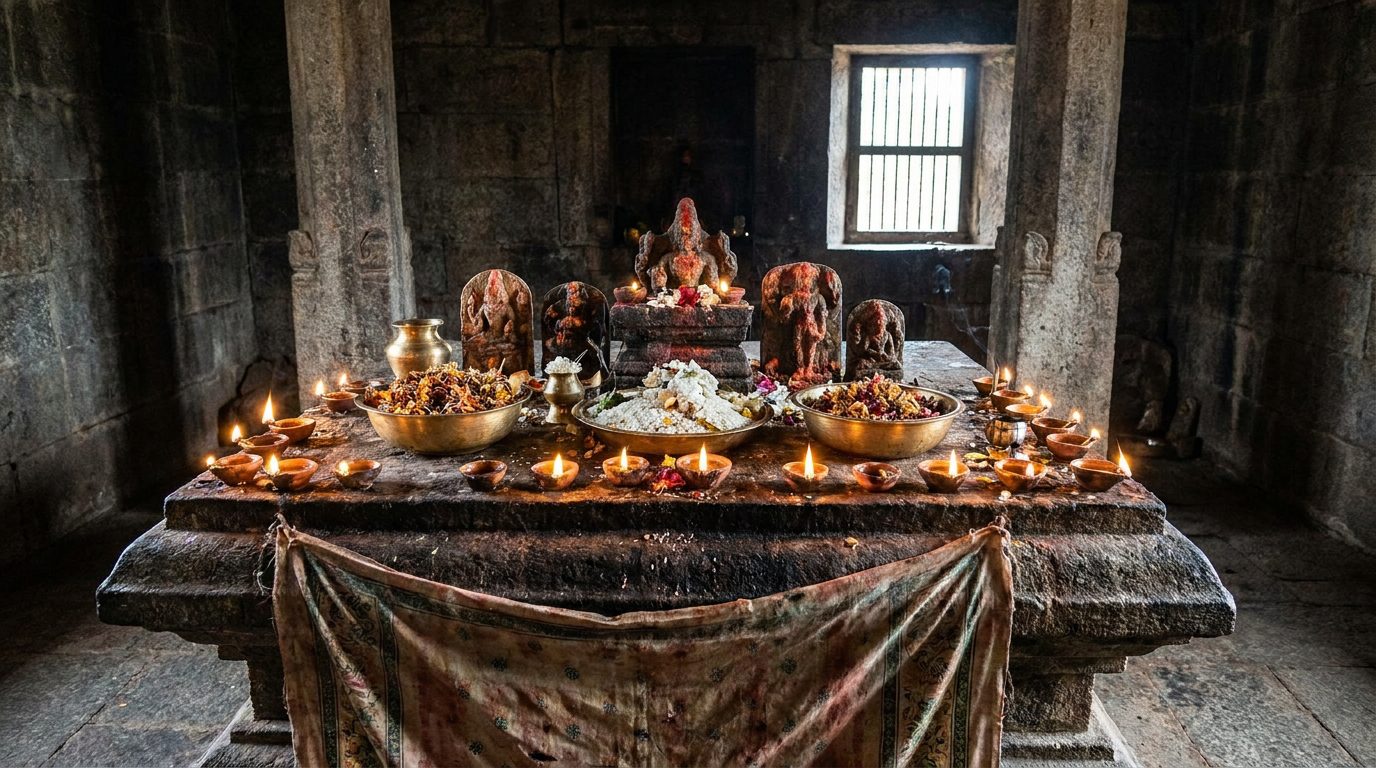
A temple altar is a sacred place where the heart learns to turn toward God.
In the Bhakti Yoga tradition, an altar is not simply a decorative table, shelf, or room. It is a place of loving relationship. It is where we offer flowers, incense, food, prayers, songs, and—most importantly—our attention. Through the altar, daily life becomes connected with the Divine.
The Sanskrit word bhakti means loving devotion. Bhakti Yoga is the path of awakening that devotion through practical acts of love: chanting God’s names, offering service, hearing sacred wisdom, praying, and remembering the Lord throughout the day.
A temple altar supports this path by giving devotion a visible home.
Whether you are setting up a large temple altar, a small home altar, or a simple sacred corner in your apartment, the purpose is the same: to create a place where love for God can be nourished.
A Sacred Meeting Place
In many Bhakti traditions, the altar is understood as a meeting place between the soul and the Supreme. When we come before the altar, we are not performing empty ritual. We are entering into a relationship.
The Bhagavad-gita teaches that God lovingly accepts even a simple offering when it is given with devotion:
“If one offers Me with love and devotion a leaf, a flower, fruit, or water, I will accept it.”
— Bhagavad-gita 9.26
This verse is deeply encouraging. It reminds us that God is not looking for wealth, perfection, or social status. The heart of the offering is love.
For Temples, Homes, and Everyday Life
A temple altar may be grand, with beautiful Deities, lamps, flowers, sacred music, and many worshipers. A home altar may be very simple: a picture of Krishna, Rama, Vishnu, Radha, Jesus, Mary, a saint, or another form of the Divine that awakens love in your heart.
The size is not the essence. The sincerity is.
A true altar becomes a spiritual anchor. It invites us to pause, breathe, pray, chant, and remember who we are beyond the rush of daily responsibilities.
The Spiritual Purpose of a Temple Altar
The purpose of a temple altar is not to impress others. It is to help us remember God with love.
In Bhakti Yoga, remembrance is everything. The heart becomes purified by repeatedly turning toward the Divine. An altar gives us a sacred focus for that remembrance.
Worship as Relationship
In Sanskrit, the word seva means service. It is one of the central practices of Bhakti Yoga. When we care for the altar, we are practicing seva.
We may clean the altar, arrange flowers, light a candle, offer food, sing, or simply sit quietly in prayer. These actions may look small, but they soften the heart.
Over time, altar worship teaches us:
- God is a person we can love and serve.
- Our home or temple can become a place of grace.
- Daily routines can become spiritual offerings.
- The heart grows through consistency and sincerity.
Bringing the Divine Into Daily Life
Many people think spirituality only happens in special places or on special days. But Bhakti Yoga invites us to bring spiritual life into every moment.
A temple altar reminds us that God is present here and now. Not only in sacred buildings. Not only during ceremonies. Not only when life is peaceful.
The altar quietly says, “Come back. Remember. Offer this moment.”
When we begin the day by bowing before the altar, chanting, or offering a simple prayer, we set a devotional intention. We remember that our work, family life, struggles, creativity, and relationships can all be offered in love.
A Place for Transformation
An altar also becomes a witness to our spiritual journey.
It sees our joyful days and our tearful days. It receives our gratitude, confusion, questions, and longing. Sometimes we stand before the altar full of faith. Other times we come feeling empty. Still, the invitation remains.
Come as you are.
That is the beauty of Bhakti. We do not need to pretend. We bring our real heart to God and allow divine love to transform us gradually.
Essential Elements of a Temple Altar
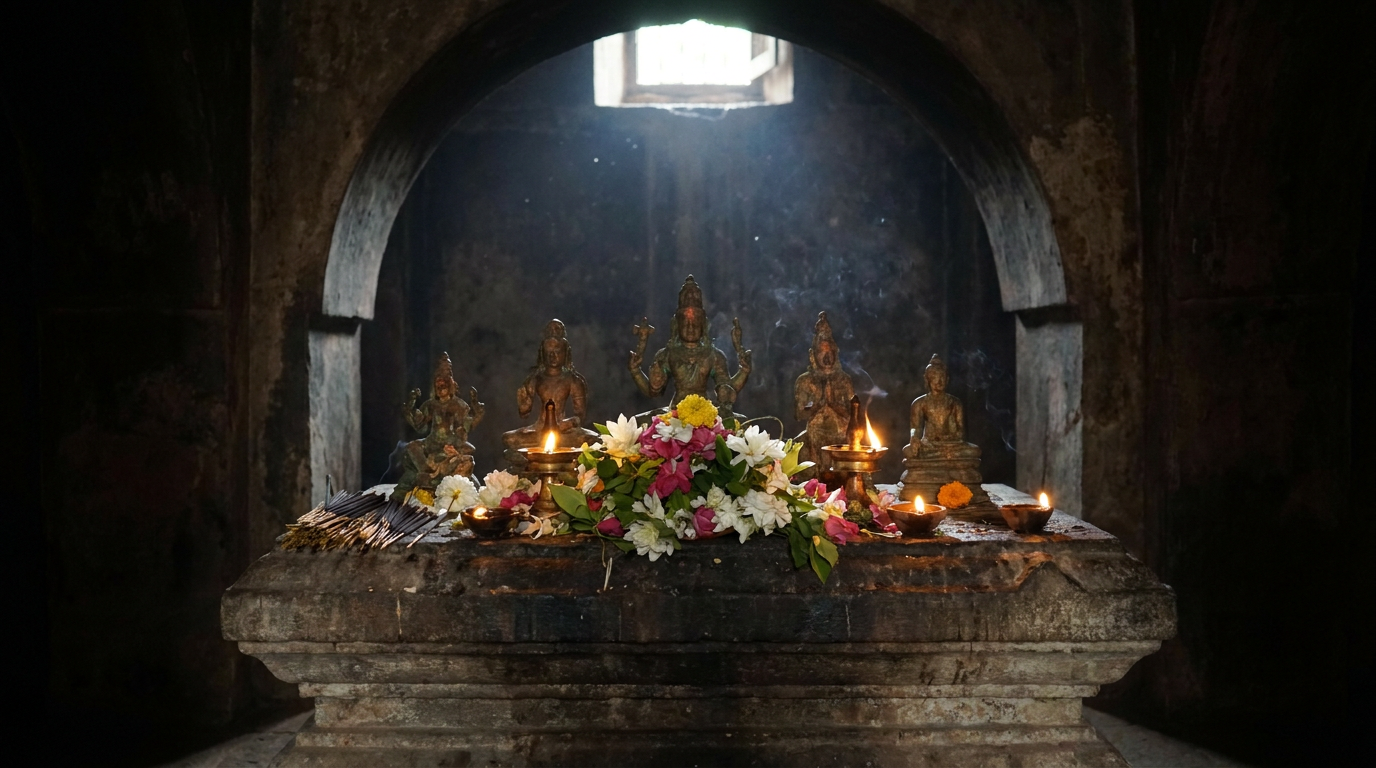
A temple altar can be simple or elaborate. The most important ingredient is devotion. Still, there are traditional elements that help create a sacred atmosphere and support focused worship.
Sacred Images or Deities
At the center of many Bhakti altars are sacred images or murtis. A murti is a consecrated form of the Divine, often made of stone, metal, wood, or other sacred materials. In Bhakti understanding, God is unlimited and can lovingly appear in a form that allows us to offer personal service.
Some altars include pictures or Deities of Sri Sri Radha-Krishna, Sri Chaitanya Mahaprabhu, Lord Rama, Lord Vishnu, Lord Narasimha, Lord Jagannath, or beloved teachers and saints in the Bhakti lineage.
If you are new to this, you do not need to feel overwhelmed. A simple framed picture can be a beautiful beginning.
Choose sacred images that inspire reverence, love, and remembrance.
A Clean Cloth or Altar Covering
A clean cloth helps make the altar feel cared for and intentional. Many devotees choose beautiful colors according to the season, festival, or mood of worship.
In a temple setting, altar cloths may be changed regularly and carefully maintained. In a home setting, a simple fresh cloth is enough.
The deeper principle is cleanliness. Cleanliness in Bhakti is not only physical—it also helps cultivate inner clarity.
Flowers and Natural Offerings
Flowers are one of the most beloved offerings in Bhakti Yoga. They represent beauty, freshness, and the blossoming of the heart.
You may offer:
- Fresh flowers
- Tulasi leaves, if appropriate in your tradition
- Fruits
- Water
- Incense
- Lamps or candles
The Bhagavad-gita verse mentioned earlier—“a leaf, a flower, fruit, or water”—shows that God accepts simple offerings when they are given with love.
A Lamp or Candle
Light symbolizes divine wisdom, purity, and the presence of God. Lighting a lamp or candle before the altar can become a meaningful daily practice.
As you light the flame, you might pray:
“May my heart be illumined with devotion. May my thoughts, words, and actions become offerings of love.”
In many Bhakti temples, lamps are offered during arati, a ceremony of worship in which lamps, incense, water, cloth, flowers, and other items are offered to the Lord.
Incense and Fragrance
Fragrance has a powerful effect on the mind. Offering incense can help create a peaceful devotional atmosphere.
When offering incense, remember that the essence is not the smoke itself, but the loving intention behind it. The fragrance becomes a gesture of hospitality to the Divine.
Sacred Texts
Keeping sacred scriptures on or near the altar helps remind us that devotion is nourished by wisdom.
Some traditional Bhakti texts include:
- Bhagavad-gita
- Srimad-Bhagavatam
- Sri Isopanisad
- Chaitanya Charitamrita
- Songs and writings of saints such as Srila Prabhupada, Bhaktivinoda Thakura, Narottama Dasa Thakura, Mirabai, Tulsidas, and others
Sacred reading, even for a few minutes daily, deepens the heart’s understanding.
Check out our latest articles at https://thebhaktihouse.org/blog.
How to Set Up a Temple Altar
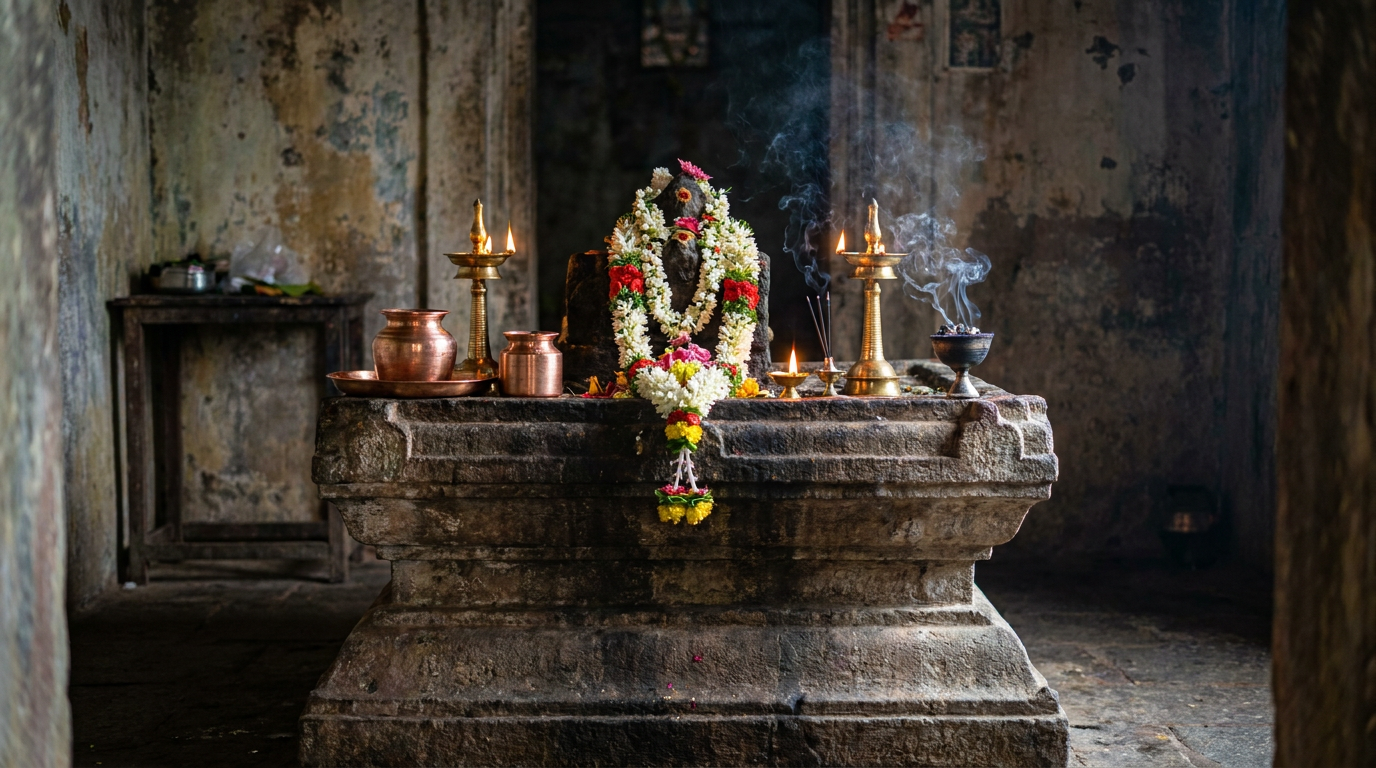
Setting up a temple altar is both practical and prayerful. The process itself can be an act of devotion.
Choose a Peaceful Location
Select a place that feels clean, calm, and respectful. In a temple, this may be a central sanctuary. In a home, it may be a quiet room, shelf, cabinet, or corner.
Try to avoid placing the altar in areas that are cluttered, noisy, or treated casually. If possible, choose a place where you can sit, chant, read, and pray without too much disturbance.
The altar does not need to be large. It needs to be honored.
Clean the Space Thoroughly
Before placing sacred items, clean the area with care. Dust, wipe surfaces, sweep or vacuum, and arrange everything neatly.
This simple cleaning can become meditation. As you clean externally, you can pray for inner cleansing too:
“May this space become pure. May my heart become a fit place for devotion.”
Arrange the Altar With Intention
Place the main sacred image or Deity in the center or highest position. If you include pictures of spiritual teachers, saints, or lineage guides, arrange them respectfully according to your tradition.
Keep offerings organized and avoid overcrowding. Beauty often comes through simplicity.
A basic home altar might include:
- A picture or Deity of the Lord
- A clean cloth
- A small candle or lamp
- A cup for water
- A small plate for offerings
- Fresh flowers
- Japa beads for chanting
- A sacred text
Create a Place to Sit
A temple altar is not only for looking at—it is for spending time with. Place a cushion, mat, chair, or small sitting area nearby.
This encourages daily practice. Even five or ten minutes of sincere prayer or chanting can deeply nourish the soul.
Keep Worship Items Separate
If possible, keep altar items separate from ordinary household use. For example, you may have a special plate, cup, spoon, cloth, or incense holder used only for offerings.
This helps cultivate reverence. It reminds the mind, “These items are for service.”
Daily Practices at the Temple Altar
A temple altar becomes alive through regular devotion. You do not need to do everything at once. Begin with simple, sustainable practices and let them grow naturally.
Morning Prayer
Morning is a sacred time. Before the day fills with messages, tasks, and responsibilities, we can turn toward God.
A simple morning practice may include:
- Bowing or offering respect
- Lighting a candle or lamp
- Offering water or flowers
- Chanting a mantra
- Reading a verse
- Praying for guidance
You may say:
“Dear Lord, please guide me today. May my thoughts, words, and actions be pleasing to You. Please help me serve with kindness, humility, and love.”
Chanting the Holy Names
Chanting is at the heart of Bhakti Yoga. The Sanskrit word mantra means a sacred sound that helps free and uplift the mind. In Bhakti, mantras are not just sounds; they are names of God filled with divine presence.
One of the most widely practiced Bhakti mantras is the Hare Krishna maha-mantra:
Hare Krishna, Hare Krishna, Krishna Krishna, Hare Hare
Hare Rama, Hare Rama, Rama Rama, Hare Hare
Maha-mantra means “great mantra.” Krishna means “the all-attractive one,” and Rama refers to the reservoir of spiritual joy. Hare calls upon the Lord’s divine energy, often understood as the compassionate feminine aspect of God.
You can chant softly before the altar, sing with others, or chant on beads called japa mala. The practice is simple: listen carefully and call out with sincerity.
Offering Food
In Bhakti Yoga, food can become sacred through offering. Food offered to God with love is called prasadam, which means mercy or grace.
Before eating, you can place a portion of vegetarian food on a clean plate before the altar and pray:
“Dear Lord, this food belongs to You. Please accept this offering made with love.”
After a few moments, the food is honored as prasadam and shared.
This practice transforms eating into gratitude. It reminds us that nourishment is a gift, not merely a product of our own effort.
Reading Sacred Wisdom
The altar is a beautiful place to read spiritual texts. Even one verse can change the direction of the day.
The Srimad-Bhagavatam teaches that hearing and chanting about the Lord cleanses the heart. This does not mean we become perfect overnight. It means that regularly hearing divine wisdom gradually removes confusion, selfishness, and forgetfulness.
You might read:
- One verse from the Bhagavad-gita
- A short passage from the Srimad-Bhagavatam
- A prayer by a saint
- A devotional song and its meaning
Then pause and ask: “How can I live this today?”
Evening Gratitude
At the end of the day, return to the altar for a moment of gratitude.
You may thank God for protection, lessons, food, relationships, and opportunities to serve. You may also offer your mistakes, regrets, or worries.
Bhakti does not ask us to hide our humanity. We can bring everything to the Lord.
A simple evening prayer:
“Thank You for this day. Please forgive my mistakes. Please help me remember You more deeply tomorrow.”
Temple Altar Etiquette and Care
Caring for a temple altar is an expression of respect. Etiquette is not meant to create fear or distance. It helps us approach sacred space with mindfulness and love.
Cleanliness and Respect
Keep the altar clean, dust-free, and uncluttered. Remove old flowers, empty water cups, and used incense ash regularly.
Wash hands before touching altar items. If offering food, use clean utensils and fresh ingredients.
In temple settings, there may be specific standards for purity and worship. If you are serving in a temple, humbly learn from experienced devotees.
Avoid Casual Use
Try not to use the altar as a storage space for keys, phones, mail, or unrelated items. The altar is a sacred place, and keeping it focused helps train the heart in reverence.
If the altar is in a shared home, gently communicate its purpose to others. Make it welcoming, not intimidating.
Offer Fresh Items When Possible
Fresh flowers, clean water, and freshly prepared food express care. If fresh flowers are not available, even a sincere prayer is accepted.
Remember: God accepts love. Do not become discouraged if you cannot offer elaborate items.
Learn From a Living Tradition
Bhakti Yoga is a living path. Books are important, but guidance from sincere practitioners is also valuable.
If you are creating a temple altar in a formal community, seek guidance from qualified teachers or temple leaders. If you are creating a home altar, you can still learn from devotees, classes, scripture, and devotional communities.
Humility protects the heart.
Types of Temple Altars
Different spiritual communities have different altar styles. The form may vary, but the purpose remains devotion.
Main Temple Altar
A main temple altar is usually the central focus of worship. It may include Deities, sacred images, lamps, flowers, and traditional decorations.
Daily worship may include:
- Mangala-arati, early morning worship
- Kirtan, devotional singing
- Scripture class
- Food offerings
- Noon and evening arati ceremonies
- Festivals and special rituals
A temple altar serves the whole community. It becomes a place where many hearts gather in prayer, song, and service.
Home Altar
A home altar brings the temple mood into daily life. It reminds the family or individual that the home is not only a place of eating, sleeping, and working—it can also be a place of worship.
A home altar may be simple and modest. The important thing is consistency.
Even in a small apartment, a shelf can become sacred when used with love.
Travel Altar
For those who travel often, a small travel altar can be helpful. This might include a small picture, beads, a pocket-sized scripture, or a tiny cloth.
A travel altar teaches us that devotion is portable. Wherever we go, we can remember God.
Community Altar
In yoga studios, retreat centers, Bhakti gatherings, and spiritual homes, a community altar creates a shared focus for prayer and chanting.
When many people from different backgrounds gather, it is especially important to make the altar welcoming and respectful. Bhakti is personal, but it is also generous. The altar should invite the heart, not exclude anyone.
Decorating a Temple Altar With Devotion
Decorating the altar is a joyful form of seva. Beauty offered to God becomes spiritualized.
Seasonal Decorations
Many temples decorate according to seasons, festivals, and sacred days. Spring flowers, autumn leaves, festival garlands, lamps, and special cloths can all become offerings.
The mood is not performance. It is loving celebration.
Just as we might decorate a home for a beloved guest, we decorate the altar for the Supreme Beloved.
Flowers and Garlands
Garlands are traditional offerings in Bhakti worship. A garland is a string of flowers offered around the Lord, a sacred teacher, or the altar.
Making a garland can be deeply meditative. Each flower becomes like a prayer:
“May my heart be offered. May my life be fragrant with devotion.”
Lighting and Atmosphere
Soft, clean lighting can help create a peaceful space. Lamps, candles, or natural light can all support a devotional mood.
Avoid harsh clutter or distracting decoration. The best altar decorations guide attention toward God.
Music and Kirtan
Though not a physical decoration, sacred sound beautifies the altar. Kirtan means singing or glorifying the names of God, often with instruments and call-and-response chanting.
A temple altar with kirtan becomes vibrant. The heart opens through sound, rhythm, and shared devotion.
Common Questions About Temple Altars
Many people feel unsure when beginning altar worship. That is natural. Bhakti is a path of learning through love.
Do I Need to Be Hindu to Have a Bhakti Altar?
No. Bhakti Yoga welcomes sincere seekers from all backgrounds.
While Bhakti has deep roots in the Vedic tradition of India, its essence is universal: the soul’s loving relationship with God. You do not need to change your cultural identity to begin chanting, praying, serving, or offering gratitude.
Come respectfully. Learn humbly. Begin sincerely.
What If I Do Not Know the “Correct” Rituals?
Start with simple devotion.
You can bow, pray, chant, read, or offer water and flowers. As you grow, you can learn traditional practices step by step.
In the Bhagavad-gita, Krishna emphasizes devotion over external complexity. The heart matters most.
Can I Have an Altar If My Home Is Small?
Yes. A small shelf, windowsill, or clean corner can become an altar.
Do not wait for perfect circumstances. Spiritual life begins where you are.
What Should I Offer?
Traditional offerings include vegetarian food, water, flowers, incense, lamps, and prayers. In many Bhakti traditions, food offerings avoid meat, fish, eggs, onion, garlic, and intoxicants, especially when offering to Krishna.
If you are new, begin with fruit, water, or a simple vegetarian meal. Offer with love and gradually learn more.
How Often Should I Worship at the Altar?
Daily is ideal, even if briefly.
A simple rhythm may be:
- Morning: light a candle, chant, pray
- Before meals: offer food
- Evening: gratitude and reflection
Consistency is more important than intensity. A little devotion practiced daily has great power.
The Inner Altar of the Heart
The outer altar helps awaken the inner altar.
In Bhakti Yoga, the ultimate sacred space is the heart purified by love. The temple altar trains us to see God not only in one place, but everywhere.
From Ritual to Remembrance
Rituals are meaningful when they lead to remembrance. If we light a candle but keep the heart closed, something is missing. But if that candle helps us pause, soften, and pray, it becomes a doorway.
Bhakti practices are not mechanical duties. They are invitations into relationship.
Seeing Life as an Offering
The Bhagavad-gita teaches the spirit of offering:
“Whatever you do, whatever you eat, whatever you offer or give away, and whatever austerities you perform—do that as an offering to Me.”
— Bhagavad-gita 9.27
This is the expansion of altar worship. We begin by offering flowers and food. Gradually, we learn to offer our work, words, relationships, and challenges.
The whole life becomes an altar.
Humility and Love
A beautiful altar is wonderful, but the most beautiful offering is a humble heart.
In Bhakti, humility does not mean thinking we are worthless. It means recognizing that we are loved, dependent on grace, and meant to serve. It means becoming soft enough to receive divine guidance.
The saints of Bhakti teach that chanting the holy names with humility opens the heart to deep spiritual joy.
Building a Temple Altar Community
A temple altar is often the heart of a devotional community. People gather around it to chant, learn, serve, celebrate, and grow together.
Shared Service
Many hands may care for a temple altar:
- Someone cleans
- Someone cooks
- Someone arranges flowers
- Someone sings
- Someone reads scripture
- Someone welcomes guests
- Someone donates supplies
- Someone simply prays
Every service matters.
Bhakti Yoga teaches that service offered with love is spiritually powerful, whether seen or unseen.
Welcoming Newcomers
A temple altar should help people feel invited into sacred life. New visitors may not know when to stand, bow, sing, or sit. A warm community can gently guide them without judgment.
The mood should be: “We are happy you are here.”
At The Bhakti House, the devotional spirit is warm, humble, and inclusive. Every person is on a journey. Every sincere step matters.
Festivals and Sacred Days
Temple altars become especially joyful during festivals such as Janmashtami, the appearance day of Lord Krishna; Gaura Purnima, honoring Sri Chaitanya Mahaprabhu; Rama Navami, honoring Lord Rama; and many other holy days.
These festivals include chanting, feasting, storytelling, drama, decoration, and community worship. They help us remember divine pastimes and celebrate God’s love together.
Practical Checklist for Creating Your Temple Altar
If you are ready to begin, here is a simple checklist.
Basic Home Altar Checklist
- Choose a clean and peaceful place
- Place a sacred image or Deity
- Add a clean cloth
- Keep a small cup for water
- Keep a small plate for offerings
- Add flowers if available
- Keep incense or a candle if safe
- Place japa beads nearby
- Keep a sacred text close
- Sit there daily for prayer or chanting
Daily Practice Checklist
- Clean or straighten the altar
- Offer fresh water
- Light a candle or incense, if appropriate
- Chant a mantra or prayer
- Offer food before eating
- Read a short scripture passage
- End the day with gratitude
Heart Checklist
Ask yourself gently:
- Am I approaching with sincerity?
- Am I trying to remember God?
- Am I willing to serve?
- Am I becoming more kind?
- Am I allowing devotion to touch my daily life?
These questions matter more than external perfection.
A Gentle Beginning for Everyone
If you are new to temple altars, please do not feel that you must do everything perfectly. Bhakti Yoga is a path of grace. The Lord sees the intention behind the offering.
You can begin today with one small act:
Place a flower before a sacred image.
Light a candle and say a prayer.
Chant one round of mantra.
Read one verse of the Bhagavad-gita.
Offer your meal with gratitude.
Sit quietly and ask God to guide your heart.
The altar is not meant to create pressure. It is meant to create connection.
God is not far away. The Divine is patiently inviting us back into loving relationship. A temple altar simply helps us hear that invitation more clearly.
May your altar—whether grand or simple—become a place of peace, remembrance, and devotion. May it bless your home, your community, and your heart. And may every offering, no matter how small, bring you closer to the Supreme Beloved.
Everyone is welcome on the path of Bhakti. Wherever you come from, whatever your background, you can take one sincere step toward God today.
FAQs
What is a temple altar?
A temple altar is a sacred structure within a place of worship, such as a church, mosque, or synagogue, where religious rituals and offerings are made to honor and connect with the divine.
What is the purpose of a temple altar?
The purpose of a temple altar is to provide a focal point for religious worship and to serve as a symbolic representation of the divine presence. It is also used for making offerings, prayers, and performing religious ceremonies.
What are the common features of a temple altar?
Common features of a temple altar include a raised platform or table, often adorned with religious symbols, candles, incense, and sacred objects. It may also include a depiction of a deity or religious figure, and may be located in the central or most sacred area of the temple.
How is a temple altar used in religious ceremonies?
A temple altar is used in religious ceremonies for making offerings, performing rituals, and conducting prayers. It serves as a focal point for the congregation to gather around and participate in communal worship and spiritual practices.
Are there different types of temple altars?
Yes, there are different types of temple altars based on the religious tradition and cultural practices. For example, in Hinduism, there are altars dedicated to specific deities, while in Christianity, altars are used for the Eucharist and other sacraments.

