
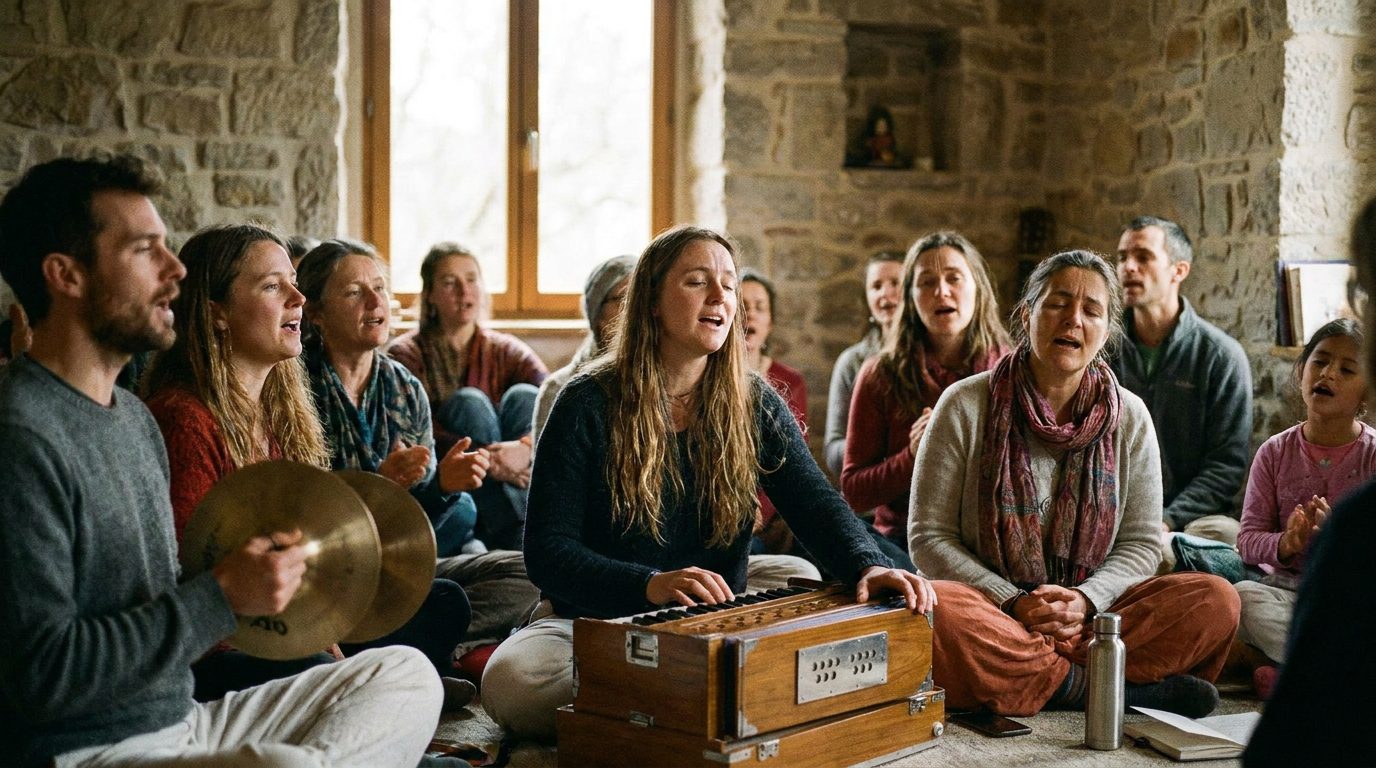
In every spiritual tradition, the heart longs to call out to the Divine.
Sometimes that call comes as a whispered prayer. Sometimes it comes through tears. Sometimes it comes in the quiet repetition of a sacred name. In Bhakti Yoga, the path of loving devotion, chanting the Holy Name is one of the most simple, beautiful, and powerful practices for awakening our relationship with God.
You do not need to be born into a particular culture. You do not need to be a scholar. You do not need to have your life perfectly together. Chanting begins exactly where you are.
The Holy Name is not just a sound we make with the lips. It is an invitation. It is a bridge. It is the soul turning toward its Source with sincerity, hope, and love.
Chanting the Holy Name means repeating sacred names of God with attention and devotion.
In the Bhakti tradition, God is known by many beautiful names, such as Krishna, Rama, Govinda, Gopala, Hari, Radha, Narayana, and others. Each name reveals a loving quality of the Divine.
For example:
- Krishna means “the all-attractive one.”
- Rama means “the source of spiritual joy.”
- Hari means “the one who removes suffering and illusion.”
- Govinda means “the one who gives pleasure to the senses, the cows, and the earth.”
These names are not considered ordinary words. In Bhakti Yoga, the Holy Name is understood to be spiritually alive. When we chant with sincerity, we are not simply speaking about God—we are reaching toward God directly.
The Meaning of Mantra
The Sanskrit word mantra can be understood as “that which frees the mind.” The mind is often busy, anxious, distracted, or weighed down by fear and regret. A mantra gives the mind a sacred place to rest.
One of the most well-known mantras in the Bhakti tradition is the Maha Mantra, which means “the great mantra”:
Hare Krishna Hare Krishna
Krishna Krishna Hare Hare
Hare Rama Hare Rama
Rama Rama Hare Hare
This mantra is a prayer. It calls upon the Divine energy of love, known as Hare, and the Lord as Krishna and Rama. In simple words, it means: “O Lord, O Divine energy of the Lord, please engage me in loving service.”
Chanting Is Both Prayer and Meditation
Chanting is sometimes called japa, which means soft, personal repetition of a mantra, often counted on beads. It is also practiced as kirtan, which is musical call-and-response chanting, usually done in a group.
Japa is like a private conversation with God.
Kirtan is like a community singing its heart open together.
Both forms are deeply nourishing. Both help us remember who we are beyond the noise of daily life.
Why the Holy Name Holds Spiritual Power
The spiritual power of chanting is not based on volume, musical talent, or religious status. It comes from the nature of the Holy Name itself and the sincerity with which we call out.
In the Bhagavad-gita, Krishna says, “Always think of Me, become My devotee, worship Me, and offer your homage unto Me.” This teaching reminds us that spiritual life is not only about beliefs. It is about remembrance, relationship, and love.
Chanting helps us remember God in a direct and practical way.
The Name and the Named Are Spiritually Connected
In ordinary life, a name and a person are different. If we say the word “water,” our thirst is not quenched. If we say the word “sun,” the room does not become warm.
But Bhakti scriptures teach that God’s names are spiritually non-different from God. This means the Holy Name carries the presence, mercy, and love of the Divine.
The Sri Chaitanya-charitamrita, a sacred text in the Gaudiya Vaishnava tradition, explains that the Holy Name has all the spiritual potency of the Lord. This is why chanting can touch the heart so deeply, even when we do not fully understand how it works.
Like sunlight entering a room, the Holy Name begins to illuminate what has been hidden.
Chanting Awakens the Heart
Many of us carry layers of hurt, distraction, doubt, and forgetfulness. We may want to love God, but we feel blocked. We may want peace, but our mind keeps pulling us outward.
Chanting gently cleanses the heart.
In the Sri Siksastakam, a set of eight devotional prayers by Sri Chaitanya Mahaprabhu, it is said that chanting cleanses the mirror of the heart. This is such a tender image. The heart is already capable of reflecting divine love, but it becomes covered by dust. Chanting is a loving process of cleaning.
We do not have to force ourselves to become spiritual overnight. We simply keep chanting, keep praying, keep returning.
Spiritual Power Is Love, Not Control
When we hear the phrase “spiritual power,” we may think of something dramatic or mystical. But in Bhakti Yoga, real spiritual power is the power to love, forgive, serve, surrender, and remember God.
It is the power to choose kindness when we are hurt.
It is the power to pray when we feel lost.
It is the power to keep the heart soft in a hard world.
Chanting the Holy Name does not make us superior to others. It makes us more humble, more compassionate, and more aware that every soul is loved by God.
Chanting as a Practical Path for Daily Life
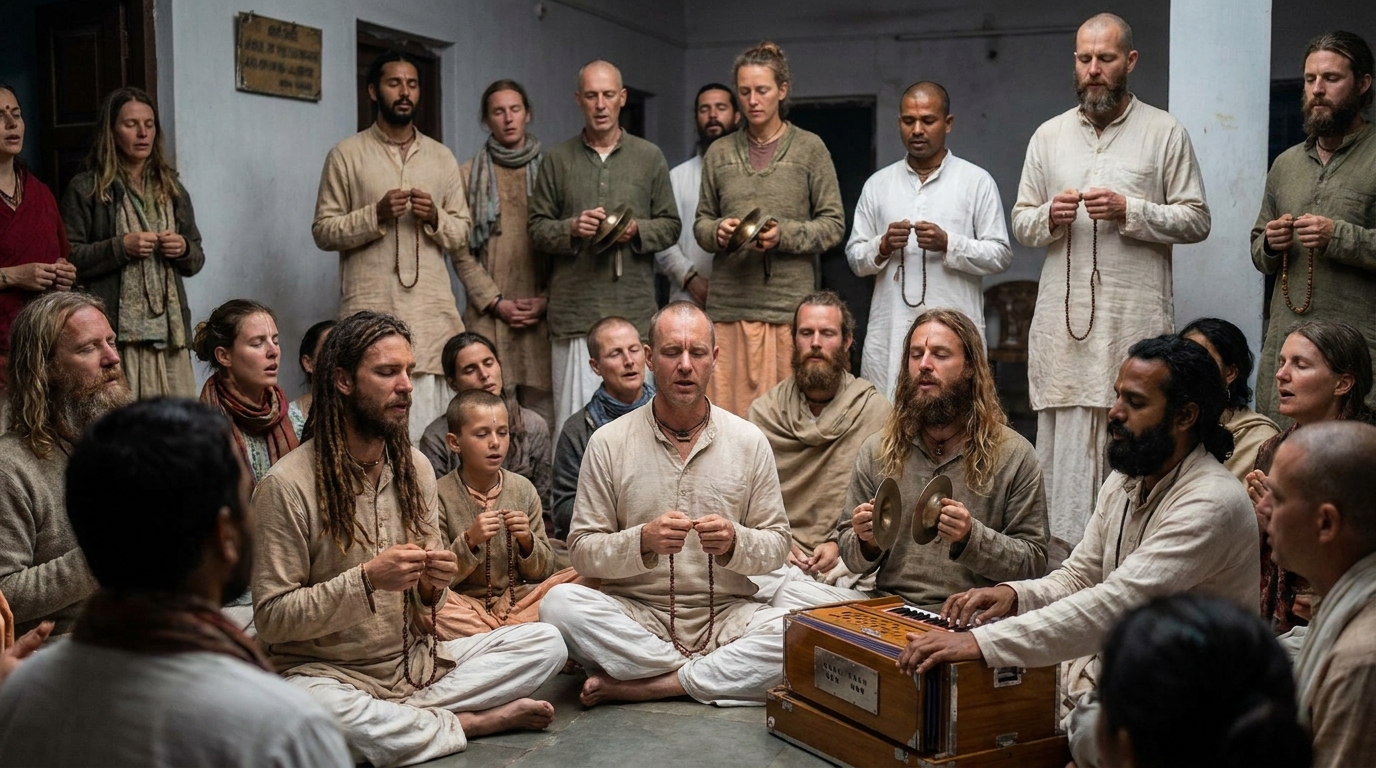
One of the blessings of chanting is that it is simple. It can be practiced by anyone, anywhere.
You can chant in a temple, a church, a yoga studio, a park, your bedroom, your car, or silently within your heart. You can chant when you are joyful, and you can chant when you are struggling. You can chant when you have strong faith, and you can chant when your faith feels very small.
The Holy Name meets us wherever we are.
Begin With a Small Daily Practice
If you are new to chanting, begin gently. You might start with five minutes a day. Choose a sacred name or mantra and repeat it with as much attention as you can.
For example, you can chant:
Hare Krishna Hare Krishna
Krishna Krishna Hare Hare
Hare Rama Hare Rama
Rama Rama Hare Hare
Or you may simply repeat: “Krishna,” “Rama,” “Govinda,” or another name of God that draws your heart.
The goal is not performance. The goal is connection.
Try sitting comfortably, taking a few deep breaths, and offering a simple prayer: “Dear Lord, please help me remember You. Please guide my heart.”
Then chant slowly and listen.
Listen While You Chant
In Bhakti Yoga, listening is essential. Chanting is not just saying the mantra; it is hearing the mantra.
The mind will wander. That is normal. When it does, gently bring it back to the sound. Not with frustration, but with kindness.
Each time you return to the Holy Name, you are practicing devotion.
This simple act of returning again and again trains the heart to seek shelter in God.
Chant With Beads
Many practitioners use japa beads, a string of 108 beads, to help focus their chanting. One mantra is chanted on each bead. The beads are not magical objects, but they support steadiness and intention.
Holding beads can make the practice feel more grounded. The fingers move, the voice chants, the ears listen, and the heart gradually becomes present.
If you do not have beads, you can still chant. You may count on your fingers, set a timer, or simply chant freely.
Create a Sacred Space
A sacred space does not need to be elaborate. It may be a small corner with a candle, a picture of Krishna, a flower, a scripture, or anything that reminds you of God.
This space becomes a gentle invitation to pause.
Over time, the mind begins to associate that place with prayer, peace, and remembrance.
Even if your home is busy, a small devotional space can become a doorway to the Divine.
Check out our latest posts at https://thebhaktihouse.org/blog.
Kirtan: The Joy of Chanting Together
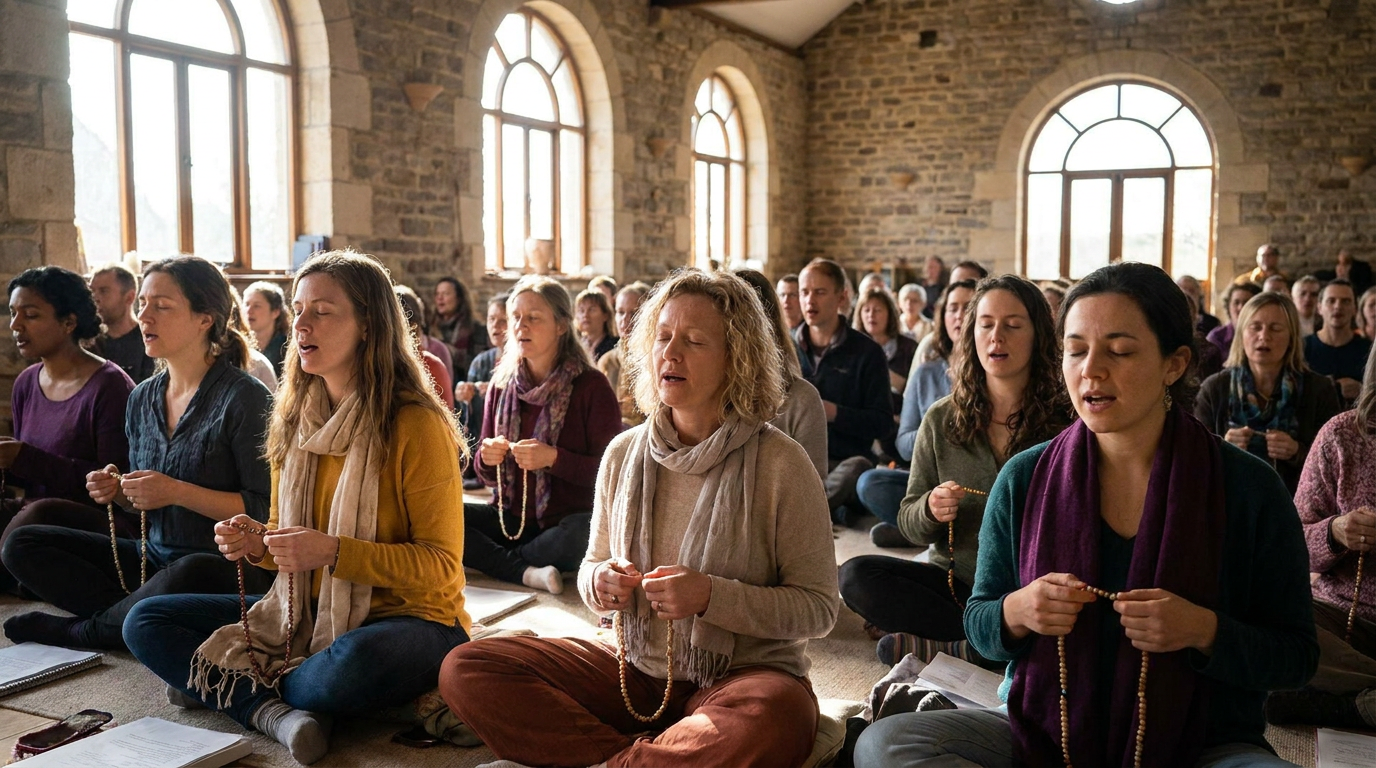
While personal chanting is deeply powerful, group chanting, or kirtan, brings a special kind of grace.
Kirtan is the singing of sacred names together, often with instruments like harmonium, mridanga drum, kartals, guitar, or simple clapping. One person leads, and others respond. The music may be soft and meditative or joyful and full of energy.
But at its heart, kirtan is not a concert. It is a shared prayer.
Everyone’s Voice Belongs
In kirtan, you do not need to have a “good voice.” The Holy Name is not looking for musical perfection. God hears sincerity.
Some people sing loudly. Some whisper. Some close their eyes. Some cry. Some simply sit and listen.
All are welcome.
The beauty of kirtan is that it carries us. When our own mind is restless or our heart feels dry, the voices of others can help lift us. Their devotion supports our devotion. Together, we remember.
Community Helps the Heart Grow
Spiritual life is personal, but it is not meant to be lonely. In Sanskrit, the word sadhu-sanga means the company of spiritually minded people. This kind of association nourishes faith.
When we chant together, share prasada, hear wisdom, and serve alongside others, our spiritual practice becomes warmer and more sustainable.
Prasada means food that has been offered to God with love. In Bhakti, eating prasada is also a sacred practice. It reminds us that nourishment is a gift and that God’s mercy can enter even the ordinary acts of life.
Kirtan, community, and prasada help us live devotion not just as a private idea, but as a shared way of being.
Kirtan Opens the Heart Beyond Words
Sometimes we carry feelings we cannot explain. Kirtan gives those feelings a way to move toward God.
Joy can become song.
Grief can become prayer.
Longing can become devotion.
The rhythm, melody, and repetition help the heart soften. And in that softness, we may feel something deeply healing: we are not alone.
The Holy Name in Bhakti Scriptures
Bhakti Yoga is not a modern invention. It is rooted in ancient spiritual wisdom passed down through saints, teachers, and scriptures.
At the same time, the teachings are deeply practical. They speak to the same human questions we face today: Who am I? Why do I suffer? How can I love? How can I remember God?
The Bhagavad-gita: Remembering God in All Circumstances
The Bhagavad-gita is a sacred conversation between Krishna and Arjuna. Arjuna is overwhelmed on a battlefield, facing confusion, grief, and moral difficulty. Krishna guides him with spiritual wisdom.
One of the Gita’s central teachings is that we are not merely the body or the mind. We are the atma, the eternal soul. The soul’s deepest nature is to love and serve God.
Chanting helps us reconnect with that identity.
In daily life, we may identify with our roles—parent, student, worker, friend, leader, caregiver. These roles matter, but they are not the whole of who we are. The Holy Name reminds us: “I am a soul. I belong to God. My life can be an offering.”
Srimad-Bhagavatam: Hearing and Chanting as Devotion
The Srimad-Bhagavatam, another beloved Bhakti scripture, describes nine forms of devotional service. The first two are sravanam and kirtanam.
- Sravanam means hearing about God.
- Kirtanam means chanting or glorifying God.
This is very encouraging. The path begins with hearing and chanting—practices available to everyone.
We may think spiritual life requires extreme austerity or advanced knowledge. But the Bhagavatam teaches that sincere hearing and chanting can awaken pure devotion in the heart.
Sri Chaitanya Mahaprabhu and the Gift of the Holy Name
Sri Chaitanya Mahaprabhu, a great saint and incarnation of divine love in the Bhakti tradition, widely shared the chanting of the Holy Name. He taught that in this age, chanting is the most accessible and effective way to awaken love of God.
He did not reserve the Holy Name for the privileged. He offered it freely.
His life shows us that devotion is not dry or distant. It is full of tears, dancing, humility, compassion, and deep spiritual joy.
Through him, we learn that chanting is not only a discipline. It is a gift.
How Chanting Transforms the Mind and Heart
Chanting the Holy Name works gently, but deeply. Sometimes we feel peaceful immediately. Other times, the change is gradual, like a seed growing underground before it becomes visible.
We may not notice transformation day by day, but over time, we begin to see that something within us is shifting.
From Anxiety to Shelter
The world can feel uncertain. Our minds can become overwhelmed by responsibilities, relationships, news, health concerns, and the unknown future.
Chanting gives the mind a sacred shelter.
It does not mean we ignore our responsibilities. Rather, chanting helps us meet them from a more centered place. When we remember God, we are less likely to feel that everything depends only on us.
The Holy Name whispers to the heart: “You are held.”
From Ego to Humility
The ego wants to be the center. It wants recognition, control, and certainty. But the Holy Name gently teaches us humility.
Humility does not mean thinking we are worthless. It means seeing clearly: we are loved by God, dependent on God, and connected to all beings.
As chanting deepens, we may become more willing to apologize, more willing to listen, more willing to serve without needing praise.
This is spiritual power.
From Restlessness to Remembrance
The mind often runs in many directions. Chanting gathers the scattered self and turns it toward God.
At first, we may chant for peace. Later, we may chant for love. Eventually, we may chant simply because we long to be with the Lord.
This movement—from seeking relief to seeking relationship—is one of the beautiful journeys of Bhakti Yoga.
From Isolation to Connection
Many people today feel spiritually hungry but disconnected from religion or community. Chanting can be a gentle doorway back into sacred connection.
You do not need to have all your theology figured out before you begin. You can start with sincerity.
The Holy Name is patient. God is patient. The path of Bhakti is patient.
As we chant, we may begin to feel connected to God, to our true self, to others, and to the whole creation.
Common Questions About Chanting the Holy Name
It is natural to have questions when beginning a spiritual practice. Bhakti Yoga welcomes honest inquiry. Faith does not require pretending. It grows through practice, reflection, and grace.
Do I Need to Be Hindu to Chant?
No. Chanting the Holy Name is open to everyone.
Bhakti Yoga comes through the Vedic tradition of India, and we honor that sacred lineage with gratitude and respect. At the same time, the soul is beyond labels of nationality, ethnicity, and social identity.
If you feel drawn to chant, you are welcome.
You can approach the practice respectfully, with an open heart, and allow your relationship with God to unfold naturally.
What If I Do Not Understand Sanskrit?
Understanding can help, but it is not required for the Holy Name to work.
A child may not understand the full meaning of a parent’s name, but when they call out sincerely, the parent responds. In the same way, God responds to the heart.
Still, learning the meaning of the mantra can deepen your practice. The Maha Mantra is a loving prayer asking to be engaged in divine service. When you chant, you can hold that mood gently: “Please let me love You. Please let me serve.”
What If My Mind Wanders?
Your mind will wander. Everyone’s mind wanders.
The practice is not to have a perfectly blank mind. The practice is to return.
Each return is meaningful. Each return is an offering.
Instead of judging yourself, simply notice, smile inwardly, and come back to the sound of the Holy Name.
Can Chanting Help During Difficult Times?
Yes. Chanting can be especially powerful during suffering.
When we are in pain, we may not have elaborate prayers. Sometimes all we can do is repeat the Holy Name. That is enough.
The name of God can hold what our words cannot.
Chanting does not always remove external difficulties immediately, but it can bring strength, clarity, hope, and a sense of divine companionship.
How Long Should I Chant?
Begin with what is realistic.
Five minutes daily is better than one hour once a month. Consistency builds relationship.
If you feel inspired, you can increase gradually. Some practitioners chant a set number of rounds on japa beads each day. Others chant during walks, cooking, driving, or before sleep.
Let your practice be sincere and steady, not forced.
Bringing Chanting Into a Life of Love and Service
In Bhakti Yoga, chanting is central, but it is not separate from how we live. The Holy Name is meant to soften our hearts and inspire loving action.
If chanting does not make us kinder, more honest, and more compassionate, then we can pray to chant more deeply.
Chanting and Prayer
Chanting naturally opens into prayer.
Before chanting, we can pray: “Please help me be present.”
During chanting, we can pray: “Please let me hear Your name.”
After chanting, we can pray: “Please guide my words and actions today.”
Prayer makes chanting personal. It reminds us that we are not performing a technique. We are entering a relationship.
Chanting and Seva
The Sanskrit word seva means service offered with love. In Bhakti, service is not only something done in a temple. It can be cooking, cleaning, listening, caring for family, helping a neighbor, supporting community, protecting the earth, or offering our talents for the welfare of others.
Chanting gives us the inner nourishment to serve.
Service gives our chanting practical expression.
Together, they form a beautiful cycle: we chant to remember God, and we serve to express that remembrance.
Chanting and Spiritual Growth
Spiritual growth is not always dramatic. Often, it looks simple:
We become a little more patient.
We forgive a little sooner.
We complain a little less.
We remember to thank God.
We choose truth when it is inconvenient.
We see others with more compassion.
These small changes are signs that the Holy Name is working within us.
Like watering a root nourishes the whole tree, chanting nourishes the soul. Gradually, every part of life can become more aligned with love.
A Simple Practice to Begin Today
If you feel inspired to experience the power of chanting the Holy Name, here is a simple practice you can try today.
Find a quiet place, even if only for a few minutes.
Sit comfortably. Let your body relax. Take a few slow breaths.
Offer a humble prayer in your own words. You might say:
“Dear God, I do not know everything, but I want to come closer to You. Please guide me. Please help me chant with sincerity.”
Then chant the Maha Mantra slowly:
Hare Krishna Hare Krishna
Krishna Krishna Hare Hare
Hare Rama Hare Rama
Rama Rama Hare Hare
Listen to each word.
If your mind wanders, gently return.
When you finish, sit quietly for a moment. Notice how you feel. Offer gratitude.
You can do this every day. Over time, the practice becomes a sacred friendship. The Holy Name becomes a companion.
The Door Is Open to Everyone
Chanting the Holy Name is a gift of mercy. It does not demand perfection before beginning. It invites us into transformation through love.
Whether you are new to spiritual life or have been practicing for many years, the Holy Name always has more to give. It meets the beginner with kindness and the advanced soul with ever-deepening sweetness.
Bhakti Yoga teaches that our deepest identity is not broken, lost, or alone. We are eternal souls, beloved by God, meant for loving connection. Chanting helps us remember this truth—not only as an idea, but as a lived experience.
So come as you are.
Bring your questions. Bring your hopes. Bring your tired heart. Bring your gratitude. Bring your longing.
The Holy Name is waiting, not with judgment, but with grace.
Everyone is welcome to take one sincere step toward God today. Chant one mantra, offer one prayer, serve one person with love, or simply open your heart and say, “Please guide me.” That one sincere step matters, and by God’s mercy, it can begin a beautiful journey.
FAQs
What is the significance of chanting the holy name?
Chanting the holy name is a spiritual practice found in many religious traditions, including Hinduism, Buddhism, and Christianity. It is believed to have the power to purify the mind, bring inner peace, and connect the practitioner with the divine.
How is chanting the holy name practiced?
Chanting the holy name can be practiced in various ways, such as repeating a sacred mantra, reciting prayers, or singing hymns. The practice often involves focusing the mind and heart on the divine through the repetition of sacred words or sounds.
What are the benefits of chanting the holy name?
Many practitioners believe that chanting the holy name can bring about spiritual transformation, inner healing, and a sense of connection with the divine. It is also thought to help calm the mind, reduce stress, and cultivate a sense of inner peace.
Are there specific traditions or religions that emphasize chanting the holy name?
Yes, chanting the holy name is a central practice in traditions such as Bhakti Yoga in Hinduism, the Pure Land tradition in Mahayana Buddhism, and the practice of the Jesus Prayer in Orthodox Christianity. Each tradition has its own specific methods and sacred names for chanting.
Can anyone practice chanting the holy name?
Yes, chanting the holy name is open to people of all backgrounds and beliefs. Many traditions emphasize the inclusivity of this practice and welcome anyone who is interested in exploring the power of sacred sound and prayer.

