

Home worship is the beautiful practice of bringing spiritual life into the heart of daily life. It means creating time and space in your home to remember God, offer love, chant sacred names, pray, read wisdom, and serve with devotion.
In Bhakti Yoga, the path of loving devotion, worship is not only something done in a temple, church, mosque, synagogue, or sacred building. Worship can happen wherever there is sincerity. A simple corner of your bedroom, a shelf in your living room, a clean table, or even a quiet place in your kitchen can become a sacred space when it is offered with love.
The Sanskrit word bhakti means devotion, love, or loving service. Bhakti Yoga is the practice of reconnecting the heart with the Divine through love. It welcomes people from every background—beginners, lifelong seekers, families, students, elders, and anyone who feels a longing for deeper meaning.
Home worship is not about perfection. It is not about having expensive items, knowing every mantra, or performing elaborate rituals exactly. It is about relationship. It is about turning toward God with humility, gratitude, and a sincere heart.
As the Bhagavad Gita teaches, God lovingly accepts even a simple offering when it is given with devotion:
“Whoever offers Me with love and devotion a leaf, a flower, fruit, or water, I accept it.”
—Bhagavad Gita 9.26
This verse is one of the most encouraging foundations for home worship. It reminds us that the Divine is not looking for wealth or performance. God is looking for love.
Why Home Worship Matters in Daily Life
Modern life can be busy, noisy, and emotionally demanding. Many people long for peace but do not know where to begin. Home worship gives the soul a daily anchor. It gently reminds us that our life has a sacred purpose.
When we worship at home, we are saying, “God, please be present in this home, in this family, in this heart, and in this day.”
Home Worship Creates Sacred Rhythm
A rhythm of worship helps us remember what matters most. Even five or ten minutes each morning can shift the atmosphere of the entire day.
You may begin by lighting a candle, chanting a short mantra, offering a prayer, or sitting in silence. Over time, this simple act becomes like watering a spiritual seed.
The Sanskrit word sadhana means spiritual practice. Home worship is a form of daily sadhana. Just as the body needs food, rest, and movement, the soul needs remembrance, prayer, and loving connection with God.
Home Worship Brings Peace to the Heart
When we pause to worship, we step out of constant doing and return to being. We remember that we are not alone. We remember that life is guided by a higher wisdom.
Chanting, prayer, and devotional reading calm the mind. They soften the heart. They help us respond to life with more patience, compassion, and faith.
Home Worship Blesses the Family and Home
A home where God is remembered becomes spiritually nourished. This does not mean every problem disappears. Families may still face challenges, disagreements, financial pressures, and grief. But worship gives everyone a sacred center to return to.
Children who see prayer, gratitude, and service in the home receive a living example of spiritual life. Partners and friends may feel more peace in the space. Guests may notice a quiet warmth.
Even if you live alone, your home worship can become a sweet companionship with the Divine.
Creating a Sacred Space at Home
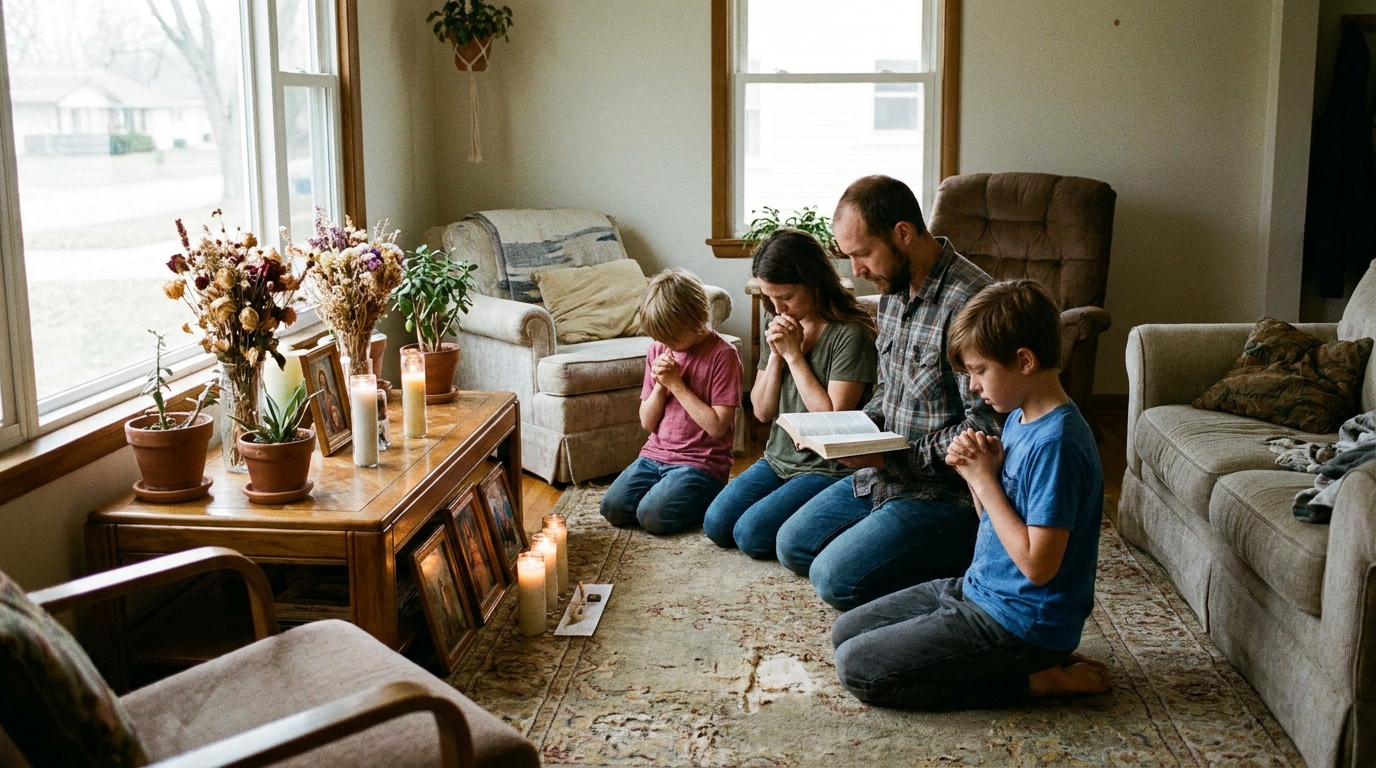
You do not need a large room or elaborate altar to begin home worship. A sincere space, kept clean and respected, is enough.
In Bhakti, the mood matters deeply. The external arrangement supports the internal offering.
Choosing a Place for Worship
Look for a peaceful and clean area in your home. It may be:
- A small table or shelf
- A corner of a bedroom
- A quiet place in the living room
- A windowsill with natural light
- A meditation nook
- A dedicated altar space
Try to choose a location that feels calm and is not easily disturbed. If possible, avoid placing your worship space directly on the floor or in a cluttered area. Cleanliness supports spiritual awareness.
In traditional Bhakti practice, the altar is considered a place where we welcome the presence of God. We care for it with respect, just as we would prepare a beautiful place for a beloved guest.
What to Place on a Home Altar
A home altar can be simple. You may include:
- A picture or sacred image of God
- A picture of Krishna, Rama, Vishnu, Radha, Chaitanya Mahaprabhu, or another form of the Divine you feel connected to
- A photo of saints, gurus, or spiritual teachers who inspire you
- A candle or ghee lamp
- Incense
- Fresh flowers
- A small bowl for water
- Scripture, such as the Bhagavad Gita or Srimad Bhagavatam
- Prayer beads, called japa mala
- A clean cloth
If you come from another faith tradition, you may also include sacred symbols or images that help you remember God with love and reverence. Bhakti Yoga honors sincere devotion and encourages the heart to turn toward the Divine.
Keeping the Space Clean and Reverent
A clean altar helps the mind become clean and focused. You may wipe the altar daily or weekly, replace old flowers, and keep items arranged neatly.
This does not need to become stressful. The purpose is not to create anxiety about rules. The purpose is to cultivate care.
In Bhakti, service is called seva. Even cleaning the altar can be seva when done with love. Dusting, arranging flowers, folding the altar cloth, or refilling water can become acts of devotion.
Sure, here is the sentence with the clickable link:
I love to visit The Bhakti House for spiritual inspiration and community.
The Essential Practices of Home Worship
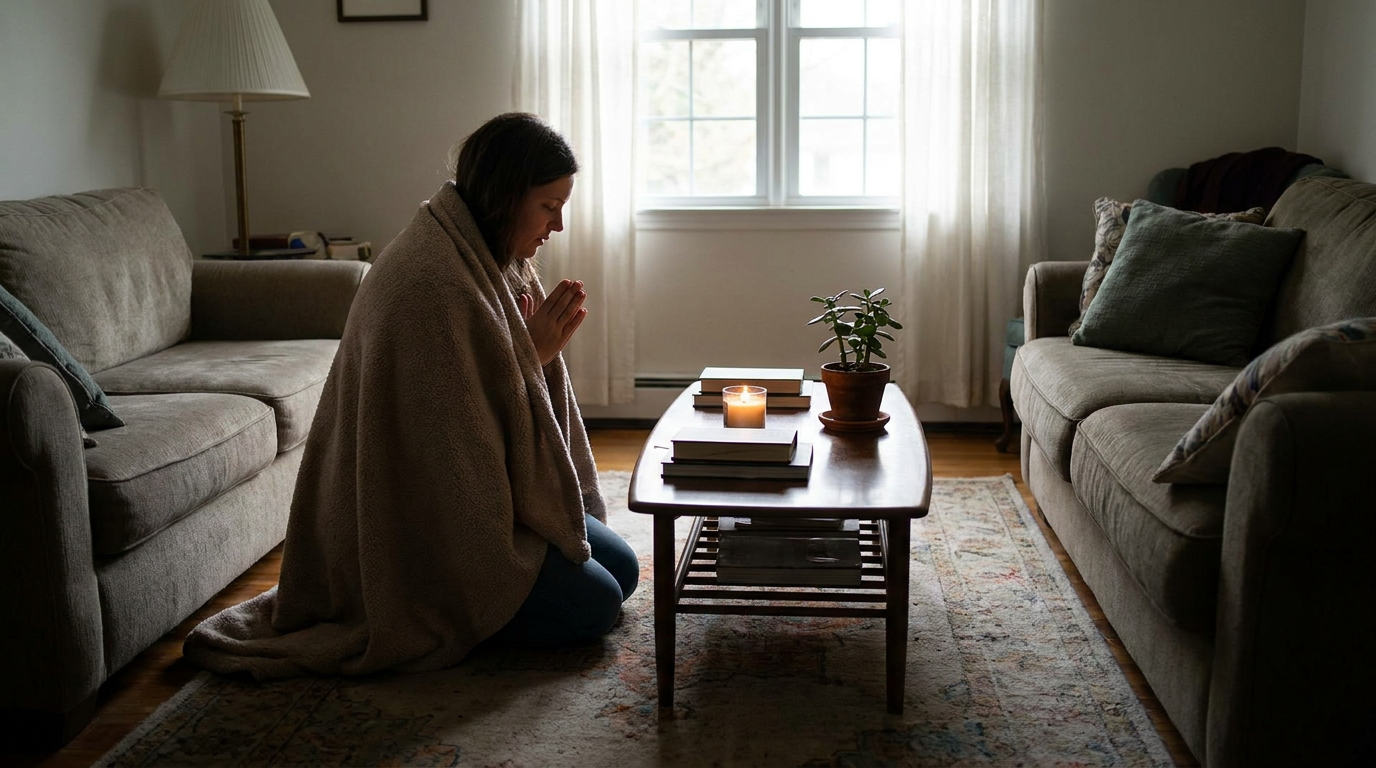
Home worship can include many practices, but the heart of Bhakti Yoga is loving remembrance. You can begin with a few simple practices and allow your spiritual life to grow naturally.
Chanting the Holy Names
Chanting is one of the most accessible and powerful practices in Bhakti Yoga. In Sanskrit, chanting sacred names is often called kirtan when done musically with others, or japa when done quietly or softly as a personal meditation.
A widely practiced mantra in the Bhakti tradition is the Hare Krishna Maha Mantra:
Hare Krishna Hare Krishna
Krishna Krishna Hare Hare
Hare Rama Hare Rama
Rama Rama Hare Hare
The word mantra means a sacred sound that helps free the mind. “Hare” calls upon the divine energy of God. “Krishna” means the all-attractive Lord. “Rama” means the source of spiritual joy.
You do not have to understand everything at once. Simply chant with sincerity. Let the sound enter the heart.
You may chant:
- Softly in the morning
- While walking
- Before meals
- With prayer beads
- During family worship
- Along with recorded kirtan
- In moments of stress or gratitude
Chanting is not only a ritual. It is a relationship. It is a way of calling out to God and allowing God’s presence to awaken within us.
Offering Prayer from the Heart
Prayer is honest conversation with God. It can be formal or spontaneous. You may recite traditional prayers, or you may speak in your own words.
You can pray:
“Dear Lord, please guide me today.”
“Please help me serve with humility.”
“Thank You for this life and this opportunity to grow.”
“Please give me strength to forgive.”
“Please help me remember You.”
Bhakti prayer does not require pretending. We can bring our real feelings—gratitude, confusion, sorrow, longing, joy, and hope. A humble prayer is deeply powerful.
The Bhagavad Gita encourages surrender, not as defeat, but as loving trust. In Gita 18.66, Krishna invites the soul to take shelter in Him. Practically, this means we can place our burdens, choices, and fears before God and ask for guidance.
Offering Food with Devotion
One of the sweetest practices of home worship is offering food to God before eating. In Sanskrit, sanctified food is called prasadam, meaning mercy or grace.
The practice is simple. Prepare vegetarian food with cleanliness and love. Before eating, place a portion before God on the altar or in a clean space. Offer a prayer, such as:
“Dear Lord, please accept this simple offering made with love. May this food nourish the body and awaken devotion in the heart.”
After a few moments, the food is considered prasadam. You may then honor it with gratitude.
This practice transforms eating from consumption into communion. It reminds us that everything comes from God—food, water, sunlight, soil, strength, and life itself.
The Bhagavad Gita explains that food offered in sacrifice becomes spiritually purifying. In practical terms, offering food helps us become more mindful, grateful, and connected to God in daily life.
Reading Sacred Scripture
Devotional reading brings wisdom into the home. Even a few verses each day can nourish the heart.
You may read from:
- Bhagavad Gita
- Srimad Bhagavatam
- Sri Chaitanya Charitamrita
- Teachings of saints and acharyas, meaning spiritual teachers
- Devotional songs and prayers
The Sanskrit word shastra means sacred scripture or revealed wisdom. Shastra helps guide our devotion so that love is supported by understanding.
For beginners, the Bhagavad Gita is a wonderful starting point. It is a conversation between Krishna and Arjuna, a warrior facing confusion and moral crisis. Krishna teaches him about the soul, duty, meditation, devotion, and surrender.
A practical way to read scripture at home is to choose one verse, read the translation, reflect on it, and ask:
- What is God teaching me here?
- How can I apply this today?
- What quality can I practice—patience, humility, courage, compassion, or faith?
Serving Others as Worship
Bhakti is not limited to the altar. True home worship flows into how we treat others.
Service, or seva, can include:
- Cooking for family with love
- Caring for children or elders
- Listening kindly to someone in pain
- Offering time at a temple or spiritual community
- Donating to a devotional cause
- Sharing prasadam
- Cleaning your home as an offering
- Encouraging someone spiritually
The mood is: “Let my actions be pleasing to God.”
In Bhakti Yoga, service purifies the heart because it moves us away from self-centeredness and toward love. Even ordinary tasks become sacred when offered with devotion.
A Simple Daily Home Worship Routine
A complete home worship practice does not need to be complicated. It is better to be steady and sincere than to begin with too much and feel overwhelmed.
Start small. Let devotion grow like a gentle flame.
Morning Worship Practice
Morning is a powerful time for spiritual practice because the mind is usually more peaceful. In Sanskrit, the early morning spiritual time is often called brahma-muhurta, a sacred period before sunrise. If that is not realistic for your life, choose a time that works for you.
A simple morning routine may look like this:
- Wash your hands and face.
- Sit before your altar or sacred space.
- Light a candle or incense if appropriate.
- Offer a short prayer.
- Chant the holy names for 5 to 20 minutes.
- Read one verse from scripture.
- Offer your day to God.
You might pray:
“May my thoughts, words, and actions today be guided by love. Please help me remember You and serve others with kindness.”
This simple routine can bring spiritual clarity before the day begins.
Midday Remembrance
If your mornings are rushed, or if you want to stay connected throughout the day, pause briefly at midday.
You may:
- Chant one round on your japa beads
- Offer your lunch
- Read a short devotional quote
- Take three deep breaths and remember God
- Say a gratitude prayer
Bhakti Yoga is practical. It can enter real life—workplaces, classrooms, kitchens, cars, and hospital rooms. God is not far away. A sincere heart can call out anywhere.
Evening Worship and Reflection
Evening is a beautiful time to return to the altar and reflect.
You may sing or play kirtan, offer incense, read scripture with family, or sit quietly in prayer.
Ask yourself:
- Where did I remember God today?
- Where did I forget?
- Did I speak with kindness?
- Did I serve someone?
- What can I offer to God from this day?
Do not use reflection to shame yourself. Use it to grow. Bhakti is a path of mercy. Each day is a new opportunity.
Weekly or Family Worship
If daily worship feels difficult, begin weekly. Choose one day for a longer practice.
A weekly home worship gathering may include:
- Kirtan
- Reading from the Bhagavad Gita
- Group prayer
- Offering vegetarian food
- Sharing prasadam
- Discussing spiritual life
- Children offering flowers or singing
Home worship can become a joyful family tradition. Children may enjoy ringing a bell, placing flowers, singing, or helping prepare offerings. Keep it loving and simple.
Understanding Deity Worship at Home
In many Bhakti traditions, devotees worship sacred forms of God called Deities or murtis. A murti is not considered an idol in the ordinary sense. Rather, it is a sacred form through which God mercifully accepts our service and allows us to focus our love.
This can be a sensitive topic for newcomers, so it is important to understand the heart behind it.
The Meaning of Murti
The Sanskrit word murti means form. In Bhakti, God is understood to be unlimited. The Divine can be present everywhere and also personally present in a form that receives worship.
Just as a national flag is not merely cloth to a citizen, or a photograph of a loved one is not merely paper to a grieving heart, a sacred image becomes meaningful through relationship. In the Bhakti tradition, the murti is approached with reverence because God kindly agrees to be worshiped through that form.
Beginning with Pictures Before Formal Deity Worship
For most beginners, it is best to start with pictures rather than formal Deity worship. Pictures of Krishna, Radha, Rama, or Chaitanya Mahaprabhu can help you focus your mind and offer devotion simply.
Formal Deity worship may involve specific standards of cleanliness, regular offerings, bathing, dressing, and mantras. This is beautiful, but it is also a commitment. If you feel drawn to it, seek guidance from experienced devotees or a trusted spiritual teacher.
The Mood Is Loving Service
Whether you worship with a picture, a simple symbol, or a formal Deity, the essential mood is love.
You may offer:
- Water
- Flowers
- Incense
- A lamp
- Food
- Songs
- Prayers
- Your time
- Your heart
In Sanskrit, the offering of items in worship is often called puja. Puja means worship or honoring. But the deepest puja is the offering of oneself: “My Lord, please let my life become an offering.”
Common Questions About Home Worship
Many people hesitate to begin because they worry they are not qualified. Bhakti Yoga gently says: begin where you are.
Do I Need to Be Hindu to Practice Bhakti Yoga?
No. Bhakti Yoga is a universal path of love for God. It has been preserved and beautifully expressed through the Vedic tradition of India, but its essence is open to everyone.
You do not need to change your cultural background to chant, pray, serve, or offer food with gratitude. Many people from different faiths and spiritual histories find that Bhakti deepens their relationship with God.
What If I Do Not Know Sanskrit?
That is completely okay. Sanskrit mantras carry sacred sound, but sincerity is more important than perfect pronunciation.
You can begin slowly. Listen to recordings. Chant along. Learn one mantra at a time. You may also pray in your own language. God understands the language of the heart.
What If My Family Does Not Participate?
Begin gently. Do not force anyone. Let your practice make you more peaceful, kind, patient, and loving. That will speak louder than pressure.
You can keep your worship simple and respectful. Over time, others may become curious or appreciative. Even if they do not join, your sincere practice can bless the home.
What If I Miss a Day?
Do not be discouraged. Spiritual life is not about guilt. If you miss a day, begin again the next day.
The path of Bhakti is filled with compassion. Each sincere effort matters. Even one holy name chanted with feeling can begin to transform the heart.
How Long Should Home Worship Take?
It can take five minutes or two hours. The best practice is one you can sustain with sincerity.
A beginner may start with:
- 5 minutes of chanting
- 1 prayer
- 1 verse of scripture
- Offering one meal
As your taste grows, you may naturally want to spend more time.
Sacred Items for Home Worship
Sacred items can support devotion, but they are not meant to create pride or comparison. Use what helps your heart remember God.
Japa Beads
A japa mala is a string of prayer beads used for chanting mantras. Many malas have 108 beads. As you chant one mantra on each bead, the hands, voice, and mind work together.
Japa helps focus the mind. It gives structure to chanting. It can be practiced quietly at home, in a garden, or while walking.
Incense, Lamps, and Flowers
Incense represents offering fragrance. A lamp represents offering light. Flowers represent beauty and freshness. These items engage the senses in worship.
Bhakti Yoga teaches that the senses are not enemies. They can be purified by being used in loving service to God.
Scripture and Devotional Music
Keeping scripture near your altar invites wisdom into your day. Devotional music, especially kirtan, can fill the home with sacred sound.
Many people find that playing kirtan while cooking, cleaning, or resting helps the mind stay peaceful and spiritually connected.
Making Home Worship Practical and Sustainable
The most helpful home worship practice is one that fits your real life and gradually lifts your consciousness.
Start Small and Be Consistent
Do not try to do everything at once. Choose one or two practices:
- Chant every morning
- Offer your meals
- Read one verse daily
- Light a candle and pray at night
- Attend weekly kirtan online or in person
Consistency builds spiritual strength.
Connect with Devotional Community
The Sanskrit word sanga means association or community. Spiritual community helps us stay inspired.
You may connect with:
- A local Bhakti center
- Online classes
- Kirtan gatherings
- Scripture study groups
- A mentor or teacher
- Devotional friends
Home worship becomes even stronger when supported by loving community.
Let Worship Shape Your Character
The real fruit of home worship is transformation. We begin to ask:
Am I becoming more humble?
Am I becoming more compassionate?
Am I remembering God more often?
Am I serving others more naturally?
Am I becoming less controlled by anger, envy, or fear?
Bhakti is not only what happens at the altar. It is how we live after we leave the altar.
Home Worship as a Path of Love
Home worship is an invitation to bring God into the center of ordinary life. It teaches us that every room can become sacred, every meal can become an offering, every word can become prayer, and every act of kindness can become worship.
You do not need to be advanced. You do not need to have everything figured out. You only need a sincere beginning.
Chant one mantra. Offer one flower. Read one verse. Say one honest prayer. Prepare one meal with love. Serve one person with humility.
In the Bhakti tradition, God is not distant from the sincere heart. The Lord lovingly receives even the smallest offering when it is given with devotion.
May your home become a place of peace, remembrance, chanting, prayer, service, and spiritual growth. May your heart feel welcomed on this path of love. And may you always know that everyone is welcome to take one sincere step toward God—today, gently, humbly, and with love.
FAQs
What is home worship?
Home worship refers to the practice of religious or spiritual activities, such as prayer, meditation, and scripture reading, that are conducted within the home rather than in a formal religious setting like a church, temple, or mosque.
What are some common practices of home worship?
Common practices of home worship include setting aside a specific time for prayer or meditation, reading religious texts or spiritual literature, singing hymns or spiritual songs, and participating in rituals or ceremonies specific to one’s faith tradition.
How can one create a sacred space for home worship?
Creating a sacred space for home worship can involve setting up a designated area within the home for prayer and meditation, incorporating meaningful symbols or religious items, and creating a peaceful and quiet environment conducive to spiritual reflection and connection.
What are the benefits of home worship?
The benefits of home worship can include a sense of personal connection to one’s faith or spirituality, the ability to tailor religious practices to individual preferences and needs, and the opportunity for intimate and meaningful spiritual experiences within the comfort of one’s own home.
How can one maintain a sense of community and connection while practicing home worship?
Maintaining a sense of community and connection while practicing home worship can be achieved through virtual religious services, online study groups or discussion forums, and reaching out to fellow believers or spiritual practitioners for support and fellowship.

