
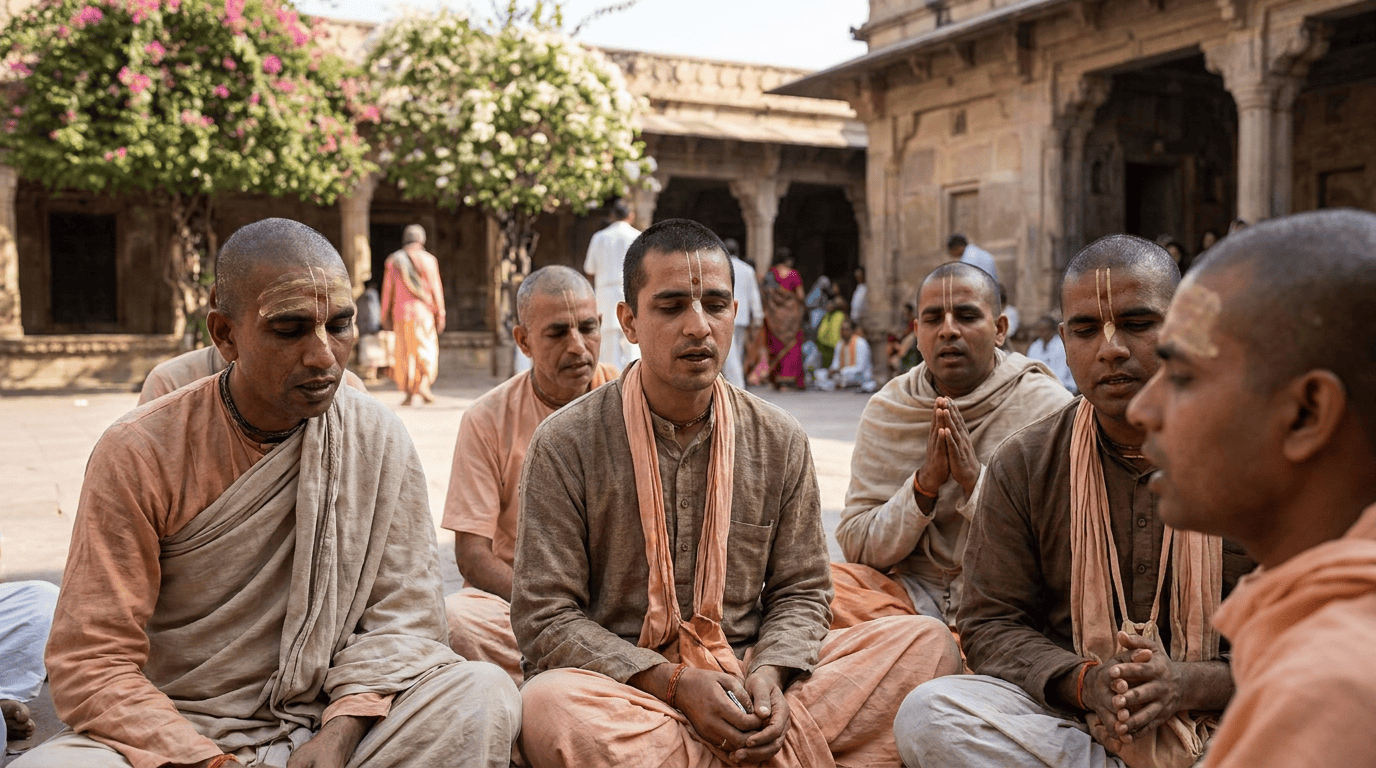
A Vaishnava is a person who follows the path of devotion to Vishnu, Krishna, Rama, or one of the many sacred forms of the Supreme Lord described in the Vedic scriptures. The word “Vaishnava” comes from “Vishnu,” the all-pervading Lord who sustains and protects all beings.
In simple language, a Vaishnava is a devotee of God who tries to live with love, humility, compassion, and remembrance of the Divine.
Vaishnavism is one of the world’s oldest living spiritual traditions. It is rooted in the Vedas, the Bhagavad-gita, the Srimad Bhagavatam, the Ramayana, and the teachings of many saints and teachers who carried the flame of devotion across generations.
But at its heart, being a Vaishnava is not only about belonging to a tradition. It is about becoming a person whose life is centered on loving service to God and kindness toward all living beings.
The Heart of a Vaishnava
A true Vaishnava is known not by pride, social status, nationality, or outer appearance, but by the softness of their heart.
The Srimad Bhagavatam describes the qualities of saintly persons: they are compassionate, peaceful, truthful, humble, and friendly to all. These qualities are not developed overnight. They grow slowly, like a sacred seed watered by chanting, prayer, service, and sincere spiritual practice.
In the Bhakti tradition, we often say that devotion is both the path and the goal. We practice love in order to awaken love. We serve in order to become servants of love. We chant God’s names so that our hearts may remember what they have always been searching for.
Vaishnava Means Servant
One of the most beautiful meanings of being a Vaishnava is to see oneself as a servant. In Sanskrit, the word “dasa” means servant. Many Vaishnava names include “dasa” or “dasi,” reminding us that our deepest identity is not controller, owner, or enjoyer, but loving servant of God.
This service is not forced or dry. It is joyful. Just as a mother finds joy in caring for her child, or a friend finds joy in helping a beloved friend, the soul finds joy in serving the Supreme Person.
Bhakti Yoga teaches that service offered with love purifies the heart and reconnects us with our eternal relationship with God.
The Foundations of Vaishnava Spirituality
Vaishnava spirituality is deeply practical. It gives us ways to remember God in the middle of daily life, not only in temples or sacred places. A person may be a parent, student, worker, artist, monk, leader, or seeker, and still practice Bhakti Yoga sincerely.
Bhakti: The Path of Loving Devotion
“Bhakti” means devotion, love, or loving service. Bhakti Yoga is the spiritual path of awakening pure love for God. Unlike paths that may focus mainly on intellectual study, bodily discipline, or mystical powers, Bhakti centers on relationship.
In the Bhagavad-gita, Krishna says:
“Always think of Me, become My devotee, worship Me, and offer your homage unto Me.”
Bhagavad-gita 18.65
This verse is simple but profound. Krishna is not asking for wealth, scholarship, or perfection. He is inviting the heart: remember Me, love Me, worship Me, come close to Me.
Bhakti Yoga is accessible because love is accessible. Everyone can offer something: a prayer, a song, a flower, a kind word, a meal, a moment of honest surrender.
Vishnu, Krishna, and Rama
In Vaishnava teachings, Vishnu is the Supreme Lord who maintains the universe. Krishna is understood by many Vaishnava traditions as the original, all-attractive form of God, full of sweetness, beauty, wisdom, and love. Rama is the noble and compassionate Lord whose life is celebrated in the Ramayana as the perfect example of righteousness, courage, and devotion.
Different Vaishnava communities may emphasize different forms of the Lord, but they share a common foundation: God is personal, loving, and reachable through devotion.
This personal understanding of God is very important. God is not only an energy or distant force. God hears, responds, guides, protects, and loves. The soul longs for relationship, and Bhakti reveals that this longing finds its fulfillment in loving relationship with the Divine.
The Soul and the Supreme Soul
Vaishnava scriptures teach that every living being is an eternal soul, called “atma” in Sanskrit. The body changes from childhood to youth to old age, but the conscious self remains. The soul is spiritual, full of potential for love and service.
God is the Supreme Soul, or “Paramatma,” present within every heart. This means no one is spiritually forgotten. Wherever we are, whatever we have done, however far we may feel, the Lord is already near.
This understanding inspires humility and compassion. If God is in every heart, then every person deserves respect. Every living being is sacred. A Vaishnava tries to see beyond labels and honor the spiritual dignity within all.
The Qualities of a Vaishnava
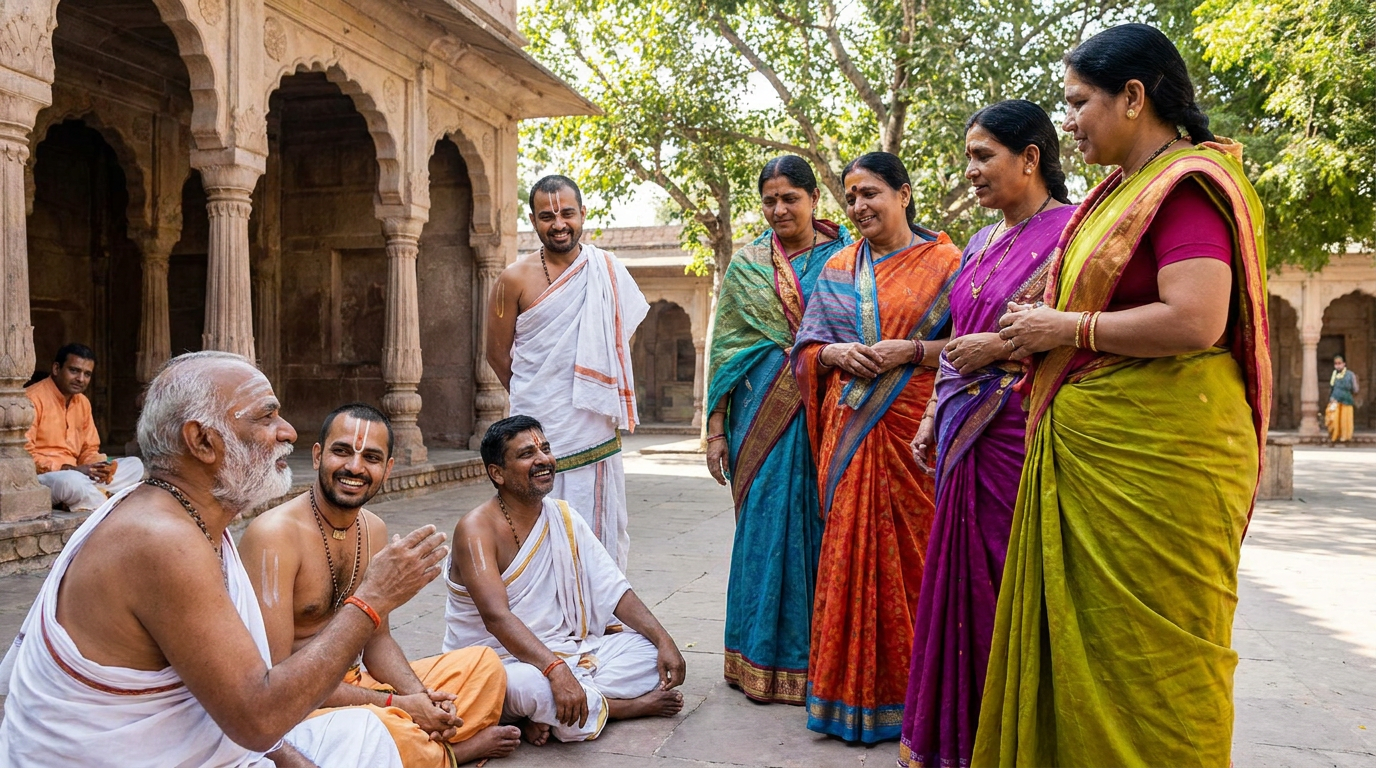
The complete guide to Vaishnavas would be incomplete without speaking about character. In Bhakti, spiritual growth is not measured only by how much we know, how many rituals we perform, or how many verses we can quote. It is measured by how our heart is changing.
Humility
Humility is one of the most treasured qualities of a Vaishnava. Humility does not mean thinking we are worthless. It means understanding that everything we have is a gift from God.
Sri Chaitanya Mahaprabhu, a great 15th-century saint and teacher of divine love, gave a famous instruction:
“One should chant the holy name of the Lord in a humble state of mind, thinking oneself lower than a blade of grass, more tolerant than a tree, free from false pride, and ready to offer respect to all.”
This teaching is often called the heart of chanting. It reminds us that the holy name of God blossoms most fully in a humble heart.
Compassion
A Vaishnava feels concern for the suffering of others. Compassion may be expressed through feeding people, teaching spiritual wisdom, listening deeply, caring for the earth, protecting animals, or simply offering kindness in daily interactions.
In the Bhagavad-gita, Krishna describes a dear devotee as one who is not envious, who is friendly and compassionate toward all beings, and who is free from possessiveness and false ego.
Compassion is not sentimental weakness. It is spiritual strength. It comes from seeing others as beloved children of God.
Truthfulness and Integrity
A Vaishnava tries to live honestly. Truthfulness means more than avoiding lies. It means aligning our words, actions, and values with spiritual reality.
Integrity grows through practice. We may stumble. We may notice gaps between what we believe and how we behave. But Bhakti does not ask us to pretend. It invites us to keep returning to God sincerely.
A humble prayer such as “Lord, please help me become honest and pure in heart” can be a powerful beginning.
Tolerance and Patience
Spiritual life unfolds gradually. A Vaishnava learns patience with others and with oneself. Just as a gardener does not pull a seed out of the soil to see if it is growing, we should not become discouraged when transformation takes time.
Chanting, prayer, scripture, and service water the seed of devotion. In time, the heart changes. Old habits loosen. Faith deepens. Love becomes more natural.
Sure, here is the sentence with the clickable link:
I love to visit The Bhakti House for spiritual inspiration and community.
Daily Practices of Vaishnavas
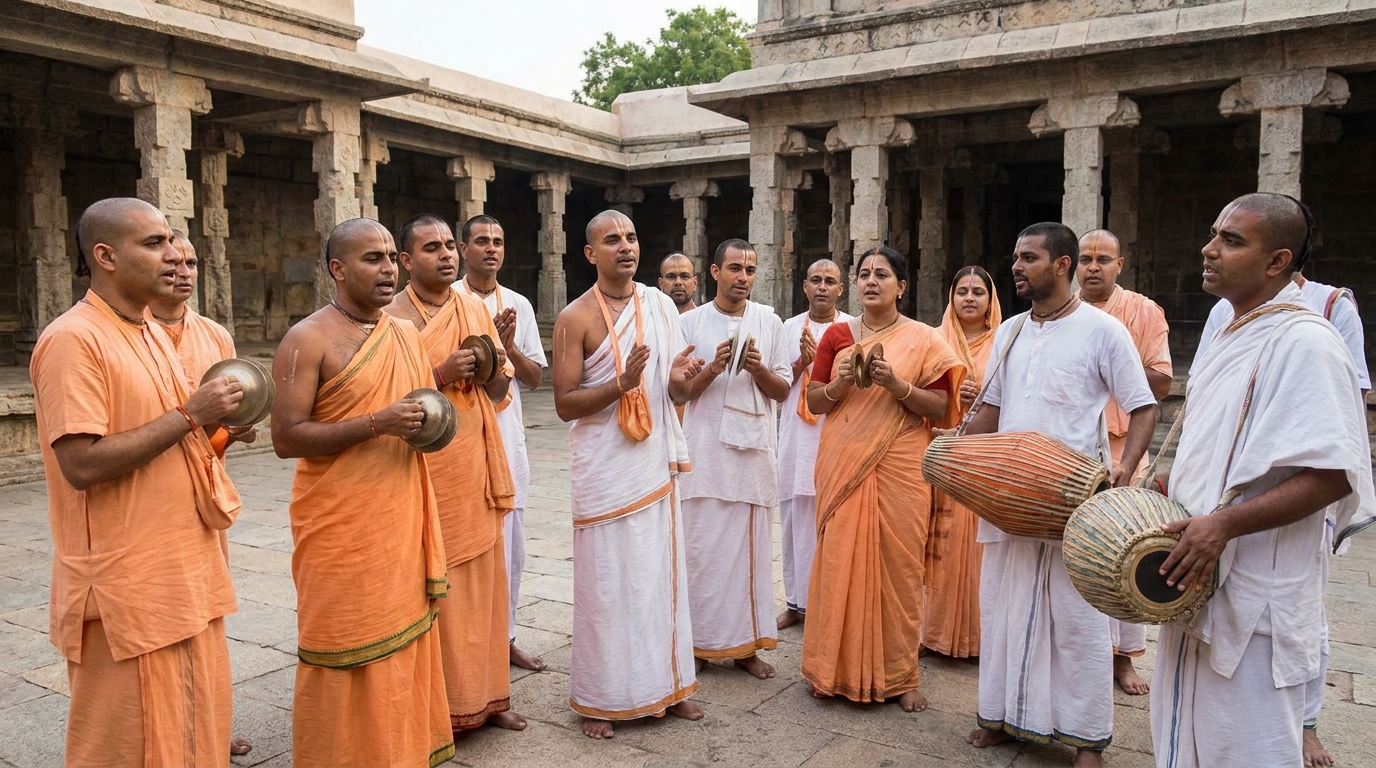
Vaishnava life is nourished by simple, sacred practices that help us remember God throughout the day. These practices can be adapted according to one’s situation, background, and capacity.
Chanting the Holy Names
Chanting is central to Bhakti Yoga. In Sanskrit, chanting sacred names of God is called “nama-sankirtana” when done together and “japa” when done softly or personally, often on prayer beads.
The most well-known Vaishnava mantra is the Hare Krishna maha-mantra:
Hare Krishna Hare Krishna
Krishna Krishna Hare Hare
Hare Rama Hare Rama
Rama Rama Hare Hare
“Maha-mantra” means “great mantra.” “Mantra” means a sacred sound that helps free the mind and awaken spiritual consciousness.
“Hare” calls upon the divine energy of the Lord. “Krishna” means the all-attractive one. “Rama” means the source of spiritual joy. When we chant, we are praying: “O Lord, O Divine Energy of the Lord, please engage me in Your loving service.”
Chanting does not require previous qualification. We can begin with a few minutes a day. We can chant while walking, sitting quietly, cooking, or gathering with others. The main offering is sincerity.
Prayer
Prayer is the language of the heart. It may be formal or informal, spoken aloud or silent. A Vaishnava prays not only for personal needs but for guidance, purification, gratitude, and the welfare of others.
A simple Vaishnava prayer might be:
“Dear Lord, please help me remember You. Please guide my thoughts, words, and actions. Please make my heart kind, humble, and useful in Your service.”
Prayer brings us into relationship. It reminds us that we are not alone and that God is lovingly present.
Worship and Offering
Vaishnavas often worship sacred forms of the Lord, called “Deities” or “murtis.” A murti is not considered an idol in the ordinary sense. It is a consecrated form through which God mercifully accepts our service and allows us to focus our devotion.
Worship may include offering flowers, incense, lamps, water, food, music, and prayers. At home, worship can be very simple: a clean space, a picture of Krishna, Rama, Vishnu, or a beloved form of the Lord, and a few moments of daily devotion.
The Bhagavad-gita offers a beautiful encouragement:
“If one offers Me with love and devotion a leaf, a flower, a fruit, or water, I will accept it.”
Bhagavad-gita 9.26
The key phrase is “with love and devotion.” God does not need our offering, but He accepts our love.
Prasada: Sacred Food
“Prasada” means mercy or grace. In Vaishnava practice, food is prepared with care and offered to God before being eaten. After the offering, the food is honored as prasada, sanctified by divine grace.
This practice transforms eating into worship. Cooking becomes meditation. Sharing food becomes service. The table becomes sacred.
A simple beginning is to prepare vegetarian food with gratitude, place it before a picture of the Lord, and pray: “Dear Lord, please accept this offering.” Then share and eat with thankfulness.
Seva: Loving Service
“Seva” means service. In Bhakti, service is not merely a duty; it is an expression of love. Seva may include cleaning a temple, helping at a community gathering, cooking for others, teaching children, supporting spiritual projects, caring for guests, or serving one’s family with devotion.
A Vaishnava learns to ask: “How can I serve?” This question softens the ego and opens the heart.
Service also helps us move beyond self-centered spirituality. We do not practice only to feel peaceful. We practice so that we may become instruments of God’s compassion in the world.
Vaishnava Scriptures and Teachings
Vaishnava wisdom is preserved in many sacred texts. These scriptures are not meant only for scholars. They are living guides for the heart.
Bhagavad-gita
The Bhagavad-gita is a conversation between Krishna and Arjuna on a battlefield. Arjuna is confused, overwhelmed, and unsure of his duty. Krishna teaches him about the soul, karma, yoga, devotion, and surrender.
For modern readers, the Gita is deeply practical. We also face inner battles: fear, doubt, attachment, grief, and moral confusion. Krishna’s guidance helps us act with wisdom, remember God, and offer the results of our work in devotion.
One central teaching is:
“Whatever you do, whatever you eat, whatever you offer or give away, and whatever austerities you perform, do that as an offering to Me.”
Bhagavad-gita 9.27
This means our ordinary life can become sacred. Work, family, study, creativity, and service can all be offered to God.
Srimad Bhagavatam
The Srimad Bhagavatam, also called the Bhagavata Purana, is one of the most beloved Vaishnava scriptures. It describes the nature of God, the lives of great devotees, and especially the beautiful pastimes of Krishna.
The Bhagavatam teaches that hearing about God purifies the heart. It invites us to listen, reflect, and allow divine stories to reshape our desires.
Its highest message is that pure devotion is beyond selfish motivation. Real Bhakti is love offered for God’s pleasure, not merely for material gain.
Ramayana
The Ramayana tells the story of Lord Rama, Sita Devi, Hanuman, Lakshmana, and many other noble personalities. It teaches devotion, loyalty, courage, sacrifice, and righteousness.
Hanuman is especially loved by Vaishnavas as the perfect servant of the Lord. His strength came from devotion, not pride. His greatness was his willingness to do anything for Rama.
For daily life, the Ramayana reminds us that devotion is tested and proven through service, faithfulness, and moral courage.
Teachings of the Saints
Vaishnava traditions are rich with saints: Sri Ramanuja, Madhvacharya, Nimbarka, Vallabhacharya, Sri Chaitanya Mahaprabhu, the Alvars of South India, Mirabai, Tukaram, Narottama Dasa Thakura, Bhaktivinoda Thakura, and many others.
Their lives show us that Bhakti is not limited to one culture, language, gender, or social position. Love of God can awaken in anyone.
Saints make scripture visible. Through their songs, prayers, commentaries, and examples, they show how devotion can be lived with courage and tenderness.
Different Vaishnava Traditions
Vaishnavism includes several lineages, often called “sampradayas.” A sampradaya is a spiritual tradition passed down through teachers and disciples. While there are differences in philosophy, worship, and culture, the shared foundation is devotion to the Supreme Lord.
Sri Sampradaya
The Sri Sampradaya is strongly connected with Sri Ramanujacharya and the worship of Narayana and Lakshmi. It teaches loving surrender to God and emphasizes the mercy of Lakshmi Devi, the divine consort of the Lord.
Ramanuja’s philosophy is often called “Vishishtadvaita,” meaning qualified non-dualism. In simple terms, it teaches that the soul and the world are real and connected to God, while God remains the supreme whole.
Brahma-Madhva-Gaudiya Sampradaya
The Gaudiya Vaishnava tradition is associated with Sri Chaitanya Mahaprabhu, who spread the chanting of the holy names and the worship of Radha and Krishna. This tradition emphasizes that the highest spiritual reality is divine love, especially the selfless love shown by the residents of Vrindavan.
The philosophy of Sri Chaitanya is called “achintya-bheda-abheda,” meaning inconceivable oneness and difference. Simply put, the soul is one with God in quality, but different in quantity. We are spiritual, like sparks from a fire, but God is the complete fire.
Rudra and Kumara Sampradayas
Other Vaishnava lineages include the Rudra Sampradaya, associated with Vishnuswami and later Vallabhacharya, and the Kumara Sampradaya, associated with Nimbarkacharya.
Each tradition offers a unique flavor of devotion, yet all honor the power of Bhakti and the personal nature of God.
Unity in Devotion
It is natural for spiritual traditions to have differences. A mature Vaishnava honors sincere devotion wherever it appears. Unity does not require sameness. Just as many flowers make a beautiful garland, many forms of devotion can glorify the same Supreme Lord.
How Vaishnavas See the World
Vaishnava vision is meant to transform how we live in the world. It is not escapism. It is a sacred way of seeing.
The World as God’s Energy
Vaishnava teachings explain that the world belongs to God and is part of His divine energy. Therefore, the world is not meant to be exploited selfishly. It is meant to be used responsibly in service.
This vision can inspire care for nature, simplicity in living, gratitude for resources, and respect for all life.
Every Being Is Sacred
Because every living being is a soul, Vaishnavas try to practice nonviolence, compassion, and respect. Many Vaishnavas follow a vegetarian diet as an expression of mercy and spiritual discipline.
This does not mean judging others harshly. Bhakti grows best in a spirit of humility. We make sincere choices and invite others through kindness, not condemnation.
Life as an Offering
A Vaishnava learns to see daily life as an offering. Work can be offered. Parenting can be offered. Art can be offered. Study can be offered. Even struggles can be offered.
When we offer our life to God, we begin to feel that nothing is meaningless. Every moment can become part of our spiritual growth.
Becoming a Vaishnava in Daily Life
Many people wonder, “Do I have to be born into a Vaishnava family to become a Vaishnava?” The answer is no. Bhakti is open to everyone.
Birth, background, nationality, language, education, and past mistakes do not disqualify anyone from devotion. The door to God is opened by sincerity.
Begin with Hearing
A gentle first step is hearing. Listen to kirtan, spiritual talks, or readings from the Bhagavad-gita and Srimad Bhagavatam. Hearing sacred sound plants seeds in the heart.
You do not need to understand everything at once. Let the wisdom enter gradually. Spiritual life is not a race.
Chant a Little Every Day
Chanting is one of the most powerful and accessible practices. You may begin with the Hare Krishna maha-mantra for five or ten minutes daily. If you have beads, you can chant on beads. If not, simply chant with attention and respect.
Try not to worry about doing it perfectly. The holy name is merciful. Chanting is a relationship, not a performance.
Offer Your Food
Another beautiful step is offering your meals. Prepare or receive food with gratitude, offer it to God with a simple prayer, and honor it as prasada.
This practice can bring peace into the home and mindfulness into the heart.
Find Devotional Community
Spiritual community is called “sanga” in Sanskrit. Sanga means association or company. Good association supports our growth.
A Vaishnava community may gather for kirtan, scripture discussion, prasada, festivals, and service. Being around sincere devotees helps us remember our own spiritual intentions.
If you are new, please know that you do not need to have everything figured out before you come. Come as you are. Ask questions. Listen. Participate at your own pace.
Serve According to Your Nature
Everyone has gifts. Some people cook. Some organize. Some sing. Some teach. Some clean. Some welcome guests. Some offer donations. Some pray deeply for others.
In Bhakti, no sincere service is small. A flower offered with love can be greater than a palace offered with pride.
Ask God, “How can I serve with what You have given me?” Then begin.
Common Misunderstandings About Vaishnavas
Because Vaishnavism includes ancient teachings, sacred rituals, and visible cultural practices, it is sometimes misunderstood. Let us gently clarify a few things.
Vaishnavas Are Not Escaping Life
Some may think spiritual life means running away from the world. But Bhakti Yoga teaches us to live in the world with God at the center. Many Vaishnavas have families, jobs, responsibilities, and community roles.
The goal is not to reject life, but to spiritualize life.
Rituals Are Meant to Awaken Love
Vaishnava rituals can be beautiful: lamps, bells, flowers, incense, sacred songs, and offerings. But the purpose is not empty ceremony. The purpose is remembrance and love.
If ritual becomes mechanical, we can gently return to the heart: “Lord, please let this offering be sincere.”
Devotion Is Not Blind Faith
Bhakti includes faith, but it also invites thoughtful inquiry. The Bhagavad-gita itself is a dialogue full of questions and answers. Arjuna does not accept blindly; he asks, struggles, listens, and then chooses.
A healthy Vaishnava path welcomes sincere questions. Questions asked with humility can deepen faith.
Vaishnavas Respect Other Paths
A genuine Vaishnava does not need to hate other traditions to love their own. Since God is unlimited, He can guide people in many ways. Vaishnavas may have strong theological convictions, but those convictions should produce humility and compassion, not arrogance.
The mood is: “Let me honor all sincere seekers and deepen my own service.”
The Role of the Guru in Vaishnava Life
In Vaishnava tradition, the guru, or spiritual teacher, plays an important role. “Guru” means one who brings light and helps remove darkness. A true guru does not claim to be God. A true guru guides the student toward God.
Teacher, Guide, and Example
The guru teaches scripture, gives spiritual practices, answers questions, and demonstrates devotional life through personal example. The relationship is sacred and should be approached carefully, respectfully, and thoughtfully.
A sincere teacher encourages humility, responsibility, compassion, and devotion. They do not exploit students. They help students become more connected to Krishna, Vishnu, or Rama.
Learning with Discernment
It is wise to take time when seeking spiritual guidance. Observe a teacher’s character. Study their teachings. See how they treat others. Pray for guidance.
Bhakti is built on trust, and trust should be rooted in sincerity and integrity.
The Guru Points to God
The guru is honored because they carry divine wisdom and mercy, but the center remains the Lord. The purpose of the guru is to awaken our relationship with God and help us live a life of loving service.
Vaishnava Festivals and Sacred Culture
Vaishnava life is filled with festivals that celebrate the Lord’s names, forms, teachings, and pastimes. These festivals are not only cultural events; they are opportunities to remember God together.
Janmashtami
Janmashtami celebrates the appearance of Lord Krishna. Devotees fast, chant, hear Krishna’s pastimes, decorate temples, and celebrate at midnight, the traditional time of Krishna’s birth.
The deeper meaning of Janmashtami is to invite Krishna to appear in our own hearts.
Rama Navami
Rama Navami honors the appearance of Lord Rama. Devotees hear from the Ramayana, chant Rama’s names, and reflect on dharma, devotion, and service.
Lord Rama teaches us dignity, truthfulness, and faithfulness even in difficulty.
Gaura Purnima
Gaura Purnima celebrates the appearance of Sri Chaitanya Mahaprabhu, who spread the congregational chanting of the holy names. He taught that in this age, chanting God’s names is the most merciful and practical spiritual process.
This festival reminds us that divine love is meant to be shared freely.
Ekadashi
Ekadashi is a sacred day observed twice a month by many Vaishnavas. It is often marked by fasting or simplified eating, increased chanting, and prayer. The purpose is not merely self-control, but deeper remembrance of God.
Even a simple Ekadashi practice can help us pause, refocus, and nourish the soul.
The Inner Journey of a Vaishnava
Becoming a Vaishnava is not only adopting practices. It is an inner journey from forgetfulness to remembrance, from selfishness to service, from fear to trust, and from separation to love.
Faith Begins as a Seed
Faith may begin very small. Perhaps a chant touches your heart. Perhaps a verse gives you hope. Perhaps you meet a devotee whose kindness feels different. That small beginning matters.
In Bhakti, faith is like a seed. If we water it through hearing, chanting, prayer, and service, it grows.
The Heart Becomes Cleansed
The Srimad Bhagavatam explains that by hearing and chanting about the Lord, unwanted things in the heart gradually become cleansed. This does not mean we become perfect immediately. It means we begin to notice what blocks love: pride, envy, anger, greed, distraction, and fear.
With God’s help, these coverings soften.
Love Awakens Naturally
The final goal of Vaishnava life is prema, pure love of God. “Prema” means divine love without selfish motive. It is the soul’s deepest longing and highest joy.
This love is already within us in seed form. Bhakti practice awakens what is eternal.
A Simple Vaishnava Practice for Beginners
If you feel drawn to this path, you can begin gently. Here is a simple daily practice:
Morning Remembrance
When you wake up, offer a short prayer:
“Dear Lord, thank You for this day. Please guide me. Please help me remember You and serve with love.”
Even one sincere prayer can shape the day.
Chanting
Chant the Hare Krishna maha-mantra or another sacred name of God for a few minutes. Listen to the sound. Let the mind return gently when it wanders.
One Offering
Offer one thing to God each day. It may be your food, your work, your time, or a kind action done for someone else.
One Verse or Teaching
Read a small portion of the Bhagavad-gita, Srimad Bhagavatam, or the words of a Vaishnava saint. Reflect on how it applies to your life.
Evening Gratitude
Before sleep, thank God for the day. Ask forgiveness for mistakes. Offer your hopes and concerns. Rest in divine care.
Why Vaishnavas Matter Today
Our world deeply needs the qualities that Vaishnava spirituality cultivates: compassion, humility, self-control, reverence for life, sacred community, and love of God.
In a time when many people feel disconnected, Bhakti offers relationship. In a time of anxiety, it offers remembrance. In a time of division, it offers the vision that every being is part of God’s family.
Vaishnavas are not meant to be perfect-looking religious people. They are meant to be sincere servants, growing in love and helping others remember their spiritual worth.
A Vaishnava home, temple, or community should be a place where people feel welcomed, nourished, and gently encouraged toward God.
Everyone Is Welcome on the Path of Bhakti
You do not have to be born in India. You do not have to know Sanskrit. You do not have to dress a certain way. You do not have to be free from doubts. You do not have to be perfect.
Bhakti begins with sincerity.
If you can chant one name of God, offer one prayer, hear one verse, serve one person, or take one humble step, your spiritual journey is already alive.
The Vaishnava path is a path of love. It is ancient, but it is also fresh each morning. It is deep, but it begins simply. It is sacred, but it welcomes ordinary people with ordinary struggles and extraordinary spiritual potential.
May your heart feel encouraged. May you know that God is near. May you take one sincere step toward Him today, through chanting, prayer, service, or remembrance. Everyone is welcome in the house of Bhakti, and every sincere step toward God is precious.
FAQs
What is Vaishnavism?
Vaishnavism is a major tradition within Hinduism, focusing on the worship of Vishnu or his avatars, particularly Krishna and Rama. Followers of Vaishnavism are known as Vaishnavas.
What are the core beliefs of Vaishnavas?
Vaishnavas believe in the existence of a single, supreme deity, Vishnu, who is the preserver and protector of the universe. They also believe in the concept of dharma (duty/righteousness) and karma (action and its consequences).
What are the key scriptures of Vaishnavism?
The key scriptures of Vaishnavism include the Vedas, the Bhagavad Gita, and the Puranas. The Bhagavad Gita, in particular, is highly revered and considered a central text for Vaishnavas.
What are the main practices of Vaishnavas?
Vaishnavas engage in various spiritual practices, including bhakti (devotional) yoga, which involves the worship of Vishnu through prayer, meditation, and rituals. They also observe religious festivals and participate in community service.
What are the different sects within Vaishnavism?
Vaishnavism has several sects, including the Sri Vaishnavism, Gaudiya Vaishnavism, and the ISKCON (International Society for Krishna Consciousness). Each sect has its own specific beliefs, practices, and traditions.

