

In the beautiful tradition of Bhakti Yoga, the word rasa means “spiritual taste,” “relationship,” or “loving mood.” It describes the unique way the soul relates with the Divine. Just as every person has a special way of loving—a quiet love, a playful love, a protective love, a serving love—our eternal relationship with God also has its own flavor.
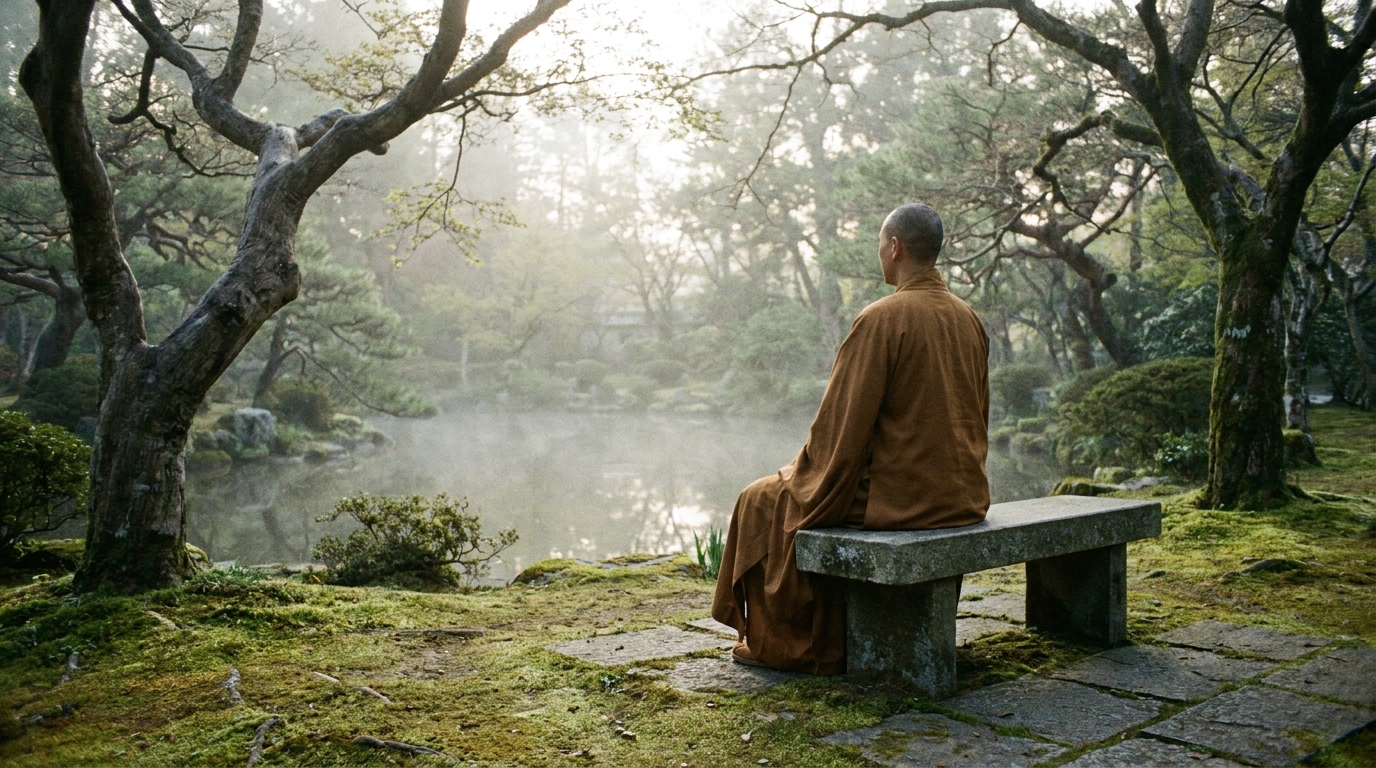
Śānta-rasa is the peaceful, tranquil mood of devotion. The Sanskrit word śānta means “peaceful,” “calm,” or “undisturbed.” In śānta-rasa, the heart becomes still before the presence of God. There is reverence, awareness, gratitude, and freedom from restless desires. The soul is no longer running here and there, trying to find satisfaction in temporary things. Instead, it rests in the gentle truth: “I belong to God.”
This mood is not empty or cold. It is not simply silence without love. Śānta-rasa is sacred peace filled with spiritual awareness. It is the calm light of the heart when it remembers the Supreme Person.
In the Bhakti tradition, especially as explained by Śrīla Rūpa Gosvāmī in Bhakti-rasāmṛta-sindhu—a foundational scripture on the science of devotional love—śānta-rasa is described as one of the primary relationships with Krishna, the all-attractive Supreme Lord. It is the beginning of deep spiritual taste, where the soul becomes free from material anxiety and experiences satisfaction in divine remembrance.
For many people beginning the path of Bhakti Yoga, śānta-rasa feels very accessible. Before we can serve with full energy, love with deep intimacy, or surrender every part of our life, we may first need peace. We may need to breathe, pause, and simply remember that God is near.
The Spiritual Beauty of Tranquility
Peace Is Not Passivity
Sometimes we may think peace means doing nothing. But in Bhakti Yoga, spiritual peace is alive. It is not laziness, indifference, or withdrawal from life. True tranquility comes when the heart is connected to God and no longer controlled by fear, anger, envy, or endless wanting.
The Bhagavad-gītā explains that a person who is not disturbed by the constant flow of desires can attain peace, just as the ocean remains full and steady even as rivers enter it. This is a powerful image. The ocean receives so much, yet it does not overflow in agitation. Similarly, a devotee practicing śānta-rasa learns to remain steady even as life brings success and failure, praise and criticism, gain and loss.
This does not mean we stop feeling. Bhakti Yoga never asks us to become stone-hearted. Rather, it teaches us to bring our feelings into relationship with God. In śānta-rasa, we learn to witness the movements of the mind and gently return to divine remembrance.
The Heart Finds Its Resting Place
The soul is naturally searching for shelter. We may seek shelter in relationships, achievements, possessions, health, reputation, or knowledge. These things may have value, but they cannot fully satisfy the eternal heart. They change. They come and go.
Śānta-rasa begins when we understand, even a little, that lasting peace comes from the Supreme. The heart whispers, “My real shelter is God.” This simple realization can soften years of anxiety.
In the Śrīmad-Bhāgavatam, one of the most beloved scriptures of the Bhakti tradition, we repeatedly hear that the Lord is the resting place of all beings. When the soul turns toward God, it gradually becomes peaceful because it is returning to its natural home.
This is the spiritual beauty of tranquility: not escaping life, but standing within life with a deeper center.
Śānta-rasa in the Bhakti Scriptures

The Four Kumāras and the Awakening of Devotion
One of the classic examples of śānta-rasa is found in the story of the Four Kumāras, described in the Śrīmad-Bhāgavatam. The Kumāras were great sages who were deeply peaceful, detached from worldly pleasures, and absorbed in spiritual knowledge. They had realized the impersonal aspect of the Divine—the all-pervading spiritual reality beyond matter.
But something remarkable happened when they came near the Lord and smelled the fragrance of tulasī leaves offered at His lotus feet. Tulasī is a sacred plant dear to Krishna, often used in worship. That divine fragrance awakened personal devotion in their hearts.
Their peace did not disappear. It blossomed. Their tranquility became touched by love.
This story teaches us something very important. Spiritual peace is wonderful, but in Bhakti Yoga, peace is not the final destination. Peace becomes the doorway to loving relationship. When the heart is calm, it can hear the call of devotion more clearly.
Bhīṣma and Devotional Steadiness
Another powerful example is Bhīṣma, the great warrior and devotee from the Mahābhārata and Śrīmad-Bhāgavatam. Bhīṣma faced intense difficulty, including the battlefield of Kurukṣetra and his own painful final moments lying on a bed of arrows. Yet his consciousness remained fixed on Krishna.
His heart was steady because it was absorbed in the Lord. Even in pain, he meditated on Krishna’s beautiful form and offered prayers. This is not ordinary peace. This is divine steadiness born of devotion.
For us, Bhīṣma’s example is deeply practical. Life may bring circumstances we cannot control. The body may suffer. Relationships may be complicated. The world may feel uncertain. But we can practice remembering God in all conditions. Even a small prayer—“Krishna, please guide me”—can become an anchor.
The Bhagavad-gītā and the Peace Formula
In the Bhagavad-gītā, Krishna offers a simple and profound “peace formula.” He explains that one who understands Him as the supreme enjoyer, the friend of all beings, and the Lord of all worlds attains peace.
This teaching is at the heart of śānta-rasa.
We become peaceful when we remember:
God is the ultimate enjoyer, so I do not need to control everything.
God is the owner and maintainer, so I can live with gratitude.
God is the friend of every living being, so I am never alone.
This vision gently changes how we live. We may still work, care for family, build community, and pursue our responsibilities. But we do so with less anxiety and more trust. We begin to live not as isolated controllers, but as beloved souls walking with God.
Check out our latest articles at https://thebhaktihouse.org/blog.
The Qualities of Śānta-rasa
Freedom from Material Craving
A key quality of śānta-rasa is freedom from intense material craving. This does not mean a devotee rejects the world with bitterness. Rather, the devotee sees the world clearly. Temporary things cannot give eternal fulfillment.
In the peaceful mood of devotion, we learn to appreciate what comes by God’s grace without becoming enslaved by it. Food, shelter, friendship, art, nature, and meaningful work can all be honored as gifts. But we do not ask them to become God.
This brings relief. So much suffering comes from expecting temporary things to satisfy the eternal soul. Śānta-rasa helps us loosen that grip.
Steady Awareness of the Divine
Another quality is steady spiritual awareness. The devotee in śānta-rasa may not yet express the more active forms of devotional intimacy, but there is a deep recognition: “God is great. God is present. God is my shelter.”
This awareness can enter ordinary moments. We may feel it while watching the sunrise, chanting softly, sitting before an altar, walking under trees, or reading sacred wisdom. We may feel it in silence after prayer, when the heart becomes simple.
Bhakti Yoga teaches that God is personal and loving. Krishna is not distant from us. Yet śānta-rasa often begins with awe and reverence. We stand before the mystery of the Divine with humility.
Inner Satisfaction
The Sanskrit word ātma-rāma refers to one who finds joy within the self, especially the self connected with the Supreme Self. In śānta-rasa, the soul begins to taste this inner satisfaction.
This does not mean we become emotionally independent in a proud way. Rather, we become spiritually nourished. We stop demanding that the world constantly entertain us, validate us, or complete us.
A peaceful devotee can sit quietly and chant the holy names of God. They can be content with simple offerings. They can find joy in sacred sound, in prayer, in remembering Krishna. This inner satisfaction is one of the gifts of Bhakti Yoga.
Practicing Śānta-rasa in Daily Life
Begin with Sacred Sound
One of the most practical ways to cultivate spiritual tranquility is through chanting. In Bhakti Yoga, chanting the holy names of God is both meditation and prayer. The maha-mantra is especially cherished:
Hare Krishna, Hare Krishna, Krishna Krishna, Hare Hare
Hare Rama, Hare Rama, Rama Rama, Hare Hare
“Hare” calls upon the divine energy of the Lord. “Krishna” means the all-attractive one. “Rama” means the source of joy and spiritual pleasure.
You do not have to be perfect to chant. You do not have to understand everything. You can simply begin. Chant softly in the morning. Sing with others in kirtan, which means devotional singing. Whisper the names of God during a difficult day. Let the sound enter the heart.
Sacred sound calms the mind because it reconnects us with our eternal nature. Over time, chanting becomes a shelter we can return to again and again.
Create a Peaceful Prayer Rhythm
Prayer is another doorway into śānta-rasa. Prayer does not need to be complicated. It can be honest and simple.
You might pray:
“Dear Lord, please help me remember You today.”
“Krishna, please guide my heart.”
“May I serve with humility.”
“Please help me let go of what keeps me from loving You.”
The mood matters more than the poetry. A sincere prayer offered with humility can transform the atmosphere of the heart.
It may help to create a daily rhythm. Light a candle or offer incense. Sit in a clean, quiet place. Read a verse from the Bhagavad-gītā or Śrīmad-Bhāgavatam. Chant for a few minutes. Offer your day to God.
Small, steady practices create deep spiritual change.
Simplify Your Desires
Śānta-rasa grows when we simplify. This does not mean abandoning responsibilities or living artificially. It means becoming thoughtful about what we feed our consciousness.
We can ask:
Does this habit bring me closer to God or farther away?
Does this desire create peace or agitation?
Am I using this gift in service, or am I trying to possess it?
Bhakti Yoga is not dry renunciation. It is loving redirection. Instead of merely giving things up, we learn to offer them. We can cook and offer food to Krishna. We can use our home for hospitality. We can use our voice for encouragement and chanting. We can use our work as an offering.
When life becomes an offering, the heart becomes peaceful.
Śānta-rasa and the Other Devotional Relationships
The Foundation of Higher Love
In Bhakti Yoga, śānta-rasa is often understood as the foundation for other loving relationships with God. Beyond peaceful reverence, the scriptures describe dāsya-rasa, the mood of loving service; sakhya-rasa, friendship with God; vātsalya-rasa, parental affection; and mādhurya-rasa, the most intimate loving relationship.
These are not ordinary emotions. They are pure spiritual relationships revealed as the heart becomes fully awakened.
Śānta-rasa is like the still lake that reflects the moon. When the waters of the mind are calm, we can begin to perceive the beauty of Krishna more clearly. From that peace, deeper devotion may naturally arise.
Respecting Each Soul’s Journey
It is important to be humble here. Bhakti Yoga is not about comparing our spiritual emotions with others. We should not imitate advanced states of love. We should not pretend to be beyond where we are.
Every sincere step matters.
For one person, devotion may begin with quiet meditation. For another, with tears during kirtan. For another, with serving meals, cleaning the temple, reading scripture, or simply feeling gratitude. God sees the sincerity, not the performance.
Śānta-rasa teaches us to honor the sacred beginning: to become peaceful, reverent, and aware of God’s presence.
Peace That Opens into Service
Although śānta-rasa is peaceful, it does not remain self-contained. Real spiritual peace naturally wants to bless others. When the heart is less consumed by personal craving, it becomes available for compassion.
This is why service, or seva, is essential in Bhakti Yoga. Seva means loving service offered for the pleasure of God and the upliftment of others. It can be as simple as washing dishes after a spiritual gathering, listening kindly, sharing prasāda—food offered to God—or helping someone remember their worth as a soul.
Peace becomes beautiful when it becomes generous.
Healing the Modern Heart Through Śānta-rasa
A Medicine for Anxiety and Overstimulation
Many of us live in a world of constant noise. Notifications, responsibilities, comparison, uncertainty, and emotional overload can leave the heart exhausted. We may feel restless even when nothing is wrong. We may feel lonely even when surrounded by people.
Śānta-rasa offers a sacred medicine: slow down and remember God.
This remembrance is not a technique only for relaxation, though it may relax us. It is a relationship. The soul becomes calm because it is turning toward the One who has always loved it.
Even five minutes of chanting can interrupt the cycle of anxiety. A verse of scripture can reframe the day. A sincere prayer can bring the mind back from fear to trust.
Learning to See with Spiritual Vision
The peaceful devotee gradually learns to see beyond the surface. We begin to understand, “I am not this temporary body. I am an eternal soul.” This teaching is central to the Bhagavad-gītā. Krishna explains that the soul is never born and never dies. The body changes, but the self remains.
This wisdom brings deep tranquility. So much fear comes from identifying only with what changes. When we remember our spiritual identity, we can face life with more courage.
We also begin to see others differently. Every person—regardless of background, religion, culture, race, gender, history, or current struggle—is a soul beloved by God. This vision softens judgment and awakens compassion.
Resting Without Escaping
Some people worry that spiritual peace may make them detached from real-world suffering. But true śānta-rasa does not make us uncaring. It helps us respond from a cleaner place.
When we are agitated, our help may be mixed with ego, anger, or the need to control. When we are spiritually grounded, we can serve with steadiness. We can show up without becoming consumed. We can care deeply while remembering that God is the ultimate shelter for everyone.
This is a mature form of compassion: peaceful, prayerful, and active.
Cultivating Śānta-rasa in Community
The Gift of Satsang
The Sanskrit word satsang means “association with truth” or “spiritual community.” We are shaped by the company we keep. If we spend time with people who value remembrance of God, our own remembrance becomes stronger.
In Bhakti community, we gather to chant, hear sacred teachings, share prasāda, ask questions, and encourage one another. This helps spiritual peace become practical. We realize we are not alone on the path.
The Bhakti House mood is one of welcome. You do not need to have everything figured out. You do not need to know Sanskrit, wear certain clothes, or come from a particular background. Come as you are. Bring your questions, your sincerity, your longing, and even your doubts.
God can work with an honest heart.
Kirtan as Shared Peace
Kirtan, the joyful singing of God’s names, is one of the most accessible practices of Bhakti Yoga. Sometimes the mind struggles to sit silently, but when sacred sound is carried by music and community, the heart opens naturally.
In kirtan, śānta-rasa may appear as a gentle calm. The nervous system settles. The breath deepens. The mind becomes less scattered. We begin to feel held by something greater than ourselves.
And because the holy name is Krishna Himself in sound form, kirtan is not merely music. It is divine association. We are spending time with God through sound.
Serving Together
Community service also deepens peace. When we serve with others, we are reminded that spiritual life is not just personal improvement. It is love in action.
Preparing a meal, welcoming guests, cleaning a sacred space, supporting a program, offering skills, or caring for someone in need can all become devotion. Service helps dissolve the ego’s constant question: “What about me?” It replaces it with a sweeter question: “How can I serve?”
That shift brings tranquility.
Obstacles to Spiritual Peace
The Restless Mind
The mind is naturally restless. Krishna acknowledges this in the Bhagavad-gītā when Arjuna says the mind is difficult to control, like the wind. Krishna does not dismiss Arjuna’s struggle. He says the mind can be controlled by practice and detachment.
This is encouraging. We should not become discouraged when the mind wanders during chanting or prayer. Wandering is what the untrained mind does. Each time we gently return to the holy name, we are practicing devotion.
Śānta-rasa grows through patience.
Spiritual Impatience
Sometimes we want quick results. We may think, “I chanted today, so why am I still anxious?” But spiritual growth is often like watering a seed. The seed may be growing beneath the surface long before we see the sprout.
Bhakti Yoga is a path of relationship, not a transaction. We are not using God to get peace; we are learning to love God, and peace comes as a natural blessing.
Let the path be gentle. Let your practice be steady. Let God work in the hidden places of the heart.
Mistaking Detachment for Hardness
Another obstacle is misunderstanding detachment. Real detachment does not mean becoming cold or emotionally unavailable. In Bhakti, detachment means being attached to God in such a way that everything else finds its proper place.
We still love people. We still care. We still grieve, celebrate, work, and participate in life. But we do so with the awareness that everything belongs to Krishna.
This awareness protects the heart from possessiveness and despair.
A Simple Practice for Entering Śānta-rasa
Morning Remembrance
Begin your day with a few moments of sacred intention. Before looking at your phone, place your hand on your heart and remember:
“I am a soul. I belong to God. May this day be an offering.”
Then chant the maha-mantra, even one time with attention. If you can chant more, wonderful. If not, begin small.
Scripture Reflection
Read one verse from the Bhagavad-gītā or Śrīmad-Bhāgavatam. Do not rush. Ask, “What is Krishna teaching me here? How can I live this today?”
Sacred wisdom becomes powerful when it is applied.
One Act of Seva
Choose one act of service. It may be encouraging someone, offering food to God, helping in your community, giving your full attention to a loved one, or doing your work with a prayerful mood.
Service turns peace into love.
Evening Gratitude
Before sleeping, reflect on the day. Where did you remember God? Where did you forget? Offer both to Him.
You might pray, “Thank You for carrying me today. Please help me remember You tomorrow.”
This simple rhythm can gradually create a life of śānta-rasa—peaceful, devotional, and deeply grounded.
The Tranquility That Leads to Love
Śānta-rasa is a sacred gift. It teaches the heart to become still, humble, and receptive. It helps us step out of the storm of endless wanting and into the shelter of divine remembrance.
But in Bhakti Yoga, tranquility is not the end of the journey. It is the beginning of love becoming clear. As peace deepens, the heart becomes ready for service. As service deepens, affection awakens. As affection deepens, the soul begins to discover its eternal relationship with Krishna.
Wherever you are on the path, you are welcome. Whether you are new to Bhakti, returning after time away, exploring from another tradition, or simply seeking peace, there is room for you here.
Take one sincere step. Chant one holy name. Offer one prayer. Read one verse. Serve one person. Sit quietly and remember that God is your friend.
The path of Bhakti Yoga is practical, personal, and filled with grace. Everyone is welcome to take one sincere step toward God.
FAQs
What is Śānta-rasa?
Śānta-rasa is a concept in Indian aesthetics and philosophy, particularly in the context of the Rasa theory. It is considered the neutral or peaceful sentiment, characterized by a sense of tranquility, serenity, and detachment.
What are the qualities of Śānta-rasa?
The qualities of Śānta-rasa include a sense of calmness, contentment, and a lack of intense emotional involvement. It is often associated with feelings of peace, harmony, and a deep sense of inner tranquility.
How is Śānta-rasa depicted in art and literature?
Śānta-rasa is often depicted in art and literature through serene and tranquil imagery, such as landscapes, meditative scenes, and peaceful settings. It is also expressed through subtle and understated emotions, as well as through the use of gentle and soothing language.
What role does Śānta-rasa play in Indian classical dance and music?
In Indian classical dance and music, Śānta-rasa is expressed through graceful and fluid movements, as well as through melodious and soothing musical compositions. Performances and compositions that evoke a sense of peace and tranquility often embody the qualities of Śānta-rasa.
How does one cultivate Śānta-rasa in their own life?
Cultivating Śānta-rasa in one’s own life involves practicing mindfulness, meditation, and cultivating a sense of inner peace and contentment. It also involves appreciating the beauty of nature, engaging in activities that promote tranquility, and fostering a sense of detachment from worldly concerns.

