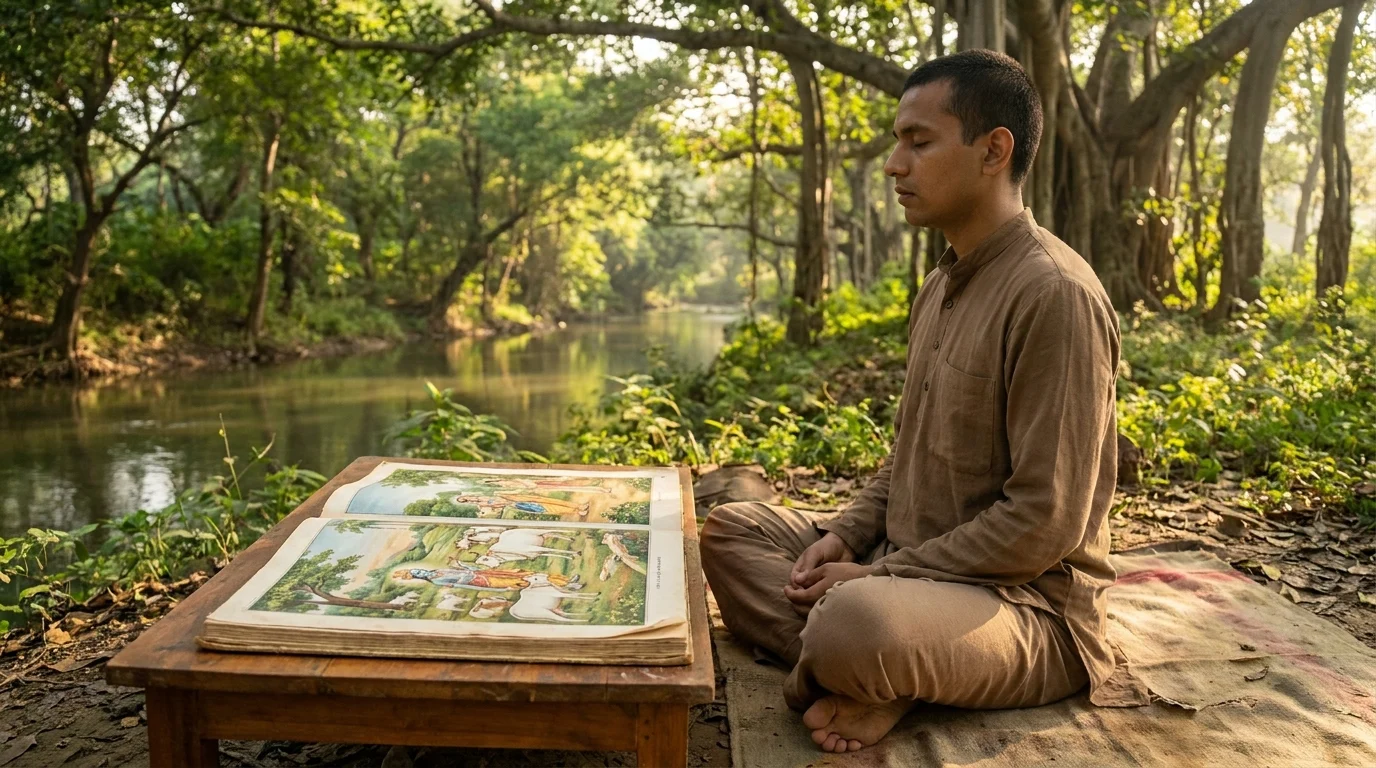
Krishna’s pastimes are not ordinary stories. In the Bhakti tradition, they are sacred windows into the heart of God—revealing divine love, beauty, courage, sweetness, friendship, compassion, and the deepest purpose of life.
For many people, the word “pastime” may sound unusual. In Sanskrit, the word is lila, meaning divine play. Krishna’s lila refers to His loving activities with His devotees: playing as a child in Vrindavan, dancing with the gopis, guiding Arjuna on the battlefield, protecting the innocent, and revealing the path of devotion.
Meditating on Krishna’s pastimes is not about escaping the world. It is about learning how to see life through the eyes of love. It helps us remember that God is not distant or impersonal, but deeply personal, caring, and approachable.
Whether you are new to Bhakti Yoga or have been practicing for many years, this guide is offered with humility. You do not need to be born into any tradition, know Sanskrit, or have a “perfect” spiritual life. You only need a sincere heart and a willingness to begin.
Krishna’s pastimes are the divine activities described in sacred Bhakti scriptures such as the Srimad Bhagavatam, Bhagavad Gita, Mahabharata, and the writings of great saints and acharyas, or spiritual teachers.
In these sacred texts, Krishna is revealed not only as the Supreme Lord, but also as a beloved son, friend, guide, protector, and lover of His devotees. This is one of the special gifts of Bhakti Yoga: God is not approached only with fear or formality, but with affection, relationship, and love.
The Meaning of Lila
The Sanskrit word lila means “play” or “divine play.” It teaches us that Krishna’s actions are not forced by karma, fear, or need. They flow from freedom, joy, and love.
Human beings act because we need something, fear something, or desire something. Krishna acts out of fullness. His pastimes are expressions of divine love meant to attract the hearts of souls back into loving relationship with Him.
When Krishna steals butter as a child, He is not committing an ordinary act of mischief. He is stealing the hearts of His devotees. When He lifts Govardhan Hill, He is not merely performing a miracle. He is protecting those who take shelter of Him. When He speaks the Bhagavad Gita to Arjuna, He is not only giving philosophy. He is lovingly guiding a confused friend toward courage, clarity, and surrender.
Why Krishna’s Stories Matter Today
In modern life, many people feel anxious, disconnected, and spiritually hungry. We may have information, entertainment, and technology, but still feel a longing for meaning.
Krishna’s pastimes nourish the heart. They remind us that life is meant for loving connection—with God, with others, with creation, and with our own true self.
These stories also teach practical lessons:
- How to trust God in difficult times
- How to serve with humility
- How to love without selfishness
- How to face fear with spiritual courage
- How to remember the Divine in daily life
Meditation on Krishna’s pastimes brings sacred imagination into the heart. It gives the mind a pure place to rest.
Bhakti Yoga: The Path of Loving Meditation
Bhakti Yoga is the path of devotion, or loving service to God. The word bhakti comes from a Sanskrit root meaning “to share,” “to serve,” or “to love.” Bhakti is not just a feeling; it is love expressed through action.
In Bhakti Yoga, meditation is not limited to silent sitting. We meditate through chanting, prayer, hearing sacred stories, offering food, serving others, remembering Krishna, and living with devotion.
Meditation as Relationship
Some forms of meditation focus on quieting the mind by detaching from all thoughts. Bhakti meditation includes quieting the mind, but it goes further. It gives the heart a loving focus.
Instead of simply trying to empty the mind, we fill the heart with remembrance of Krishna.
In the Bhagavad Gita 9.22, Krishna says:
“Those who always worship Me with exclusive devotion, meditating on My transcendental form—to them I carry what they lack, and preserve what they have.”
This verse offers deep comfort. Krishna is not indifferent to our effort. When we turn toward Him sincerely, He responds. Bhakti meditation is a relationship of love, not a performance.
The Role of Hearing and Chanting
Two of the most important practices in Bhakti Yoga are shravanam and kirtanam.
Shravanam means hearing—listening to sacred teachings, Krishna’s names, and Krishna’s pastimes.
Kirtanam means chanting or glorifying—singing or speaking the holy names and qualities of God.
The Srimad Bhagavatam describes nine practices of devotion, beginning with hearing and chanting. This is significant. We begin by receiving. We listen. We allow sacred sound to enter the heart.
Chanting the Hare Krishna mantra is a central practice:
Hare Krishna Hare Krishna
Krishna Krishna Hare Hare
Hare Rama Hare Rama
Rama Rama Hare Hare
“Hare” calls upon the divine energy of the Lord, especially Srimati Radharani, the embodiment of pure devotion. “Krishna” means the all-attractive one. “Rama” means the source of spiritual joy.
This mantra is a prayer: “O Lord, O divine energy of the Lord, please engage me in Your loving service.”
Preparing the Heart for Krishna Meditation
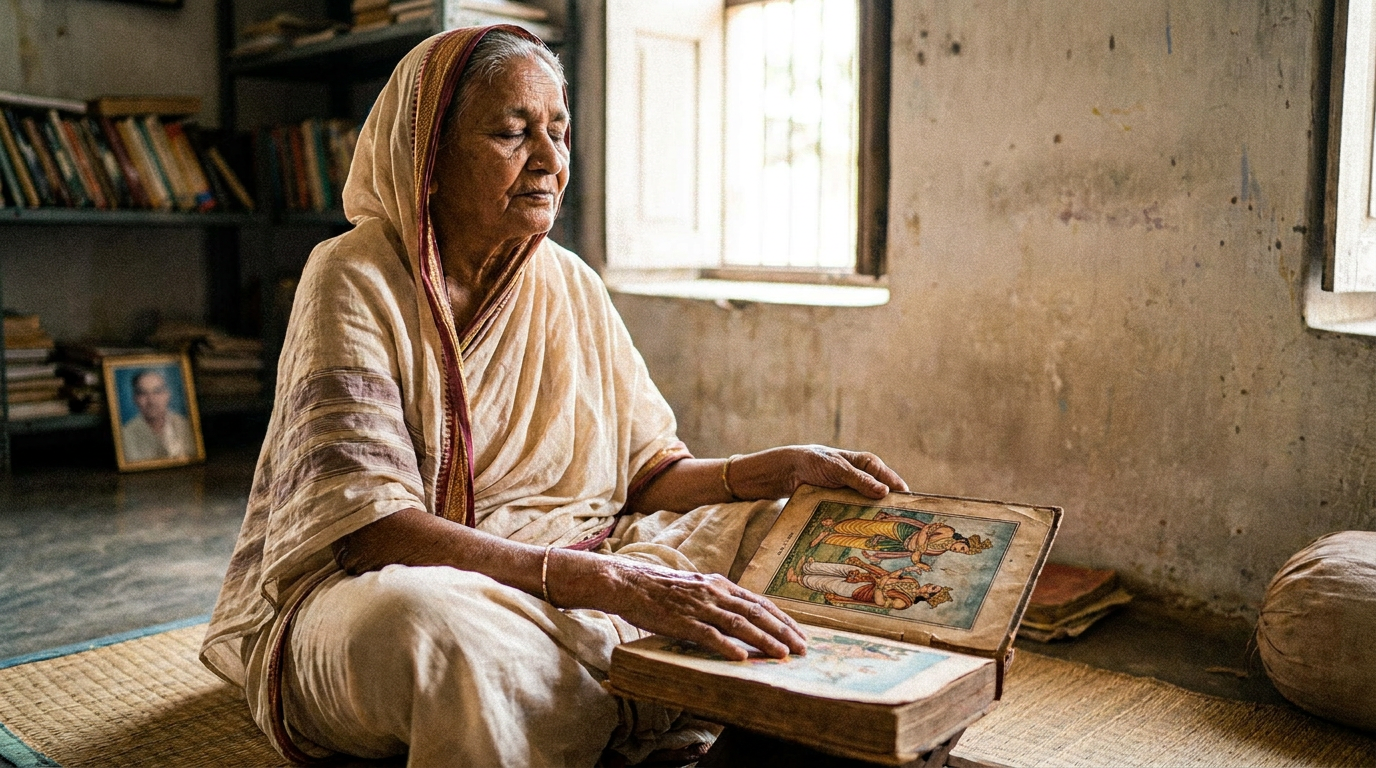
Meditating on Krishna’s pastimes is simple, but preparation helps. The goal is not to create a rigid ritual, but to make space for love.
A heart that is rushed, distracted, or heavy can still pray. Krishna does not reject anyone. Still, a few gentle practices can help us become more present.
Create a Sacred Space
Choose a quiet place where you can sit comfortably. It may be a corner of a room, a small altar, a desk, or even a peaceful outdoor spot.
You might place:
- A picture of Krishna
- A candle or lamp
- Fresh flowers
- A copy of the Bhagavad Gita or Srimad Bhagavatam
- Beads for chanting
- A simple offering, such as water or fruit
The sacred space is not meant to impress anyone. It is a reminder: “This moment is for God.”
If you live in a busy home, do not worry. Even a small shelf or a quiet moment before sleep can become sacred when offered with love.
Begin With Humble Prayer
Before meditating on Krishna’s pastimes, offer a simple prayer. You might say:
“Dear Krishna, I am here. My mind is restless, but my heart wants to remember You. Please guide me. Please help me hear and meditate with sincerity.”
Prayer opens the heart. It also reminds us that spiritual realization is not achieved by force. It is received by grace.
In Bhakti, grace is central. We make effort, but we depend on Krishna’s kindness and the blessings of the devotees.
Set a Gentle Intention
Ask yourself: “Why am I meditating today?”
Your intention may be:
- To remember Krishna
- To find peace
- To deepen love
- To receive guidance
- To offer gratitude
- To heal the heart
- To serve better
Even if your intention feels imperfect, offer it. Krishna accepts sincerity.
In the Bhagavad Gita 9.26, Krishna says:
“If one offers Me with love and devotion a leaf, a flower, fruit, or water, I will accept it.”
This verse reveals Krishna’s heart. He is not looking for wealth, status, or perfection. He is looking for love.
Please visit our website for more information on our articles: articles.
A Step-by-Step Meditation Guide on Krishna’s Pastimes
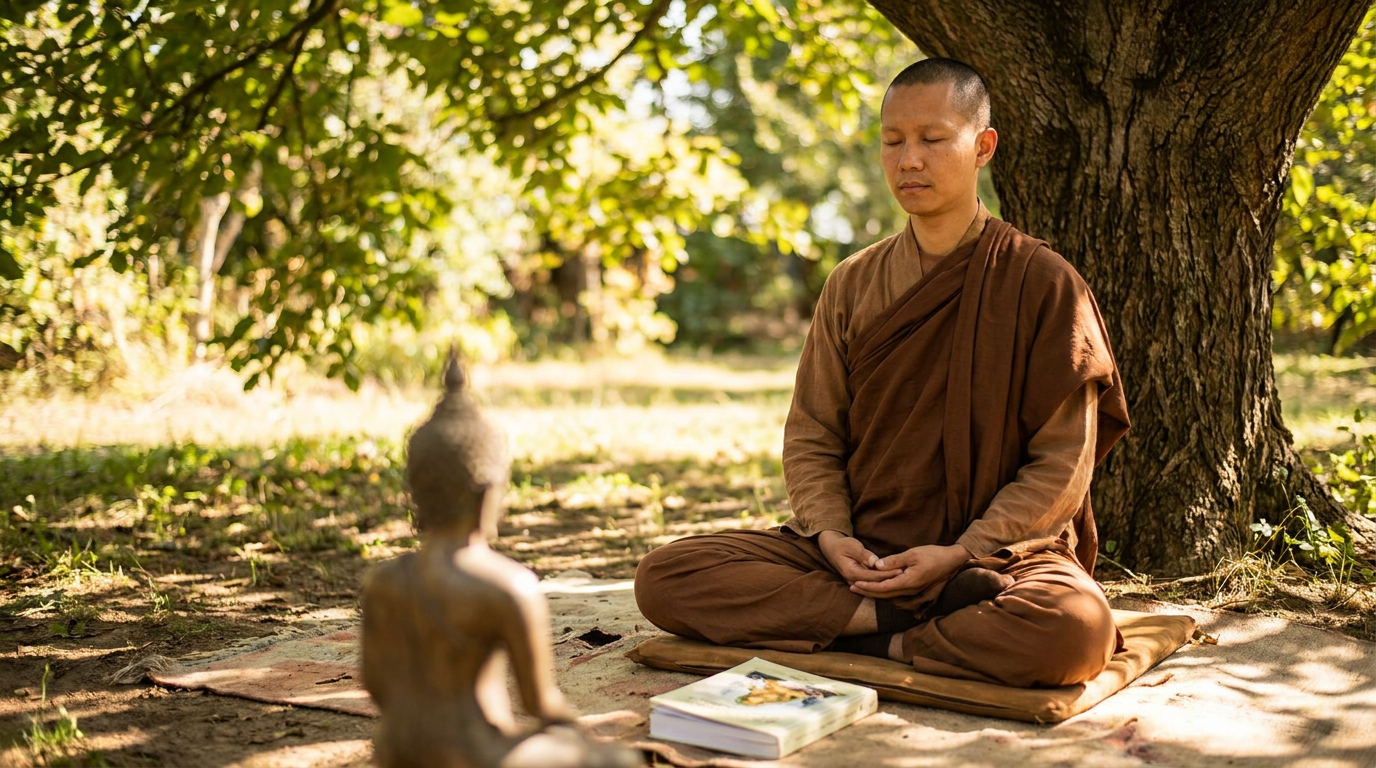
This meditation can be practiced in 10 minutes or extended for an hour or more. The key is consistency and sincerity.
Choose one pastime at a time. Let it become vivid, personal, and prayerful.
Step 1: Chant to Purify the Mind
Begin by chanting the Hare Krishna mantra softly or silently. If you have japa beads, you may chant one round or a few minutes.
Chanting helps gather the scattered mind. It brings us into sacred sound, which is considered non-different from Krishna Himself in the Bhakti tradition.
Do not worry if thoughts come. Gently return to the mantra.
Each repetition is a step toward the heart.
Step 2: Read or Hear the Pastime
Choose a trusted source, such as the Srimad Bhagavatam, Krishna Book, Bhagavad Gita, or teachings from authentic Bhakti teachers.
Read slowly. If possible, read aloud. Hearing your own voice speak Krishna’s pastimes can make the meditation more alive.
You might begin with simple pastimes such as:
- Krishna’s birth in Mathura
- Baby Krishna stealing butter
- Krishna protecting the cows and cowherd boys
- Krishna lifting Govardhan Hill
- Krishna dancing with the gopis
- Krishna speaking the Bhagavad Gita to Arjuna
Read not as a scholar trying to collect information, but as a soul trying to meet the Divine.
Step 3: Visualize With Reverence
After reading, close your eyes gently.
Imagine the scene.
If you are meditating on Vrindavan, picture the soft dust, the trees, the Yamuna River, the sound of birds, the cows moving peacefully, and Krishna’s flute calling the hearts of all beings.
If you are meditating on Kurukshetra, picture Arjuna sitting in his chariot, overwhelmed and confused. Picture Krishna as his charioteer—calm, compassionate, and ready to guide him.
Visualization in Bhakti is not fantasy for personal enjoyment. It is a devotional aid to help the heart remember and serve.
Approach the scene with humility. You are entering sacred ground.
Step 4: Notice Krishna’s Qualities
Ask: “What quality of Krishna is being revealed here?”
For example:
- In the butter-stealing pastimes, Krishna reveals sweetness and intimacy.
- In lifting Govardhan Hill, He reveals protection and care.
- In the Bhagavad Gita, He reveals wisdom and friendship.
- In the rasa dance, He reveals the highest divine love.
- In His dealings with the poor brahmana Sudama, He reveals affection and gratitude.
Let one quality touch your heart.
You might pray: “Krishna, please help me remember that You are my protector,” or “Krishna, please help me serve with more love.”
Step 5: See Yourself as a Servant
Bhakti meditation becomes deeper when we ask, “How may I serve?”
In your meditation, you might imagine offering flowers, sweeping a path, bringing water, listening to Krishna’s words, helping the devotees, or simply bowing with gratitude.
The identity of a servant is not low or negative in Bhakti. It is sacred. To serve God and His beloved ones is the soul’s natural joy.
The Sanskrit word seva means service offered with devotion. Seva transforms meditation from observation into relationship.
Step 6: Journal Your Reflection
After meditation, write a few sentences.
You might answer:
- What did I notice about Krishna?
- What emotion arose in my heart?
- What lesson can I carry into my day?
- How can I serve with more love?
- What prayer do I want to offer?
Journaling helps devotional insights become practical.
Spiritual life grows when remembrance becomes action.
Meditating on Beloved Krishna Pastimes
Krishna’s pastimes are unlimited. Here are a few especially powerful meditations for daily practice.
Krishna’s Birth: Hope in Darkness
Krishna appears in a prison cell in Mathura, where His parents, Vasudeva and Devaki, are held by the cruel king Kamsa.
This setting is deeply meaningful. Krishna does not only appear in palaces, temples, or peaceful places. He appears in darkness, danger, and fear.
For meditation, reflect on this:
Where in my life do I feel imprisoned by fear, grief, or uncertainty? Can I invite Krishna to appear there?
Krishna’s birth teaches that divine light can arise even in the most difficult circumstances. No place is too dark for God.
Baby Krishna Stealing Butter: The Lord Who Steals Hearts
In Vrindavan, Krishna steals butter from the homes of the cowherd women, known as the gopis. Butter is made by churning milk, and in Bhakti symbolism, it represents the essence of the heart.
The gopis churn with love. Krishna comes to steal what is most precious.
This pastime invites a tender meditation:
What is the “butter” of my heart? What love, attention, and devotion can I offer Krishna?
Krishna is not attracted by external show. He is attracted by the heart softened through devotion.
Govardhan Hill: Taking Shelter
When the residents of Vrindavan are threatened by a devastating storm, Krishna lifts Govardhan Hill like an umbrella and protects everyone beneath it for seven days.
This pastime is a meditation on shelter.
In life, storms come—health challenges, family struggles, financial stress, loneliness, spiritual doubt. Krishna’s lifting of Govardhan reminds us that we are not alone.
Meditate on standing beneath Govardhan Hill with the devotees of Vrindavan. Krishna is holding the hill effortlessly. He is smiling. His presence gives courage.
Ask: “What storm am I facing? How can I take shelter of Krishna today?”
Taking shelter may look like chanting, praying, seeking devotee association, reading scripture, or choosing trust over panic.
Krishna and Arjuna: Guidance in Confusion
On the battlefield of Kurukshetra, Arjuna is overwhelmed. He does not know what to do. Rather than pretending to be strong, he turns to Krishna and says, “I am Your disciple. Please instruct me.”
This moment begins the Bhagavad Gita.
Arjuna’s humility is a model for us. Spiritual growth often begins when we stop pretending we have everything figured out.
Meditate on sitting with Krishna in the chariot of your own life. What decision, fear, or confusion do you need to bring to Him?
Krishna’s guidance in the Bhagavad Gita is practical: act with devotion, offer your work, remember God, cultivate wisdom, and surrender with love.
Krishna and Sudama: Friendship Beyond Wealth
Sudama was a poor brahmana and childhood friend of Krishna. When he visited Krishna in Dwaraka, he brought a humble offering of chipped rice. Krishna received him with overwhelming love.
This pastime teaches that Krishna values devotion, not social position.
Sudama felt he had nothing to offer, yet Krishna saw his love as priceless.
Meditate on this when you feel unworthy. You may think, “My prayer is small. My offering is simple. My heart is imperfect.” But Krishna sees sincerity.
A small offering made with love becomes spiritually beautiful.
Common Obstacles in Krishna Meditation
Every sincere practitioner faces obstacles. Please do not be discouraged. Difficulty does not mean failure. It often means the heart is being trained.
Restless Mind
The mind may wander constantly. This is normal.
When it happens, gently return to the mantra, the scripture, or the image of Krishna. Do not fight the mind harshly. Bring it back like guiding a child with kindness.
In the Bhagavad Gita 6.26, Krishna teaches that wherever the restless mind wanders, one should bring it back under the control of the self. This is a patient practice.
Every return is progress.
Feeling Unqualified
Many people think, “I am not pure enough to meditate on Krishna.”
Bhakti begins exactly where we are. We do not become pure and then approach Krishna. We approach Krishna, and by His grace, the heart becomes purified.
The holy name is especially merciful. We can chant in joy, sadness, confusion, or imperfection.
Krishna is not waiting for a flawless offering. He is waiting for us to turn toward Him.
Emotional Dryness
Sometimes meditation feels sweet. Sometimes it feels dry.
Do not measure your spiritual life only by emotion. Devotion is also shown through steady practice.
If your heart feels dry, pray honestly:
“Krishna, I do not feel much today, but I still want to remember You.”
That simple sincerity is precious.
Misunderstanding Krishna’s Intimate Pastimes
Some of Krishna’s pastimes, especially with the gopis, are very deep and should be approached with reverence and guidance. They are not ordinary romantic stories. They represent the highest selfless love, completely free from selfish desire.
For beginners, it is often helpful to first meditate on Krishna’s childhood pastimes, His protection of devotees, and the teachings of the Bhagavad Gita. As faith and understanding mature, the heart can gradually approach the more intimate pastimes with purity and respect.
Bringing Krishna’s Pastimes Into Daily Life
Meditation becomes powerful when it shapes how we live.
The goal is not only to have a peaceful moment in the morning, but to carry Krishna remembrance into work, family, relationships, challenges, and service.
Chant During the Day
You can chant while walking, cooking, driving, cleaning, or resting. Even one sincere repetition of Krishna’s name can reconnect the heart.
Try beginning the day with a few minutes of mantra meditation:
Hare Krishna Hare Krishna
Krishna Krishna Hare Hare
Hare Rama Hare Rama
Rama Rama Hare Hare
Let the sound become a companion.
Offer Your Food
In Bhakti Yoga, we offer food to Krishna before eating. This practice is called offering prasadam. Prasadam means mercy—food that has been offered to God with love and then received as sacred grace.
You can offer simply:
“Dear Krishna, please accept this food prepared or received with gratitude. May it nourish me for service.”
Offering food transforms eating into devotion.
Practice Seva, Loving Service
Service is meditation in action.
You may serve by helping at a temple or spiritual community, feeding others, caring for family, encouraging a friend, cleaning a sacred space, supporting kirtan, or offering your talents for a higher purpose.
At The Bhakti House, we understand Bhakti as a lived path. We chant, pray, learn, cook, serve, and grow together. Spiritual life becomes stronger in community.
Remember Krishna in Relationships
Krishna’s pastimes teach us how to love.
When we remember Krishna as a friend of Arjuna, we can become better friends. When we remember Krishna’s love for His parents, we can honor family bonds. When we remember His compassion for the humble, we can treat others with dignity.
Ask in daily interactions:
“How can I bring more kindness here?”
“How can I serve rather than control?”
“How can I see this person as beloved by God?”
This is practical Bhakti.
A Simple 21-Day Krishna Pastime Meditation Practice
If you want to build a steady habit, try this gentle 21-day practice.
Do not worry about perfection. If you miss a day, simply begin again.
Days 1–7: Establish the Foundation
Each day:
- Sit in a quiet place for 10 minutes.
- Chant the Hare Krishna mantra for 3–5 minutes.
- Read one short Krishna pastime.
- Offer one prayer.
- Write one sentence of reflection.
Suggested focus: Krishna’s birth, childhood pastimes, and butter stealing.
Ask: “How is Krishna inviting my heart?”
Days 8–14: Deepen the Meditation
Increase your practice to 15–20 minutes if possible.
After reading, close your eyes and visualize the scene. Notice Krishna’s qualities. Imagine offering simple service.
Suggested focus: Govardhan Hill, Krishna with the cowherd boys, Krishna protecting His devotees.
Ask: “Where do I need to take shelter?”
Days 15–21: Bring It Into Life
Continue chanting and reading, but add one daily act of service.
This could be offering food, calling someone with kindness, helping clean, donating, volunteering, or sharing spiritual encouragement.
Suggested focus: Krishna and Arjuna, Krishna and Sudama, Krishna’s teachings in the Bhagavad Gita.
Ask: “How can I live this meditation today?”
By the end of 21 days, you may notice more peace, clarity, humility, and remembrance. The change may be subtle, but sacred growth often begins quietly.
The Fruit of Meditating on Krishna’s Pastimes
The fruit of Bhakti meditation is not merely relaxation, though peace often comes. The deeper fruit is love.
As we hear about Krishna, chant His names, and remember His pastimes, the heart gradually softens. We begin to feel more connected, more grateful, and more guided.
The Srimad Bhagavatam teaches that by regularly hearing about Krishna, the impurities of the heart are cleansed, and devotion awakens. This cleansing is not harsh. It is like the rising sun gently removing darkness.
From Information to Transformation
It is possible to know many stories about Krishna but remain unchanged. Bhakti invites us to go deeper.
After every meditation, ask:
“What is Krishna teaching me?”
“How can I love more sincerely?”
“What attachment can I offer?”
“What service is being placed before me?”
When sacred stories become daily choices, meditation becomes transformation.
Love Is the Goal
In Bhakti Yoga, the final goal is prema, pure love of God.
Prema is not sentimental emotion. It is the fully awakened state of the soul, where love for Krishna flows naturally and selflessly.
Most of us may feel far from such love, and that is okay. The path begins with small sincere steps: one mantra, one prayer, one offering, one act of service, one moment of remembrance.
Krishna sees every step.
Walking the Path Together
Meditating on Krishna’s pastimes is a beautiful personal practice, but it is also nourished by community. In Bhakti, spiritual friendship is considered essential.
When we gather for kirtan, study, prasadam, prayer, and service, our hearts become stronger. We learn from one another. We remember that we are not walking alone.
The Importance of Devotee Association
The Sanskrit term sadhu-sanga means association with spiritually minded people. A sadhu is a person who is sincerely devoted to spiritual truth and loving service.
Sadhu-sanga does not mean being around perfect people. It means being in the company of those who are trying to remember God.
In such association, faith grows naturally.
Learning With Humility
Krishna’s pastimes are deep. We can return to the same story again and again and find new meaning each time.
Approach scripture with humility, prayer, and guidance. Authentic Bhakti teachings help us understand Krishna’s pastimes in a way that purifies the heart rather than feeds ego or imagination.
A humble heart is the best doorway into divine mystery.
A Closing Meditation Prayer
Dear Krishna,
You are the all-attractive Lord, the friend of every soul, and the shelter of the surrendered heart. Please help us remember You with sincerity. Please let Your holy names enter our hearts. Please teach us to see Your love in Your pastimes and to carry that love into our daily lives.
When we feel lost, guide us as You guided Arjuna.
When we feel afraid, protect us as You protected the people of Vrindavan.
When we feel unworthy, receive our small offerings as You received Sudama’s chipped rice.
When our hearts feel hard, gently steal them like butter and make them soft with devotion.
May our chanting become prayer.
May our prayer become service.
May our service become love.
May our love bring us closer to You and to all living beings.
Everyone is welcome on this path. Whatever your background, wherever you are in life, Krishna meets sincerity with mercy. Today, you can take one sincere step toward God—chant one mantra, offer one prayer, read one sacred pastime, serve one person with love, or simply say, “Krishna, please guide me.”
That one step matters. And you are warmly welcome to take it.
FAQs
What is the significance of meditating on Krishna’s pastimes?
Meditating on Krishna’s pastimes is a way to connect with the divine and experience spiritual bliss. It allows practitioners to deepen their understanding of Krishna’s teachings and develop a closer relationship with the deity.
How can one start meditating on Krishna’s pastimes?
One can start meditating on Krishna’s pastimes by finding a quiet and peaceful place, sitting in a comfortable position, and focusing on a specific pastime or story from Krishna’s life. It is also helpful to chant Krishna’s names or mantras to enhance the meditation experience.
What are the benefits of meditating on Krishna’s pastimes?
Meditating on Krishna’s pastimes can bring about a sense of inner peace, joy, and spiritual fulfillment. It can also help in reducing stress, anxiety, and negative emotions, while promoting a sense of connection with the divine.
Are there specific techniques for meditating on Krishna’s pastimes?
There are various techniques for meditating on Krishna’s pastimes, including visualization, chanting, and deep contemplation. Practitioners may also choose to read or listen to stories about Krishna’s pastimes to aid in their meditation practice.
Is it necessary to have prior knowledge of Krishna’s pastimes to meditate on them?
While having prior knowledge of Krishna’s pastimes can enhance the meditation experience, it is not necessary. Beginners can start by learning about Krishna’s pastimes through books, lectures, or online resources, and gradually incorporate them into their meditation practice.