Many of us are searching for peace.
We may look for it in a quieter schedule, a better home, a healthier body, a more stable relationship, or a deeper sense of purpose. These are all natural desires. Life can be beautiful, but it can also feel heavy. The mind becomes crowded with worries, hopes, memories, plans, and fears. Even when everything looks fine on the outside, the heart may still be longing for something more.
In the Bhakti Yoga tradition, peace is not understood as something we must manufacture by force. Peace is already connected to our deepest nature. Beneath the restless mind and changing circumstances, the soul longs for loving relationship with God.
Hare Krishna meditation is a simple and sacred practice that helps us return to that relationship.
It does not require a particular background, nationality, culture, or level of spiritual knowledge. It welcomes the sincere heart. Whether you are new to meditation, returning to prayer after many years, or already walking a devotional path, the chanting of the Hare Krishna mantra can become a warm companion on your journey.
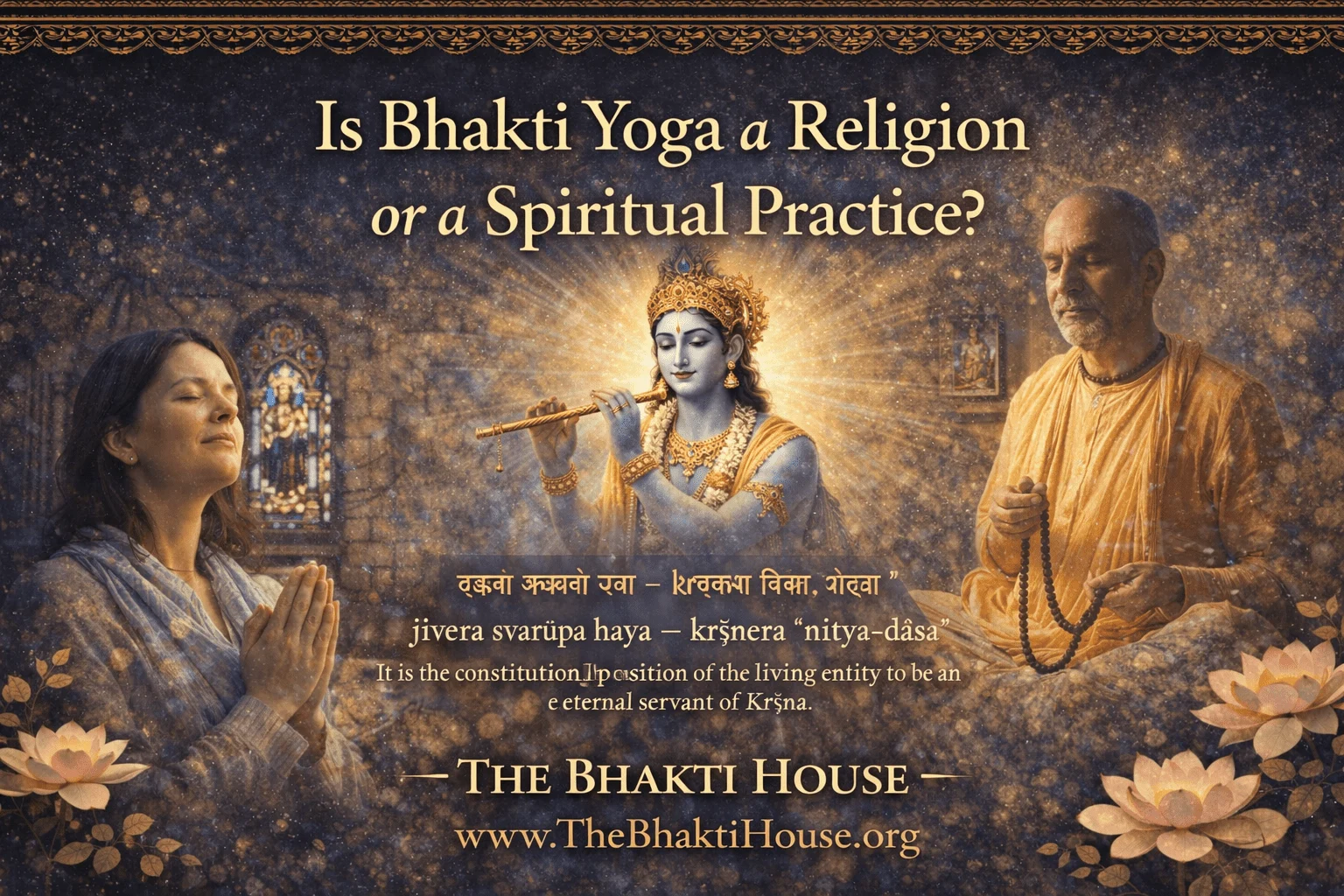
Bhakti Yoga means “the yoga of devotion.” The Sanskrit word bhakti means loving devotion, and yoga means connection. So Bhakti Yoga is the path of reconnecting with the Divine through love. This love is expressed through chanting, prayer, service, study, gratitude, community, and daily remembrance.
At the heart of this path is the practice of chanting the holy names of God.
What Is Hare Krishna Meditation?
Hare Krishna meditation is the practice of chanting or singing the Hare Krishna maha-mantra:
Hare Krishna Hare Krishna
Krishna Krishna Hare Hare
Hare Rama Hare Rama
Rama Rama Hare Hare
The word mantra comes from two Sanskrit roots: man, meaning “mind,” and tra, meaning “to deliver” or “to protect.” A mantra is a sacred sound that helps protect the mind from anxiety, distraction, and forgetfulness of our spiritual nature.
The word maha means “great.” So the maha-mantra means “the great mantra.” It is considered especially powerful in the Bhakti tradition because it is made entirely of divine names.
The Meaning of Hare, Krishna, and Rama
The names in the mantra are not ordinary sounds. They are personal names of God and God’s divine energy.
Hare is a call to the Lord’s compassionate spiritual energy, often understood as the energy of divine love. It is a prayer: “O Divine Energy, please engage me in loving service.”
Krishna means “the all-attractive one.” In Bhakti scriptures, Krishna is the Supreme Person, the source of beauty, wisdom, strength, compassion, and love.
Rama means “the reservoir of joy” or “the one who gives spiritual happiness.” It reminds us that true joy comes not from taking, but from loving connection with God.
So when we chant the Hare Krishna mantra, we are not simply repeating words. We are offering a prayer:
“O Lord, O Divine Energy of the Lord, please lift my heart. Please help me remember You. Please engage me in loving service.”
A Meditation of Relationship
Some forms of meditation invite us to empty the mind or observe thoughts from a distance. Hare Krishna meditation is a little different. It gives the mind a beautiful place to rest: the sound of God’s names.
Instead of fighting the mind, we gently guide it. When thoughts wander, we return to the mantra. When emotions rise, we offer them into the mantra. When we feel dry, distracted, or unworthy, we still chant. The holy name is patient.
This is a meditation of relationship. We are not alone in silence. We are calling out to the Divine, and we are learning to listen.
Why Chanting Brings Peace
The peace that comes from Hare Krishna meditation is not merely relaxation, though relaxation may come. It is deeper than a calm mood. It is the peace of remembering who we are and who we belong to.
Bhakti teachings explain that we are not just the body, the mind, our job title, our past mistakes, or our social identity. We are atman, the eternal soul. The soul is naturally full of consciousness and meant for loving relationship with God.
When we forget this, we become restless. We try to satisfy the heart through temporary things. Some of these things may be good and necessary, but they cannot fully nourish the soul. Chanting helps us turn toward the eternal source of love.
The Mind Needs a Sacred Anchor
The mind is often compared to a restless wind. In the Bhagavad-gita, a beloved scripture of Bhakti Yoga, Arjuna honestly says to Krishna:
“The mind is restless, turbulent, obstinate, and very strong.”
Many of us can relate. We sit down to pray or meditate, and suddenly the mind remembers an email, a conversation, a worry, or a desire. Rather than feeling discouraged, we can understand that this is part of being human.
Krishna responds in the Bhagavad-gita that the mind can be controlled by practice and detachment. In Bhakti Yoga, chanting is that practice. We patiently return to the holy name again and again.
Each return is meaningful. Each return is a small act of love.
Sound That Cleanses the Heart
Bhakti scriptures describe sacred sound as spiritually cleansing. In the Srimad-Bhagavatam, another central Bhakti text, hearing and chanting about God is said to cleanse the heart of unwanted things.
This does not mean that we become perfect overnight. It means that the process is alive. Over time, chanting can soften anger, reduce envy, awaken gratitude, and help us see ourselves and others with more compassion.
The heart may carry old pain, fear, or pride. The mantra enters gently, like sunlight into a closed room. We do not have to force everything open at once. We simply keep chanting, and the light gradually reveals and heals.
Peace Through Loving Surrender
In modern life, peace is often associated with control. We think, “If I can control my circumstances, then I will feel peaceful.” But life constantly reminds us that we are not fully in control.
Bhakti offers another way: peace through loving surrender.
Surrender does not mean weakness. It means trusting that God is loving, present, and guiding us. It means offering our efforts while accepting that the results are ultimately in divine hands.
When we chant Hare Krishna, we practice surrender in a simple way. We bring the mind back to God’s names. We let go of the need to solve everything in that moment. We allow ourselves to be held.
Check out our latest posts at https://thebhaktihouse.org/blog.
How to Practice Hare Krishna Meditation
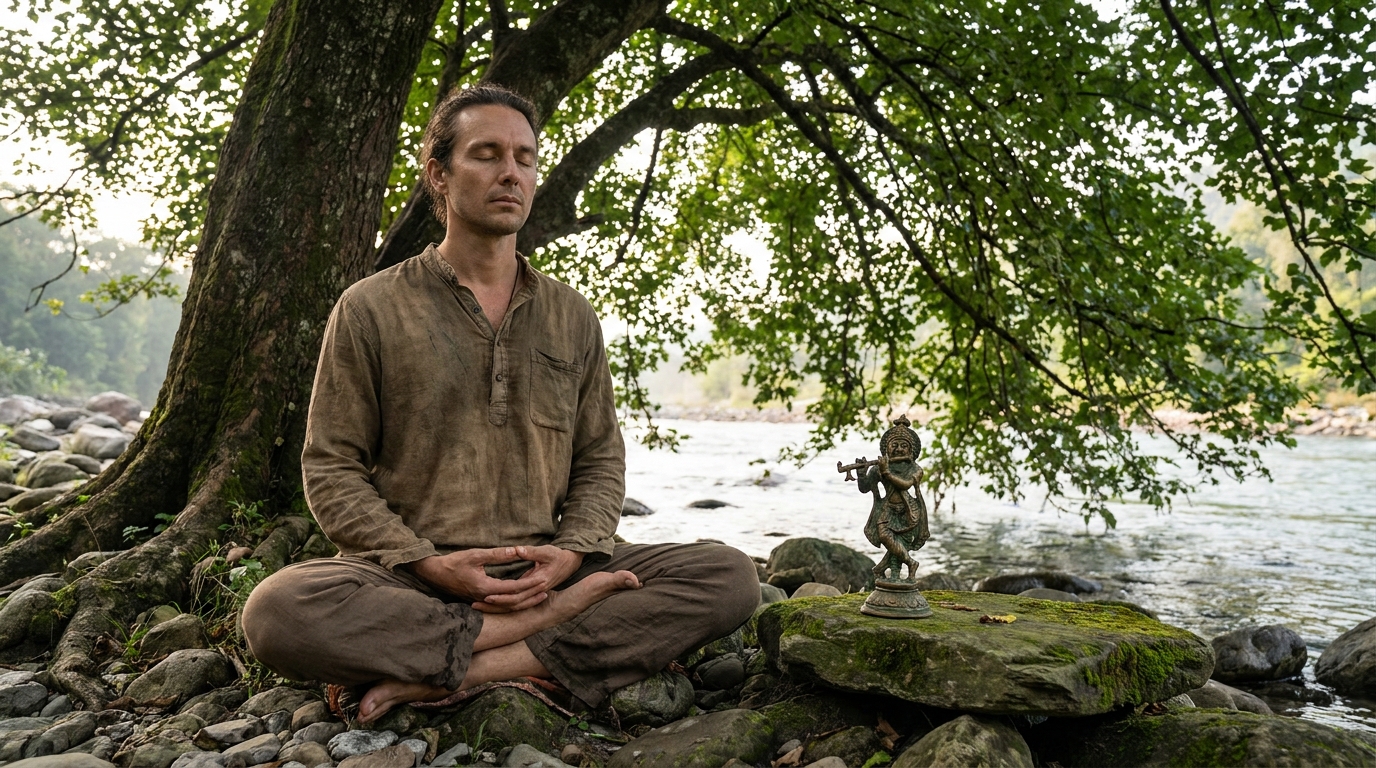
Hare Krishna meditation can be practiced in many settings: at home, in a temple, in nature, while walking, or with a community. The most important ingredient is sincerity.
You do not need to be advanced. You do not need to know Sanskrit deeply. You do not need to have your life perfectly arranged. You can begin exactly where you are.
Japa: Personal Mantra Meditation
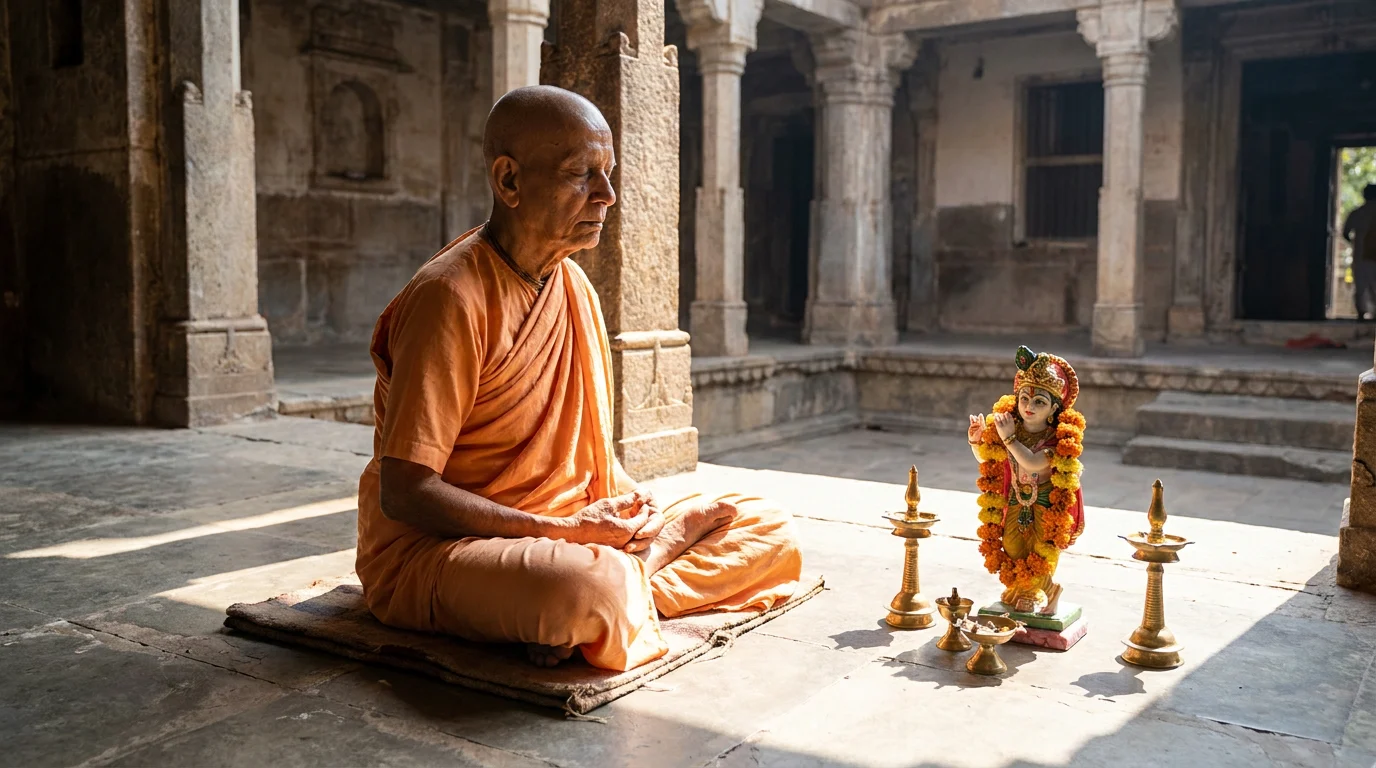
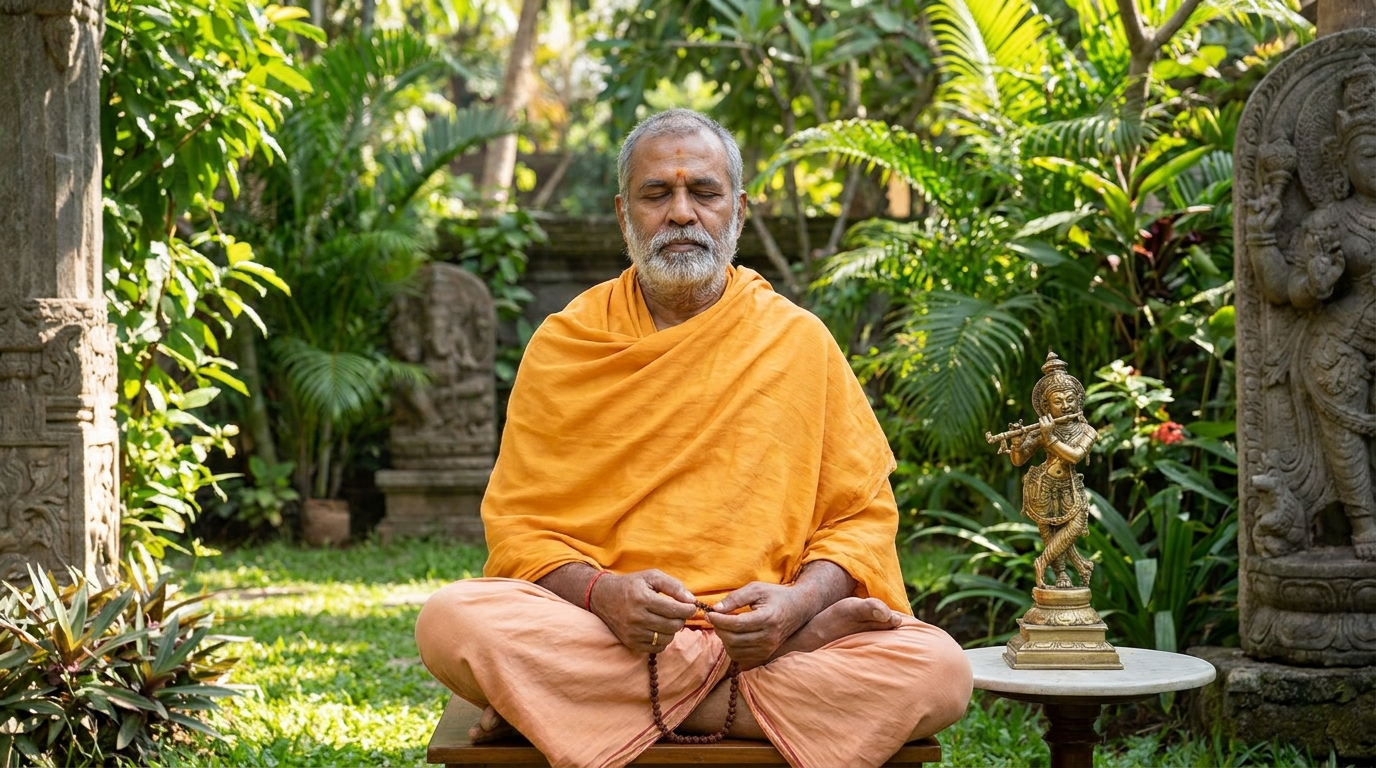
One traditional form of Hare Krishna meditation is called japa. Japa means softly chanting a mantra, often while using prayer beads.
A set of japa beads usually has 108 beads. The practitioner chants the full maha-mantra once on each bead, moving bead by bead. This gives the hands something simple to do and helps the mind stay connected.
If you are new, you might begin with just five minutes a day. Sit comfortably, take a gentle breath, and chant:
Hare Krishna Hare Krishna
Krishna Krishna Hare Hare
Hare Rama Hare Rama
Rama Rama Hare Hare
You may chant softly aloud, whisper, or chant within the mind. In Bhakti Yoga, hearing the sound is very important, so chanting aloud or softly enough to hear yourself can be especially helpful.
When the mind wanders, kindly bring it back. No harshness is needed. The practice is not about judging the mind. It is about returning to love.
Kirtan: Singing in Community
Another beautiful form of Hare Krishna meditation is kirtan. Kirtan means devotional singing, often with musical instruments and a call-and-response style.
One person leads the mantra, and others respond. Sometimes the music is gentle and prayerful. Sometimes it becomes joyful and energetic. Both moods are welcome.
Kirtan reminds us that spiritual life is not only private. We are meant for connection. Singing together can open the heart in ways that are difficult to explain. A room of people from different backgrounds can become united through sacred sound.
You do not need to be a “good singer.” In kirtan, the offering is the heart. The sound may be simple, imperfect, or hesitant, but if it is sincere, it is beautiful.
Chanting While Walking or Working
Hare Krishna meditation can also enter daily life in practical ways. You may softly chant while walking, cooking, cleaning, driving, or resting. Of course, we should remain attentive and safe in whatever we are doing, but the mantra can accompany ordinary moments.
This is one of the gifts of Bhakti Yoga: it spiritualizes daily life.
A kitchen can become a place of prayer. A walk can become a pilgrimage. A difficult day can become an opportunity to call on God. The mantra helps us remember that the Divine is not far away.
The Inner Attitude of Chanting
The quality of our chanting is shaped by the mood we bring to it. While the holy name is powerful in itself, our openness helps us receive its grace more deeply.
Bhakti is not mechanical. It is personal. The mantra is not a tool to control God or demand a certain result. It is a way of approaching God with humility and love.
Chanting With Humility
One of the most cherished verses in the Bhakti tradition comes from Sri Chaitanya Mahaprabhu, the great teacher who widely shared the chanting of the Hare Krishna mantra. He taught:
“One should chant the holy name of the Lord in a humble state of mind, thinking oneself lower than the grass, more tolerant than a tree, and ready to offer respect to others without expecting respect in return.”
This verse is not meant to make us feel worthless. Rather, it invites us into a softer heart. Humility means we recognize that life is sacred, others are children of God, and we are dependent on divine grace.
When we chant with humility, we become less defensive. We stop trying to prove ourselves. We become more available to love.
Chanting With Patience
Sometimes chanting feels peaceful and sweet. Sometimes it feels distracted or dry. Both experiences can be part of the journey.
If you plant a seed, you do not dig it up every day to see if it is growing. You water it, protect it, and trust the process. In the same way, chanting is like watering the seed of devotion in the heart.
The results may be subtle at first. You may notice a little more calm, a little more kindness, a little more awareness before reacting. These small changes are precious. Spiritual growth often happens quietly.
Chanting as Prayer, Not Performance
It is easy to compare our spiritual practice with others. Someone else may chant more rounds, sing more beautifully, quote more scripture, or seem more peaceful. But Bhakti is not a performance.
God sees the heart.
A single sincere mantra can be deeply meaningful. A simple prayer from a tired parent, a struggling student, a grieving heart, or a seeker unsure of what they believe can be received with great love.
We can chant honestly: “Krishna, I do not know how to pray well, but I am trying. Please guide me.”
That honesty is sacred.
Bhakti Yoga: A Practical Path of Love
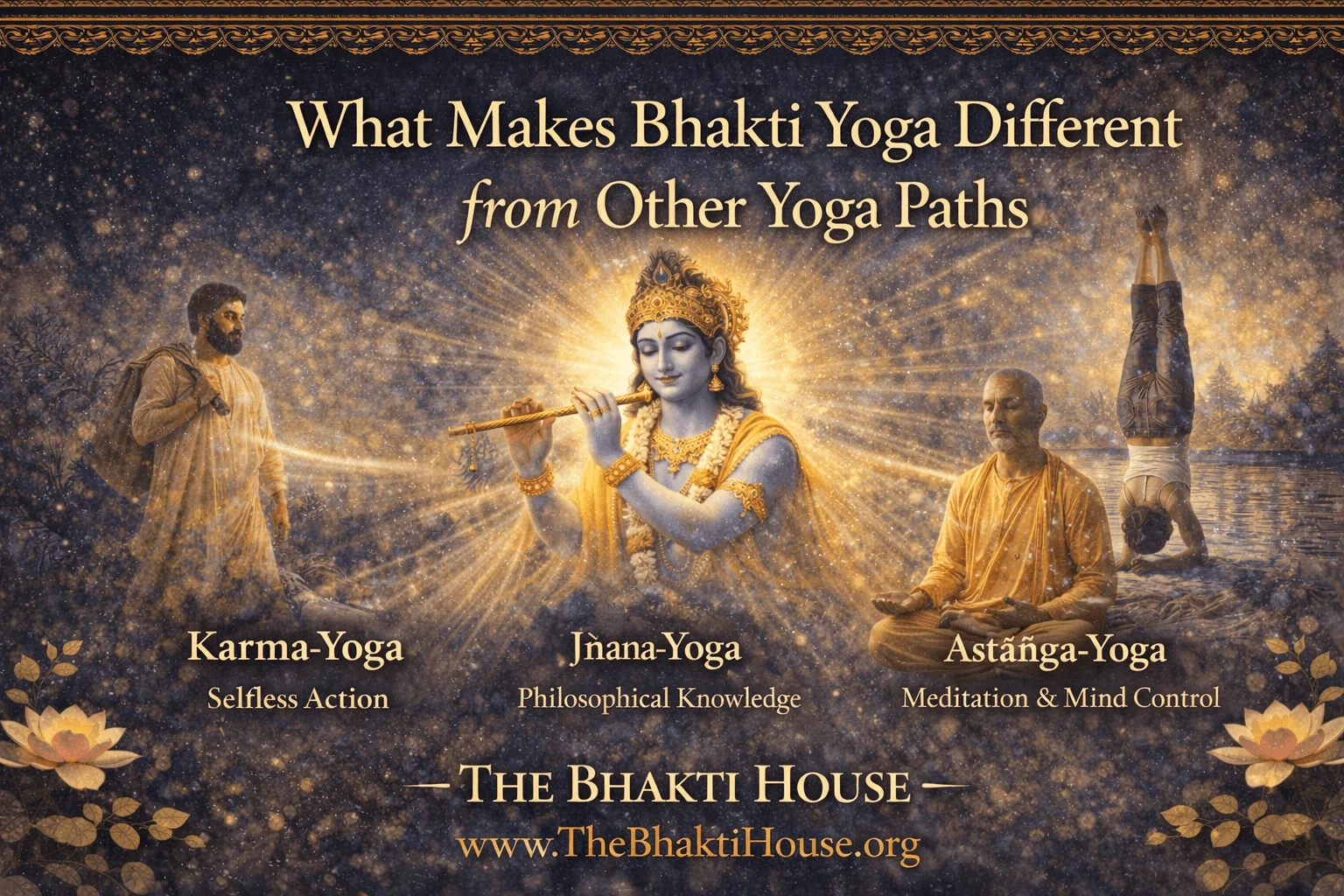
Hare Krishna meditation is central to Bhakti Yoga, but it is part of a larger way of living. Bhakti invites us to bring love for God into our thoughts, words, choices, relationships, and responsibilities.
This path is not about escaping the world. It is about learning to live in the world with a heart connected to the Divine.
Hearing and Study
In Bhakti Yoga, hearing sacred wisdom is very important. The Bhagavad-gita offers practical guidance on the soul, duty, devotion, the mind, and God’s loving nature. The Srimad-Bhagavatam shares stories and teachings that awaken devotion and help us see life through a spiritual lens.
Scripture study does not have to be dry or academic. We can read a small passage and ask:
What does this teach me about God?
What does this teach me about the soul?
How can I live this today?
How can I become more loving?
Even a few minutes of thoughtful reading can nourish the heart.
Prayer and Honest Conversation With God
Prayer is not only formal language. It can be a real conversation with God.
We can pray with gratitude, confusion, sorrow, hope, or repentance. We can ask for guidance. We can ask for strength to serve. We can ask to become more compassionate.
In Bhakti, prayer is relational. Krishna is not distant or uninterested. He is described in the Bhagavad-gita as the friend of all living beings. When we turn toward Him, even imperfectly, we begin to feel accompanied.
Service: Love in Action
The Sanskrit word seva means service. In Bhakti Yoga, service is love expressed through action.
Service may be offered in a temple, community, home, workplace, or family. It may be cooking, cleaning, teaching, listening, organizing, caring for children, helping someone in need, or offering your skills for a sacred purpose.
When we serve with the intention to please God and uplift others, ordinary actions become devotional.
This is deeply practical. If we chant but remain harsh with others, our practice is incomplete. The holy name is meant to soften the heart and inspire loving behavior.
Offering Food With Love
Another beautiful Bhakti practice is offering food to Krishna before eating. This is called preparing and honoring prasadam. The word prasadam means mercy or grace.
The practice is simple. Prepare vegetarian food with care, place it before a picture or form of Krishna, and offer a prayer: “My Lord, please accept this food prepared with love.” After offering, the food is received as prasadam, sanctified by devotion.
Eating becomes more than consumption. It becomes gratitude. It reminds us that everything comes from God.
Overcoming Common Challenges in Meditation
Every sincere practitioner faces challenges. This does not mean we are failing. It means we are practicing.
The path of Bhakti is kind. We can bring our struggles into the practice rather than hiding them.
“My Mind Is Too Distracted”
A distracted mind is not a reason to stop chanting. It is a reason to chant more patiently.
Try chanting at a regular time each day, perhaps early morning if possible. Keep your phone away. Sit in a clean, peaceful place. Pronounce the mantra clearly and listen to each word.
If the mind wanders 100 times, return 100 times. Each return is progress.
“I Don’t Feel Anything”
Feelings come and go. Devotion is deeper than emotion.
Sometimes the heart is being cleansed beneath the surface. Sometimes we are learning faithfulness. Continue gently. You may also try joining kirtan, reading scripture, spending time with devotees, or praying before chanting: “Please help me hear Your name.”
Spiritual taste often awakens through steady practice and grace.
“I’m Not Sure What I Believe”
You are still welcome.
Bhakti Yoga does not demand that you pretend. You can begin with openness. Chant and observe what happens in your heart. Ask sincere questions. Learn gradually.
Faith can begin as a small willingness: “Maybe there is divine love, and maybe I can experience it.”
That small willingness is a beautiful beginning.
“I Feel Unworthy”
Many people feel unworthy of God’s love. But the holy name is especially merciful. We do not become pure first and then chant. We chant, and the chanting purifies us.
The Bhakti tradition is filled with stories of people transformed by sincere remembrance of God. No past mistake is greater than divine mercy.
You are not disqualified by struggle. You are invited into healing.
The Teachings Behind the Mantra
Hare Krishna meditation is rooted in a rich spiritual tradition. It is not a passing trend or merely a relaxation technique. It comes from the devotional teachings of the Vedas, the Bhagavad-gita, the Srimad-Bhagavatam, and the lives of saints.
These teachings help us understand why chanting is so powerful and how to practice with depth.
The Holy Name and the Lord Are Connected
In ordinary life, a name and a person are different. If we say “water,” our thirst is not quenched. But Bhakti scriptures teach that God’s names are spiritually non-different from God Himself. Because God is absolute, His name carries His presence.
This is a profound idea. When we chant Hare Krishna, we are not simply thinking about God from a distance. We are associating with God through sacred sound.
This is why chanting can transform the heart. The holy name is living spiritual contact.
The Age of Quarrel and the Gift of Chanting
The Vedic tradition describes our current age as Kali-yuga, an age marked by distraction, conflict, anxiety, and spiritual forgetfulness. This may sound very familiar.
For this age, the scriptures especially recommend chanting the names of God. It is simple, accessible, and powerful. We may not have the time, purity, or discipline for difficult spiritual practices, but we can chant.
Sri Chaitanya Mahaprabhu shared this practice widely, inviting everyone—regardless of birth, education, gender, social position, or past—to participate in the chanting of God’s names.
That same invitation continues today.
The Goal Is Love
The ultimate goal of Hare Krishna meditation is not just stress relief, though it can reduce stress. It is not just focus, though it can improve focus. It is not even just personal peace, though peace is a blessed fruit.
The goal is prema, pure love of God.
Prema is the soul’s natural love fully awakened. It is love without selfish demand, love that delights in God’s happiness, love that extends compassion to all beings.
As this love awakens, peace naturally follows. A heart filled with divine love becomes less dependent on external approval and temporary pleasures. It becomes rooted.
Bringing Hare Krishna Meditation Into Daily Life
A spiritual practice becomes most powerful when it becomes part of daily life. It does not need to be complicated. Small, sincere steps can change the direction of the heart.
Begin the Morning With the Mantra
The morning is a sacred doorway. Before the demands of the day rush in, take a few moments to chant.
Even five or ten minutes can make a difference. Light a candle if you like. Sit quietly. Offer your day to God. Chant the maha-mantra and ask for guidance:
“Krishna, please help me remember You today. Please help me be kind. Please let my words and actions become an offering.”
This simple beginning can shape the mood of the whole day.
Create a Sacred Space
A small sacred space in your home can support your practice. It might include a picture of Krishna, a scripture, flowers, a candle, or your japa beads.
This space does not need to be elaborate. Cleanliness and sincerity are enough. When you sit there, your mind gradually learns: “This is a place to remember God.”
Join Others When You Can
Community is a great support in Bhakti Yoga. Being with others who chant, serve, and sincerely seek God can strengthen our own practice.
If you have access to a Bhakti center, kirtan gathering, temple, or online community, consider joining. Ask questions. Listen. Participate at your own pace.
Spiritual life grows beautifully in good company.
Let the Mantra Meet Your Real Life
Chant when you are peaceful, and chant when you are not.
Chant before a hard conversation. Chant after receiving difficult news. Chant when you feel grateful. Chant when you feel uncertain. Chant when you are walking under the sky. Chant when tears come.
The mantra is not only for perfect moments. It is for real life.
Peace That Becomes Compassion
True spiritual peace does not make us indifferent to the world. It makes us more compassionate.
As we chant, we begin to see others not as obstacles, competitors, or labels, but as souls. Every person is carrying joys and wounds. Every person is loved by God. Every living being is worthy of respect.
This vision is part of Bhakti Yoga.
Seeing With Softer Eyes
When the heart is restless, we may react quickly. We may judge, criticize, or withdraw. But chanting gradually gives us space. In that space, we can choose a more loving response.
We may still feel hurt or challenged, but we are less controlled by impulse. We can pray, “Krishna, please help me see this person as Your child. Please help me respond with wisdom.”
This is practical spirituality.
Serving From Inner Fullness
Many people serve others but become exhausted because they feel they must carry everything alone. Bhakti teaches us to serve while staying connected to God, the true source of strength.
Chanting nourishes the servant’s heart. It reminds us that we are instruments, not the ultimate controller. We offer our best, and we depend on grace.
This brings peace even in active service.
A Simple Practice to Try Today
If you would like to experience Hare Krishna meditation, here is a simple practice you can try today.
Find a quiet place. Sit comfortably. Take three slow breaths. Let your shoulders relax. If you feel comfortable, place your hand over your heart for a moment and silently offer your intention.
Then chant the mantra slowly:
Hare Krishna Hare Krishna
Krishna Krishna Hare Hare
Hare Rama Hare Rama
Rama Rama Hare Hare
Listen to each word. Let the sound enter the heart. If the mind wanders, gently return.
You can chant for five minutes, ten minutes, or longer. When you finish, sit quietly for a moment. Offer gratitude. Notice how you feel, without forcing any conclusion.
You may want to write down one simple reflection:
What did I notice?
What was difficult?
What felt nourishing?
What is one sincere step I can take tomorrow?
Spiritual growth is not rushed. It is cultivated through small, steady acts of love.
Everyone Is Welcome on the Path of Bhakti
One of the most beautiful truths of Bhakti Yoga is that everyone is welcome.
You do not need to be born into a particular tradition. You do not need to have perfect knowledge. You do not need to be free from doubt. You do not need to have your life fully together.
You are welcome with your questions.
You are welcome with your longing.
You are welcome with your grief.
You are welcome with your hope.
You are welcome with your sincere heart.
Hare Krishna meditation is a gift that can be received one mantra at a time. It is a path of love, chanting, prayer, service, and spiritual growth. It invites us to remember that we are souls, that God is loving, and that peace is found not by running from life, but by reconnecting our life to the Divine.
If you feel inspired, begin gently. Chant one mantra. Offer one prayer. Read one verse. Serve one person. Take one small step toward Krishna, toward God, toward the loving source of all peace.
No sincere step is ever lost. Everyone is welcome to take that step today.
FAQs
What is Hare Krishna meditation?
Hare Krishna meditation, also known as “japa meditation,” is a form of mantra meditation practiced by followers of the Hare Krishna movement. It involves the repetition of the Hare Krishna mantra, “Hare Krishna, Hare Krishna, Krishna Krishna, Hare Hare, Hare Rama, Hare Rama, Rama Rama, Hare Hare,” on prayer beads called japa mala.
What are the benefits of Hare Krishna meditation?
Hare Krishna meditation is believed to have numerous benefits, including reducing stress and anxiety, increasing focus and concentration, promoting inner peace and spiritual growth, and fostering a sense of connection with the divine.
How is Hare Krishna meditation practiced?
Hare Krishna meditation is typically practiced by sitting in a quiet place, holding the japa mala in one hand, and using the thumb and middle finger to move the beads while chanting the Hare Krishna mantra softly and attentively. The practice is often done for a specified number of rounds, with each round consisting of 108 repetitions of the mantra.
Is Hare Krishna meditation associated with a specific religion?
Hare Krishna meditation is closely associated with the International Society for Krishna Consciousness (ISKCON), a religious movement based on the teachings of the Bhagavad Gita and the chanting of the Hare Krishna mantra. While it is rooted in Hindu philosophy and theology, people from various religious backgrounds practice Hare Krishna meditation.
Can anyone practice Hare Krishna meditation?
Yes, anyone can practice Hare Krishna meditation, regardless of their religious or spiritual beliefs. The practice is open to all individuals seeking inner peace, spiritual growth, and a deeper connection with the divine.