
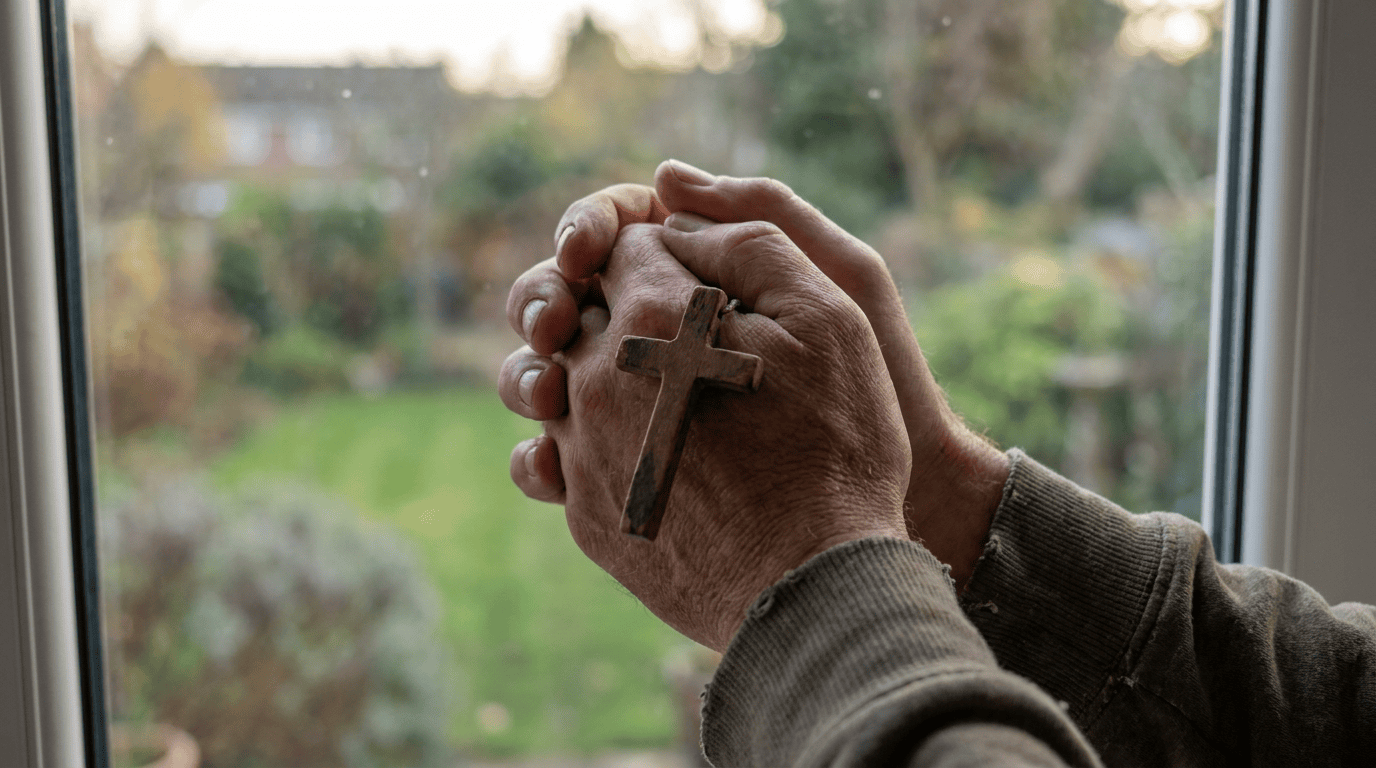
Personal prayers are the heartfelt words we offer to God in our own voice.
They may be spoken aloud, whispered softly, written in a journal, sung as a simple song, or held quietly within the heart. Personal prayer does not require perfect language, a special background, or advanced spiritual knowledge. It begins with sincerity.
In Bhakti Yoga, the path of devotion, prayer is one of the most natural ways to build a loving relationship with the Divine. The Sanskrit word bhakti means loving devotion. It is the practice of turning the heart toward God through love, remembrance, chanting, service, gratitude, and surrender.
Personal prayer is not only asking for help. It is also listening, thanking, remembering, confessing, offering, and loving. It is the soul reaching toward its eternal source.
Many people wonder, “Am I praying correctly?” In the devotional tradition, the most important question is not whether the prayer sounds impressive. The deeper question is: “Is my heart present?”
God is not distant from us. In the Bhagavad Gita, Lord Krishna says, “I am seated in everyone’s heart” (Bhagavad Gita 15.15). This means prayer is not a performance for a faraway being. It is a conversation with the Divine Presence who already knows us completely and still lovingly invites us closer.
Prayer as Relationship
Personal prayer is relationship.
Just as close friendships grow through honest conversation, our relationship with God deepens through regular, heartfelt prayer. Sometimes we speak with joy. Sometimes we come with confusion. Sometimes we come with tears. Sometimes we come with silence.
All of it can be prayer when offered sincerely.
In Bhakti, God is not seen as an abstract force alone, but as the Supreme Person, full of love, beauty, compassion, and wisdom. Different traditions may use different names for God—Krishna, Rama, Vishnu, Narayana, Radha, Govinda, Allah, Yahweh, Christ, the Divine Mother, or simply God. The essence of personal prayer is turning toward that sacred reality with humility and love.
Prayer as an Offering
A simple way to understand prayer is as an offering.
We may offer our words, our emotions, our hopes, our worries, our gratitude, and even our inability to pray well. In the Bhagavad Gita 9.26, Krishna says:
“If one offers Me with love and devotion a leaf, a flower, fruit, or water, I accept it.”
This verse is deeply comforting. God is not asking for something grand. God is asking for love. A small prayer, offered sincerely, can become a beautiful gift.
Prayer as a Daily Practice
Personal prayer becomes powerful when it becomes part of daily life.
It does not need to be long. Even a few moments of sincere prayer in the morning can shape the whole day. A short prayer before eating can turn a meal into gratitude. A prayer before work can transform duty into service. A prayer before sleep can bring peace to the heart.
Prayer is practical. It helps us pause, remember what matters, soften the ego, and align our actions with love.
Why Personal Prayer Matters in Bhakti Yoga
Bhakti Yoga is often described as the yoga of the heart.
While some spiritual paths focus mainly on knowledge, meditation, discipline, or physical postures, Bhakti Yoga centers on loving relationship with God. This relationship grows through practices that awaken devotion, such as chanting sacred names, hearing spiritual wisdom, serving others, worship, and prayer.
Personal prayer matters because it makes our spiritual life intimate.
It helps us bring our real life to God—not just our polished version. We can pray about our family, our work, our fears, our health, our grief, our temptations, our gratitude, and our longing for spiritual growth.
Nothing is too small to bring before God.
Prayer Opens the Heart
The heart can become covered by stress, disappointment, pride, resentment, and fear. Prayer gently opens it again.
When we pray, we practice vulnerability. We admit that we are not fully in control. We remember that we need grace. This humility is not weakness. In Bhakti, humility is strength because it allows love to enter.
The great Bhakti saint Sri Chaitanya Mahaprabhu prayed:
“O Lord, I am not asking for wealth, followers, beauty, or worldly success. I only ask for unmotivated devotion to You.”
This prayer teaches us that the highest gift is not simply getting what we want. The highest gift is learning to love God purely.
Prayer Helps Us Remember God
One of the central teachings of Bhakti Yoga is remembrance.
In Sanskrit, the word smaranam means remembering the Divine. Personal prayer helps us remember God in the middle of ordinary life. We do not have to wait until everything is calm. We can pray while walking, cooking, driving, caring for children, working, or sitting quietly.
A simple prayer like “Please guide me” can bring the mind back to God.
A prayer like “Let me serve with love” can change the mood of a difficult task.
A prayer like “Thank You for being with me” can bring comfort even during uncertainty.
Prayer Invites Transformation
The purpose of personal prayer is not only to change our circumstances. It is also to change our consciousness.
We may begin by asking God to remove a problem. Over time, prayer may deepen into asking God to help us grow through the problem—with patience, wisdom, courage, forgiveness, and devotion.
This is spiritual maturity.
Prayer does not always make life easy, but it can make the heart steady. It reminds us that we are held by divine love, even when the path is difficult.
How to Begin a Personal Prayer Practice

Starting a personal prayer practice can be very simple.
You do not need to wait until you feel “spiritual enough.” You do not need to know Sanskrit. You do not need to belong to a particular background. You can begin exactly where you are.
The most important ingredients are sincerity, regularity, and openness.
Choose a Simple Time
It helps to choose a regular time for prayer.
Morning is especially powerful because it sets the tone for the day. Before checking your phone, before entering the rush of responsibilities, you can take a few minutes to turn toward God.
Evening prayer is also beautiful. It allows you to reflect, release the day, ask forgiveness, and rest in divine care.
You might begin with five minutes a day. If that feels too much, begin with one minute. A sincere one-minute prayer is better than an elaborate practice that never happens.
Create a Sacred Space
A sacred space can support your prayer practice.
This may be a small altar, a clean corner, a candle, a picture of Krishna or another form of God dear to you, a sacred text, flowers, or a simple place to sit quietly. The purpose is not decoration alone. The purpose is remembrance.
In Bhakti homes and temples, sacred spaces often include images or Deities of Radha and Krishna, Rama, Vishnu, or saints. For newcomers, it is enough to understand that these forms help the heart focus on the personal nature of God.
A sacred space says to the mind: “This is where I return to love.”
Begin with Gratitude
Gratitude is one of the easiest doors into prayer.
You can begin by naming three things you are grateful for. They may be simple: breath, food, shelter, friendship, sunlight, a chance to begin again.
Gratitude softens the heart. It moves us from scarcity to trust. It reminds us that life is already filled with gifts.
A simple prayer may be:
“Dear God, thank You for this day. Thank You for my life. Thank You for the chance to remember You. Please help me use this day in a way that pleases You.”
Speak Honestly
Personal prayer does not need to sound poetic.
Speak honestly. God is not impressed by artificial language. If you are tired, say so. If you are afraid, say so. If you feel distant from God, bring that too.
You might pray:
“Dear Lord, I do not know how to pray today, but I want to come closer to You.”
Or:
“Krishna, my mind is restless. Please help me remember You.”
Or:
“God, I am carrying pain. Please guide me toward healing and help me act with love.”
Honest prayer builds trust.
Leave Space to Listen
Prayer is not only speaking. It is also listening.
After offering your prayer, sit quietly for a few moments. You may not hear anything dramatic. Often, divine guidance comes gently—as peace, clarity, conscience, scripture, the words of a wise person, or a softened heart.
Listening prayer means becoming receptive.
We do not demand that God answer in our preferred way. We simply make space for grace.
Please visit our website for more information on our articles: articles.
Types of Personal Prayers

Personal prayer has many forms. Different moments call for different kinds of prayer.
In Bhakti Yoga, all sincere prayers can become part of devotional life when they are offered with love.
Prayers of Gratitude
Gratitude prayers thank God for the gifts of life.
They help us recognize that everything is sustained by divine mercy. In Sanskrit, the word prasada means mercy or grace. In Bhakti communities, food offered to God is called prasada, reminding us that nourishment is a sacred gift.
A gratitude prayer may be:
“Dear Lord, thank You for feeding me, guiding me, and giving me another chance to grow. Please help me use what I have received in service to You and others.”
Gratitude does not deny hardship. It simply helps us remember that grace is present even within difficulty.
Prayers for Guidance
Life often brings decisions that feel unclear.
We may ask: Should I take this job? How should I respond to this conflict? How can I care for my family? What is the next step in my spiritual life?
A prayer for guidance may be:
“Dear God, please guide my intelligence. Help me see clearly. Let me choose what brings me closer to love, truth, and service.”
In the Bhagavad Gita 10.10, Krishna says that He gives understanding to those who are devoted and desire to come to Him. This does not mean we stop using our intelligence. It means we ask for our intelligence to be purified and directed by divine wisdom.
Prayers of Surrender
Surrender is a central teaching in Bhakti Yoga.
The Sanskrit word sharanagati means taking shelter. It does not mean giving up responsibility. It means trusting God while doing our sincere best.
A surrender prayer may be:
“Lord, I offer this situation to You. I will do what I can with honesty and love, but I release the results into Your hands.”
This kind of prayer is especially helpful when we are anxious about outcomes. Bhakti teaches that we are responsible for our effort, but not fully in control of the result. Prayer helps us act with devotion and let go with faith.
Prayers for Forgiveness
We all make mistakes.
Personal prayer gives us a sacred way to acknowledge harm, ask forgiveness, and seek strength to change. True forgiveness prayer includes humility and responsibility. We do not simply ask God to erase discomfort. We ask for a transformed heart.
A forgiveness prayer may be:
“Dear Lord, I have acted in ways that were selfish or unkind. Please forgive me. Please help me repair what I can and become more compassionate.”
In Bhakti, guilt is not meant to crush us. It is meant to awaken us. God’s mercy is greater than our mistakes, and sincere repentance can become the beginning of real growth.
Prayers for Others
Praying for others expands the heart.
We can pray for family, friends, strangers, leaders, those who are suffering, and even those with whom we have conflict. This is a powerful practice of compassion.
A simple prayer for others may be:
“Dear God, please bless this person. Please guide them, protect them, and bring them closer to Your love.”
When we pray for someone who has hurt us, we are not saying the hurt was acceptable. We are asking God to free our heart from hatred and guide everyone toward healing.
Prayers of Longing
In Bhakti, longing for God is considered sacred.
Sometimes the heart feels dry. Sometimes we want to love God more than we actually do. That longing itself is a beautiful prayer.
A longing prayer may be:
“Krishna, please awaken devotion in my heart. I am distracted by many things, but deep down I want to love You. Please help me remember You.”
The Bhakti scriptures are full of prayers of longing. The Srimad Bhagavatam, one of the great devotional texts, describes the prayers of saints, queens, kings, children, and sages who turn toward God with intense love. These prayers remind us that devotion grows when we sincerely desire it.
Chanting as Personal Prayer
In Bhakti Yoga, chanting sacred names is one of the most accessible and powerful forms of prayer.
The Sanskrit word mantra means a sacred sound that helps free the mind. A mantra is not just a phrase. It is a prayer carried by sound.
The most widely practiced mantra in the Gaudiya Vaishnava Bhakti tradition is the Maha Mantra:
Hare Krishna Hare Krishna
Krishna Krishna Hare Hare
Hare Rama Hare Rama
Rama Rama Hare Hare
Maha means great. This is called the great mantra because it is a complete prayer for divine service and spiritual awakening.
What Does the Maha Mantra Mean?
The names in the mantra are names of God.
“Krishna” means the all-attractive one. “Rama” means the source of spiritual joy. “Hare” calls upon the divine energy of the Lord, often understood as Srimati Radharani, the feminine aspect of divine love and devotion.
A simple meaning of the mantra is:
“O Lord, O Divine Energy of the Lord, please engage me in Your loving service.”
This is a prayer of the heart. We are not demanding material things. We are asking to be reconnected with our natural loving relationship with God.
Japa: Quiet Personal Chanting
Japa means soft, personal repetition of a mantra.
Many practitioners chant on beads called japa mala. A traditional mala has 108 beads. But if you are new, you can begin simply by chanting for a few minutes each day.
You might sit quietly, take a breath, and chant the Maha Mantra with attention. When the mind wanders, gently bring it back to the sound.
There is no need to be harsh with yourself. The mind naturally wanders. Each return to the mantra is an act of devotion.
Kirtan: Prayer Sung Together
Kirtan means congregational chanting, often with music.
In kirtan, people sing sacred names together in call-and-response. It is joyful, meditative, and deeply healing. You do not need a trained voice. You only need a willing heart.
Kirtan reminds us that prayer is personal, but not always private. We are supported by spiritual community. When many hearts call out to God together, the atmosphere becomes filled with devotion.
Chanting Throughout the Day
Chanting can be woven into daily life.
You can softly chant while walking. You can repeat a short name of God during stress. You can play kirtan while cooking or cleaning. You can pause before a difficult conversation and chant once with sincerity.
The sacred name becomes a companion.
In Bhakti teachings, God is fully present in His holy names. This means chanting is not merely symbolic. It is direct contact with divine grace.
Personal Prayer and Daily Life
A beautiful prayer practice is not separate from daily responsibilities.
Bhakti Yoga teaches that daily life can become spiritual when offered with devotion. Work, family care, study, creativity, cooking, cleaning, and service can all become part of our relationship with God.
Praying Before Work
Before beginning work, pause for a moment.
You might pray:
“Dear Lord, please help me do this work with integrity, patience, and care. May my efforts serve others and be pleasing to You.”
This transforms work from mere obligation into service.
In Sanskrit, seva means service. In Bhakti, seva is not only temple worship or formal volunteering. It is any action done with love for God and compassion for others.
Praying Before Meals
Food prayer is a powerful daily practice.
In Bhakti tradition, devotees prepare vegetarian food with care and offer it to Krishna before eating. This offering expresses gratitude and recognizes God as the source of all nourishment.
Even if you are just beginning, you can pause before meals and pray:
“Dear God, thank You for this food. Please bless it and help me use this energy in service, kindness, and devotion.”
When eating becomes prayerful, we become more conscious, grateful, and peaceful.
Praying in Conflict
Prayer can help us respond better in conflict.
Before reacting, we can pause and pray:
“God, please help me speak truthfully and kindly. Please protect me from anger and pride. Help me see this person with compassion.”
This does not mean avoiding necessary boundaries. Bhakti is not passivity. It means allowing divine wisdom to guide our words and actions.
Praying During Grief
Grief can make prayer feel difficult.
Sometimes we do not have words. In those moments, tears may become prayer. Silence may become prayer. Simply sitting before God and saying, “Please be with me,” is enough.
Bhakti scriptures honor the full range of human emotion. Devotion is not emotional denial. It is bringing every emotion into relationship with God.
When we grieve, prayer helps us remember that love is not destroyed by death, and the soul is eternal. The Bhagavad Gita teaches that the soul is not slain when the body is slain (Bhagavad Gita 2.20). This teaching does not remove the pain of loss, but it offers hope that our true identity is spiritual and enduring.
Common Challenges in Personal Prayer
Everyone faces challenges in prayer.
Rather than becoming discouraged, we can see these challenges as part of the path. Prayer grows slowly, like a plant. It needs patience, nourishment, and time.
“My Mind Wanders”
A wandering mind is normal.
When you notice distraction, gently return to your prayer or mantra. Do not spend your prayer time criticizing yourself. The act of returning is itself devotional.
You can also pray about distraction:
“Lord, my mind is restless. Please help me come back to You.”
This honest prayer may be more powerful than pretending to be focused.
“I Don’t Feel Anything”
Sometimes prayer feels dry.
Spiritual life has seasons. Feelings come and go. Bhakti is not based only on emotion; it is based on sincere offering.
If you do not feel much, continue gently. Offer even the dryness.
You might pray:
“God, I do not feel close to You today, but I still want to show up. Please accept this small effort.”
This kind of faithful prayer is very dear.
“I Feel Unworthy”
Many people hesitate to pray because they feel unworthy.
But Bhakti teaches that God’s mercy is not limited to the already pure. God is the purifier. We come to prayer not because we are perfect, but because we need grace.
In the Bhagavad Gita 9.30-31, Krishna says that even if someone has acted wrongly, if they turn toward Him with sincere devotion, they should be considered saintly because they are rightly resolved. This is a deeply hopeful teaching.
No one is disqualified from beginning again.
“My Prayers Aren’t Answered”
This is one of the most tender challenges.
Sometimes we pray deeply and do not receive the result we hoped for. This can be painful and confusing.
Bhakti does not ask us to hide that pain. We can bring disappointment into prayer too.
At the same time, devotional wisdom teaches that God sees beyond our immediate understanding. Sometimes the answer is yes. Sometimes no. Sometimes not yet. Sometimes the answer comes as inner strength rather than outer change.
Personal prayer is not a transaction. It is a relationship of trust.
Learning from Bhakti Scriptures
Bhakti scriptures offer many examples of personal prayer.
They show us how saints and devotees speak to God with humility, courage, love, and honesty. These prayers are not only ancient poetry; they are practical guides for our own hearts.
The Prayers of Queen Kunti
In the Srimad Bhagavatam, Queen Kunti offers profound prayers to Lord Krishna.
She had faced great suffering—exile, danger, family conflict, and war. Yet her prayers are filled with gratitude and deep realization. She recognizes Krishna as the Supreme Lord and asks to remember Him always.
Her example teaches us that prayer can mature through hardship. Instead of only asking for comfort, she asks for remembrance. This does not mean we should seek suffering. It means that even suffering can become a doorway to deeper dependence on God.
The Prayer of Prahlada
Prahlada Maharaja, a young saint in the Srimad Bhagavatam, prayed with extraordinary compassion.
Even though he was persecuted by his father, he did not ask only for his own liberation. He prayed for the welfare of all beings.
His example teaches us that true devotion expands beyond self-interest. As prayer deepens, our concern widens. We begin to ask not only, “Please help me,” but also, “Please bless everyone.”
The Teachings of the Bhagavad Gita
The Bhagavad Gita is a sacred conversation between Krishna and Arjuna.
Arjuna begins in confusion and distress. He does not hide his struggle. He turns to Krishna and says, “I am Your disciple. Please instruct me” (Bhagavad Gita 2.7).
This is one of the most important moments in spiritual life: when we stop pretending to have all the answers and sincerely ask for guidance.
The Gita teaches that prayer, surrender, action, knowledge, meditation, and devotion can all be harmonized. Krishna’s final instruction is deeply personal: “Abandon all varieties of separate duty and take shelter of Me. I will deliver you. Do not fear” (Bhagavad Gita 18.66).
This is the heart of personal prayer: taking shelter.
Simple Personal Prayers You Can Use
If you are new to prayer, it can help to begin with simple words.
You can use these prayers as they are, or adapt them in your own voice.
Morning Prayer
“Dear God, thank You for this new day. Please guide my thoughts, words, and actions. Help me remember You, serve others, and grow in love. May this day be an offering to You.”
Prayer Before Chanting
“Krishna, please help me hear Your holy names with attention and devotion. Please cleanse my heart and awaken love for You.”
Prayer for Peace
“Dear Lord, my heart feels restless. Please help me breathe, trust, and remember that You are with me. Let me act from love, not fear.”
Prayer for Service
“God, please show me how I can serve today. Let my hands, words, and heart become instruments of kindness.”
Prayer Before Sleep
“Dear Lord, thank You for carrying me through this day. Please forgive my mistakes and bless everyone I encountered. I place my worries in Your hands and rest in Your care.”
Building a Sustainable Prayer Practice
A lasting prayer practice is gentle, realistic, and sincere.
It is better to pray simply every day than to create a complicated routine that becomes overwhelming. Devotion grows through consistency.
Start Small
Begin with a practice you can actually keep.
One prayer in the morning. One mantra while walking. One gratitude before eating. One moment of surrender before sleep.
Small steps matter.
In Bhakti Yoga, no sincere effort is wasted. Krishna says in the Bhagavad Gita 2.40 that even a little progress on this path can protect one from great fear. This verse encourages us to begin without discouragement.
Keep a Prayer Journal
Writing prayers can be very helpful.
A prayer journal allows you to be honest, reflect on your growth, and notice how grace is moving in your life. You can write letters to God, gratitude lists, questions, confessions, or prayers for others.
Over time, your journal becomes a record of relationship.
You may look back and see that even when you felt lost, God was gently guiding you.
Pray with Others
Personal prayer is strengthened by spiritual community.
You may join a kirtan, attend a Bhakti gathering, read scripture with others, or pray with a trusted friend. Community helps us stay inspired and supported.
At The Bhakti House, the mood is welcoming and people-first. Whether someone is new to spirituality, returning after a long time, or already walking a devotional path, there is room for everyone.
Let Prayer Lead to Action
Prayer should soften the heart and inspire loving action.
If we pray for compassion, we can practice compassion. If we pray for forgiveness, we can take steps toward repair. If we pray for guidance, we can listen and act responsibly.
Bhakti is practical. Love becomes real through service.
Prayer and seva belong together. We speak to God, and then we try to live in a way that reflects that sacred conversation.
A Gentle Path Forward
Personal prayer is a complete guide because it can accompany every part of life.
It can meet you in the morning and at night. It can hold your gratitude and your grief. It can guide your decisions, soften your relationships, deepen your chanting, and transform ordinary duties into offerings of love.
You do not need perfect words. You do not need a perfect life. You only need a sincere beginning.
Bhakti Yoga invites us to come as we are and turn toward God with love. Through prayer, chanting, service, scripture, and community, the heart gradually becomes clearer. We begin to remember who we truly are: spiritual beings, beloved by God, meant for loving relationship.
If today you can offer one honest prayer, chant one sacred name, serve one person with kindness, or pause for one moment of gratitude, that is a beautiful step.
Everyone is welcome on this path. Wherever you come from, whatever you carry, you are invited to take one sincere step toward God today.
FAQs
What is a personal prayer?
A personal prayer is a form of communication with a higher power, often practiced in solitude. It is a way for individuals to express their thoughts, feelings, and desires to their chosen deity or spiritual entity.
How can one practice personal prayers?
Personal prayers can be practiced in various ways, such as through meditation, reciting specific prayers or mantras, or simply speaking directly to the divine. It can be done at any time and in any place that feels comfortable and conducive to spiritual connection.
What are the benefits of personal prayers?
Personal prayers can provide individuals with a sense of peace, comfort, and guidance. It can also serve as a form of self-reflection and introspection, helping individuals to gain clarity and insight into their own thoughts and emotions.
Are there different types of personal prayers?
Yes, there are various types of personal prayers, including prayers of gratitude, prayers for guidance, prayers for healing, and prayers for strength. Different traditions and belief systems may also have specific prayers or rituals associated with personal prayer.
Is personal prayer limited to a specific religion or belief system?
No, personal prayer is not limited to a specific religion or belief system. It is a universal practice that can be adapted and personalized to fit the individual’s spiritual or religious beliefs, or even practiced in a secular or non-religious context.

